
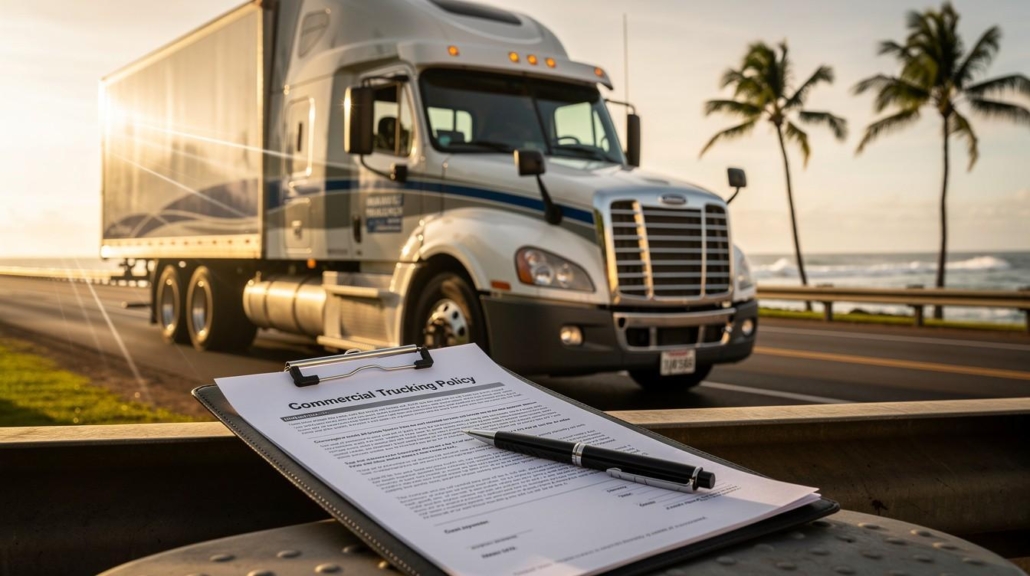
Commercial Trucking Policy Hawaii: Essential Coverage
Running a trucking operation in Hawaii means navigating specific insurance requirements that protect your business and your drivers. A commercial trucking policy in Hawaii isn’t optional-it’s a legal requirement with state-mandated minimums and federal standards you must meet.
We at Carr’s Insurance Agency help trucking companies understand exactly what coverage they need and how to avoid overpaying for it. This guide walks you through the essential policies, cost factors, and practical ways to reduce your premiums.
What Hawaii Actually Requires for Trucking Operations
State-Mandated Liability Minimums
Hawaii’s Department of Transportation enforces strict liability minimums that differ from mainland requirements. For intrastate trucking in Hawaii, Hawaii mandates minimum bodily injury liability of $50,000 per person and $100,000 per accident, with property damage liability of $25,000. These numbers sound reasonable until you experience a serious accident-then they’re dangerously low. A single catastrophic injury claim can exceed these limits within seconds, leaving your business exposed to personal liability. We recommend carrying at least $500,000 in bodily injury coverage and $250,000 in property damage coverage, which costs significantly less than dealing with an underinsured claim.
Federal Requirements for Interstate Operations
If your operation involves interstate commerce, federal requirements jump substantially higher. The Federal Motor Carrier Safety Administration sets minimum liability at $750,000 for most trucking operations, and $5 million if you transport hazardous materials. These federal standards exist because trucking accidents cause real damage-the National Highway Traffic Safety Administration reported 4,485 large truck fatalities in 2022, with commercial vehicle accidents averaging $97,000 in damages per incident.
Uninsured Motorist and Physical Damage Protection
Most trucking operations need uninsured motorist coverage, which protects you when an uninsured driver causes an accident. Hawaii requires this coverage for personal vehicles, and it’s equally important for commercial trucks. Physical damage coverage matters tremendously in Hawaii’s environment-salt spray, humidity, and tropical storms accelerate vehicle deterioration. This protection prevents unexpected repair costs from disrupting your operations.
Cargo and Specialized Coverage Options
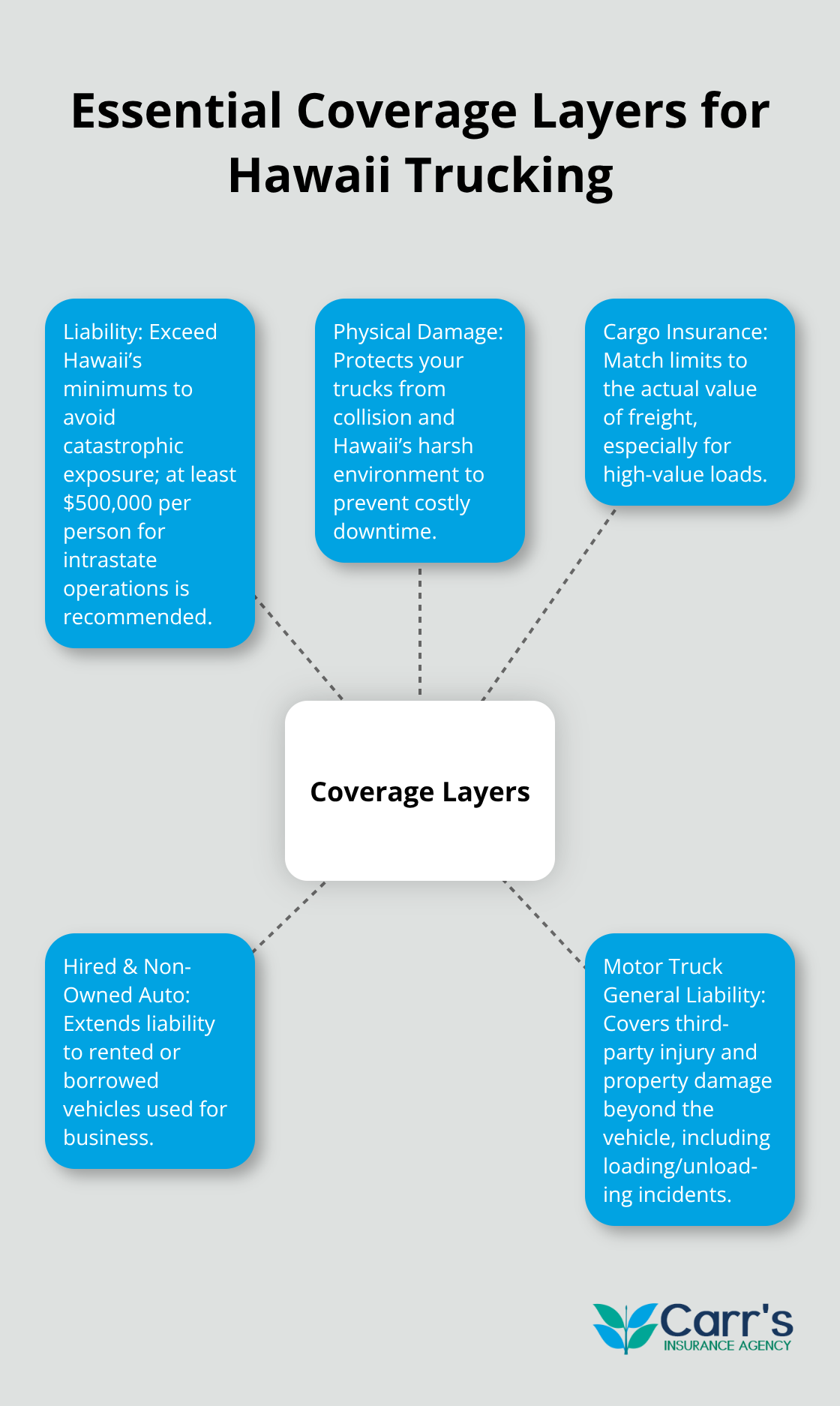
Cargo insurance protects the goods you haul, which is essential if you transport high-value freight. You should review your cargo limits annually because underinsuring inventory creates serious cash flow problems when losses occur. Hired and non-owned auto coverage extends your liability protection to vehicles you don’t own but operate for business purposes, which is critical if you rent equipment or borrow trucks temporarily. Motor truck general liability covers bodily injury and property damage beyond your vehicle’s direct involvement, protecting against accidents caused by cargo loading or unloading operations.
Understanding these coverage types sets the foundation for protecting your operation. The next step involves examining how different factors affect what you’ll actually pay for this protection.
What Coverage Actually Protects Your Trucking Operation
Liability Coverage Forms Your Foundation
Liability coverage forms the backbone of any trucking operation, and Hawaii’s minimum limits are genuinely insufficient for real-world accidents. A single serious injury claim costs $200,000 to $500,000 in medical expenses alone, which means Hawaii’s $50,000 per-person minimum evaporates instantly. We recommend minimum bodily injury liability of $500,000 per person and $1,000,000 per accident for intrastate operations, with property damage liability at $250,000. These limits cost roughly 15-20% more than minimums but eliminate the catastrophic risk of personal liability exposure. If you haul interstate, federal requirements demand $750,000 in liability coverage, and that’s non-negotiable with the Federal Motor Carrier Safety Administration.
The investment in adequate liability coverage is straightforward math: underinsuring your liability creates unlimited personal exposure when accidents happen, which they inevitably do in commercial trucking. A single catastrophic claim can bankrupt an operation that carries only state minimums.
Physical Damage Protection in Hawaii’s Environment
Physical damage coverage protects your actual trucks from repair costs that range from $15,000 for minor collisions to $80,000 for major frame damage on newer commercial vehicles. Hawaii’s salt air environment accelerates rust and corrosion, making regular maintenance essential but expensive. Comprehensive coverage prevents weather and accident damage from becoming financial emergencies that halt your operations. Your trucks represent your most valuable assets, and protecting them against the elements and collision damage keeps your business running without unexpected downtime.
Cargo and Specialized Coverage Layers
Cargo insurance becomes critical when you haul high-value freight, with coverage limits matching your actual cargo values rather than generic amounts. Hired and non-owned auto coverage protects you when you rent equipment or borrow trucks temporarily, which most operations do periodically. Motor truck general liability covers third-party bodily injury and property damage claims from cargo operations, loading accidents, or incidents beyond your vehicle’s direct involvement (such as injuries that occur during unloading at customer sites).
These coverage layers work together to address specific gaps that basic liability insurance misses, and skipping any of them creates operational vulnerabilities that show up at the worst possible moments. Understanding what each policy covers prepares you to make informed decisions about your actual costs.
What Drives Your Trucking Insurance Costs in Hawaii
Vehicle Age and Type Impact Your Premiums Most
Vehicle age and type create the largest swings in your premium, and older trucks cost significantly more to insure than newer models. A 2015 commercial truck might cost 40-50% more annually than a 2023 model with the same coverage limits, because repair costs climb dramatically as vehicles age and parts become harder to source. Newer trucks with advanced safety technology like automatic braking systems and lane departure warnings qualify for premium discounts ranging from 5-15% with most carriers.
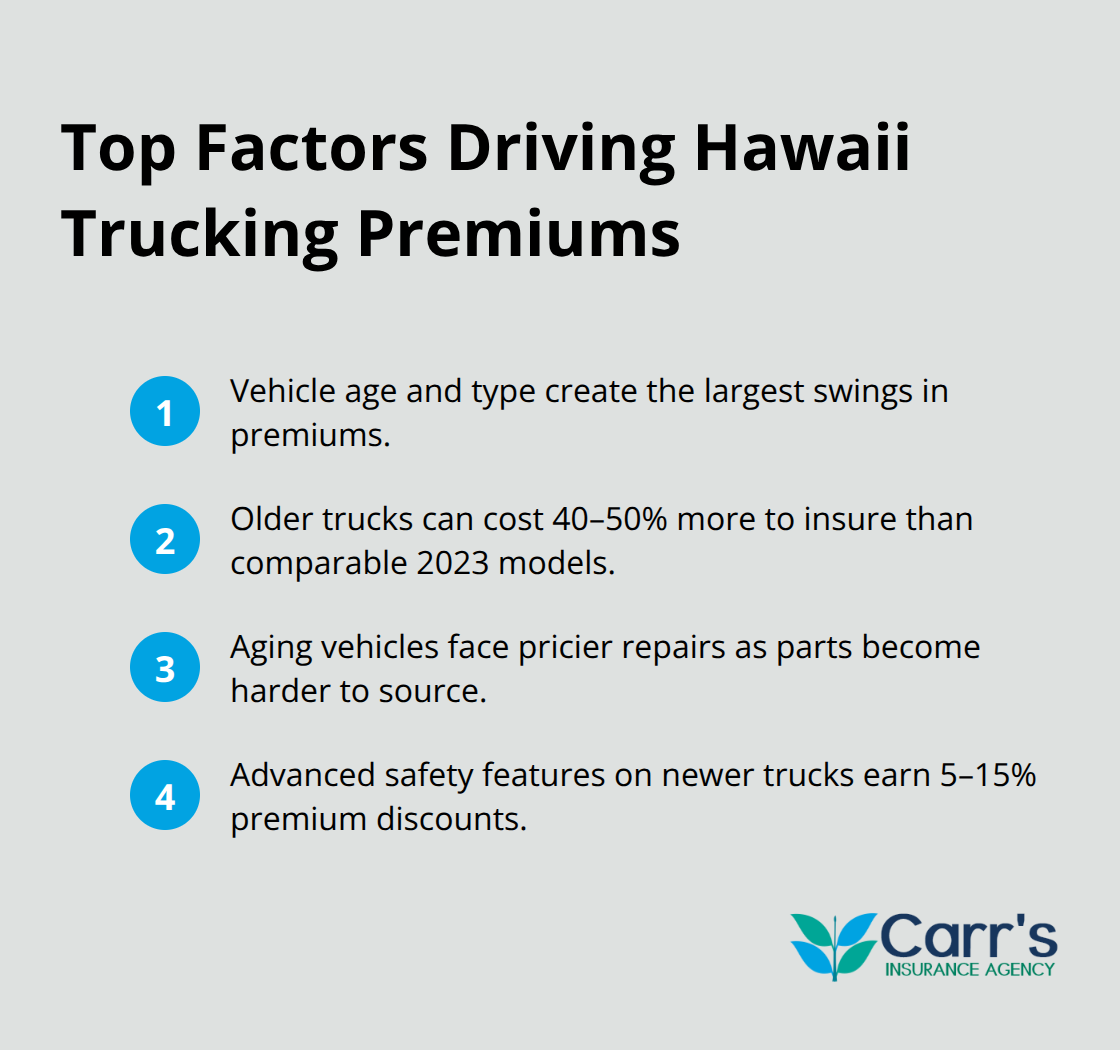
The truck’s cargo capacity matters too-a heavy-duty dump truck or flatbed hauling construction materials costs more to insure than a lighter commercial van because payload weight increases accident severity and damage potential. If you operate newer equipment with modern safety systems, your premiums reflect that investment through lower rates, which means upgrading aging trucks often pays for itself through insurance savings within 3-5 years.
Driver Safety Records Determine Fleet-Wide Costs
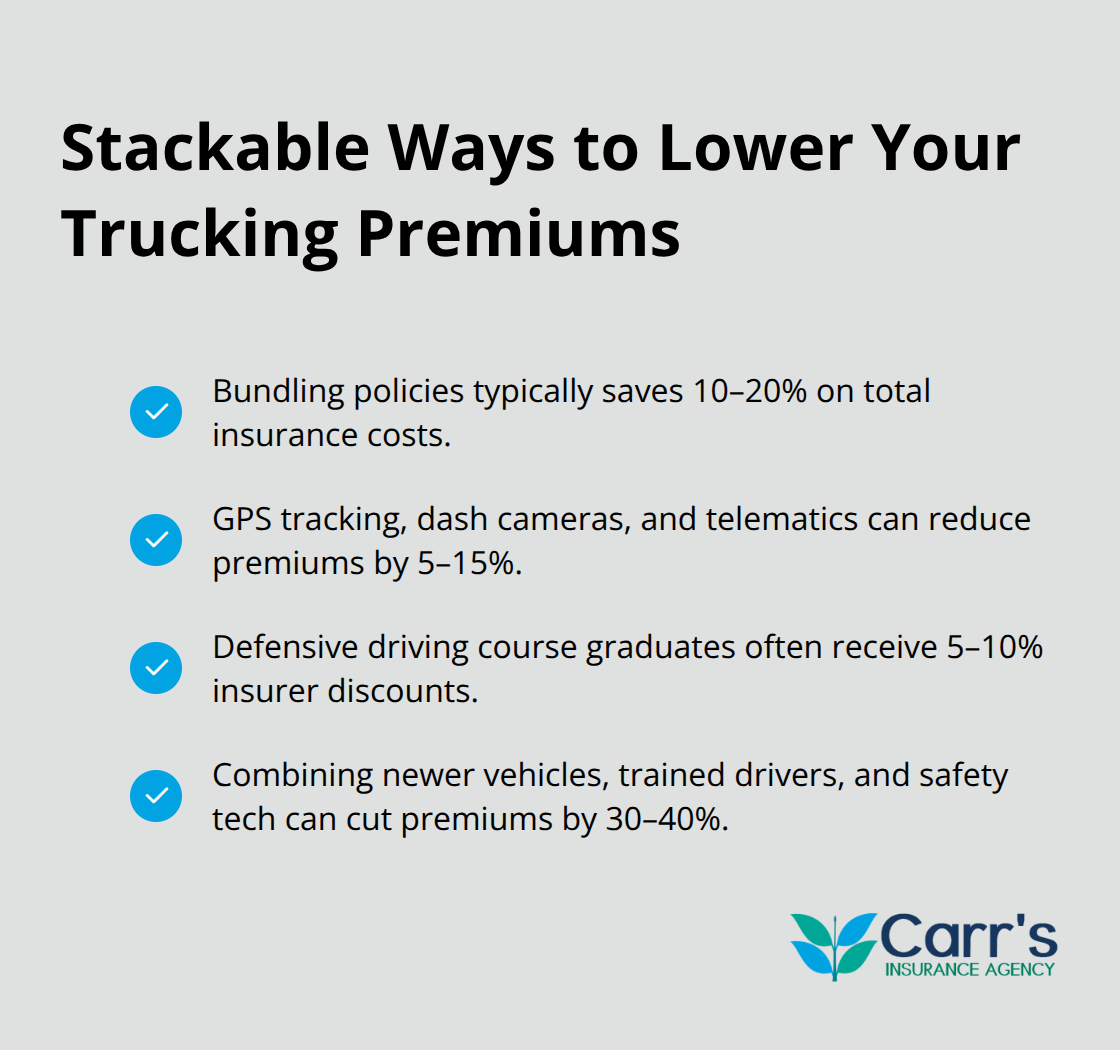
Your drivers’ safety records are the second-largest cost factor, and insurance providers monitor commercial driver records constantly. Drivers with clean records cost substantially less to insure than those with violations or accidents, so investing in driver training programs delivers immediate premium reductions. The National Safety Council reports that drivers completing defensive driving courses reduce accident rates by 10-15%, which insurers reward with rate discounts of 5-10%.
Bundling and Safety Technology Lower Your Rates
Bundling your commercial truck policy with other business coverage like general liability or workers compensation typically saves 10-20% on your overall insurance costs, making it financially sensible to consolidate policies with one carrier rather than splitting coverage across multiple insurers. Installing GPS tracking systems, dash cameras, and telematics devices that monitor driver behavior reduces premiums by 5-15% because insurers view these safety tools as accident prevention measures backed by concrete data.
Calculate Your Potential Savings
The combination of newer vehicles, trained drivers with clean records, and modern safety technology can reduce your annual premiums by 30-40% compared to older equipment with minimally trained drivers, which represents thousands of dollars in annual savings that flow directly to your bottom line. These cost reductions stack on top of each other, so each improvement you make compounds the financial benefit across your entire operation.
Final Thoughts
Your commercial trucking policy in Hawaii requires three essential coverage layers: liability protection that exceeds state minimums, physical damage coverage for your vehicles, and specialized policies like cargo and hired auto coverage that address operational gaps. Carrying only Hawaii’s mandated minimums exposes your business to catastrophic personal liability when serious accidents occur, which is why we recommend liability limits of at least $500,000 per person for intrastate operations. These higher limits cost far less than the financial devastation of an underinsured claim.
Comparing quotes from multiple carriers reveals significant price differences for identical coverage, with premiums varying by 30-50% depending on how each insurer evaluates your fleet, drivers, and safety practices. Local agents understand Hawaii’s specific insurance landscape and regulatory environment in ways that national call centers simply cannot match. An agent familiar with island operations knows which carriers offer the best rates for your particular situation and can identify discounts you might otherwise miss.
We at Carr’s Insurance Agency compare rates across top carriers to find the coverage and savings that fit your operation. Contact us to review your commercial trucking policy Hawaii coverage and learn how much you could save by optimizing your protection strategy.
Disclaimer: The information provided in this blog is for general informational purposes only and does not constitute legal, financial, or insurance advice. Coverage options, terms, and availability may vary. Please consult with a licensed professional for advice specific to your situation






