
Logistics Company Insurance Hawaii: Coverage for Your Operations
Running a logistics operation in Hawaii means managing complex risks across vehicles, cargo, and employees. At Carr’s Insurance Agency, we understand that logistics company insurance in Hawaii requires more than basic coverage.
Your fleet, warehouse, and team all need protection tailored to your specific operations. This guide walks you through the essential coverage types that keep your business running smoothly.
Commercial Auto Insurance for Your Fleet in Hawaii
Understanding Fleet Coverage Basics
Commercial auto insurance forms the foundation of fleet protection, yet most logistics operations in Hawaii carry inadequate coverage because they misunderstand what their policies actually cover. We see companies underestimate their exposure to liability claims, physical damage costs, and regulatory penalties. Your delivery trucks, box vans, and cargo vehicles face unique risks-from third-party accident claims to cargo loss during transport-that personal auto insurance simply won’t handle. The National Highway Traffic Safety Administration reported that 5,936 people killed in traffic crashes involving large trucks in 2022, underscoring why proper fleet coverage isn’t optional.
Liability Protection Requirements
Commercial auto policies protect your business against liability claims when your driver injures someone or damages their property. They also cover repairs or replacement if your vehicles are damaged in accidents and meet Hawaii’s minimum liability requirements of 20/40/10 (20,000 dollars bodily injury per person, 40,000 dollars per accident, 10,000 dollars property damage). Without this coverage, a single accident involving your delivery truck could trigger lawsuits that exceed your company’s annual revenue.
Physical Damage Coverage for Hawaii Operations
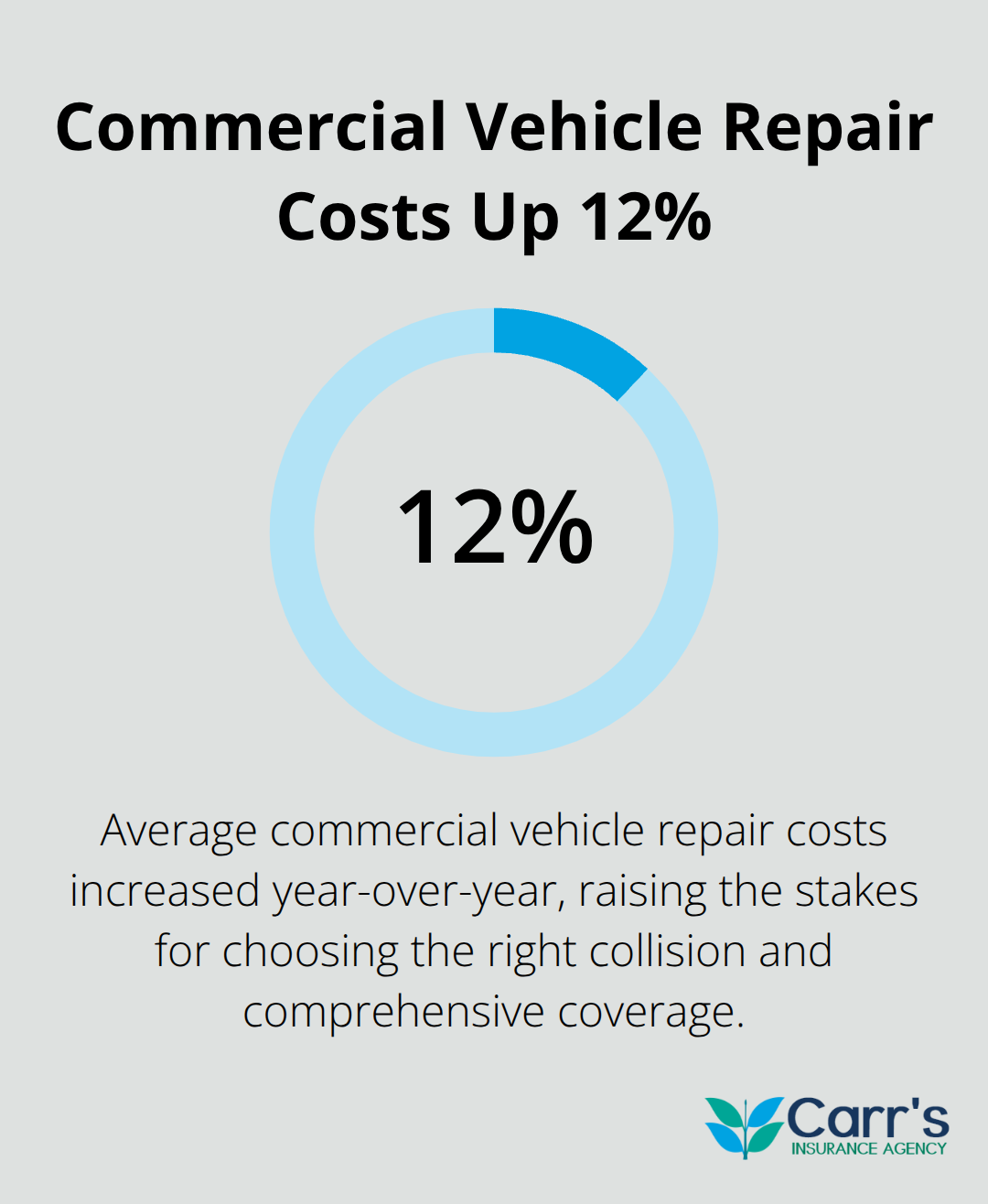
Physical damage coverage on your fleet vehicles breaks into two components: collision coverage pays for repairs when your truck hits another vehicle or object, while comprehensive coverage handles theft, weather damage, vandalism, and other non-collision losses. Hawaii’s weather patterns create specific risks-salt air accelerates rust and corrosion on vehicle frames, and seasonal heavy rains increase accident frequency, particularly on routes through mountainous areas. Logistics companies operating in Hawaii should evaluate whether stated-value or actual cash-value coverage makes sense for their fleet age and replacement costs. A 2024 analysis by the American Trucking Associations found that average commercial vehicle repair costs increased 12 percent year-over-year, making physical damage coverage decisions more critical to your bottom line.
Hired and Non-Owned Vehicle Protection
Liability protection extends beyond basic bodily injury and property damage to include hired and non-owned vehicle coverage, which protects you when employees use their personal vehicles for business purposes or when you rent equipment temporarily. This protection matters because Hawaii logistics operations often supplement owned fleet with rental vehicles during peak seasons or equipment breakdowns. Your policy should clearly specify whether it covers hired vehicles used for business, non-owned vehicles your employees operate, and any trailers or specialized equipment your operation uses regularly. Understanding these distinctions prevents coverage gaps that could expose your business to uninsured losses.
With fleet protection in place, your next priority shifts to safeguarding the cargo and facilities that keep your logistics operation running.
Business Property and Cargo Insurance for Your Hawaii Logistics Operation
Warehouse and Facility Coverage Protects Your Physical Assets
Your warehouse and facility coverage protects the physical structures where your logistics operation stores inventory, equipment, and vehicles when not in transit. This includes the building itself, roof, walls, and permanent fixtures, plus contents like shelving, forklifts, and office equipment inside. Hawaii’s climate creates specific exposure-salt air corrodes metal structures faster than mainland facilities, and seasonal storms bring wind and water damage risks that standard coverage often excludes without proper endorsements. You need coverage that addresses both sudden events like typhoons and gradual deterioration from humidity that can compromise your inventory.
In-Transit Cargo Protection Covers Your Goods on the Move
In-transit cargo protection covers goods while they move between your warehouse and customer locations, whether by truck, container ship, or air freight. Most logistics companies in Hawaii face serious gaps here because they assume their commercial auto liability handles cargo loss, when it typically covers only bodily injury and property damage to third parties, not your own goods. If your truck carrying electronics or food products gets damaged en route, your commercial auto policy won’t reimburse the cargo value-that’s what cargo insurance does.
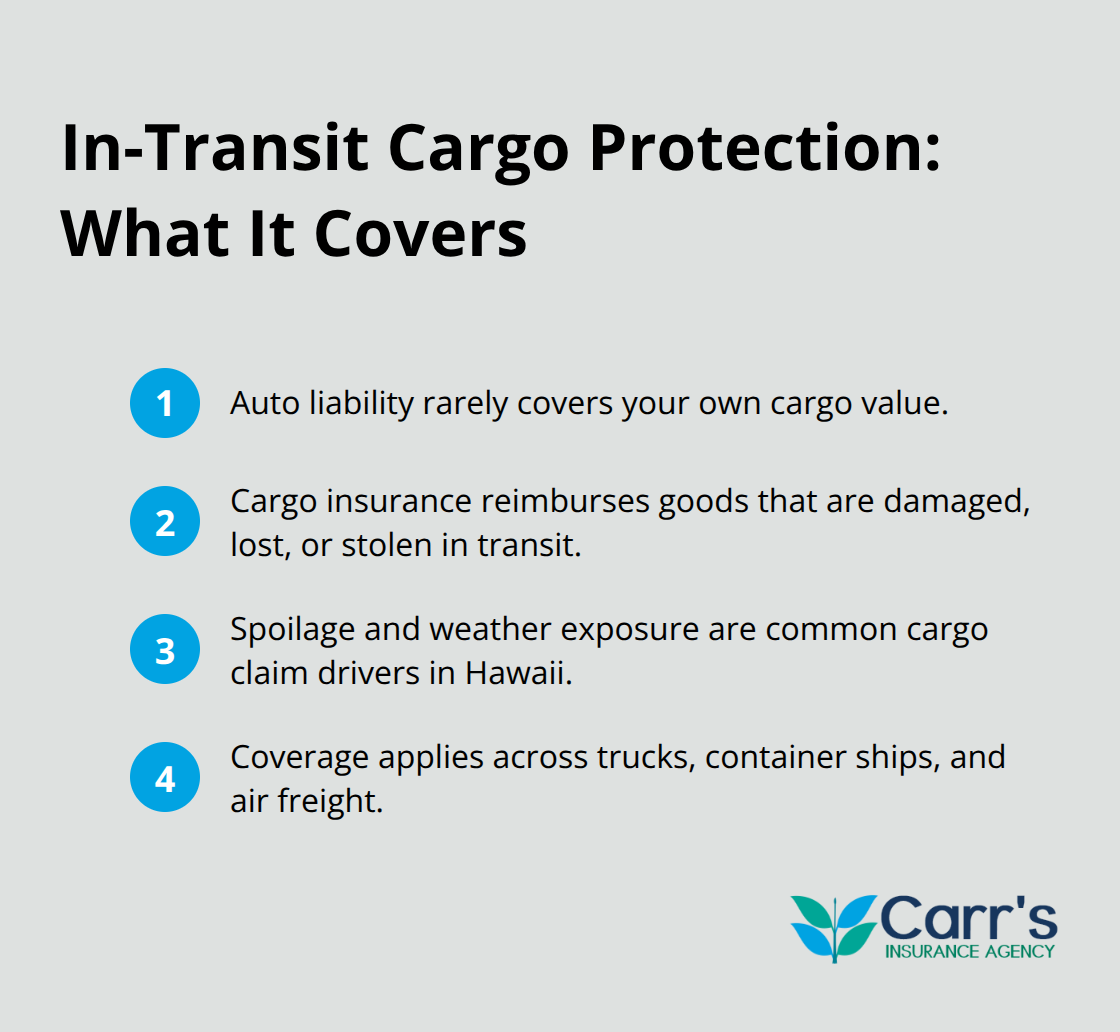
A 2023 report from the Council of Insurance Agents and Brokers found that cargo claims average significant amounts per incident, and many involve spoilage or weather exposure during transport that cargo policies specifically cover.
Equipment and Inventory Protection Extends Beyond Your Warehouse
Equipment and inventory protection extends beyond your warehouse walls to cover machinery, vehicles stored off-site, and stock held at customer locations or distribution centers. Hawaii logistics operations frequently store equipment at multiple locations, and each location needs explicit coverage in your policy. If you own forklifts, pallet jacks, generators, or specialized handling equipment, verify your property policy includes them by name or description, because generic coverage often excludes equipment with high replacement costs. Inventory sitting at a customer’s facility while awaiting processing or shipment creates liability exposure that your basic property policy may not address, requiring additional agreed-value or blanket coverage that accounts for fluctuating stock levels throughout the year.
Valuation Methods Determine What You Receive After a Loss
Replacement cost value and actual cash value are the two primary ways insurers calculate payouts, and this choice dramatically affects what you receive after a loss. Replacement cost value reimburses you for what it costs to replace damaged property at current market prices, while actual cash value subtracts depreciation from the replacement cost, meaning older equipment receives lower payouts. For Hawaii logistics operations with aging warehouse structures or vehicles, replacement cost coverage costs more upfront but prevents devastating underinsurance when you need to rebuild after a major event. Agreed value eliminates depreciation disputes by locking in a property value at policy inception, which works especially well for high-value cargo or specialized equipment where market prices fluctuate. The National Association of Insurance Commissioners data shows that commercial property claims often involve disputes over valuation, so choosing the right method before a loss occurs prevents negotiation delays when your business needs funds immediately to resume operations.
Coverage Gaps Create Financial Crises When Disasters Strike
Standard property policies exclude water damage from flooding, which matters because Hawaii’s geography creates flooding risk during heavy rains and storm surge events. You need separate flood insurance through the National Flood Insurance Program or private carriers, and waiting until after a storm warning appears means you cannot purchase coverage-most policies include 30-day waiting periods before protection activates. Spoilage coverage specifically protects perishable cargo from temperature fluctuations during transit or storage, and Hawaii’s tropical heat accelerates spoilage faster than cooler climates, making this endorsement essential for food or pharmaceutical logistics. Business interruption insurance covers lost income when a covered event forces your warehouse to shut down or your cargo fleet to stop operating, protecting your fixed costs like payroll and rent while you restore operations. Without this coverage, a major fire or equipment failure creates a financial crisis beyond just replacing the damaged property itself-your operation stalls while competitors capture your customers.
Workers Compensation and Specialized Coverage for Your Hawaii Logistics Team
Workers Compensation Protects Employees and Your Business
Logistics operations in Hawaii depend on employees who handle cargo, operate vehicles, and manage warehouse functions, making workers compensation insurance non-negotiable rather than optional. Hawaii requires employers with four or more employees to carry workers compensation coverage, and the Hawaii Department of Labor and Industrial Relations enforces strict compliance with penalties of not less than $500.00 or $100.00 for each employee for every day of non-coverage.
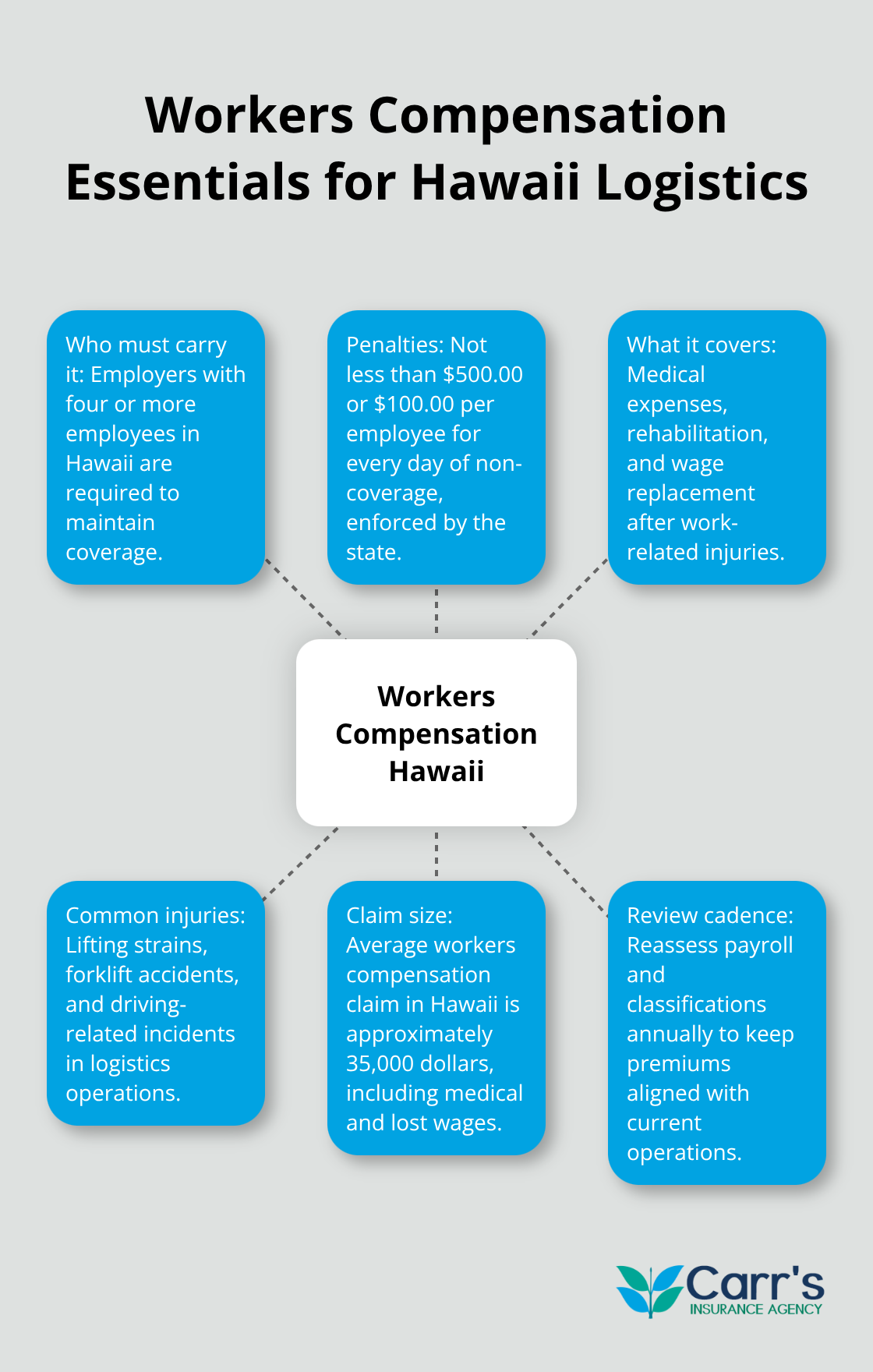
When an employee suffers an injury-whether a back strain from lifting heavy cargo, a forklift accident in your warehouse, or a traffic injury while driving a delivery route-workers compensation covers medical expenses, rehabilitation costs, and wage replacement while they recover. The National Council on Compensation Insurance reports that the average workers compensation claim in Hawaii costs approximately 35,000 dollars across medical treatment and lost wages, and logistics operations face higher injury rates than many industries because of the physical demands of cargo handling and vehicle operation.
Your policy should cover all employees regardless of classification, and you need clear documentation of job duties for each position because insurers use this information to assess risk and calculate premiums accurately. Payroll changes, new equipment, and staffing shifts all affect your actual exposure and what you should pay for protection, so you should review your workers compensation coverage annually to stay aligned with your current operations.
General Liability Coverage Addresses Non-Employee Claims
General liability coverage protects your business when an employee, customer, or third party claims you caused their bodily injury or property damage through your business operations. This differs from workers compensation because it covers non-employee claims-for example, if a customer trips in your warehouse and breaks their leg, or if your delivery driver damages someone’s fence while backing up to make a delivery. Hawaii logistics companies face significant general liability exposure because customers, vendors, and the public interact with your facilities and vehicles regularly, and a single serious injury claim can exceed 500,000 dollars in medical and legal costs.
Your general liability policy should include products liability if you handle perishable goods, because spoilage or contamination claims fall under this coverage. You need contractual liability protection if customers require you to carry specific insurance before they’ll do business with you, and this endorsement prevents coverage disputes when third parties demand proof of your protection.
Tow Truck Insurance Covers Unique Bailee Risks
Specialized policies for tow truck operations require additional considerations because these activities create unique risks that standard commercial auto and general liability policies explicitly exclude. Tow truck insurance must cover bailee liability, which protects you when you hold a customer’s vehicle in your care and it gets damaged or stolen. Your policy should include coverage for the towed vehicle itself during transport because standard policies won’t pay for damage that occurs while you’re towing someone else’s car, and this gap leaves you personally liable for losses that exceed your reserves.
Hauling Services Need Pollution and Cargo Liability
Hauling services that transport oversized loads, hazardous materials, or specialized equipment need pollution liability coverage if you move chemicals or fuel. Cargo liability specifically covers goods you’re transporting for hire-different from in-transit cargo protection because you’re compensated for moving the cargo and assume responsibility for it during transport. This distinction matters because your customer expects you to protect their shipment, and your policy must reflect that you hold liability for loss or damage that occurs under your control (rather than covering only your own goods in transit).
Final Thoughts
Your logistics operation in Hawaii faces interconnected risks that require coverage working together seamlessly rather than functioning as separate line items. Commercial auto insurance, business property and cargo protection, workers compensation, and specialized policies create a comprehensive safety net that keeps your business running when accidents, weather events, or injuries strike. A company moving perishable goods faces different risks than one transporting general freight, and your warehouse location in a flood-prone area changes which endorsements matter most for your logistics company insurance Hawaii needs.
Start by documenting your current policies and identifying gaps where coverage doesn’t exist or limits fall short of your actual exposure. Review your workers compensation classification codes to confirm they accurately reflect your employees’ duties, because misclassification creates premium overpayment or underpayment that affects your cash flow. Calculate your potential loss scenarios-what happens if your warehouse floods, a delivery truck causes a serious injury, or your cargo spoils during transport-and verify your coverage limits can absorb those financial impacts without forcing your business to close.
We at Carr’s Insurance Agency have served Hawaii since 1990 as a locally owned independent broker, and we understand the specific risks that logistics companies face across our islands. Our agents compare rates from top carriers and work with you to build coverage that protects your operations without overpaying for protection you don’t need. Contact us to review your current coverage and identify where your business remains exposed to preventable financial losses.
Disclaimer: The information provided in this blog is for general informational purposes only and does not constitute legal, financial, or insurance advice. Coverage options, terms, and availability may vary. Please consult with a licensed professional for advice specific to your situation






