Dry Van Insurance Hawaii: What You Need to Know

Dry Van Insurance Hawaii: What You Need to Know

Operating a dry van in Hawaii comes with distinct challenges that mainland truckers rarely face. Island logistics, strict state regulations, and unique environmental risks mean you need dry van insurance in Hawaii that actually fits your operation.

We at Carr’s Insurance Agency have helped countless Hawaii-based operators find coverage that protects their business without breaking the bank. This guide walks you through exactly what you need to know.

What Dry Van Insurance Actually Covers in Hawaii

Dry van insurance in Hawaii protects your business from financial catastrophe when something goes wrong. The core coverage includes liability protection, which covers damage or injuries you cause to third parties-another vehicle, property, or a person-up to your policy limits. Physical damage coverage pays for repairs or replacement of your own truck if it’s damaged in an accident, collision, or weather event. Cargo coverage protects the freight you haul, which matters significantly in Hawaii where goods often move between islands and face unique transit risks.

Hawaii’s Minimum Requirements vs. What You Actually Need

Hawaii’s Department of Transportation requires all commercial vehicles operating intrastate to carry minimum liability limits of 50/100/25, meaning $50,000 per person, $100,000 per accident, and $25,000 for property damage. These minimums fall dangerously short given Hawaii’s higher repair costs and medical expenses. Most dry van operators should carry 100/300/100 coverage instead to protect themselves adequately.

Environmental and Geographic Risks Demand Stronger Coverage

Hawaii’s weather patterns create risks that mainland truckers never encounter. Salt spray from ocean exposure corrodes vehicle components faster than on the mainland, volcanic ash damages engines and paint, and sudden tropical downpours flood roads unpredictably. Your dry van crossing Saddle Road on the Big Island faces elevation changes and weather shifts that increase accident probability compared to flat highway driving.

Hawaii’s limited roadway infrastructure means accidents often happen in remote areas where towing and recovery costs skyrocket. The National Association of Insurance Commissioners reports that island-based commercial vehicles experience 23% higher claims frequency than comparable mainland operations, primarily due to terrain and weather factors. Uninsured motorist coverage becomes particularly valuable here since uninsured drivers pose a significant risk on Hawaii’s roads.
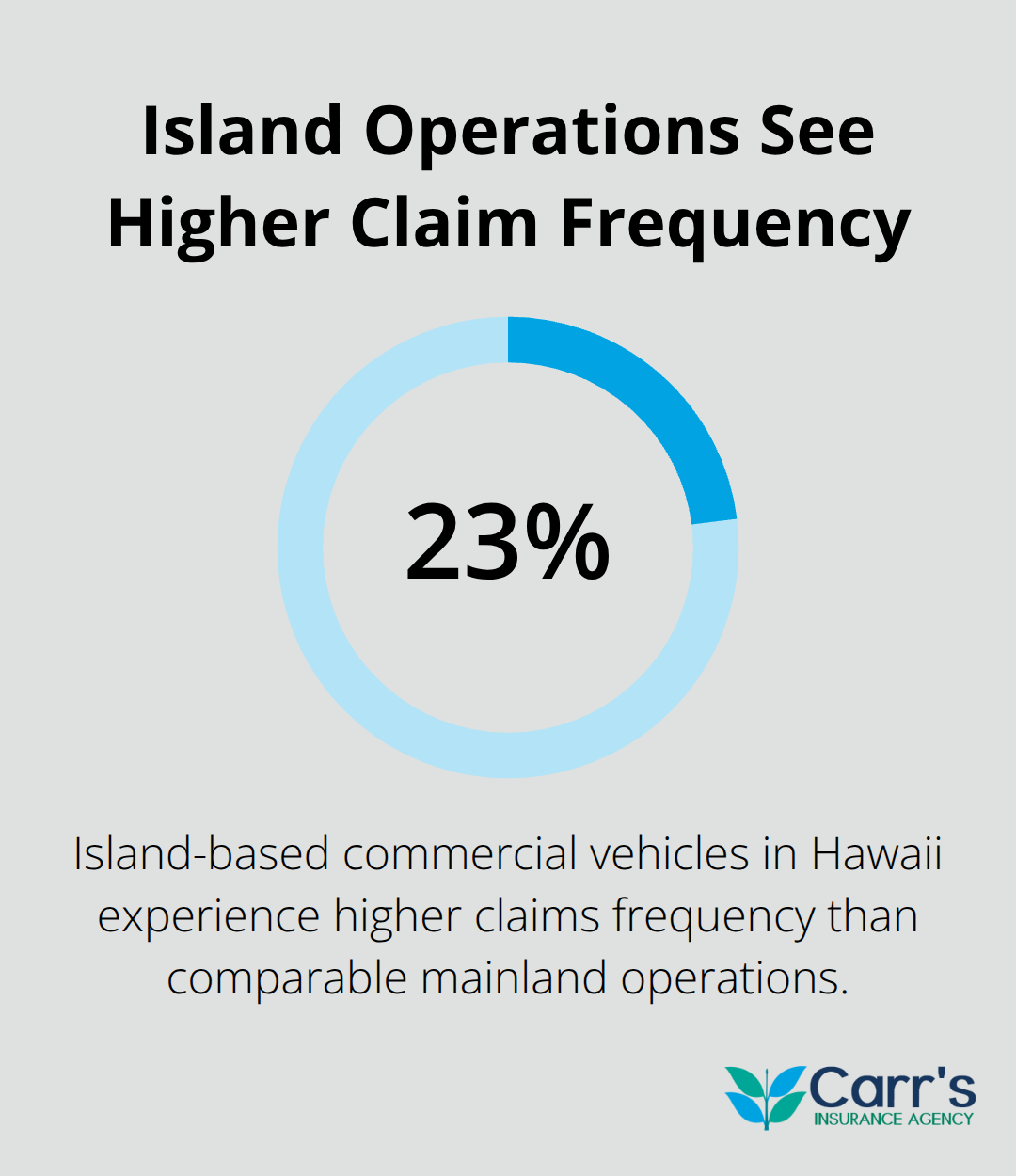
Infographic showing that island-based commercial vehicles in Hawaii experience 23% higher claims frequency than comparable mainland operations.

State and Federal Compliance Requirements

Hawaii mandates that dry van operators carry workers compensation insurance if you employ anyone, with minimum coverage requirements based on payroll. The state also requires proof of financial responsibility, which your insurance policy satisfies. However, Hawaii’s freight movement across islands triggers federal DOT regulations simultaneously, creating a dual compliance requirement that confuses many operators.

Your insurance policy must comply with both state regulations and federal motor carrier standards outlined in 49 CFR 387. Cargo liability becomes mandatory if you transport goods valued above certain thresholds, and Hawaii’s port authorities impose additional insurance requirements for operations at Honolulu Harbor or other commercial ports. Non-compliance results in fines ranging from $500 to $2,500 per violation, plus potential loss of operating authority.

Understanding these coverage types and requirements sets the foundation for selecting the right policy. The next step involves comparing actual coverage options available to you and identifying which carriers offer the best rates for your specific operation.

Coverage Options and What They Protect

Liability Coverage Forms Your Legal Foundation

Liability coverage forms the legal backbone of your dry van operation in Hawaii. This coverage pays for injuries or property damage you cause to others, and Hawaii law treats it seriously. The state’s minimum 50/100/25 requirement falls dangerously short for dry van operators because a single accident involving another vehicle and medical expenses easily exceeds these limits. Most operators should carry at least 100/300/100, and we recommend 250/500/100 if you regularly haul high-value freight or operate during peak tourist seasons when roads are congested.

Your liability coverage depends heavily on your driving record, years of experience, and cargo type. If you cause an accident that exceeds your liability limits, the injured party can pursue your personal assets, making adequate coverage non-negotiable for protecting your business equity.

Physical Damage Coverage Protects Your Vehicle Investment

Physical damage coverage repairs or replaces your truck after accidents, collisions, theft, or weather damage. Hawaii’s tropical environment makes comprehensive coverage particularly valuable because volcanic ash, salt corrosion, and sudden flooding damage vehicles more frequently than on the mainland. Collision coverage pays for accident-related damage, while comprehensive covers weather, theft, and vandalism.

Deductibles typically range from $500 to $2,500, and choosing a higher deductible lowers your premium substantially. A $2,500 deductible instead of $500 can reduce your physical damage premium by 25 to 35 percent annually, which for many operators means $400 to $700 in yearly savings. This trade-off works well if you maintain strong cash reserves for unexpected repairs.

Cargo Coverage Addresses Inter-Island Shipping Risks

Cargo coverage protects the freight you transport, with liability limits separate from your vehicle coverage. Hawaii’s inter-island shipping creates unique risks because goods spend extended time in transit and face exposure to salt spray and humidity. You should match cargo coverage limits to your typical load values, typically between $25,000 and $100,000 depending on your freight mix.

Specialized coverages like bobtail insurance protect you when you operate your tractor without a trailer, which many Hawaii operators overlook despite regularly moving between ports and dispatch yards. These additional protections address the specific operational patterns that define Hawaii’s trucking environment.

Understanding what each coverage type protects allows you to move forward with selecting the right combination for your operation. The next step involves comparing actual quotes and identifying which carriers offer the best rates for your specific situation.

How to Get the Right Dry Van Insurance at the Best Rate

Comparing quotes from multiple carriers is non-negotiable if you want competitive pricing on dry van insurance in Hawaii. Most operators stop after getting two or three quotes and assume they’ve done their due diligence, but this costs them money. Commercial truckers who compare five or more quotes save an average of 18 to 22 percent on premiums compared to those who get fewer quotes.
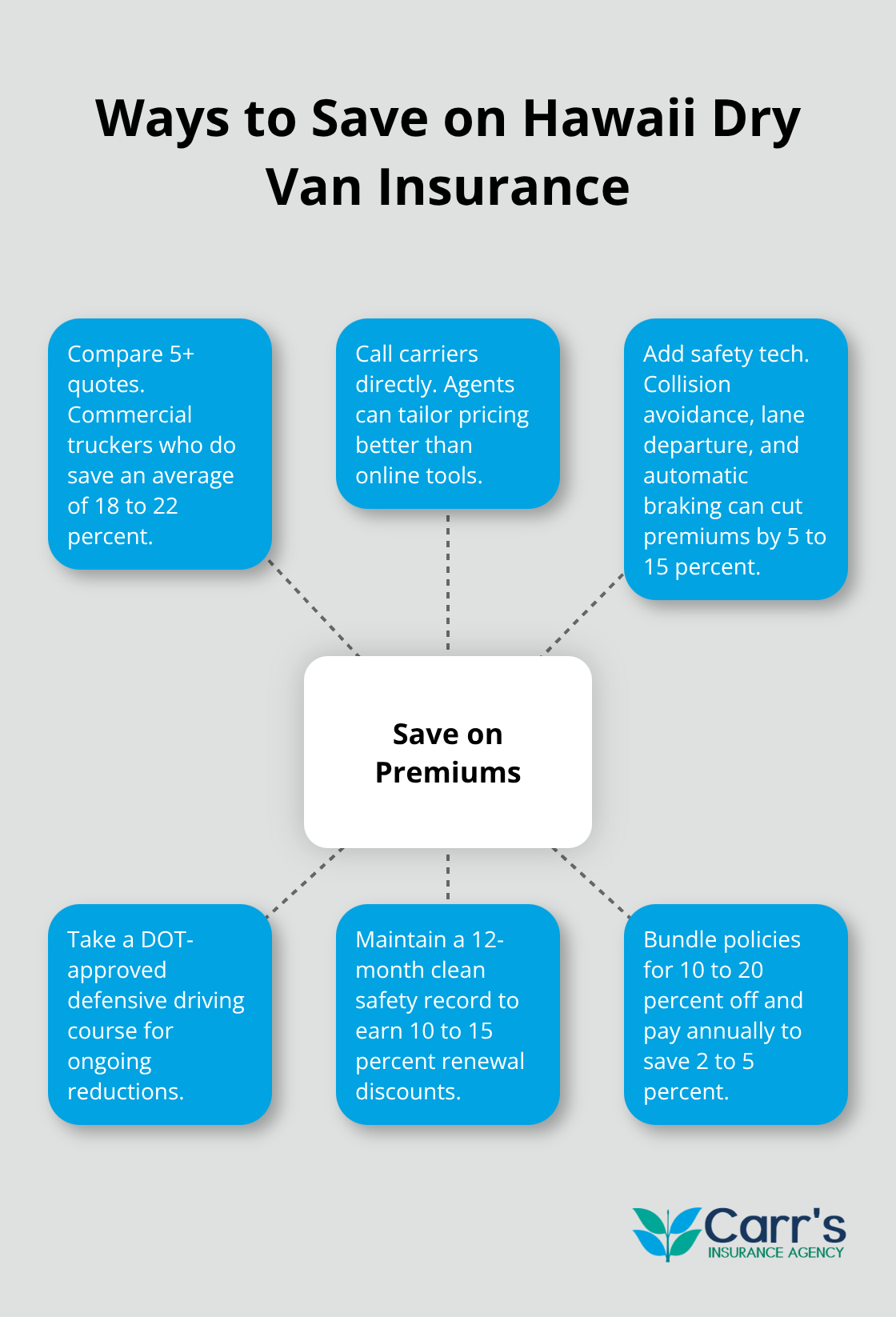
Hub-and-spoke chart outlining proven strategies to reduce dry van insurance costs in Hawaii, with specific discount ranges. - Dry van insurance Hawaii

Request quotes from at least five carriers that specialize in Hawaii commercial vehicle coverage, and provide identical information to each one so you can make accurate comparisons. Many carriers offer online quote tools, but calling directly produces better results because agents can discuss your specific operational patterns, cargo types, and driving routes.

What Drives Your Premium Up or Down

Your driving record remains the single strongest factor affecting your premium cost. A clean three-year record qualifies you for better rates, while even one at-fault accident increases premiums by 15 to 40 percent depending on severity. Years of commercial driving experience matter significantly, with operators holding five or more years of history typically paying 20 to 30 percent less than newer drivers.
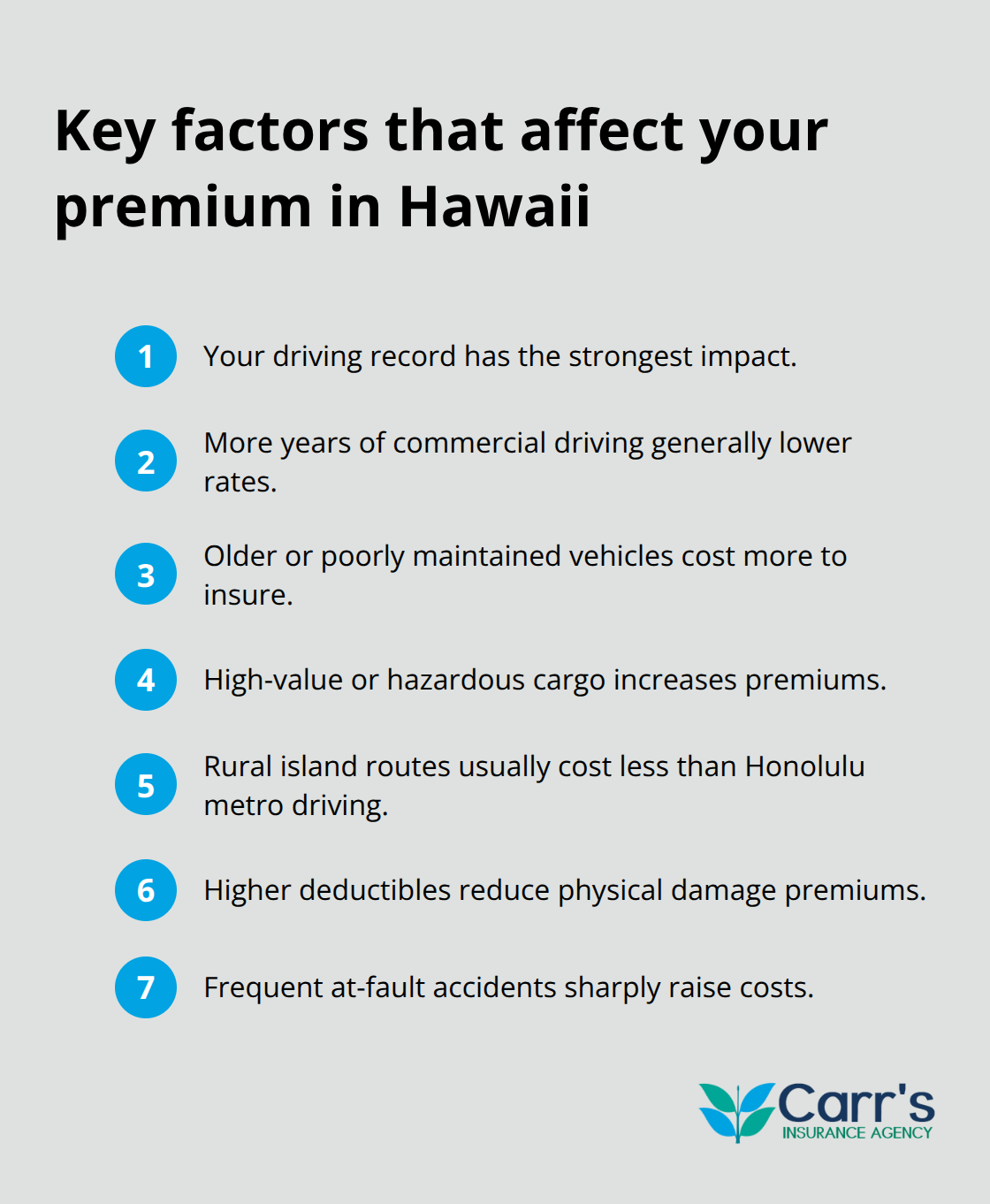
Compact list of the primary factors that raise or lower dry van insurance premiums in Hawaii. - Dry van insurance Hawaii

Your vehicle’s age and condition directly impact physical damage premiums, so older equipment costs more to insure because repair expenses run higher. The cargo you typically haul influences rates substantially because hazardous materials or high-value freight attract higher premiums than standard dry goods. Operating primarily on rural island routes costs less than frequent Honolulu metro driving where congestion and accident frequency are higher. Deductible selection offers immediate premium reduction opportunities, with moving from $500 to $2,500 deductibles typically cutting physical damage costs by 25 to 35 percent annually.

Safety Features and Training Lower Your Costs

Safety features on your truck qualify for meaningful discounts that many operators miss. Collision avoidance systems, lane departure warnings, and automatic braking technology can reduce premiums by 5 to 15 percent because insurers view these systems as accident prevention tools. A defensive driving course approved by the Hawaii Department of Transportation qualifies you for ongoing premium reductions. Electronic logging device compliance shows insurers you monitor hours of service properly, which qualifies for carrier-specific discounts. Some carriers offer performance-based discounts if you maintain a clean safety record for 12 consecutive months, reducing rates by 10 to 15 percent in renewal periods.

Multi-Policy Bundling and Payment Strategies

Bundling your dry van coverage with other business policies like general liability or workers compensation produces multi-policy discounts ranging from 10 to 20 percent. Maintaining continuous coverage without lapses demonstrates reliability to carriers and unlocks loyalty discounts. Paying your annual premium upfront instead of monthly saves 2 to 5 percent on most policies. These straightforward strategies (safety upgrades, bundling, and upfront payment) combine to produce substantial savings across your insurance costs.

Final Thoughts

Dry van insurance in Hawaii requires more than checking a box on a compliance form. You need coverage that accounts for island-specific risks, higher repair costs, and the unique operational demands of inter-island freight movement. The foundation starts with understanding Hawaii’s minimum liability requirements and recognizing why they fall short for protecting your business, then moves to selecting physical damage coverage that handles volcanic ash, salt corrosion, and tropical weather patterns that damage vehicles faster than mainland conditions.

Your premium depends heavily on your driving record, years of experience, cargo type, and the safety features on your truck, so comparing quotes from multiple carriers produces real savings. Local expertise makes a genuine difference when selecting dry van insurance Hawaii coverage because an agent familiar with island operations understands the specific routes you drive, the cargo you typically haul, and the regulatory environment that shapes your coverage needs. They know which carriers offer competitive rates for Hawaii-based operators and which ones price coverage too aggressively for island logistics.

We at Carr’s Insurance Agency compare rates from top carriers to find coverage that protects your operation without unnecessary expense. Our licensed agents provide personalized service and understand the aloha-driven approach that matters in Hawaii business relationships. Contact us at carrsinsuranceagency.com to discuss your dry van insurance needs and get quotes from multiple carriers that specialize in Hawaii commercial vehicle coverage.

Disclaimer: The information provided in this blog is for general informational purposes only and does not constitute legal, financial, or insurance advice. Coverage options, terms, and availability may vary. Please consult with a licensed professional for advice specific to your situation
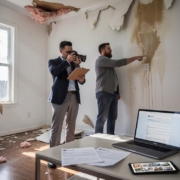
Hurricane Insurance Claims Hawaii: From Filing to Settlement

Hurricane Insurance Claims Hawaii: From Filing to Settlement

Hurricanes hit Hawaii hard, and the aftermath often brings confusion about insurance coverage and claims. We at Carr’s Insurance Agency know that understanding your hurricane insurance claims in Hawaii can mean the difference between a smooth recovery and months of financial stress.

This guide walks you through everything from filing your claim to receiving your settlement payment.

Understanding Hurricane Coverage in Hawaii

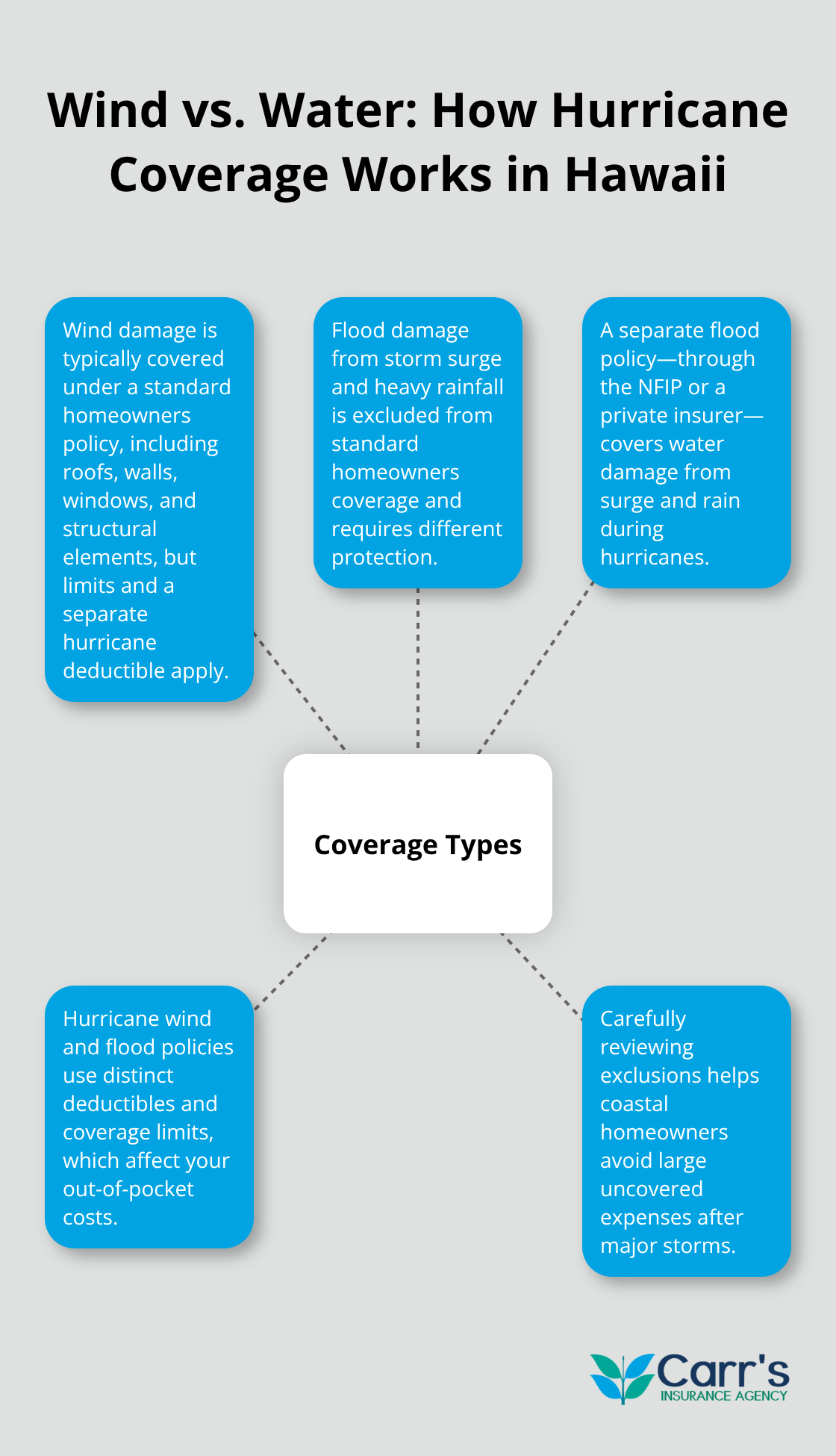
Standard homeowners policies in Hawaii cover wind damage from hurricanes, but this coverage comes with strict limits that catch most people off guard. Wind damage includes damage to your roof, walls, windows, and structural components caused directly by hurricane-force winds. However, water damage from storm surge and heavy rainfall falls into a completely different category and requires separate coverage. According to the National Association of Insurance Commissioners, homeowners in coastal states need to understand what their policies exclude to avoid massive out-of-pocket expenses after major storms.

Visual guide showing wind coverage under homeowners insurance versus separate flood insurance and deductibles in Hawaii. - Hurricane insurance claims Hawaii

The distinction matters tremendously because hurricane damage in Hawaii frequently involves both wind and water, yet insurers treat them as separate claims with different coverage limits and deductibles.

Water Damage Requires Its Own Policy

Flood damage from storm surge and torrential rain is explicitly excluded from standard homeowners policies across Hawaii. If you live in a flood-prone area or near the coast, you need a separate flood insurance policy through the National Flood Insurance Program or a private flood insurer. The Hawaii Department of Commerce and Consumer Affairs reports that only about 15% of Hawaii homeowners carry flood insurance despite living in high-risk areas. This gap in coverage is catastrophic because storm surge from major hurricanes can push water inland several miles, affecting properties far from the immediate coastline. Any homeowner within five miles of the ocean should seriously consider flood coverage, regardless of what flood maps suggest. Private flood insurance often costs less than federal flood insurance while offering better coverage terms and faster claims processing.

Hurricane Deductibles Work Differently Than You Think

Most Hawaii homeowners policies include a separate hurricane deductible that applies only to hurricane-related wind damage, and this deductible is typically much higher than your standard deductible. Instead of a flat dollar amount, hurricane deductibles often run between 2% and 10% of your home’s insured value, meaning a home insured for $500,000 could face a $10,000 to $50,000 deductible per claim. The deductible applies once per hurricane season regardless of how many storms hit, not per individual storm. Hawaii’s insurance commissioner requires insurers to clearly disclose these separate hurricane deductibles in policy documents, yet many homeowners never review this information until after a hurricane strikes. Water damage from flooding carries its own deductible through a flood policy, typically ranging from $1,000 to $2,500. Understanding these layered deductibles before hurricane season arrives means you can budget appropriately and avoid financial shock when you file claims.

What Happens Next with Your Claim

Once you understand your coverage limits and deductibles, the next critical step involves knowing exactly what to do immediately after a hurricane strikes your property.

Filing Your Hurricane Claim Right

The first hours after a hurricane hits your property determine whether your claim moves smoothly or gets bogged down in disputes. Stop worrying about cleanup and start documenting everything instead-this is the single most important action you can take.

Document Damage Before Cleanup Begins

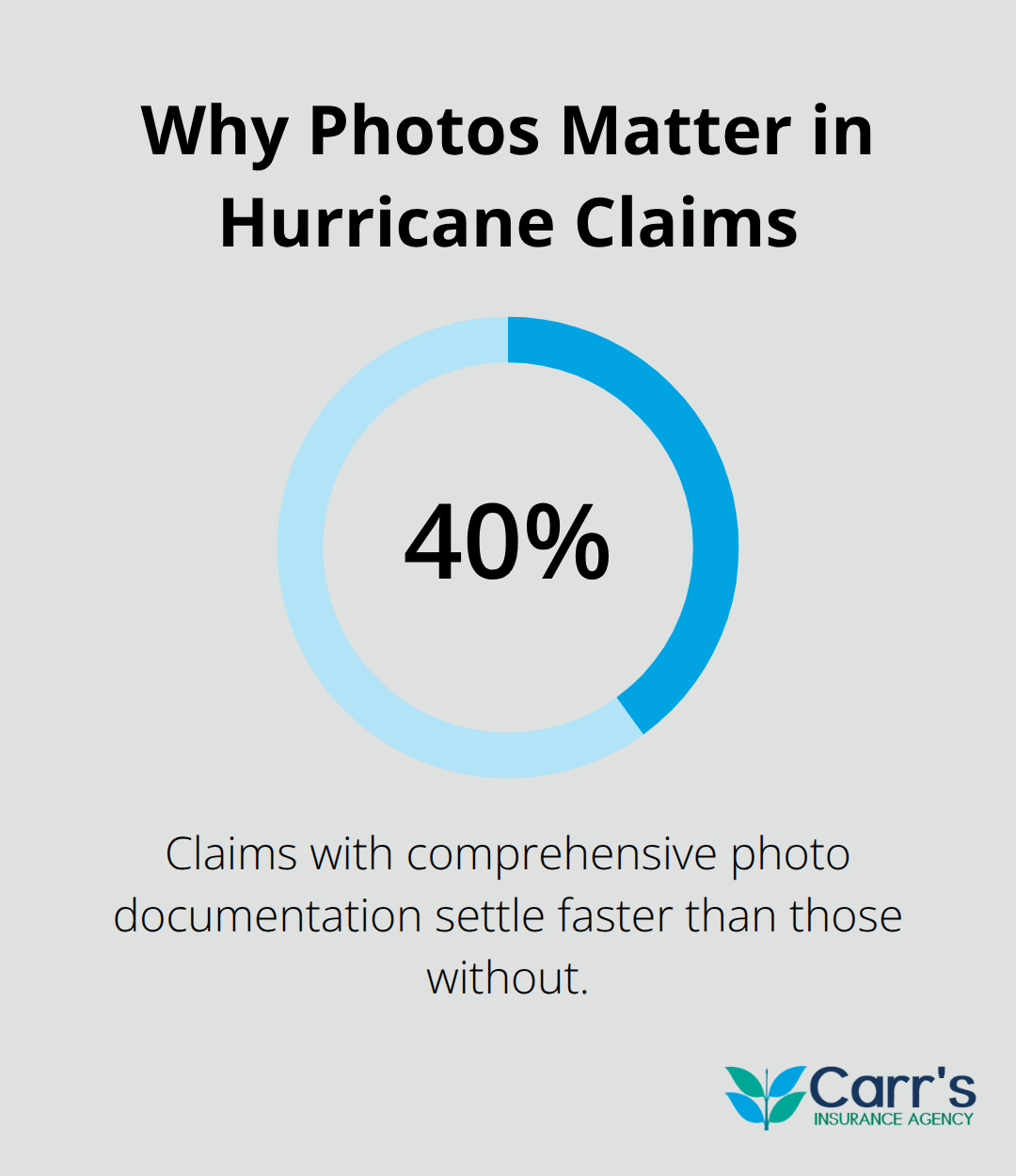
Photograph and video all damage before you remove debris or make temporary repairs, as insurers need to see the damage in its original state. Your phone camera works perfectly for this task. Capture wide shots showing the overall damage plus close-ups of specific broken windows, roof damage, or structural issues. Claims with comprehensive photo documentation settle 40% faster than those without visual evidence. Create a dated folder on your phone or cloud storage with these images immediately, before you contact anyone.

Statistic highlighting faster hurricane claim settlements with comprehensive photo documentation.

Contact Your Insurer Quickly

Contact your insurer within 24 to 48 hours of the storm passing. Most Hawaii insurers operate dedicated hurricane hotlines during peak season, and early reporting prevents delays in assigning an adjuster. Request written confirmation of your claim number and assigned adjuster’s contact information when you file.

Gather Essential Documentation

Collect your insurance policy documents, home inventory records, and receipts for any temporary repairs or emergency expenses like boarding up windows or tarping a damaged roof. Maintaining a detailed home inventory (including purchase dates and values for major items) dramatically strengthens your claim if contents are damaged. Write down the exact date and time the hurricane hit your area, wind speeds if available from local weather reports, and any damage to neighboring properties as supporting context.

Cover Emergency Mitigation Costs

If you made temporary repairs to prevent further damage, keep all receipts and photographs showing the work. Insurers typically cover reasonable emergency mitigation costs, so document everything carefully. Submit your claim through your insurer’s preferred method, whether online portal, phone, or in-person.

With your claim filed and documentation submitted, the next phase begins when an adjuster evaluates your property and determines what your insurer will pay.

The Claims Process and Settlement Timeline

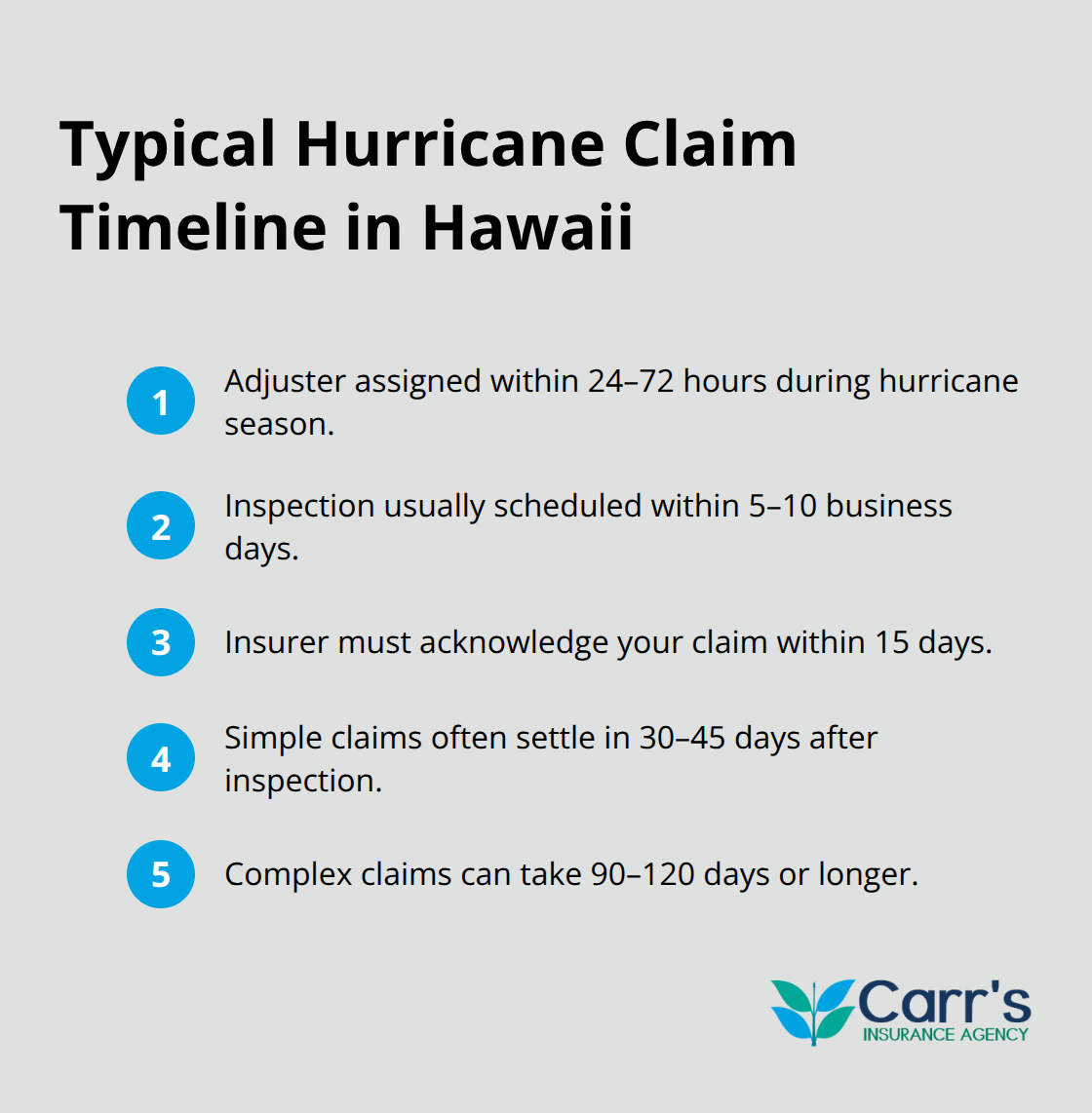
After your claim hits your insurer’s system, an adjuster gets assigned within 24 to 72 hours during hurricane season when dozens of claims flood in simultaneously. Your adjuster is the person who determines how much your insurer pays, making this relationship critical to your settlement outcome. The adjuster will contact you to schedule an inspection, typically within 5 to 10 business days depending on claim volume and weather conditions. During this waiting period, continue to document any additional damage and keep receipts for all temporary repairs or emergency expenses. If your insurer hasn’t contacted you within two weeks, call your claims department directly and ask for a status update with a specific inspection date. Hawaii’s insurance commissioner requires insurers to acknowledge claims within 15 days and provide a timeline for inspection, so pushing back on delays is not just acceptable-it’s your right.

How Adjusters Evaluate Damage

Your adjuster walks through your property with a trained eye for structural damage, water intrusion, and the specific cause of each damaged component. Adjusters working in Hawaii typically spend 2 to 4 hours on residential properties, photographing damage, measuring affected areas, and noting whether damage resulted from wind or water. This distinction matters enormously because wind damage pays out from your homeowners coverage while other policies do not cover water damage from flooding but may cover damage from other perils, such as wind-driven rain or fire. Be present during the inspection and point out all damage, including issues in attics, crawl spaces, and interior walls that aren’t immediately visible. Provide your adjuster with your documentation folder containing photos taken immediately after the storm, receipts for temporary repairs, and your home inventory records. Adjusters who see comprehensive documentation upfront are more likely to approve higher settlements because the evidence removes guesswork from their evaluation.

Challenging an Adjuster’s Assessment

If you disagree with the adjuster’s assessment, most policies include an appraisal clause allowing you to hire an independent appraiser to challenge their valuation. This process adds 4 to 8 weeks to settlement, but it protects you when you believe the adjuster undervalued your damage. Request a detailed explanation of how your insurer calculated the payout, including the depreciation applied to damaged items. Don’t accept a settlement check without understanding exactly what damage it covers and what you’ll repair out-of-pocket.

Timeline from Filing to Payment

Key milestones from claim reporting to payment for Hawaii hurricane claims. - Hurricane insurance claims Hawaii

Simple claims with minor wind damage and clear documentation typically settle within 30 to 45 days from the initial inspection. Complex claims involving both wind and water damage, structural issues, or content disputes can stretch to 90 to 120 days or longer. Your insurer must provide written notice of claim approval or denial within 30 days of receiving your claim in Hawaii, though this deadline often extends during major hurricane seasons when insurers are overwhelmed. Once your claim receives approval, your insurer issues payment either directly to you or jointly to you and any mortgage lender or lienholder on your property.

Final Thoughts

Hurricane insurance claims in Hawaii demand preparation before the storm arrives, not after. Understanding what your standard homeowners policy covers, recognizing that water damage requires completely separate flood insurance, and documenting everything immediately after a hurricane strikes transforms a chaotic claims process into a manageable recovery path. These three steps matter most when hurricane season hits your property.

Working with a local agent makes an enormous difference when you file hurricane insurance claims in Hawaii. We at Carr’s Insurance Agency have served Hawaii since 1990, and our locally knowledgeable agents understand the specific risks facing Hawaii homeowners that national insurers often overlook. An independent broker like ours compares rates across top carriers to find coverage that actually protects your property rather than leaving dangerous gaps, and when you file a claim, having an agent who knows your policy inside and out accelerates your settlement significantly.

Start protecting your property now by reviewing your current coverage with a licensed agent who understands Hawaii’s unique hurricane exposure. Schedule a policy review before the next hurricane season to confirm you have adequate wind coverage, separate flood insurance if you’re in a high-risk area, and clear documentation of your home’s contents and value. Contact us to review your hurricane coverage and build a comprehensive protection plan tailored to your specific property and location.

Disclaimer: The information provided in this blog is for general informational purposes only and does not constitute legal, financial, or insurance advice. Coverage options, terms, and availability may vary. Please consult with a licensed professional for advice specific to your situation
Tow Truck Insurance Hawaii: Protecting Your Towing Business

Tow Truck Insurance Hawaii: Protecting Your Towing Business

Running a towing business in Hawaii means facing unique risks that standard commercial insurance won’t cover. From vehicle damage to customer injuries, the gaps in typical policies can leave your operation exposed.

At Carr’s Insurance Agency, we’ve helped tow truck operators across Hawaii build protection plans that actually match their daily operations. This guide walks you through the coverage types you need and how to keep costs manageable.

Why Standard Insurance Falls Short for Towing

The Coverage Gaps in General Liability Policies

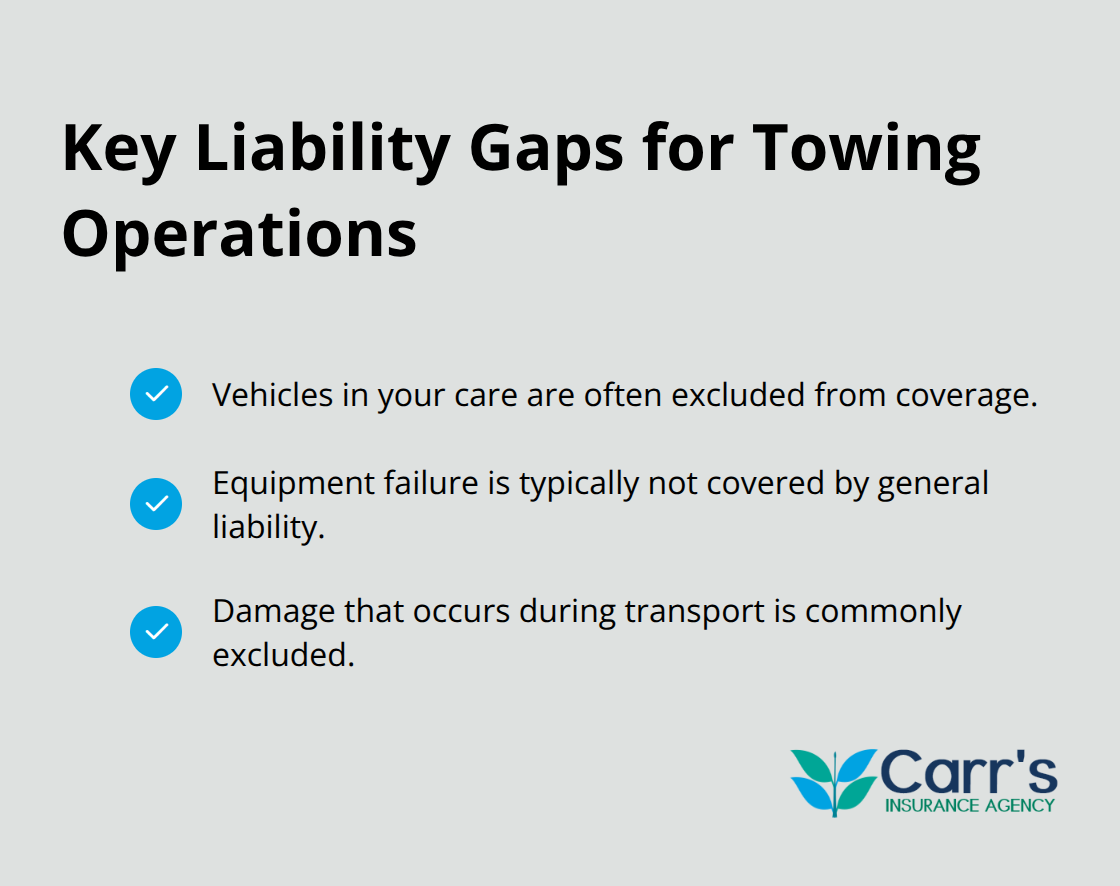
Standard commercial insurance policies treat towing operations like any other business, which is exactly the problem. A general liability policy covers basic slip-and-fall incidents at your office, but it doesn’t protect you when a customer’s vehicle gets damaged while it sits on your flatbed, or when someone gets injured during the towing process itself. Your policy might explicitly exclude vehicles in your care, equipment failure, or damage that occurs during transport. This gap between what you think you’re covered for and what you actually are covered for creates serious financial exposure that can cripple a towing operation overnight.

Three common liability gaps that standard general liability policies miss for towing businesses

Why Physical Damage Coverage Misses the Mark

Physical damage coverage in standard policies also falls short for towing businesses. Your tow truck isn’t just transportation-it’s a revenue-generating asset that faces constant wear from heavy-duty work. Standard commercial auto policies cap coverage on specialized equipment like winches, boom arms, and hydraulic systems, or exclude them entirely. When you haul vehicles worth $15,000 to $40,000, you need cargo coverage that protects both the vehicle you’re towing and your liability if something goes wrong during transport.

Specialized Coverages You Actually Need

Garage keepers liability specifically covers vehicles left in your care at your lot or facility, protecting you from theft, vandalism, or damage while they wait for repair or pickup. Without these specific coverages, a single incident-a towed vehicle damaged on your truck, a customer injured during hookup, or equipment failure that damages a car-can create significant losses. These aren’t theoretical risks; they’re the daily realities tow operators face across Hawaii.

As an independent broker representing top carriers, Carr’s Insurance Agency compares rates and works with tow operators throughout Hawaii to layer these specialized coverages together, ensuring your business stays protected against the exact risks you face daily. Understanding what each coverage type actually protects is the first step toward building a policy that works for your operation.

Coverage Types Essential for Towing Operations

Commercial Auto Liability: The Foundation That Matters

Commercial auto liability forms the foundation of any towing operation’s insurance strategy, but most tow operators accept whatever limits their carrier suggests without question. Hawaii towing businesses operate across diverse terrain-from Honolulu’s congested highways to rural Maui routes-which means your liability exposure varies significantly depending on where you work and what you tow. A standard commercial auto liability policy with $100,000 per occurrence and $300,000 aggregate won’t protect you if you regularly tow vehicles worth $25,000 to $50,000. Nationwide requires at least $100,000 commercial auto liability coverage per vehicle, with a recommended minimum of $500,000 up to a maximum of $1 million for towing operations.

Physical Damage Coverage for Your Tow Truck

Physical damage coverage on your tow truck itself gets overlooked because operators focus on protecting others’ property, but your truck is your business. A 2024 analysis by the National Association of Independent Insurers shows that tow truck repair costs average $8,500 per incident when equipment like hydraulic systems fails. Comprehensive plus collision coverage with low deductibles ($500 or less) protects your ability to keep operating during downtime and prevents a single breakdown from shutting down your revenue stream.

Garage Keepers Liability and Vehicle Protection

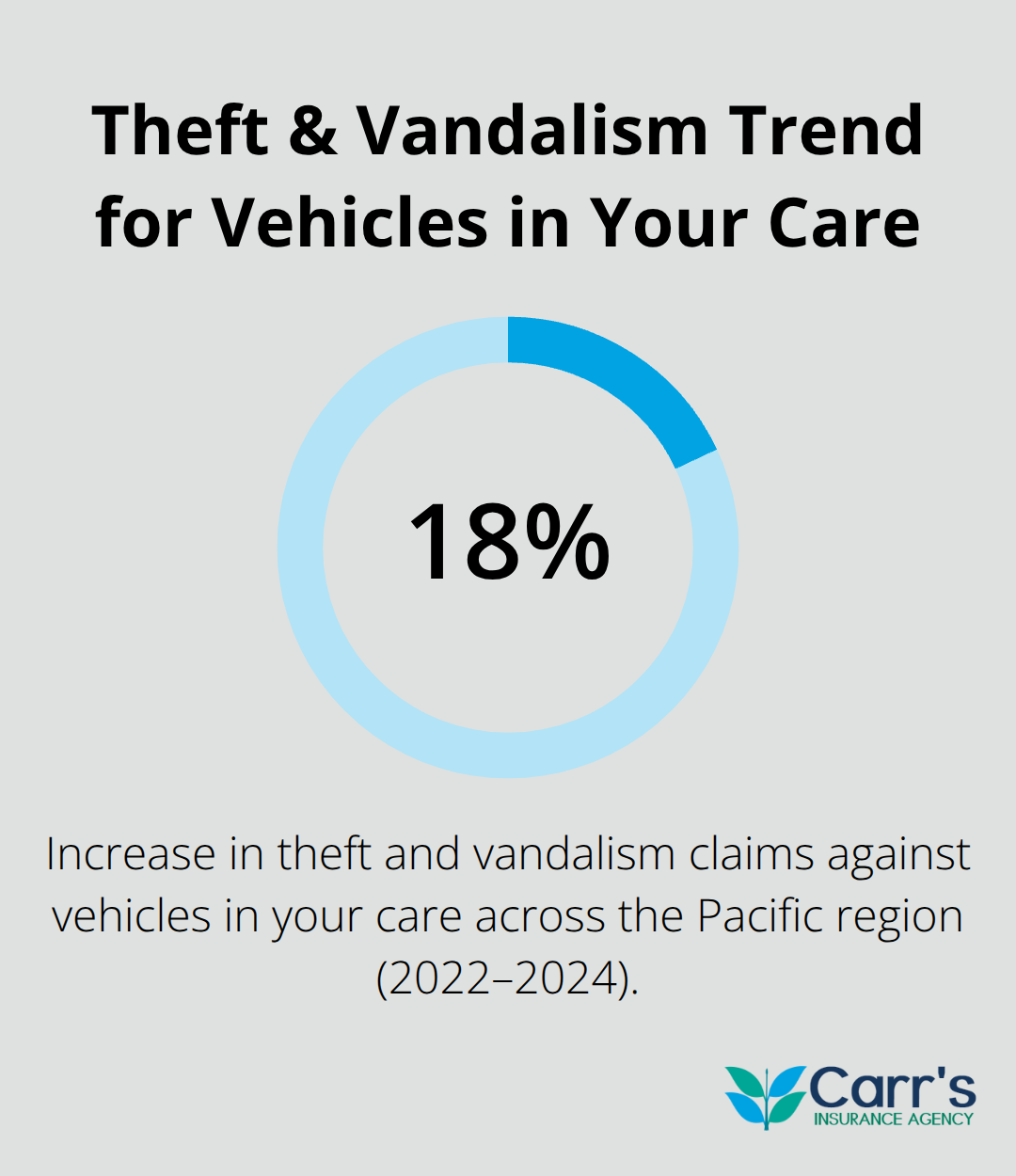
Garage keepers liability covers vehicles sitting in your lot or facility-the protection that actually matters most in Hawaii’s weather conditions. Theft and vandalism claims against vehicles in your care increased 18 percent across the Pacific region between 2022 and 2024, according to the Insurance Information Institute, making this coverage non-negotiable for any operation with a storage lot. This coverage protects you from financial loss when someone steals or damages a customer’s vehicle while it waits for pickup or repair.

Percentage increase in theft and vandalism claims affecting vehicles in a towing operator’s custody across the Pacific region - Tow truck insurance Hawaii

Cargo and Hired Equipment Coverage

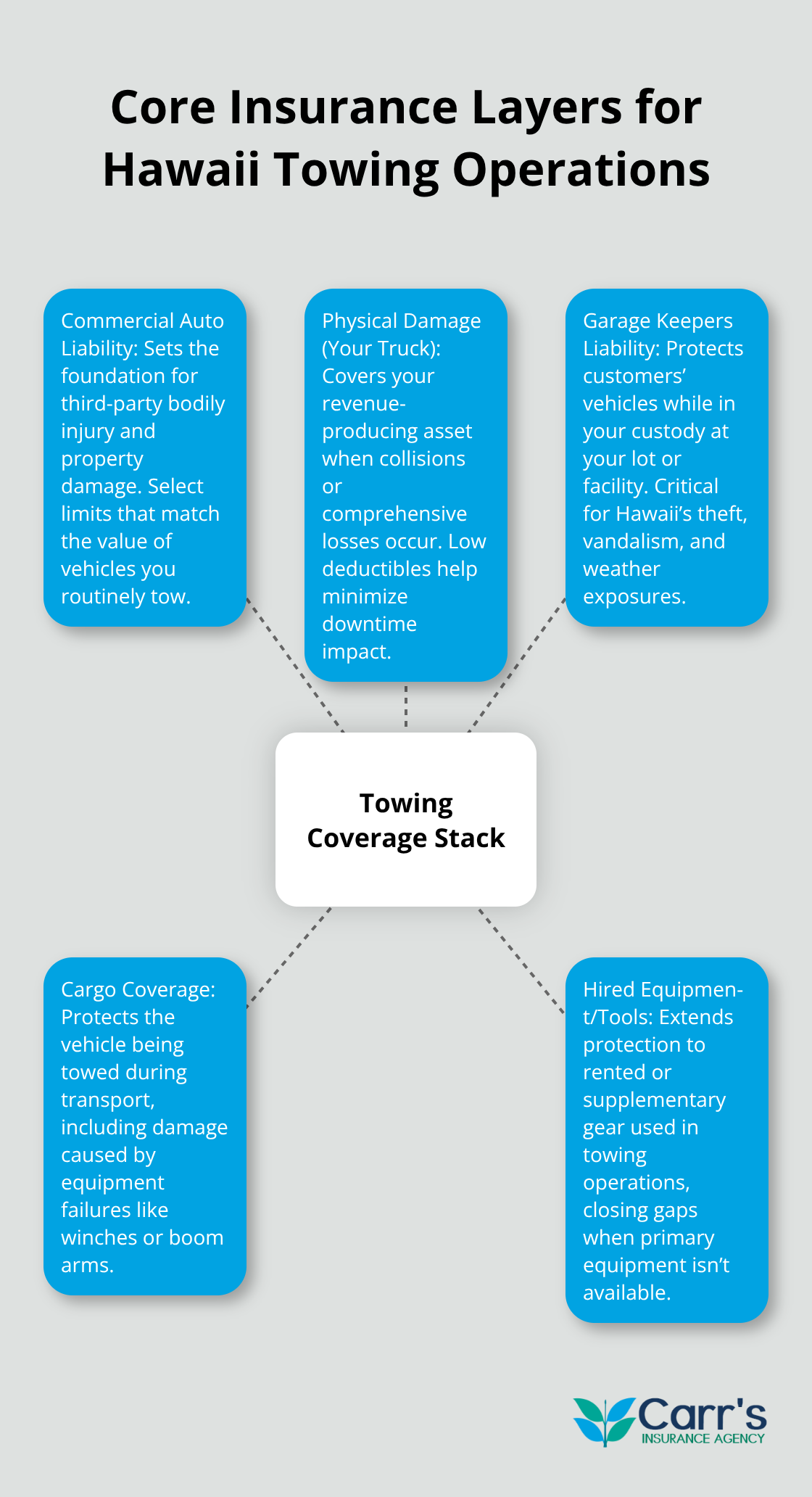
Cargo and hired equipment coverage protects both the vehicle you’re towing and your liability if your equipment damages it during transport-think a winch failure that scratches a customer’s paint job or a boom arm that accidentally punctures a fuel tank. This coverage typically costs between $400 and $900 annually depending on your towing radius and vehicle types, but a single cargo claim without it can easily exceed $15,000. The actionable step here is getting these three coverage types quoted together rather than separately, because carriers often bundle them more competitively than individual policies.

Hub-and-spoke diagram showing essential towing coverages and how they protect operations in Hawaii - Tow truck insurance Hawaii

When you compare complete packages side by side, you identify gaps faster and spot opportunities to reduce your overall premium. The next section walks you through the specific cost factors that affect your tow truck insurance rates and shows you where real savings opportunities exist.

Cost Factors and Savings Opportunities for Tow Truck Insurance

How Vehicle Type and Operating Radius Affect Your Premiums

Your tow truck’s make, model, and age directly determine how much you’ll pay for coverage, but most operators accept quotes without understanding why their rate differs from another shop down the street. A newer heavy-duty tow truck with advanced hydraulic systems and safety features costs less to insure than an older model, even though the newer truck might be worth more money. Insurance carriers evaluate repair costs and parts availability when setting rates, which means a 2023 Peterbilt costs significantly less to insure than a 2015 model with outdated components.

Your operating radius matters equally-towing exclusively within Honolulu’s city limits exposes you to different risks than operating across multiple islands. Island-to-island towing increases your premium by 15 to 25 percent depending on the carrier, since ocean transport and longer distances create higher loss potential. Some insurers charge separately for multi-island operations because the liability exposure shifts substantially.

The types of vehicles you tow also affect your rate. Towing heavy commercial trucks or specialty equipment commands higher premiums than light-duty passenger vehicle towing because the liability exposure increases with vehicle weight and value.

Safety Records and Training Discounts

Your safety record and driver training history directly reduce what you pay, making this the fastest way to lower premiums without sacrificing coverage. Carriers offering tow operator-specific training programs report premium reductions for businesses completing certification courses. Hawaii’s Department of Transportation doesn’t mandate specific towing certifications, but completing a recognized program through organizations like the Heavy Duty Trucking Association demonstrates commitment to safety and qualifies you for measurable discounts.

A clean driving record with zero at-fault accidents over three years saves you 10 to 20 percent annually compared to operators with recent claims. This discount applies directly to your bottom line without requiring coverage changes.

Bundling Commercial Policies to Reduce Overall Costs

Bundling your commercial auto, garage keepers liability, and cargo coverage into one package instead of shopping them separately typically saves 15 to 30 percent on total premiums. Carriers offer volume discounts when you consolidate coverage, and what saves money for one towing business may cost more for another depending on your vehicle mix and service area. Shopping bundled packages from multiple carriers identifies which ones offer the best rates for your specific operation.

Final Thoughts

Your tow truck insurance in Hawaii needs to reflect the specific risks your operation faces daily, not the generic coverage a standard commercial policy offers. Commercial auto liability with adequate limits for the vehicles you tow, garage keepers liability for vehicles in your care, and cargo coverage that protects both the vehicles you transport and your liability if equipment fails during the process form the three layers that cover the gaps most towing operations face. These three coverages work together to eliminate the dangerous exposure that leaves many operators unprotected.

Document your vehicle types, your typical towing radius across the islands, your annual towing volume, and your safety record over the past three years to get accurate quotes instead of estimates based on incomplete details. Compare bundled packages from multiple carriers rather than shopping individual coverages separately, since bundling typically saves 15 to 30 percent on total premiums. A clean driving record and completed safety training reduce your costs by 10 to 20 percent, so pursuing operator certification offers your fastest path to lower rates without sacrificing protection.

Local insurance knowledge matters significantly for Hawaii towing operators because your risks differ substantially from mainland operations-island geography, multi-island towing logistics, Hawaii’s specific weather patterns, and regional theft and vandalism trends all affect your coverage needs and premium costs. An agent familiar with Hawaii’s towing industry understands these factors and structures your policy accordingly. Contact Carr’s Insurance Agency to connect with a locally knowledgeable agent who compares rates from top carriers and finds the right protection for your tow truck insurance in Hawaii.

Disclaimer: The information provided in this blog is for general informational purposes only and does not constitute legal, financial, or insurance advice. Coverage options, terms, and availability may vary. Please consult with a licensed professional for advice specific to your situation
Hazardous Materials Insurance Hawaii: What Shippers Should Know

Hazardous Materials Insurance Hawaii: What Shippers Should Know

Shipping hazardous materials in Hawaii comes with serious legal and financial risks. One mistake in handling, documentation, or transportation can result in massive liability claims and environmental damage.

That’s why hazardous materials insurance in Hawaii isn’t optional-it’s a business necessity. We at Carr’s Insurance Agency help shippers understand their coverage options and protect themselves from the real costs of accidents.

Types of Hazardous Materials Requiring Special Coverage

Flammable Liquids and Gases Present the Highest Risk

Flammable liquids and gases represent the highest-risk category for Hawaii shippers. Gasoline, propane, acetylene, and paint thinners fall into this group and account for a significant portion of hazardous cargo incidents. The U.S. Department of Transportation reports that flammable liquid spills cause a substantial portion of hazardous material transportation accidents. These substances require Class 3 placarding under DOT regulations, and Hawaii’s humid climate can escalate even minor leaks quickly. Shippers who move these materials face immediate liability exposure if containers aren’t properly sealed, vented, or transported in certified vehicles. Standard commercial auto insurance won’t cover these exposures-you need specialized hazmat coverage that addresses both the cargo itself and environmental contamination risks.

Toxic and Corrosive Substances Create Environmental Liability

Pesticides, cleaning chemicals, batteries, and industrial solvents create different challenges than flammables. These materials can cause serious injury to workers and contaminate Hawaii’s sensitive marine environment. The EPA strictly regulates spill response for corrosive substances, and cleanup costs routinely exceed $50,000 for even minor incidents near waterways. Shippers must carry specific documentation showing proper packaging, segregation from incompatible materials, and emergency contact information. Your insurance policy needs to cover not just transportation liability but also third-party bodily injury claims and environmental remediation. Many standard policies exclude these exposures entirely, leaving shippers personally liable for damages.

Radioactive and Biological Materials Demand Maximum Precision

Radioactive medical isotopes and biological specimens moving through Hawaii ports face the most stringent regulations. The Nuclear Regulatory Commission requires shippers to maintain separate insurance specifically for radioactive materials, with coverage limits often exceeding $1 million. Biological materials used in research or medical diagnostics require proof of proper packaging certified to IATA standards. A single documentation error can result in port delays costing thousands daily, plus regulatory fines from the State of Hawaii Department of Health. These shipments need coverage that addresses not just traditional liability but also regulatory defense costs and business interruption from confiscation or quarantine.

Understanding what materials require special coverage is only the first step. Hawaii’s regulatory framework adds another layer of complexity that shippers cannot ignore.

Regulatory Requirements for Hazardous Materials Shipping in Hawaii

The Department of Transportation enforces federal hazmat shipping standards that apply everywhere, including Hawaii, but Hawaii adds its own requirements on top. All hazardous materials moving through Hawaii ports must comply with DOT’s Hazardous Materials Regulations, which specify packaging standards, vehicle certifications, driver qualifications, and routing restrictions. The DOT requires shippers to register with the Pipeline and Hazardous Materials Safety Administration if they transport certain materials regularly, and drivers must hold a Commercial Driver’s License with a hazmat endorsement. Hawaii’s Department of Transportation also requires advance notification for certain hazmat shipments arriving by sea, and the State Department of Health enforces additional rules for biological and radioactive materials that exceed federal minimums. Shippers who underestimate these layered requirements face fines starting at $500 for documentation errors and escalating to $25,000 or more for serious violations.

Federal DOT Regulations and Compliance Standards

The DOT’s Hazardous Materials Regulations establish the baseline for all shipments nationwide. These regulations mandate specific packaging materials, vehicle placarding, and driver certifications that shippers cannot bypass. The Pipeline and Hazardous Materials Safety Administration registration requirement applies to shippers who transport certain hazmat categories on more than a few occasions per year. Drivers transporting hazmat must pass a written exam and carry a hazmat endorsement on their Commercial Driver’s License. Many shippers assume federal compliance covers everything, but that assumption costs them money when state inspectors find missing paperwork or improper labeling at the dock.

State-Specific Hawaii Requirements

Hawaii’s Department of Transportation requires advance notification for hazmat shipments arriving by sea, adding a step that mainland shippers often overlook. The State Department of Health enforces stricter rules for biological and radioactive materials than federal standards require. Port authorities in Honolulu and Hilo conduct inspections that focus specifically on Hawaii’s unique vulnerabilities (island ecosystems, limited emergency response capacity, and marine contamination risks). These state-level requirements exist because Hawaii’s geography and environment demand extra protection. Shippers who comply only with federal standards face significant liability exposure in Hawaii’s regulatory environment.

Documentation and Labeling Obligations

Every hazmat shipment requires a shipping paper that travels with the cargo, listing the material’s proper shipping name, hazard class, UN identification number, and emergency contact information. The EPA and DOT conduct random inspections at Hawaii’s ports, and missing or incorrect shipping papers result in immediate cargo holds and fines. Labels and placards must appear on the container’s four sides using specific fonts and colors-red for flammable, yellow for oxidizers, white with black stripes for toxic substances. Shippers often cut corners with outdated label formats or fail to update documentation when material composition changes slightly, and inspectors catch these mistakes regularly. The State of Hawaii requires shippers to maintain records for at least three years, and audits show that 40 percent of small shippers lack proper documentation systems. Your insurance carrier will deny claims if you cannot prove you followed labeling and documentation procedures, so treating paperwork as a core operational requirement-not an afterthought-directly protects both your business and your coverage.

These regulatory layers create real financial exposure, but they pale in comparison to the liability risks that shippers face when accidents actually occur.

Why Hazardous Materials Insurance Protects Your Bottom Line

The Real Cost of a Single Spill

A single spill of corrosive chemicals near Hawaii’s coast drains your business account faster than any operational expense. Shippers face cleanup bills exceeding $200,000 for minor incidents near waterways, plus third-party liability claims that standard commercial policies flatly reject. Hazmat insurance isn’t about compliance theater or checking regulatory boxes-it’s about preventing one accident from destroying years of profitable operations. When a container of pesticides leaks during transport in Honolulu, your general liability policy won’t cover environmental remediation, worker injury claims, or the regulatory fines that follow.

Hawaii’s Strict Liability Standards

Hawaii’s Department of Health enforces strict liability standards for marine contamination and holds shippers personally responsible for cleanup costs regardless of fault. Proper hazmat coverage addresses what standard policies explicitly exclude: the environmental liability, cargo loss, and third-party bodily injury exposures that create real financial devastation. Transportation risks in Hawaii compound because of island geography and limited emergency response capacity. A hazmat incident on the mainland might trigger response from multiple nearby facilities; in Hawaii, response delays stretch incident response timelines and multiply damage costs.

Hub-and-spoke chart showing key coverage areas that mitigate Hawaii-specific hazmat risks. - Hazardous materials insurance Hawaii

Coverage for Transportation and Storage Risks

Your insurance must cover cargo loss during transport, liability for damage to other cargo in the same container, and costs from business interruption when shipments face holds at ports during investigations. Port authorities conduct inspections that detain hazmat cargo for 48 hours or longer while documentation gets reviewed, and without business interruption coverage, those delays hit your revenue directly. Storage risks at intermediate facilities create significant exposure-many incidents actually occur at warehouses and distribution centers rather than during active transport. Your policy needs to protect you from warehouse to final destination, including all intermediate stops where cargo sits vulnerable to accidents or environmental exposure.

Port Delays and Financial Impact

Port holds cost shippers thousands daily in lost revenue and operational disruption. A single documentation error can trigger a 72-hour cargo hold while inspectors verify compliance, and your business interruption coverage determines whether you absorb those costs or your insurer does. Hawaii’s ports (Honolulu and Hilo) maintain strict inspection protocols that exceed mainland standards, so your coverage structure must account for Hawaii’s unique regulatory environment. The difference between adequate coverage and inadequate coverage often determines whether a business recovers from an accident or closes its doors permanently.

Final Thoughts

Hazardous materials insurance in Hawaii protects your business from the specific risks that standard commercial policies exclude. Port delays, regulatory fines, environmental cleanup costs, and third-party liability claims converge to create financial exposure that compounds quickly without proper coverage. Your business needs protection that addresses transportation risks, storage exposure at intermediate facilities, and the regulatory defense costs that follow an incident.

We at Carr’s Insurance Agency understand Hawaii’s hazmat shipping landscape because we’ve served the local business community since 1990. As an independent agency, we compare coverage options from top carriers and match your specific cargo types and shipping routes to policies that actually protect your operations. Our locally knowledgeable agents work with you to identify coverage gaps that other brokers miss, and we structure your policy to address Hawaii’s unique regulatory requirements rather than just federal minimums.

Contact Carr’s Insurance Agency to review your current coverage and discuss hazardous materials insurance Hawaii options tailored to your shipping operations. We’ll evaluate your cargo types, routes, and regulatory exposure, then deliver a clear recommendation on the coverage limits and policy structure your business needs. A single incident can destroy years of profitable operations, so addressing your coverage gaps now prevents that outcome.

Disclaimer: The information provided in this blog is for general informational purposes only and does not constitute legal, financial, or insurance advice. Coverage options, terms, and availability may vary. Please consult with a licensed professional for advice specific to your situation
A Practical Guide to SR22 Insurance Hawaii

A Practical Guide to SR22 Insurance Hawaii

Getting an SR22 filing in Hawaii isn’t optional if you’ve had certain driving violations. It’s a legal requirement that can feel overwhelming, but it doesn’t have to be.

We at Carr’s Insurance Agency help drivers navigate SR22 insurance in Hawaii every day. This guide walks you through what you need to know, how to get it, and how to keep costs down.

What SR22 Actually Means and Why Hawaii Requires It

An SR22 is not an insurance policy. It’s a certificate of financial responsibility that proves you carry the minimum liability insurance required by Hawaii law. When you file an SR22, your insurance company submits this document directly to the Hawaii Department of Motor Vehicles on your behalf. The state uses it to verify that you maintain continuous coverage after certain driving violations. Hawaii requires an SR22 for violations like driving under the influence, reckless driving, driving without insurance, or accumulating too many points on your license. Drivers with DUI convictions must maintain SR22 coverage for three years from the conviction date. If your coverage lapses even for one day, your insurer must notify the DMV, and your license suspension can be reinstated immediately. This is why SR22 filers cannot afford gaps in coverage like other drivers might tolerate.

Why Hawaii’s Rules Are Stricter Than You Think

Hawaii takes traffic safety seriously. The state’s minimum liability limits are 20/40/10, meaning $20,000 in bodily injury per person, $40,000 per accident, and $10,000 in property damage. For SR22 filers, you must maintain these exact minimums without exception. Hawaii also has a points system where accumulating 12 points in 24 months results in license suspension. A single speeding ticket adds three points, while a DUI adds 12 points automatically. The consequence of this strict system is that SR22 filers often stay longer in the system than drivers in other states. Most states require SR22 coverage for three years, but Hawaii’s three-year requirement starts fresh if you incur another violation during that period, extending your obligation further.

Who Actually Needs SR22 Coverage Right Now

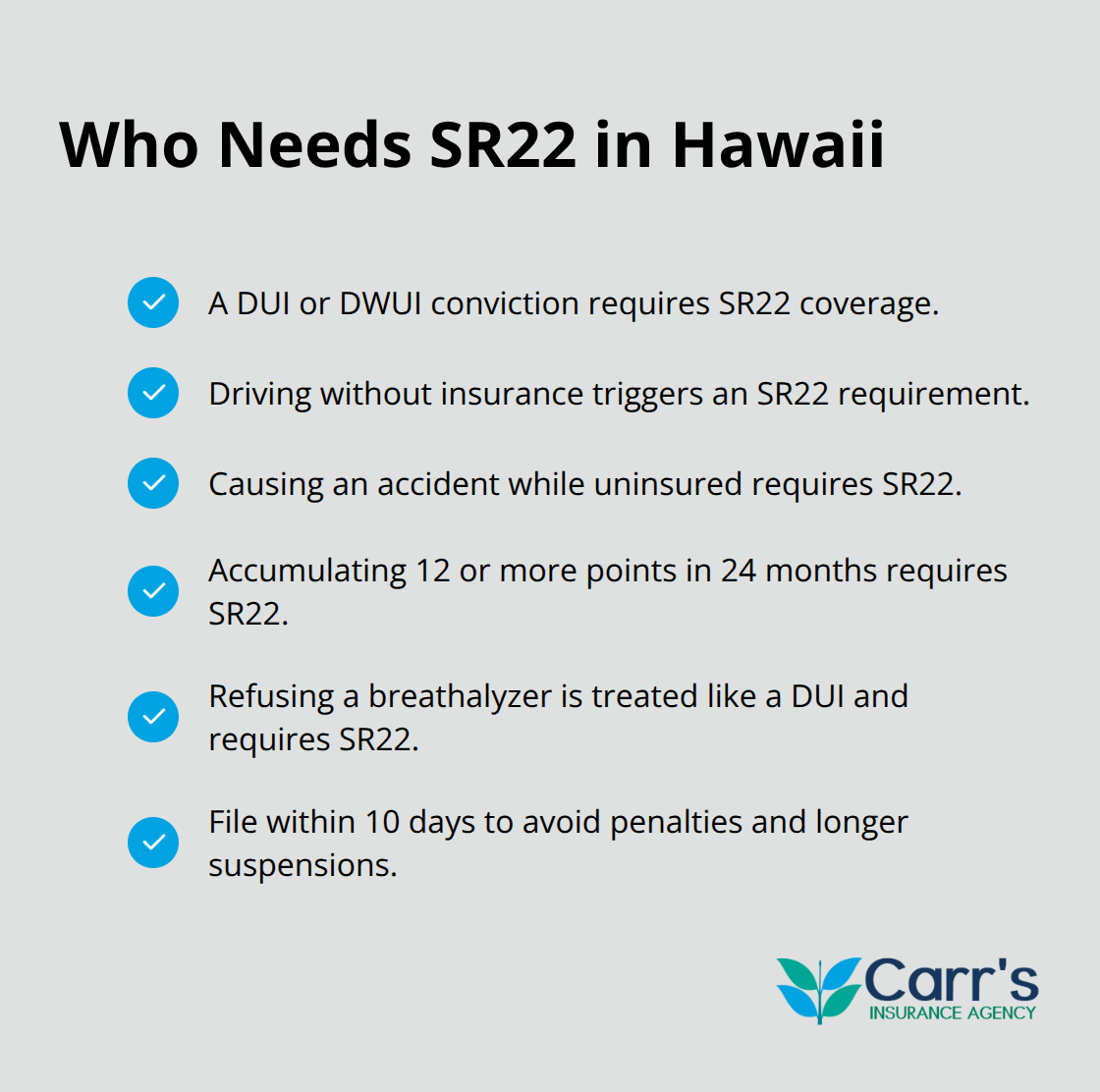
If you have been convicted of DUI or DWUI in Hawaii, you need SR22 coverage. If authorities caught you driving without insurance, you need it. If you caused an accident while uninsured, you need it. If you accumulated 12 or more points on your driving record in 24 months, you need it. If you refused a breathalyzer test, Hawaii treats this the same as a DUI conviction, and you need SR22 coverage. The Hawaii DMV will send you a notice if you are required to file, but do not wait for that letter. Contact an insurance agent immediately after any qualifying incident.

Checklist of incidents that require SR22 coverage in Hawaii - SR22 insurance Hawaii

We at Carr’s Insurance Agency recommend filing within 10 days of your violation or conviction because delays result in additional penalties and extended license suspension periods. The sooner you file, the sooner you can begin your three-year countdown to normal driving status.

What Happens Next After You Identify Your Need

Once you recognize that you need SR22 coverage, the actual process of obtaining it moves quickly. Your insurance company handles most of the paperwork and submits the filing to the DMV on your behalf. You will need to provide specific information about your violation or conviction, your driving history, and your current vehicle details. The timeline from application to DMV approval typically takes between three to five business days. However, some carriers process SR22 filings same-day, which can make a significant difference if your license suspension is imminent. The key is to act fast and work with an agent who understands Hawaii’s specific requirements and can navigate the process efficiently.

How to Get SR22 Coverage in Hawaii

What Information You Need to Gather

You must contact an insurance company that writes policies in Hawaii and provide your driving violation details. The insurer handles the DMV submission on your behalf. Collect your driver’s license number, vehicle identification number, the date of your violation or conviction, and details about what triggered the SR22 requirement. If you had a DUI, the conviction date matters because it determines when your three-year obligation starts. Have your current vehicle information ready, including the make, model, year, and whether you own or finance it. If you finance your vehicle, your lender’s information helps speed up the process since they must appear on your policy.

The Filing Process and Timeline

Most carriers in Hawaii process SR22 filings within three to five business days, though some complete them same-day. Once you submit your information, the insurance company files the SR22 certificate electronically with the Hawaii Department of Motor Vehicles. The DMV typically processes these filings within two to three business days after receiving them. However, if you have multiple violations on your record or your case involves additional complications (like a suspended license), processing may take longer. Some insurance companies charge a filing fee between $15 and $50 on top of your premium, so ask about this upfront.

Why Speed Matters in Hawaii

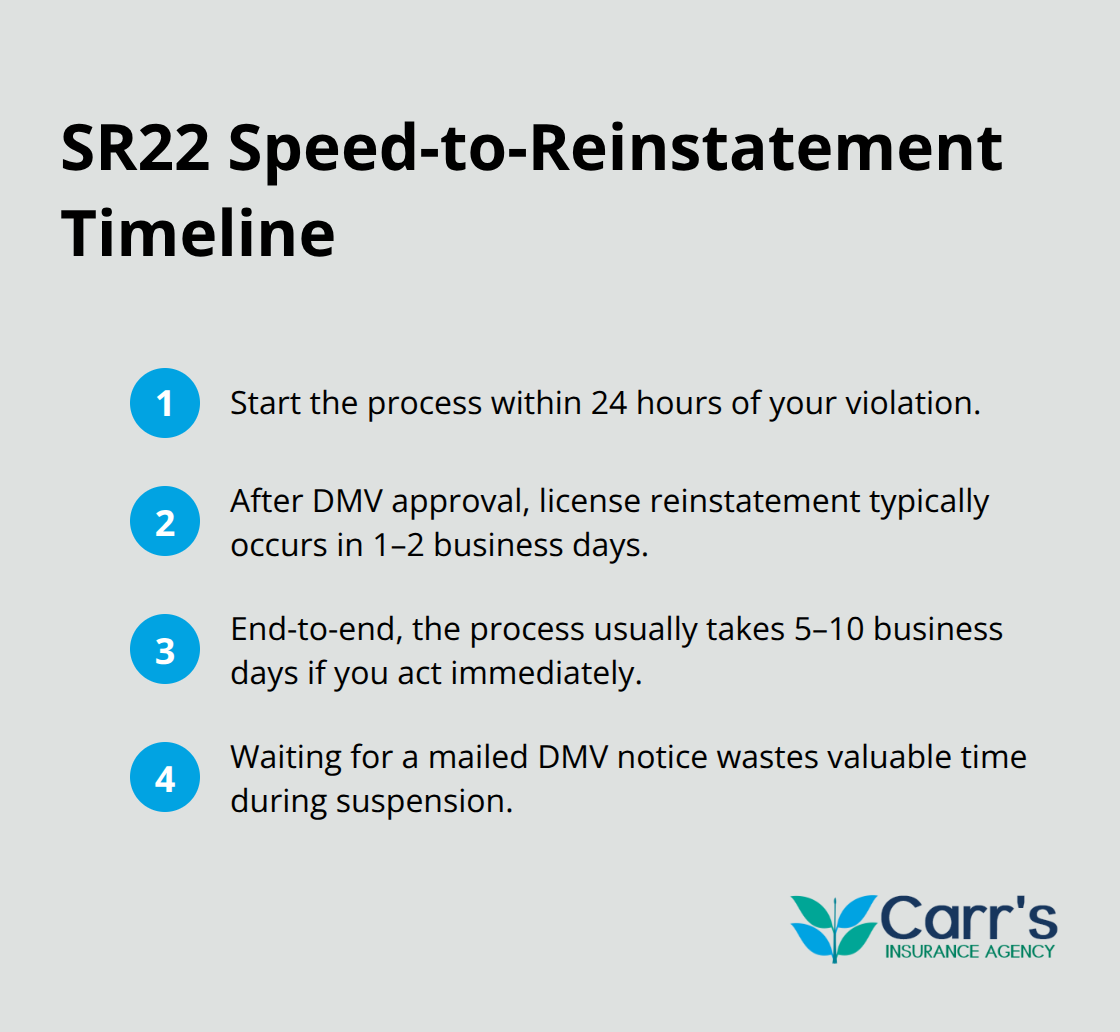
Many drivers make the mistake of waiting to file until after they receive notice from the DMV, but this costs you time during a period when your license suspension is already active. Starting the process within 24 hours of your violation gives you the fastest possible path to getting back on the road legally. After the DMV approves your filing, you will receive confirmation, and your license suspension should lift within one to two business days. The entire process from your first phone call to driving legally again usually takes five to ten business days if you act immediately.

Key timing milestones from filing to license reinstatement in Hawaii

Delays happen when drivers wait days to contact an agent or when they provide incomplete information that requires follow-up.

Moving Forward With Your SR22 Application

Now that you understand what information you need and how quickly the process moves, the next step involves understanding what your SR22 coverage will actually cost and which strategies can lower your premiums.

What SR22 Costs in Hawaii and How to Cut That Price

SR22 insurance in Hawaii costs significantly more than standard auto insurance, and the gap widens based on your specific violation. Drivers with a DUI conviction pay an average of $3,500 to $5,200 annually for SR22 coverage in Hawaii, according to data from the National Association of Insurance Commissioners. This represents a 200 to 300 percent increase over what a clean-record driver pays. A reckless driving violation or driving without insurance typically results in premiums between $2,000 and $3,500 per year. The three-year requirement means a DUI conviction could cost you $10,500 to $15,600 total before any discounts apply.

Why Your Rate Varies So Much

Your specific rate depends on your age, gender, driving history before the violation, the type of vehicle you drive, and which insurance company quotes you. Hawaii’s strict insurance requirements and the elevated risk that insurers perceive when you have a serious violation on your record both push premiums higher. Two drivers with identical violations can pay vastly different amounts simply because they shop with different carriers.

Shop Multiple Carriers to Find the Lowest Rate

The most effective way to lower your SR22 premium is to shop multiple carriers because rates vary dramatically between insurers. One driver might pay $4,200 annually with one company and $2,800 with another for identical coverage. As an independent broker representing top carriers, Carr’s Insurance Agency compares rates across multiple insurers and delivers personalized service to find the right coverage and save you money.

Practical Strategies That Cut Your Premium

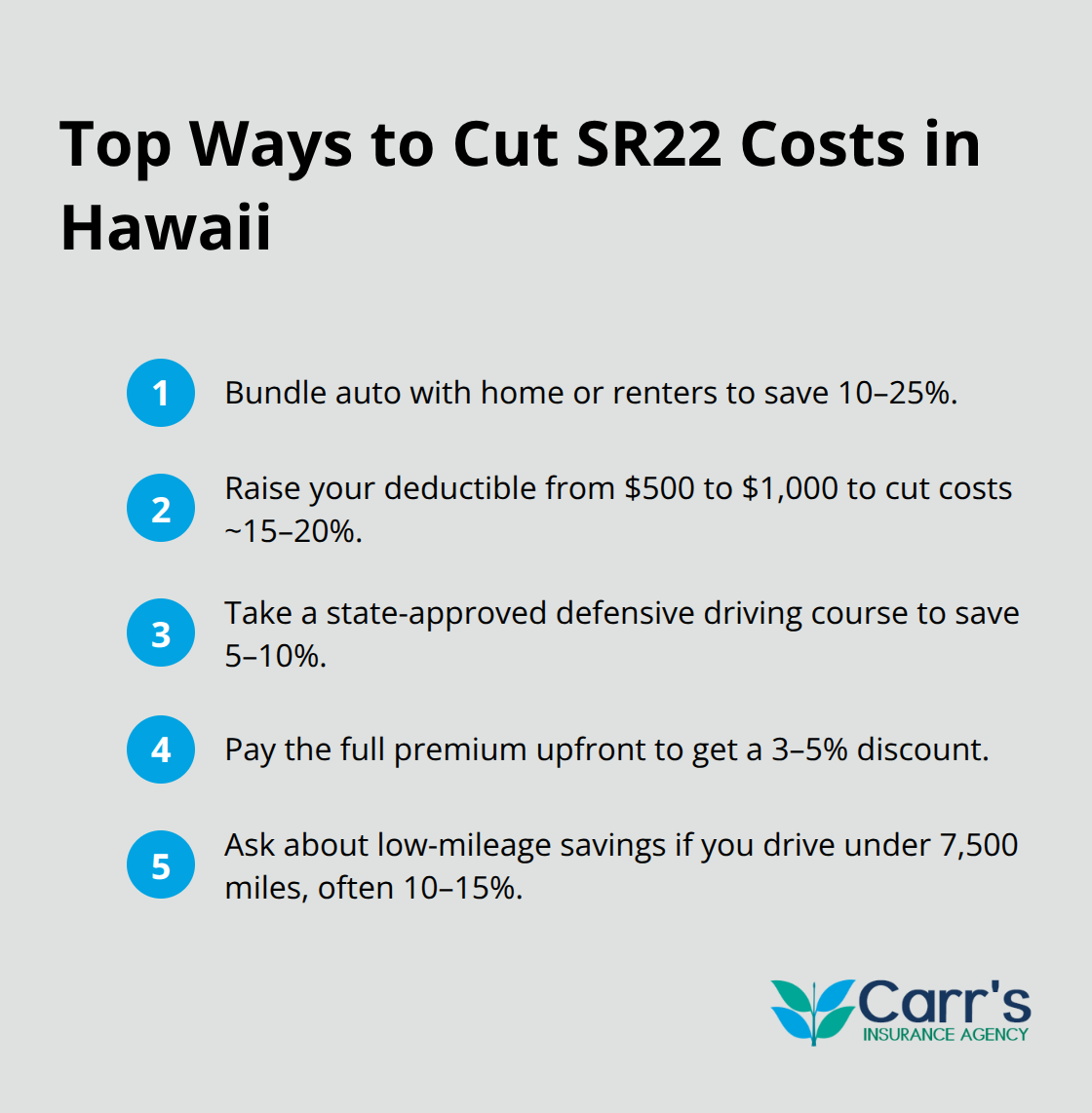
Bundling your SR22 auto policy with home or renters insurance typically saves 10 to 25 percent on your total premiums. Increasing your deductible from $500 to $1,000 reduces your monthly cost by approximately 15 to 20 percent (though this strategy only works if you have emergency savings to cover a larger out-of-pocket expense after an accident). Taking a defensive driving course approved by the State of Hawaii can reduce your premium by 5 to 10 percent and demonstrates to insurers that you’re committed to safer driving.

Five proven strategies to lower SR22 insurance premiums in Hawaii - SR22 insurance Hawaii

Paying your premium in full upfront rather than monthly installments often qualifies you for a 3 to 5 percent discount. The most overlooked opportunity is asking your insurer about low-mileage discounts if you drive fewer than 7,500 miles annually, which can save an additional 10 to 15 percent.

Final Thoughts

SR22 insurance in Hawaii is temporary, not permanent. You now understand what an SR22 filing actually is, why Hawaii enforces it, and how much it costs over your three-year obligation. The process moves quickly when you act fast, and your compliance during this period determines when you return to normal driving status.

Contact an insurance agent within 24 hours of your violation or conviction. Provide your driver’s license number, vehicle information, and details about what triggered your SR22 requirement, then shop quotes from multiple carriers because rates vary dramatically between insurers. Ask about bundling discounts, defensive driving course reductions, and low-mileage discounts that apply to your specific situation.

Carr’s Insurance Agency has served Hawaii since 1990 as a locally owned, independent broker representing top carriers. Our licensed agents compare rates across multiple insurers and find the right SR22 insurance Hawaii coverage at the lowest possible price for your circumstances. Contact us today to get started on your filing.

Disclaimer: The information provided in this blog is for general informational purposes only and does not constitute legal, financial, or insurance advice. Coverage options, terms, and availability may vary. Please consult with a licensed professional for advice specific to your situation
Hurricane Insurance Hawaii: Prepared for Storm Season

Hurricane Insurance Hawaii: Prepared for Storm Season

Hurricane season in Hawaii brings real danger to homes and businesses across the islands. At Carr’s Insurance Agency, we know that standard homeowners policies often leave significant gaps in protection when storms strike.

Hurricane insurance in Hawaii isn’t optional if you want genuine financial security. This guide walks you through what coverage actually protects you, how to prepare your property, and why local expertise matters when choosing the right policy.

Understanding Hurricane Risk in Hawaii

Hawaii’s hurricane season runs from June through November, but the real threat concentrates between August and October when atmospheric conditions align to push storms toward the islands. According to the National Weather Service, about 4 to 5 tropical systems occur each year within 1500 miles or so of Hawaii, though indirect impacts from passing storms occur far more frequently. The islands’ position in the central Pacific means storms intensify rapidly over warm waters before reaching land, giving residents limited warning time and little margin for error in preparation.

Historical Patterns Shape Current Exposure

The Big Island and Maui face the highest exposure because of their geographic position and topography, with the Big Island’s windward side particularly vulnerable to moisture-laden systems. Kauai has absorbed some of the most destructive hurricanes in recent decades, including Hurricane Iniki in 1992, which caused over 1 billion dollars in damage and remains a sobering reminder of what unprotected property faces. These historical events show that Hawaii’s hurricane threat is not theoretical-it’s documented, measurable, and repeating.

Geographic Vulnerability Varies Significantly

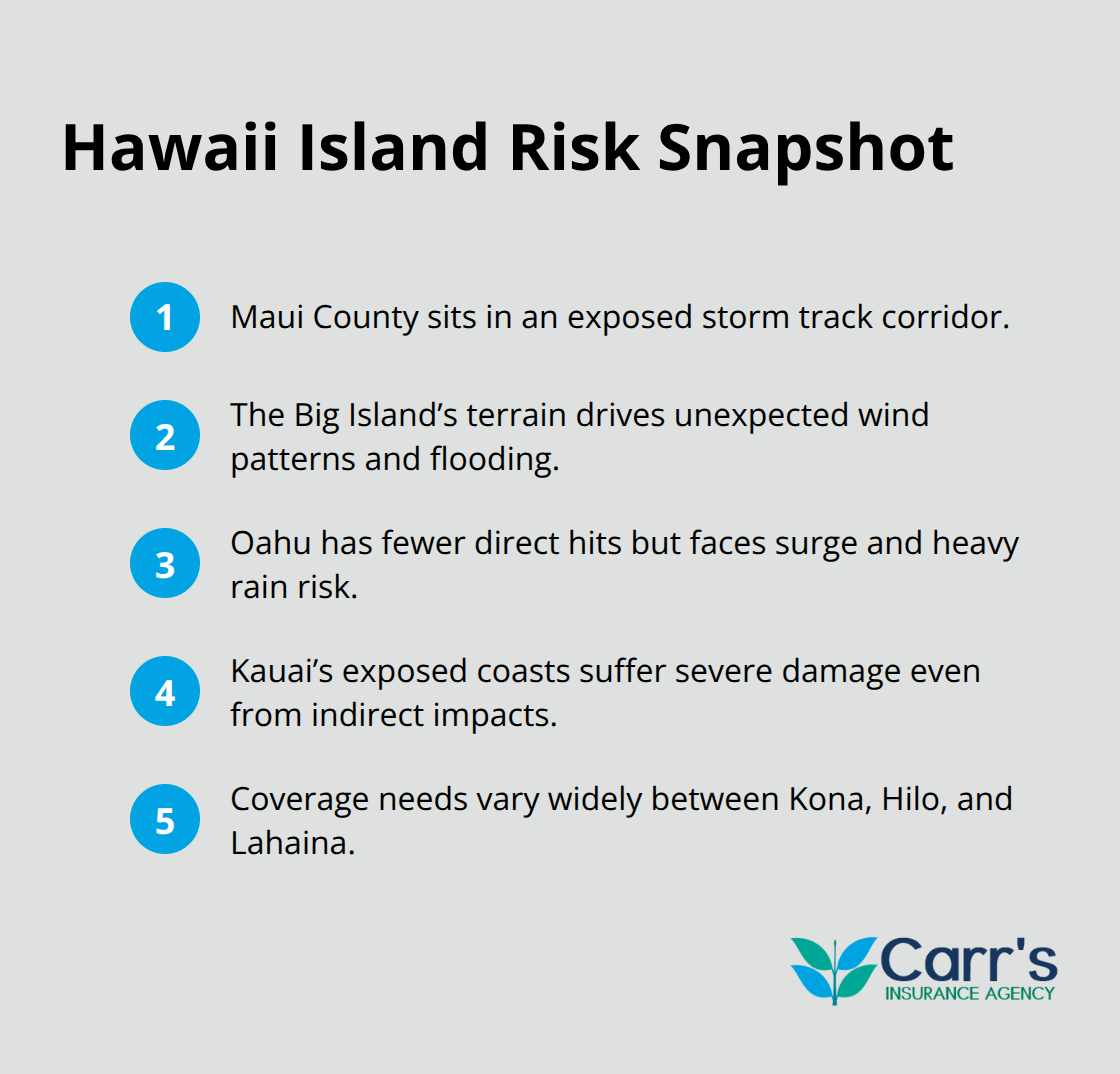
Maui County, which includes Maui, Molokai, and Lanai, sits in a particularly exposed corridor where storms frequently track. The Big Island’s height and terrain trigger unexpected wind patterns and flooding that standard assessments miss. Oahu, home to Honolulu and the majority of Hawaii’s population, has lower direct hit frequency but still faces significant risk from storm surge and heavy rain. Kauai’s smaller size and exposed coastlines mean that even indirect hurricane impacts cause severe damage to homes and infrastructure.

Compact list summarizing island-specific hurricane vulnerabilities across Hawaii - Hurricane insurance Hawaii

Coverage needs in Kona differ dramatically from those in Hilo or Lahaina because each location faces distinct storm exposure patterns.

Uninsured Losses Mount Quickly

Homeowners without adequate hurricane coverage face repair bills that regularly exceed 50,000 to 150,000 dollars for moderate damage, with major hurricanes inflicting 300,000 to 500,000 dollars in losses on single properties. Businesses suffer even steeper consequences, with commercial properties in exposed areas facing million-dollar-plus repair obligations after significant storms. The Hawaii Insurance Council reports that uninsured and underinsured losses in the state continue rising as property values increase and construction costs climb. Wind damage accounts for the largest share of hurricane losses, followed by water intrusion and flooding, both of which standard homeowners policies either exclude or severely limit.

Waiting until hurricane season arrives to address coverage gaps leaves you exposed to denial of claims and catastrophic out-of-pocket expenses that can take years to recover from financially. Understanding what your current policy actually covers-and what it doesn’t-becomes the first step toward real protection.

Hurricane Insurance Coverage Essentials

Wind Damage: The Hidden Gap in Standard Policies

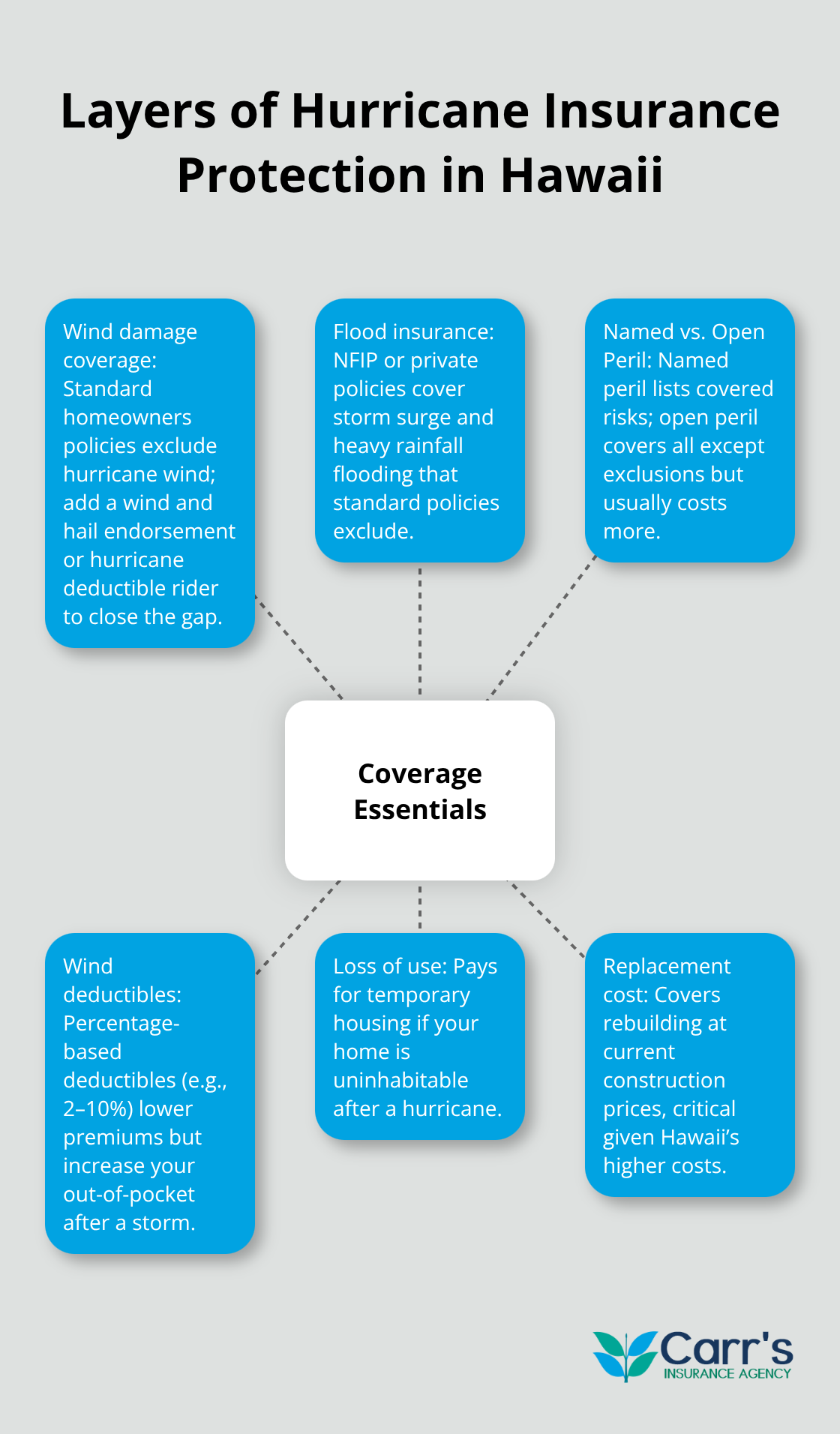
Standard homeowners policies sold across Hawaii exclude wind damage from hurricanes entirely, treating it as a separate peril that requires additional coverage through a wind and hail endorsement or a standalone hurricane deductible rider. This distinction matters tremendously because wind damage accounts for 60 to 80 percent of total hurricane losses. Your basic homeowners policy covers fire, theft, and some water damage from rain that enters through broken windows or damaged roofs, but the moment sustained winds from a named hurricane cause that damage, your claim gets denied unless you purchased supplemental protection. Water damage presents another complexity-flooding from storm surge and heavy rainfall is excluded from standard policies, requiring separate flood insurance through the National Flood Insurance Program or private carriers.

Named Peril vs. Open Peril Coverage

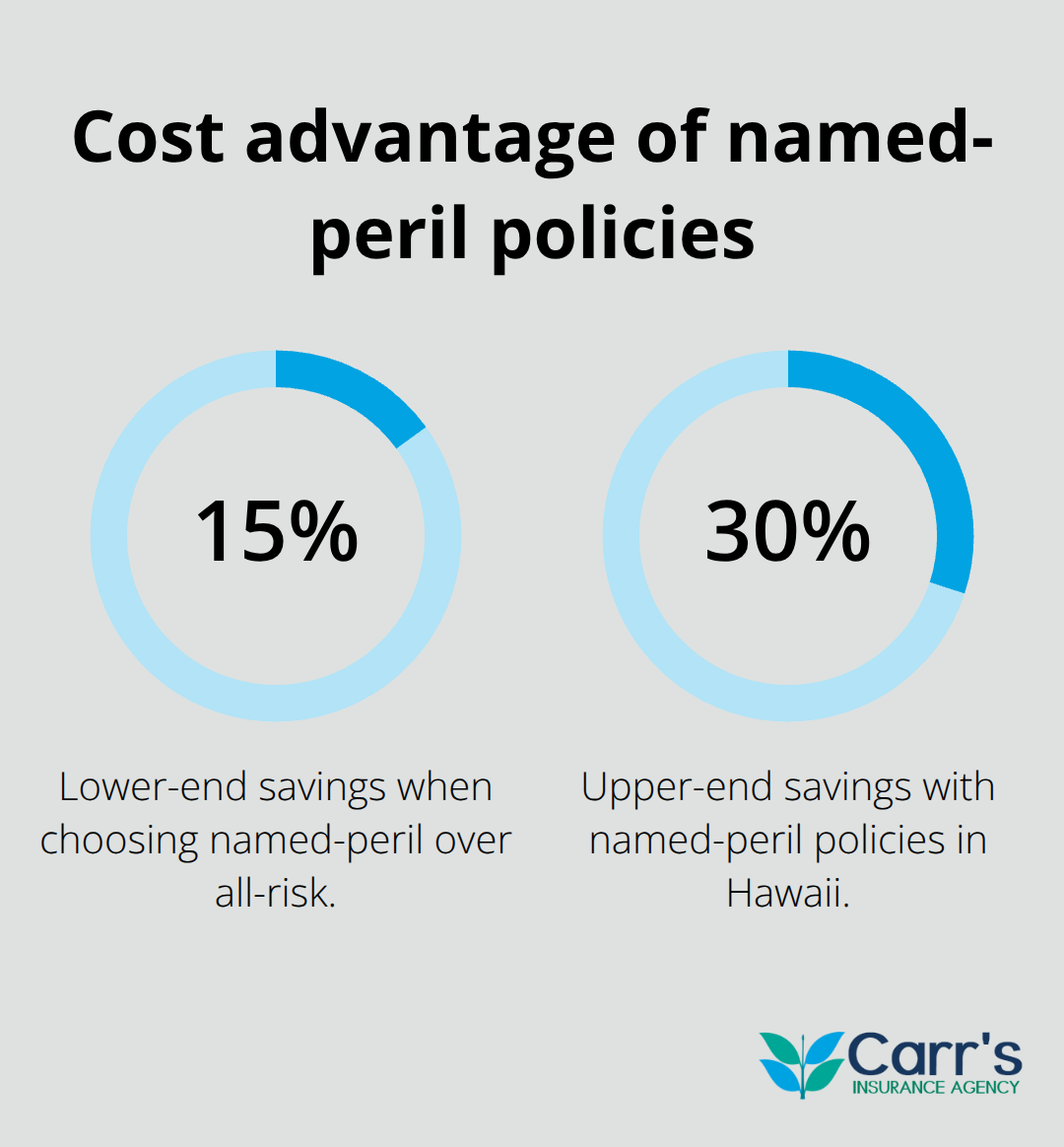
Named peril policies, which dominate the Hawaii market, only pay claims for specific listed perils like wind, hail, or fire, leaving you unprotected against unlisted risks like storm surge flooding or falling trees. Open peril policies, sometimes called all-risk coverage, protect against any loss except those specifically excluded in your policy language, providing significantly broader protection but typically costing more in annual premiums. Many Hawaii homeowners choose named peril policies because they cost less upfront, but this gamble often backfires during hurricane season when multiple damage types occur simultaneously.

Hub-and-spoke diagram illustrating essential hurricane insurance components for Hawaii homeowners

Additional Coverage Options That Matter

Increased wind deductibles ranging from 2 to 10 percent of your home’s replacement value reduce premiums but shift more financial responsibility to you after a hurricane. Loss of use coverage pays temporary housing expenses if your home becomes uninhabitable following a storm. Replacement cost endorsements ensure your insurer pays to rebuild your home at current construction costs rather than depreciated value-essential in Hawaii where labor and materials consistently exceed mainland pricing.

Flood Insurance: A Separate but Essential Layer

Homeowners in flood-prone zones near coastlines should carry flood insurance through the National Flood Insurance Program, which covers damage from storm surge that standard policies completely ignore. This coverage protects against a major source of hurricane losses after wind damage, making it non-negotiable for coastal properties. Understanding these coverage distinctions now prevents the financial devastation that strikes homeowners who discover gaps only after a hurricane makes landfall.

With your coverage options clarified, the next step involves preparing your actual property to withstand the forces that insurance alone cannot prevent.

Preparing Your Property Before Hurricane Season Hits

Structural Reinforcements That Stop Wind Damage

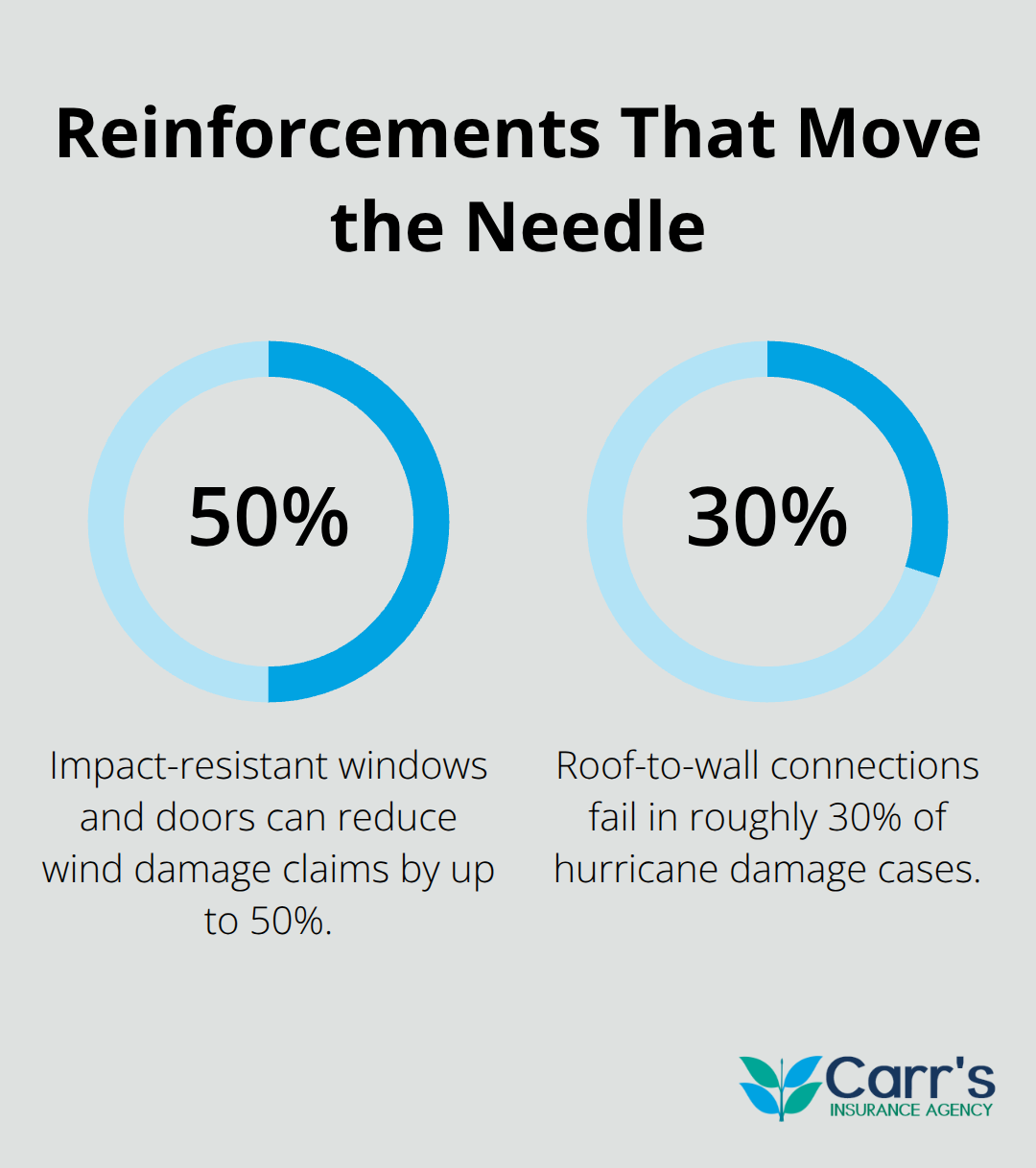
Structural reinforcements form the foundation of property protection, and Hawaii homeowners who skip this step pay the price when winds exceed 100 mph. Impact-resistant windows and doors rated for hurricane-force winds cost between $3,000 and $8,000 installed but reduce wind damage claims by up to 50 percent according to insurance industry data. Roof-to-wall connections fail in roughly 30 percent of hurricane damage cases, making metal hurricane straps or bolts a non-negotiable upgrade that costs $500 to $2,000 depending on your home’s size.

Percentage chart showing mitigation impact and common failure points in hurricanes - Hurricane insurance Hawaii

Gable-end reinforcement prevents the roof from lifting during high winds-a failure point that leads to catastrophic interior water damage once the roof structure separates. Secondary water barriers applied to exterior walls before hurricane season stop moisture intrusion that causes mold and structural rot long after the storm passes. Garage door reinforcement matters because a failed garage door allows wind to enter your home and creates internal pressure that can collapse walls and remove roofing. These improvements take weeks or months to complete, so you should schedule contractors now rather than waiting until August when every roofer and window installer in Hawaii is booked solid.

Critical Maintenance Tasks Before June Arrives

Maintenance tasks completed before June prevent minor vulnerabilities from becoming major damage during the season. Trim tree branches hanging over your roof and clear gutters of debris so water drains properly and doesn’t pool on your roof or foundation. Secure loose outdoor items like air conditioning units, satellite dishes, and antennas that become projectiles in sustained winds. Inspect your roof for missing shingles, cracked flashing, and deteriorated sealant, addressing these issues immediately rather than waiting for a storm to expose them. Test your sump pump and backup power systems if your property sits in a flood-prone area, ensuring they function when you need them most. Document your home’s condition with photos and video before hurricane season, creating evidence for insurance claims if damage occurs.

Emergency Supplies and Evacuation Planning

Establish your emergency supply now rather than three days before a storm when stores are emptied and prices spike. Stock at least two weeks of non-perishable food, a gallon of water per person per day, prescription medications, first aid supplies, and battery-powered or hand-crank flashlights. Create a household evacuation plan identifying your evacuation route, destination, and communication method with family members who may be separated. Store important documents including insurance policies, deeds, mortgage papers, and medical records in waterproof containers (keeping copies both at home and with an out-of-state contact). Know which zones require mandatory evacuation in your area by checking Hawaii County civil defense websites now, not when a hurricane warning is issued. These preparations transform your response from chaotic scrambling into decisive action that protects both your life and your property investment.

Final Thoughts

Hurricane insurance Hawaii protects your financial future when storms strike, but only if you understand what your policy covers and act before June arrives. Standard homeowners policies leave you exposed to wind and flood damage that accounts for the majority of hurricane losses, while structural improvements completed now prevent damage that insurance alone cannot fix. Local knowledge about your specific island’s exposure patterns determines whether your coverage matches your actual risk.

Your next step involves reviewing your current policy with honest eyes about what it excludes. Check whether you have wind coverage through a separate endorsement or rider, confirm that your replacement cost limits reflect current Hawaii construction prices, and determine whether flood insurance makes sense for your property’s location. Many homeowners discover gaps only after calling their agent during hurricane season, when options narrow and premiums spike.

Contact Carr’s Insurance Agency to review your current coverage and explore options that match your actual risk without overpaying for unnecessary protection. Our agents understand how storms track toward different islands, which areas face the highest flood risk, and how construction costs in Hawaii exceed mainland pricing that national carriers sometimes underestimate. Getting hurricane insurance coverage right requires comparing options from multiple carriers and understanding how each policy responds to the specific threats your property faces.

Disclaimer: The information provided in this blog is for general informational purposes only and does not constitute legal, financial, or insurance advice. Coverage options, terms, and availability may vary. Please consult with a licensed professional for advice specific to your situation
SR22 Insurance Requirements Hawaii: Who Needs It?

SR22 Insurance Requirements Hawaii: Who Needs It?

Getting a DUI or reckless driving conviction in Hawaii means you’ll face SR22 insurance requirements. This form proves to the state that you carry the minimum liability coverage needed to drive legally again.

At Carr’s Insurance Agency, we help drivers understand what an SR22 filing means and how long you’ll need to maintain it. Whether you’re dealing with a suspended license or an at-fault accident, we’ll walk you through the process of getting compliant coverage.

Understanding SR22 Filings in Hawaii

What an SR22 Certificate Actually Is

An SR22 is a certificate of financial responsibility that Hawaii’s Department of Transportation requires when you’ve been convicted of driving under the influence, reckless driving, or accumulated too many traffic violations. This form isn’t insurance itself-it’s a document your insurance company files with the state to verify you maintain the minimum liability coverage required by law. Hawaii mandates SR22 filings because the state views these violations as high-risk driving behavior.

The Hawaii Administrative Rules Section 19-115-2 establishes these requirements to protect other drivers on the road. When you’re required to carry an SR22, your insurance company must report your coverage status to the Department of Transportation. If your policy lapses or gets canceled, they must notify the state immediately. This notification system exists because Hawaii takes these violations seriously and wants real-time verification that you maintain continuous coverage.

How Long Your SR22 Requirement Lasts

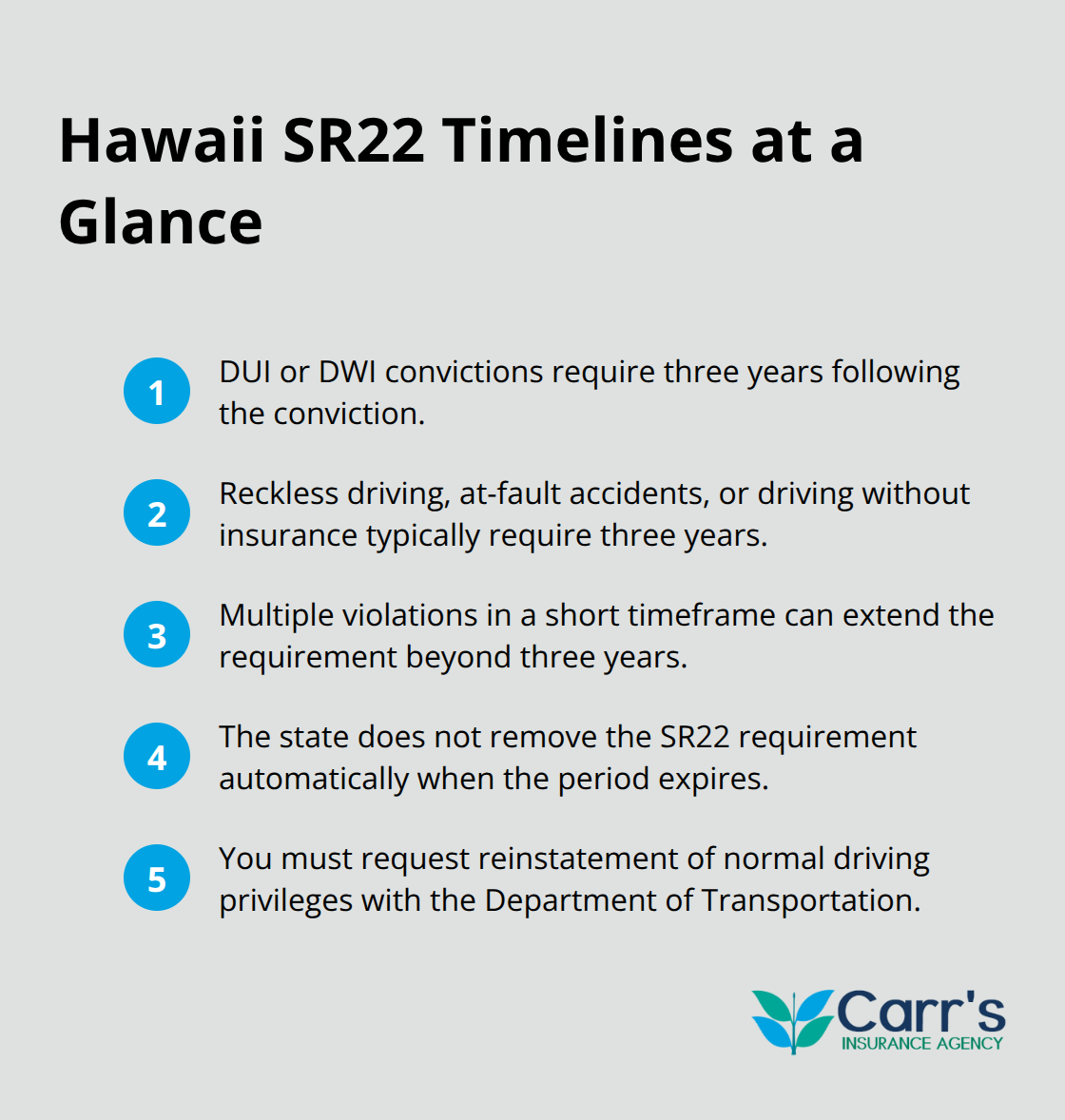
The length of your SR22 requirement depends on your violation type. Hawaii requires SR22 filings for three years following a DUI or DWI conviction, which is standard across most states. If you received an SR22 due to reckless driving, at-fault accidents, or driving without insurance, the requirement typically lasts three years from the conviction or violation date as well.

Summary of SR22 duration rules in Hawaii - SR22 insurance requirements Hawaii

Multiple violations within a short timeframe can extend the requirement beyond the standard three years. The state doesn’t automatically remove your SR22 requirement when the period expires-you must request reinstatement of your normal driving privileges through the Department of Transportation.

Moving Forward With Your SR22 Status

Tracking these timelines matters because missing your reinstatement window means you’ll continue carrying SR22 coverage longer than necessary. The process of getting compliant and eventually removing this requirement involves several steps, starting with finding the right insurance provider who understands Hawaii’s specific regulations and can file your SR22 form correctly.

Who Needs SR22 Insurance in Hawaii

DUI and DWI Convictions Trigger Mandatory SR22 Filing

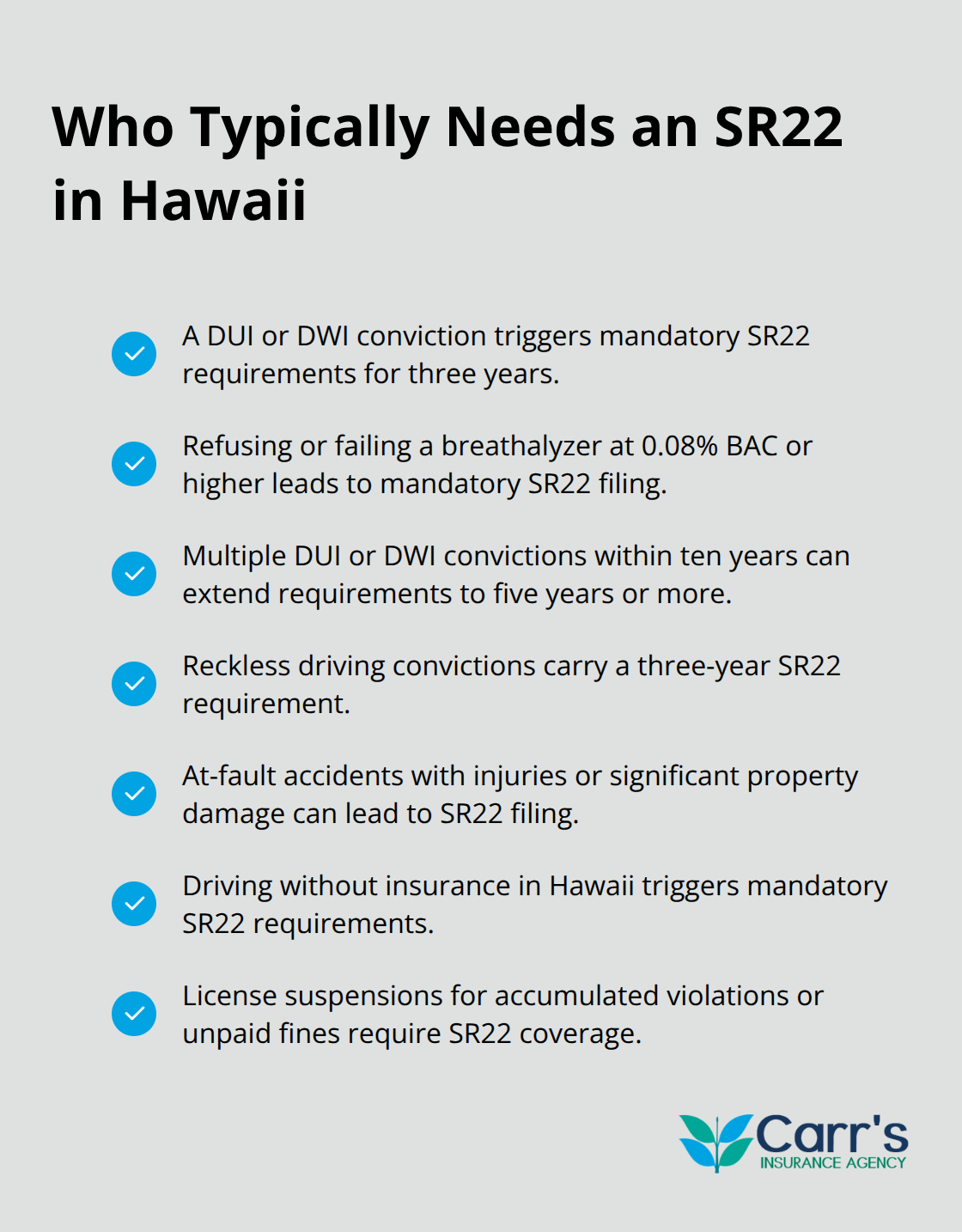
A DUI or DWI conviction in Hawaii automatically triggers SR22 requirements, and Hawaii courts take these violations seriously. Anyone convicted of driving under the influence must file an SR22 for three years from the conviction date. The state applies the same three-year timeline to first-time offenders and repeat violators alike. If you refused a breathalyzer test or failed one with a blood alcohol content of 0.08% or higher, you face mandatory SR22 filing. Multiple DUI or DWI convictions within a ten-year period extend your requirements further-sometimes requiring SR22 coverage for five years or more. Hawaii’s strict approach reflects the state’s position that impaired driving poses an unacceptable risk to other motorists.

Reckless Driving, At-Fault Accidents, and Uninsured Driving

Reckless driving convictions carry the same three-year SR22 requirement as a DUI under Hawaii Revised Statutes Section 291-2. At-fault accidents that result in injuries or significant property damage can lead to SR22 filing, particularly if you lacked adequate insurance coverage at the time of the accident. Driving without insurance in Hawaii triggers mandatory SR22 requirements-the state views uninsured driving as a serious violation of financial responsibility laws. License suspensions due to accumulated traffic violations or failure to pay fines also require SR22 coverage before you can legally operate a vehicle again.

Checklist of violations and situations that trigger SR22 in Hawaii - SR22 insurance requirements Hawaii

Why Speed Matters for Your SR22 Filing

Every day you delay filing your SR22 increases the risk of driving uninsured, which creates additional legal liability and potential criminal penalties. The sooner you file your SR22, the sooner you start your compliance clock and move toward regaining unrestricted driving privileges. Finding the right insurance provider who understands Hawaii’s specific regulations becomes your next critical step in this process.

Getting SR22 Insurance in Hawaii

Find an Insurance Provider That Handles SR22 Filings

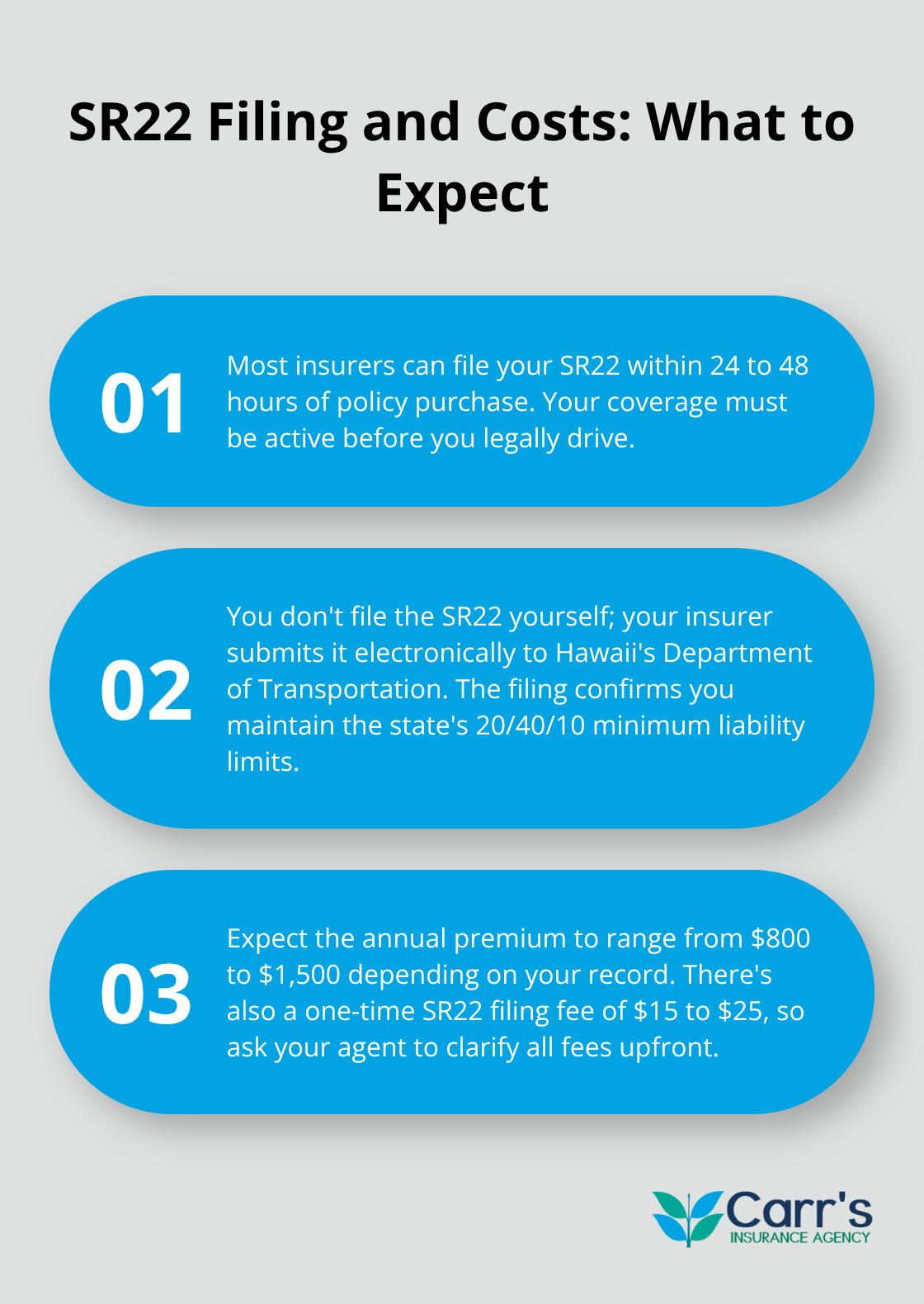
Start your SR22 process by contacting insurance companies that actively write SR22 filings in Hawaii. Not all insurers handle these policies equally-some charge significantly more, while others specialize in high-risk drivers and offer competitive rates. When you call an insurance company, ask directly if they file SR22 forms with Hawaii’s Department of Transportation and how quickly they can process your paperwork. Most insurers can file your SR22 within 24 to 48 hours of policy purchase, which matters because your coverage must be active before you legally drive.

Three key points on SR22 filing speed, process, and total costs in Hawaii

Request quotes from at least three providers to compare rates. SR22 premiums in Hawaii typically range from $800 to $1,500 annually depending on your violation type and driving history, according to national insurance data. Drivers with DUI convictions generally pay higher premiums than those with reckless driving violations. As an independent broker representing top carriers, Carr’s Insurance Agency compares rates across multiple insurers to help you find competitive SR22 coverage that fits your situation.

Submit Your SR22 Form to Hawaii’s Department of Transportation

Once you select an insurer, they handle the actual SR22 filing with Hawaii’s Department of Transportation. You don’t file the form yourself-your insurance company submits it electronically after you purchase your policy. The form confirms you maintain the state’s minimum liability limits, which in Hawaii are 20/40/10 for bodily injury and property damage.

Your insurance company must notify the state immediately if your policy lapses or gets canceled. Any gap in coverage triggers an automatic state notification, which extends your SR22 requirement and creates additional legal problems. Verify with your insurer that they’ll notify you before your policy renews so you don’t accidentally let coverage lapse.

Understand Your Total Costs and Coverage Requirements

Your total costs include the policy premium plus a one-time SR22 filing fee, typically $15 to $25. Some insurers bundle this fee into your first payment, while others charge it separately. Ask your agent to clarify all fees upfront so you understand your exact out-of-pocket cost before committing to coverage. This transparency helps you avoid surprises when your policy activates and your SR22 filing begins.

Final Thoughts

SR22 insurance requirements in Hawaii protect other drivers and hold high-risk motorists accountable for their violations. Whether you’re dealing with a DUI conviction, reckless driving charge, or uninsured driving violation, the three-year filing period gives you a clear timeline to regain your driving privileges. Acting quickly matters because every day you delay increases your legal exposure and keeps you from starting your compliance clock.

Your next step involves contacting an insurance provider who actively handles SR22 filings in Hawaii. Request quotes from multiple carriers to compare rates, since premiums vary significantly based on your violation type and driving history. Ask each company how quickly they can file your SR22 form and what fees they charge beyond the policy premium.

At Carr’s Insurance Agency, we help Hawaii drivers navigate SR22 insurance requirements and find competitive coverage that fits your budget. Contact Carr’s Insurance Agency to get started with your SR22 filing today, and our licensed agents will guide you through every step of the process.

Disclaimer: The information provided in this blog is for general informational purposes only and does not constitute legal, financial, or insurance advice. Coverage options, terms, and availability may vary. Please consult with a licensed professional for advice specific to your situation
Trucking Insurance Hawaii: A Local Perspective

Trucking Insurance Hawaii: A Local Perspective

Running a trucking operation in Hawaii comes with challenges you won’t find on the mainland. The islands’ remote location, unpredictable weather, and complex logistics create insurance needs that standard policies simply don’t cover.

At Carr’s Insurance Agency, we work with trucking companies across Hawaii every day. We know the specific risks your fleet faces and how to protect your business properly.

What Makes Hawaii Trucking Insurance Fundamentally Different

Island trucking operations face cost structures that mainland carriers simply don’t encounter. Shipping goods between islands requires ocean transport, which adds layers of risk and expense that standard commercial auto policies don’t address. A truck moving cargo from Honolulu to Hilo faces different hazards than one traveling across Nevada. The distance, the water crossing, and the limited alternative routes mean that when something goes wrong, the financial impact hits harder. Owner operator insurance rates range from $3,000 to $25,000+ per year in 2026, reflecting the elevated risk profile that Hawaii operations demand. Your fleet operates in an environment where equipment replacement costs more, repair delays stretch longer, and supply chain disruptions carry steeper consequences.

Geography Creates Real Operational Constraints

Hawaii’s island layout prevents you from simply rerouting around problems. Kauai, Maui, and the Big Island each have limited road networks, and weather can shut down critical passages for days. Winter swells regularly affect inter-island barge schedules, creating inventory backups that mainland operators never experience. A single tropical storm can strand cargo and disable vehicles in ways that trigger coverage gaps in standard policies. Cargo insurance becomes non-negotiable because ocean transport introduces salt spray, humidity, and rough seas that damage goods differently than road transport. Island-based fleets file cargo damage claims at nearly double the rate of mainland operations, which is why carriers price premiums accordingly and why selecting the right coverage matters enormously.

Ocean Transport Introduces Distinct Cargo Risks

Inter-island and mainland shipments expose your cargo to hazards that road-only operations avoid entirely. Salt spray corrodes equipment and damages sensitive goods during barge crossings. Humidity levels on ocean vessels far exceed what trucks experience on highways, creating conditions that ruin electronics, textiles, and perishables. Rough seas cause cargo to shift and containers to sustain impact damage that standard inland cargo policies often exclude. Your cargo insurance must specifically address marine transport conditions, not just terrestrial logistics. Without proper coverage, a single inter-island shipment loss can wipe out weeks of profit.

Limited Market Competition Affects Your Options

Only a handful of insurance carriers actively compete for Hawaii trucking business, which means fewer options for finding competitive rates. Major national insurers either avoid the Hawaii market entirely or charge premiums that reflect their reluctance to underwrite island operations. This limited competition means you need someone who knows which carriers still actively write trucking policies in Hawaii and which ones have quietly exited the market. The carriers that remain understand Hawaii’s unique exposures, but they’re selective about which fleets they insure. Working with a local agent who maintains relationships with these carriers and understands their underwriting preferences becomes your practical advantage for securing coverage that actually fits your operation.

Why Local Knowledge Matters for Coverage Selection

Carriers that write Hawaii trucking policies apply different underwriting standards than they use for mainland fleets. They evaluate your claims history, equipment age, and operational routes through a Hawaii-specific lens. An agent unfamiliar with these local underwriting preferences may submit applications to carriers that have already tightened their Hawaii appetite, wasting time and potentially triggering declinations that hurt your future applications. Local agents know which carriers prioritize inter-island operations, which ones focus on Honolulu-based fleets, and which ones have recently adjusted their rates or coverage terms. This knowledge directly impacts whether you secure coverage at all and what you pay for it.

What Coverage Does Your Hawaii Trucking Fleet Actually Need

Commercial auto liability forms the foundation of any Hawaii trucking operation, but standard mainland policies miss critical exposures you face daily. Your liability limits need to reflect both the higher replacement costs on the islands and the severity of potential claims when cargo or vehicles sustain damage during inter-island transport. Hawaii courts award damages at rates that exceed mainland averages, with jury verdicts in commercial vehicle cases frequently exceeding $500,000 when injuries occur. You need minimum liability coverage of at least $1 million per occurrence, though $2 million is standard for fleets running regular inter-island routes. Physical damage coverage for your vehicles costs more in Hawaii because repair shops charge premium rates due to parts scarcity and labor costs that run 20-30% higher than mainland facilities. If your fleet operates older equipment, comprehensive coverage becomes especially important since weather-related damage from salt spray, humidity, and tropical storms occurs at higher frequencies than on the mainland.

Chart showing Hawaii truck repair and labor costs running 20–30% higher than mainland facilities.

Cargo Insurance Separates Protected Operations from Exposed Ones

Inter-island and mainland shipments require specific cargo coverage that addresses marine transport conditions, not just road hazards. Standard inland cargo policies exclude or severely limit coverage for goods transported on barges and ocean vessels, which means you face uninsured losses on every inter-island shipment without proper protection. Cargo damage claims from salt spray corrosion and rough-sea impact account for a significant portion of inter-island shipping losses, yet many general cargo policies treat these as standard wear rather than insurable events. You must specify marine cargo coverage explicitly and confirm that your policy covers goods during the entire ocean leg, not just the truck portions of your journey. Perishable goods require temperature-monitoring provisions since inter-island transit times of 12-24 hours can compromise refrigerated cargo if coverage gaps exist during vessel loading and unloading. Cargo values for typical inter-island shipments range from $15,000 to $75,000 per load, making inadequate coverage a direct threat to profitability on individual shipments.

Workers Compensation and Hired Vehicle Coverage Close Critical Gaps

Workers compensation in Hawaii carries mandatory coverage requirements and premium rates that run 40-50% higher than mainland states due to the higher cost of living and medical expenses. Your policy must cover all employees who perform driving duties, loading, and cargo handling, with rates varying significantly based on your claims history and safety record.

Chart illustrating Hawaii workers’ compensation premiums running 40–50% higher than mainland states. - Trucking insurance Hawaii

Hired and non-owned auto coverage protects you when employees use personal vehicles for business purposes or when you temporarily lease additional equipment during peak shipping seasons. This coverage becomes essential during inter-island operations when you occasionally contract with local haulers or when employees transport goods in their own vehicles for company purposes. Hawaii’s limited vehicle inventory means rental trucks and hired equipment are more expensive and harder to secure, making this coverage a practical necessity rather than optional protection. Without hired auto coverage, a single accident involving a rented vehicle or employee personal vehicle can create liability exposure that your primary commercial auto policy won’t cover.

Why Coverage Gaps Cost More Than Premiums

The real expense of inadequate coverage emerges when claims occur. A cargo loss on an inter-island barge crossing that your policy excludes becomes a complete financial loss-no recovery, no reimbursement. An employee accident in a personal vehicle without hired auto coverage exposes your business to a judgment that your insurance won’t pay. These gaps transform single incidents into operational crises that affect cash flow, equipment replacement, and your ability to fulfill customer commitments. Hawaii’s insurance market requires you to think beyond minimum requirements and build coverage that actually protects your operation as it functions. The next step involves identifying which carriers understand these exposures and how to work with agents who know the Hawaii market well enough to spot coverage gaps before they cost you money.

Finding Insurance Carriers That Actually Write Hawaii Trucking Policies

The hardest part of securing Hawaii trucking insurance isn’t understanding your coverage needs-it’s identifying which carriers still actively underwrite island operations. Most national insurance companies have quietly reduced or eliminated their Hawaii trucking appetite over the past five years, which means submitting applications to the wrong carriers wastes weeks and damages your future insurability. Carriers track declinations, and multiple rejections signal to remaining underwriters that you represent elevated risk. You need an agent with current knowledge of which carriers maintain active Hawaii trucking programs, what minimum equipment standards they require, and whether they’ve recently tightened their underwriting guidelines.

Which Carriers Still Compete for Hawaii Trucking Business

The carriers writing Hawaii policies today demand specific information upfront: your fleet size, average equipment age, inter-island versus Honolulu-only operations, and your three-year loss history. Carriers weight Hawaii-specific factors differently than mainland underwriters do-a carrier might accept a 2015 truck on the mainland but require 2018 or newer for Hawaii operations due to the higher repair costs and longer downtime when breakdowns occur. One carrier might specialize in inter-island refrigerated transport while another focuses exclusively on Honolulu port operations. Knowing these distinctions separates agents who can actually place your coverage from those who submit applications that get rejected before underwriters even review them.

An independent broker representing multiple carriers holds a significant advantage in this market. These agents maintain ongoing relationships with the carriers that still compete for island trucking business and understand their current underwriting preferences. They know which carriers have recently tightened their guidelines and which ones remain actively hungry for new business. This knowledge prevents wasted applications and protects your insurability for future coverage needs.

How to Structure Quote Comparisons for Accurate Pricing

Comparing quotes requires more than collecting three premium numbers and selecting the lowest price. Request quotes structured identically across carriers-same liability limits, same deductibles, same cargo coverage-so you can evaluate actual pricing differences rather than comparing policies with different protection levels. Ask each carrier’s agent to specify what inter-island operations they cover, what cargo exclusions apply, and whether they charge additional premiums for barge transport versus truck-only routes.

Compact checklist to compare Hawaii trucking insurance quotes consistently. - Trucking insurance Hawaii

Some carriers quote aggressively on base commercial auto but load cargo coverage with exclusions that make the policy nearly worthless for inter-island shipments. Others price marine cargo competitively but impose strict equipment age requirements or claims history thresholds that eliminate you from consideration. Request the actual policy documents before committing, not just summary sheets, and have your agent walk you through the specific exclusions rather than assuming standard coverage applies. Hawaii’s insurance environment means the lowest quote frequently includes hidden limitations that emerge only when you file a claim.

What to Examine Beyond the Premium Number

Compare what each carrier requires for hired and non-owned auto coverage, since some include this automatically while others charge substantial additional premiums or exclude it entirely. Ask about experience modification rates-the factor that adjusts your premium based on your claims history relative to similar operations-since carriers apply these differently than mainland underwriters. A carrier might offer lower base rates but apply a higher experience modification that eliminates any savings.

The comparison process takes longer than mainland shopping because Hawaii’s limited market requires more detailed policy analysis. That effort directly protects your operation from coverage gaps that cost significantly more than premium savings. Each carrier’s underwriting approach reflects their specific appetite for Hawaii risk, and matching your operation to the right carrier prevents future claim denials and coverage disputes.

Final Thoughts

Hawaii trucking insurance requires a different approach than mainland coverage because your operation faces distinct risks that standard policies don’t address. The higher costs, ocean transport exposures, and limited carrier competition mean you need protection specifically built for island logistics. Cargo damage from salt spray and rough seas, liability claims that exceed mainland averages, and equipment repair costs running 20-30% higher than the mainland all demand coverage that reflects your actual operational environment.

Working with local insurance professionals who understand Hawaii trucking operations gives you a practical advantage that national carriers simply can’t provide. An agent familiar with which carriers actively compete for island business, what underwriting standards they apply, and how they evaluate Hawaii-specific exposures prevents wasted applications and protects your insurability. Local agents know the difference between carriers that genuinely cover inter-island operations and those that exclude marine transport or impose restrictions that make policies nearly worthless.

Contact Carr’s Insurance Agency to discuss your trucking insurance Hawaii coverage needs and receive quotes from carriers that actively compete for island trucking business. Our independent broker relationships allow us to compare rates across multiple carriers and find protection that fits your operation and your budget. We work with trucking companies across the islands and understand the specific exposures your fleet faces.

Disclaimer: The information provided in this blog is for general informational purposes only and does not constitute legal, financial, or insurance advice. Coverage options, terms, and availability may vary. Please consult with a licensed professional for advice specific to your situation
Contractor Truck Insurance Hawaii: Specialized Coverage for Jobsites

Contractor Truck Insurance Hawaii: Specialized Coverage for Jobsites

Running a contracting business in Hawaii means your trucks face unique risks that standard commercial auto policies simply don’t cover. From coastal salt damage to remote jobsite conditions, your vehicles need protection built specifically for how you work.

We at Carr’s Insurance Agency help contractors across Hawaii get the specialized coverage their fleets actually need. This guide walks you through contractor truck insurance in Hawaii and how to protect your business properly.

What Makes Contractor Truck Insurance Different

Standard commercial auto policies were built for businesses that operate vehicles on regular routes-delivery companies, sales teams, service fleets. They assume your trucks spend most time on paved roads between known locations. Contractor trucks operate in an entirely different world. Your vehicles sit on active jobsites, get loaded with expensive equipment, work in harsh coastal conditions, and face exposure to liability claims that typical commercial policies simply weren’t designed to handle. A standard commercial auto policy might cover your truck getting hit on the highway, but it won’t protect you when someone gets injured on your jobsite or when your equipment gets damaged during transport. This gap between what you actually need and what a basic policy covers is where contractors in Hawaii run into serious problems.

The Real Gaps in Standard Policies

Regular commercial auto insurance covers the vehicle itself and liability from accidents involving the truck. What it doesn’t cover is the specialized equipment you haul, the tools left on jobsites, or liability specific to construction work. If your truck carries a compressor worth $8,000 and it falls off the bed, your standard policy won’t touch it. If someone trips over your equipment on a jobsite and sues, your basic commercial liability won’t be adequate-contractors typically need $2 million in general liability coverage, but many standard policies max out lower or exclude construction-related incidents entirely. Hawaii’s maritime environment adds another layer of risk. The National Weather Service data shows Hawaii averages 6 tropical storms annually, and salt spray damage to vehicles in coastal areas costs contractors $2,000 to $5,000 per incident on average. Standard policies often exclude weather-related corrosion damage.

Hawaii Jobsite Conditions Demand Specialized Protection

Your trucks don’t just transport equipment-they’re mobile assets on active jobsites where liability exposure multiplies. A contractor vehicle parked at a residential remodel creates a liability risk in ways a plumber’s van on a service call doesn’t. Equipment theft from jobsites is rampant; Hawaii contractors report tools and materials worth $1,000 to $15,000 that go missing from unsecured sites monthly.

Infographic showing key Hawaii jobsite risks for contractor vehicles - Contractor truck insurance Hawaii

Your truck insurance needs to cover equipment in transit and at rest on jobsites. Remote locations on islands like Maui and the Big Island mean your trucks may be hours from repair facilities, and breakdown coverage becomes essential rather than optional. Specialized coverage also addresses hired and non-owned vehicle liability-if you rent equipment or hire subcontractors with their own trucks, you need protection against their accidents impacting your business. Hawaii’s unique jobsite environment (from volcanic rock surfaces that damage undercarriage to humid conditions that accelerate rust) requires carriers who understand local conditions, not national insurers that write generic policies.

Legal Requirements Specific to Hawaii Contractors

Hawaii Revised Statutes Chapter 431 requires all commercial vehicles to carry minimum liability coverage of $25,000 per person and $50,000 per accident for bodily injury, plus $25,000 for property damage. These minimums are laughably low for any serious contracting operation-a single injury lawsuit easily exceeds $100,000. Beyond state minimums, Hawaii’s Department of Labor enforces strict safety standards for contractor operations, and your insurance documentation proves compliance during inspections.

Quick list of legal and jobsite insurance requirements in Hawaii - Contractor truck insurance Hawaii

Most general contractors who work on residential or commercial projects need proof of $1 million to $2 million in combined liability coverage before you’re allowed on job sites. County permits in Honolulu, Maui, and Hawaii County often require certificates of insurance that name the project owner as additional insured before work starts. Failing to have proper contractor truck insurance doesn’t just leave you financially exposed-it can result in permit revocation, job stoppage, and fines up to $5,000. Understanding what your specific projects require matters far more than settling for minimum state requirements.

What Coverage Actually Protects Your Fleet

The gap between legal minimums and real-world protection is where contractors make costly mistakes. Your trucks need commercial auto liability that covers bodily injury and property damage claims from accidents, but they also need physical damage coverage that protects against theft, weather, and collision. Tools and equipment coverage (sometimes called inland marine coverage) protects the compressors, generators, and materials your trucks carry-coverage that standard policies exclude entirely. Workers compensation integrates with your truck insurance when employees operate vehicles or work from jobsites, and general liability coverage protects against third-party injury claims that happen on or near your vehicles. Hired and non-owned vehicle liability covers accidents involving rental equipment or subcontractor vehicles you don’t own but use for projects. The right contractor truck insurance policy stacks these coverages together in ways that address how you actually work, not how a delivery company or sales fleet operates.

Types of Coverage Contractors Need

Commercial auto liability forms the foundation of contractor truck insurance, but it represents only the starting point for operations in Hawaii. You need liability coverage that reaches at least $1 million per occurrence-most jobsite requirements demand this level, and state minimums of $50,000 leave you dangerously exposed. Physical damage coverage protects your truck against collision, theft, and weather damage, which matters intensely in Hawaii where salt corrosion and tropical storms cause substantial losses. The Insurance Information Institute reports that weather-related vehicle damage claims average $3,400 per incident nationally, and Hawaii’s coastal environment pushes that figure higher. Physical damage typically includes comprehensive coverage for theft and weather, plus collision coverage for accidents.

Choosing the Right Deductibles and Physical Damage Limits

A $500 deductible costs less in premiums but exposes you to repeated out-of-pocket losses on active jobsites. Most contractors operating multiple trucks should carry $1,000 deductibles to keep premiums reasonable while maintaining adequate protection. This balance protects your cash flow without sacrificing coverage when damage occurs. Higher deductibles work only if your business can absorb the immediate cost without disrupting operations or project timelines.

Tools and Equipment Coverage Protects Your Mobile Assets

Tools and equipment coverage is where most contractors face unexpected gaps because it doesn’t come standard with commercial auto policies. This inland marine coverage protects compressors, generators, power tools, and materials your trucks carry-the exact assets that disappear from jobsites or suffer damage during transport. Hawaii contractors lose approximately $1,000 to $15,000 monthly in equipment theft from unsecured sites according to local law enforcement reports, making this coverage essential rather than optional. Equipment coverage also protects against mysterious disappearance, which matters when tools vanish between jobsites without clear theft documentation.

Workers Compensation and General Liability Integration

Workers compensation and general liability integration rounds out your protection by covering employee injuries during truck operations and third-party injuries on jobsites near your vehicles. General liability should extend to $2 million combined single limit for serious contracting work, and workers compensation is legally mandatory in Hawaii if you have any employees. These three coverage types working together-commercial auto liability and physical damage, equipment protection, and integrated workers compensation with general liability-create a complete shield against the specific risks contractor trucks face in Hawaii’s jobsite environment.

The right coverage combination protects your fleet, but selecting the actual policy requires comparing what different carriers offer and understanding how their rates reflect Hawaii’s unique risks.

How to Choose the Right Contractor Truck Insurance Policy

Calculate your fleet value and equipment investment

Start with your actual fleet value and equipment investment, not just truck count. Most contractors underestimate what they carry on jobsites-a single truck with a compressor, generator, and hand tools easily represents $15,000 to $40,000 in mobile assets beyond the vehicle itself. Add up replacement costs for every piece of equipment your trucks transport regularly, then add 20 percent for items you occasionally haul. This total determines your equipment coverage limits, which directly impacts your premium.

A contractor with three trucks and $60,000 in equipment needs fundamentally different coverage than one with five trucks and $150,000 in gear. Insurance carriers price policies based on exposure, so accurately reporting your fleet composition and equipment value prevents both underinsurance and overpaying for coverage you don’t need. Many contractors discover they’ve been insuring equipment at half its actual replacement value, leaving themselves exposed when losses occur.

Request Quotes with Identical Coverage Terms

Multiple carriers reveal massive rate variations for identical coverage. Three carriers might quote you $2,400, $3,100, and $2,650 annually for the same commercial auto liability and physical damage on a single truck-a $700 difference that compounds across multiple vehicles. Request quotes with identical deductibles ($1,000), liability limits ($1 million), and equipment coverage amounts so you’re actually comparing apples to apples.

Three tips to compare contractor truck insurance quotes in Hawaii

Carriers price contractor risk differently based on their loss history in Hawaii and their appetite for construction exposure. Some national insurers avoid contractor business entirely or charge premium rates because they lack local experience with jobsite conditions. Local agents who represent multiple carriers access quotes from insurers specializing in Hawaii contractor business, not just the national players.

Examine Policy Exclusions and Coverage Details

When comparing quotes, examine what each carrier excludes-some won’t cover equipment left unattended on jobsites, while others include mysterious disappearance coverage as standard. These policy details matter far more than a $200 premium difference because they determine whether your claim gets paid when damage actually happens. One carrier might exclude weather-related corrosion damage while another includes it as standard protection.

Ask each carrier specifically about coverage for hired and non-owned vehicles, equipment in transit versus at rest on jobsites, and whether they cover mysterious disappearance. A policy that costs $300 less annually but excludes your most common loss scenario (equipment theft from jobsites) leaves you financially exposed. The cheapest quote rarely represents the best value for contractor operations in Hawaii.

Work with an Agent Who Understands Local Jobsite Risks

An independent agent representing multiple carriers compares rates specifically for contractor operations, which means they find coverage options that national online quote systems never show. Agents with Hawaii experience understand how coastal conditions, remote island locations, and local jobsite practices affect your actual risk profile. They know which carriers specialize in contractor business and which ones treat construction as a secondary market.

Carr’s Insurance Agency, a locally owned independent agency serving Hawaii since 1990, represents top carriers and compares rates for contractor operations. As an independent broker, Carr’s accesses quotes from multiple insurers and delivers licensed, locally knowledgeable agents who provide personalized service to find the right coverage and save money. An agent who works with contractors regularly knows which carriers pay claims promptly and which ones create obstacles when you file.

Final Thoughts

Contractor truck insurance in Hawaii protects your entire business operation against the specific risks that jobsite work creates. Standard commercial auto policies leave dangerous gaps in coverage, and state legal minimums won’t keep you financially safe when equipment disappears from jobsites or someone gets injured on your project. The right policy combines commercial auto liability reaching $1 million or higher, physical damage protection that accounts for Hawaii’s coastal conditions, and equipment coverage for the tools and materials your trucks carry.

Your contractor truck insurance needs reflect your actual fleet size, equipment value, and the jobsite conditions you face across Hawaii’s islands. Comparing quotes with identical coverage terms reveals significant rate variations between carriers, and examining policy exclusions determines whether claims actually get paid when damage happens. An agent with local experience understands how tropical storms, salt corrosion, remote island locations, and equipment theft patterns affect your risk profile in ways national insurers simply don’t grasp.

Carr’s Insurance Agency, a locally owned independent broker serving Hawaii since 1990, represents top carriers and compares rates specifically for contractor operations. As an independent agency, Carr’s accesses quotes from multiple insurers and delivers licensed, locally knowledgeable agents who find the right coverage and save money through personalized service. Contact Carr’s Insurance Agency to calculate your total fleet and equipment value, then request quotes from carriers who specialize in contractor business rather than treating construction as a secondary market.

Disclaimer: The information provided in this blog is for general informational purposes only and does not constitute legal, financial, or insurance advice. Coverage options, terms, and availability may vary. Please consult with a licensed professional for advice specific to your situation
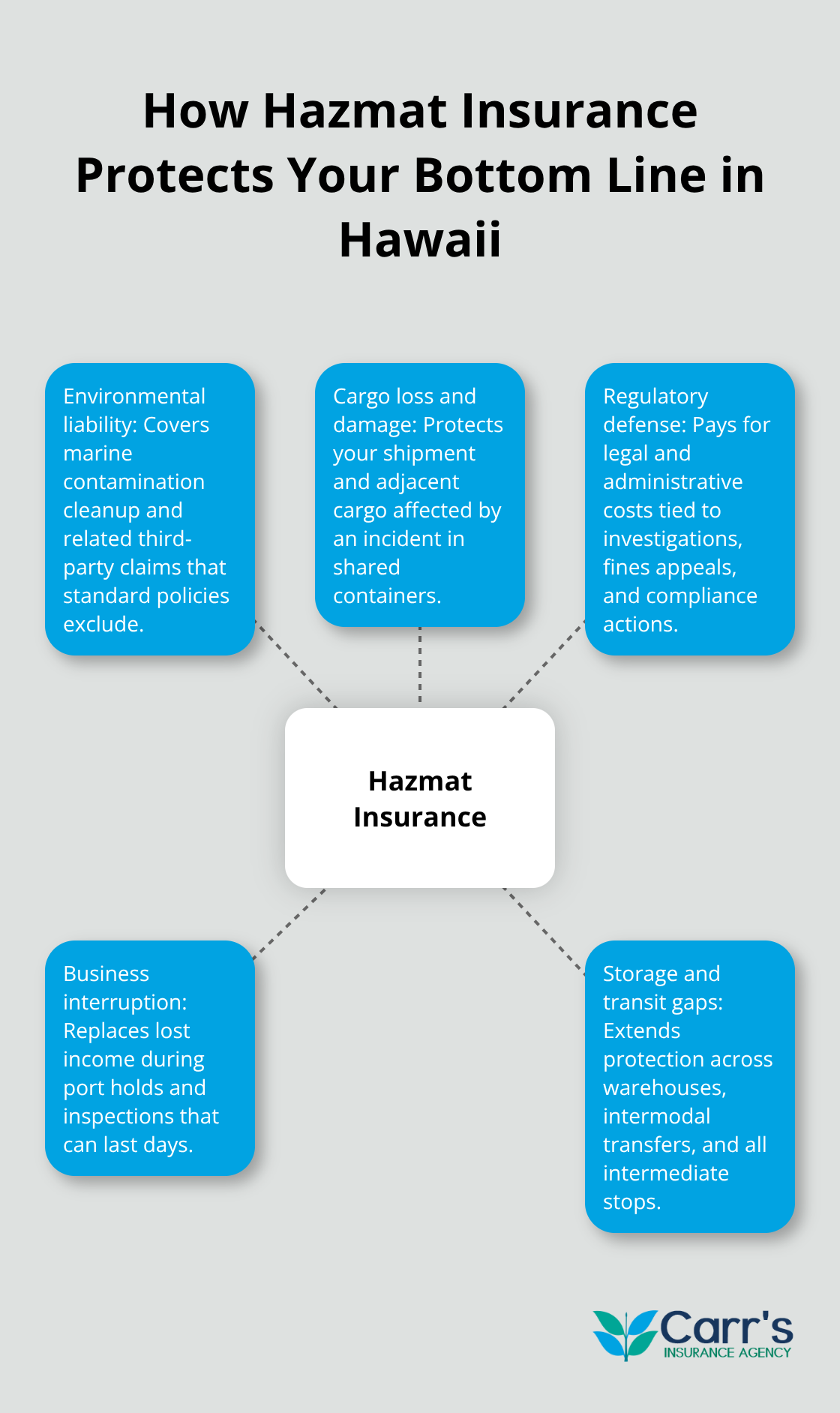
Commercial Hurricane Insurance Hawaii: Coverage for Storms

Commercial Hurricane Insurance Hawaii: Coverage for Storms

Hawaii’s hurricane season brings real threats to commercial properties. Standard business insurance often leaves gaps that leave you exposed when storms hit.

At Carr’s Insurance Agency, we help Hawaii business owners understand why commercial hurricane insurance in Hawaii is essential. The right coverage protects your assets, operations, and bottom line when nature strikes.

What Commercial Hurricane Insurance Actually Covers

Commercial hurricane insurance protects specific property and business assets when named windstorms strike Hawaii. Standard business policies typically exclude wind damage or place severe limits on it, leaving owners vulnerable when hurricanes hit. We at Carr’s Insurance Agency see this gap repeatedly-businesses assume their general liability or property policies cover hurricane damage, only to discover during claims that wind exclusions apply. Commercial hurricane coverage fills this gap by protecting your building structure, inventory, equipment, and sometimes even business income during storm shutdowns. Your policy can cover roof damage, structural repairs, damaged merchandise, and even temporary relocation costs if your building becomes uninhabitable. Some policies also include coverage for debris removal and emergency repairs to prevent further damage.

Why Your Current Business Policy Leaves You Exposed

Standard commercial property policies often come with wind exclusions or sub-limits that cap hurricane coverage at 5 to 10 percent of your total insured value. This means if your building is worth $500,000 and you have a 10 percent wind sub-limit, you’re only covered for $50,000 in hurricane damage-far less than actual repair costs. Many business owners don’t realize they need separate hurricane or named-peril coverage until it’s too late. Equipment breakdown coverage, business interruption protection, and loss of rents aren’t automatically included in basic hurricane policies either. You must add these endorsements specifically to protect ongoing operational expenses when storms force temporary closures.

Compact list of common coverage gaps and needed endorsements for Hawaii businesses

Without these additions, you cover property damage but lose income protection during recovery periods.

Hawaii’s Specific Storm Exposure

Hawaii faces unique hurricane risks due to its central Pacific location and susceptibility to late-season storms. Trade winds and ocean temperatures between June and November create conditions for rapid storm intensification near Hawaii. Your location matters significantly-windward shores and exposed coastlines face higher velocity winds than leeward areas, affecting both premium rates and coverage recommendations. Salt spray and moisture from hurricanes also accelerate corrosion of metal roofing, HVAC systems, and electrical equipment, creating secondary damage that standard coverage often misses. Flood damage from hurricane-driven storm surge requires separate flood insurance, which wind policies explicitly exclude.


Assessing Your Coverage Needs

Different business types face different hurricane exposures, and your coverage should reflect your actual risk profile. A retail storefront on Oahu’s windward side needs different protection than a warehouse in a more sheltered location. Your industry matters too-restaurants and hospitality businesses face higher business interruption losses than manufacturing operations with lower daily revenue. The deductible you select (typically ranging from $1,000 to $25,000 or higher) directly impacts your premium costs and out-of-pocket expenses when storms hit. Higher deductibles lower your monthly payments but increase what you pay when claims occur. Local agents who understand Hawaii’s climate and your specific neighborhood can recommend appropriate coverage limits and deductible levels based on your actual risk profile.

Types of Commercial Hurricane Policies Available

Named peril policies and all-risk policies represent fundamentally different approaches to hurricane protection, and named peril coverage makes more sense for most Hawaii commercial properties. Named peril policies specifically list the perils they cover-hurricane, windstorm, hail, and similar events-while all-risk policies theoretically cover everything except what’s explicitly excluded. The problem with all-risk policies is that they often come with wind exclusions or severely limited wind coverage anyway, making them deceptively expensive for the actual protection they provide. Named peril hurricane policies cost 15 to 30 percent less than all-risk alternatives while delivering clearer, more straightforward coverage for the specific threats Hawaii businesses actually face. When you purchase a named peril policy focused on hurricane and windstorm protection, you know exactly what’s covered and what isn’t, eliminating the surprise gaps that plague all-risk policies during claims.

Percentage comparison showing how much less named-peril hurricane policies can cost versus all-risk - Commercial hurricane insurance Hawaii

Deductibles Shape Both Your Premium and Your Risk

Deductible selection directly determines your monthly costs and your financial exposure when storms strike. Hawaii commercial hurricane policies typically offer deductibles ranging from $1,000 to $50,000, with some carriers allowing even higher options for larger properties. A $5,000 deductible represents the middle ground for most small to mid-sized businesses, balancing reasonable monthly premiums against manageable out-of-pocket expenses. Choosing a $10,000 deductible instead of $5,000 can reduce your annual premium by 20 to 25 percent, creating significant savings for businesses willing to absorb larger upfront costs after storms. However, if your business operates on thin margins or lacks substantial cash reserves, a higher deductible becomes risky-you might qualify for a lower premium but face financial strain when you actually need to file a claim. The calculation involves your business’s emergency fund capacity and your tolerance for unexpected expenses, not simply selecting the highest deductible available to minimize premiums.

Business Interruption and Equipment Breakdown Matter More Than Most Realize

Business interruption coverage protects your lost income during the days or weeks your operations shut down after hurricane damage, and this protection often proves more valuable than the property damage coverage itself. A restaurant loses $2,000 daily in revenue during a two-week closure, facing $28,000 in income loss, yet many business owners focus solely on insuring their $150,000 building structure. Equipment breakdown coverage addresses the secondary damage that hurricanes cause-HVAC systems corroded by salt spray, electrical panels damaged by moisture, refrigeration units failing after storm-related power surges. These additions require specific endorsements to your base hurricane policy and cost between 10 and 20 percent more than basic coverage, but they transform your policy from property-focused to operationally focused. Without business interruption coverage, you recover your building but lose months of revenue during repairs. Without equipment breakdown protection, you replace damaged property only to face hidden failures in complex systems weeks after the storm passes.

Selecting Additional Coverages for Your Operation

Your specific business type and location determine which additional coverages make financial sense. A retail storefront on Oahu’s windward side needs different protection than a warehouse in a more sheltered location, and your industry matters significantly. Restaurants and hospitality businesses face higher business interruption losses than manufacturing operations with lower daily revenue. Debris removal coverage addresses the costs of clearing storm wreckage from your property, while emergency repair endorsements cover temporary fixes that prevent further damage. Some policies include coverage for loss of rents (if you lease to tenants) or extra expense coverage (for temporary relocation costs). An independent agent who understands Hawaii’s climate and your specific neighborhood can recommend appropriate coverage limits and endorsements based on your actual risk profile and operational needs.

Matching Coverage to What Your Business Actually Owns and Earns

Calculate Your Total Insurable Value

Start by calculating your total insurable value, not what you paid for property years ago. Walk through your building and list every asset that would need replacement after a hurricane: the structure itself, HVAC systems, electrical panels, inventory, furniture, equipment, signage, and any permanent fixtures. Many Hawaii business owners underestimate this number significantly. A mid-sized retail space might contain $200,000 in inventory alone, yet the owner only insures the $150,000 building value.

Hub-and-spoke diagram of assets to count when calculating total insurable value in Hawaii - Commercial hurricane insurance Hawaii

Your coverage limit should match replacement costs in today’s Hawaii market, where construction and labor costs run 15 to 20 percent higher than mainland averages. Get written quotes from local contractors for what repairs would actually cost, then add 20 percent for inflation and supply chain delays common after major storms. This becomes your baseline coverage amount.

Protect Your Operating Income

Next, calculate your monthly operating expenses and daily revenue. If your business generates $5,000 daily and faces a two-week closure after hurricane damage, business interruption coverage should protect at least $70,000 in lost income. Many policies cap business interruption at 12 months of coverage, which works well for most Hawaii businesses since hurricane recovery typically takes 3 to 6 months.

Equipment breakdown endorsements should cover every system that keeps your operation running. HVAC units cost $8,000 to $15,000 to replace, commercial refrigeration units run $5,000 to $20,000, and electrical systems can exceed $30,000 in repairs. These secondary damage costs often exceed the initial structural damage from wind.

Avoid the Affordability Trap

The single biggest mistake business owners make is choosing coverage limits based on what feels affordable rather than what their actual exposure demands. A restaurant owner paying $200 monthly for a $50,000 coverage limit faces financial catastrophe if a hurricane causes $150,000 in damage. Your premium should reflect your real risk, not the other way around.

Local agents who spend time in Hawaii’s communities understand which neighborhoods face highest wind exposure, how salt spray affects specific equipment types, and which coverage gaps create problems for your particular industry. Windward Oahu properties face measurably higher wind speeds than leeward locations, affecting both your risk profile and appropriate deductible selection. An agent familiar with your specific block knows whether your building sits in an area prone to storm surge, which determines whether flood insurance becomes essential alongside hurricane coverage.

Select Endorsements That Match Your Operation

They can also identify which additional endorsements matter most for your operation rather than suggesting every available option. Insurance protects what you’ve built, so coverage decisions should rest on your actual asset values and income needs, not on minimizing monthly premium payments. Your specific business type and location determine which additional coverages make financial sense-a retail storefront on Oahu’s windward side needs different protection than a warehouse in a more sheltered location.

Final Thoughts

Commercial hurricane insurance in Hawaii protects what you’ve built, but only if your coverage matches your actual exposure. The gap between what business owners think they’re covered for and what their policies actually protect remains the biggest problem we see at Carr’s Insurance Agency. Standard business policies fail because they exclude wind damage or cap it at levels far below real repair costs.

Named peril hurricane coverage costs less than all-risk alternatives while delivering clearer protection for the specific threats Hawaii businesses face. Your deductible selection, business interruption endorsements, and equipment breakdown coverage determine whether you recover quickly or struggle financially after storms hit. The math is straightforward: calculate your total replacement costs, add your monthly operating expenses, then select coverage limits that match those numbers.

Your location matters significantly-windward properties face higher wind speeds than leeward areas, affecting both your premium rates and appropriate coverage recommendations. Salt spray accelerates corrosion of metal roofing and electrical equipment, creating damage that standard coverage misses. Contact Carr’s Insurance Agency to discuss your commercial hurricane insurance Hawaii needs, and our locally knowledgeable agents will recommend appropriate coverage limits based on your actual exposure.

Disclaimer: The information provided in this blog is for general informational purposes only and does not constitute legal, financial, or insurance advice. Coverage options, terms, and availability may vary. Please consult with a licensed professional for advice specific to your situation