

Business Auto Insurance Quotes: How to Compare Providers
Getting business auto insurance quotes from multiple providers is the smartest way to find coverage that fits your budget and protects your company. The process doesn’t have to be complicated, but it does require knowing what to compare and which factors actually matter.
We at Carr’s Insurance Agency help business owners navigate this decision every day. This guide walks you through the essentials so you can compare quotes with confidence.
What Coverage Types Actually Matter for Your Business Vehicles
Business auto insurance comes with several coverage types, and understanding which ones you genuinely need prevents you from overpaying for protection you don’t require while leaving dangerous gaps in your policy.
Liability Coverage Protects Your Company from Legal and Financial Exposure
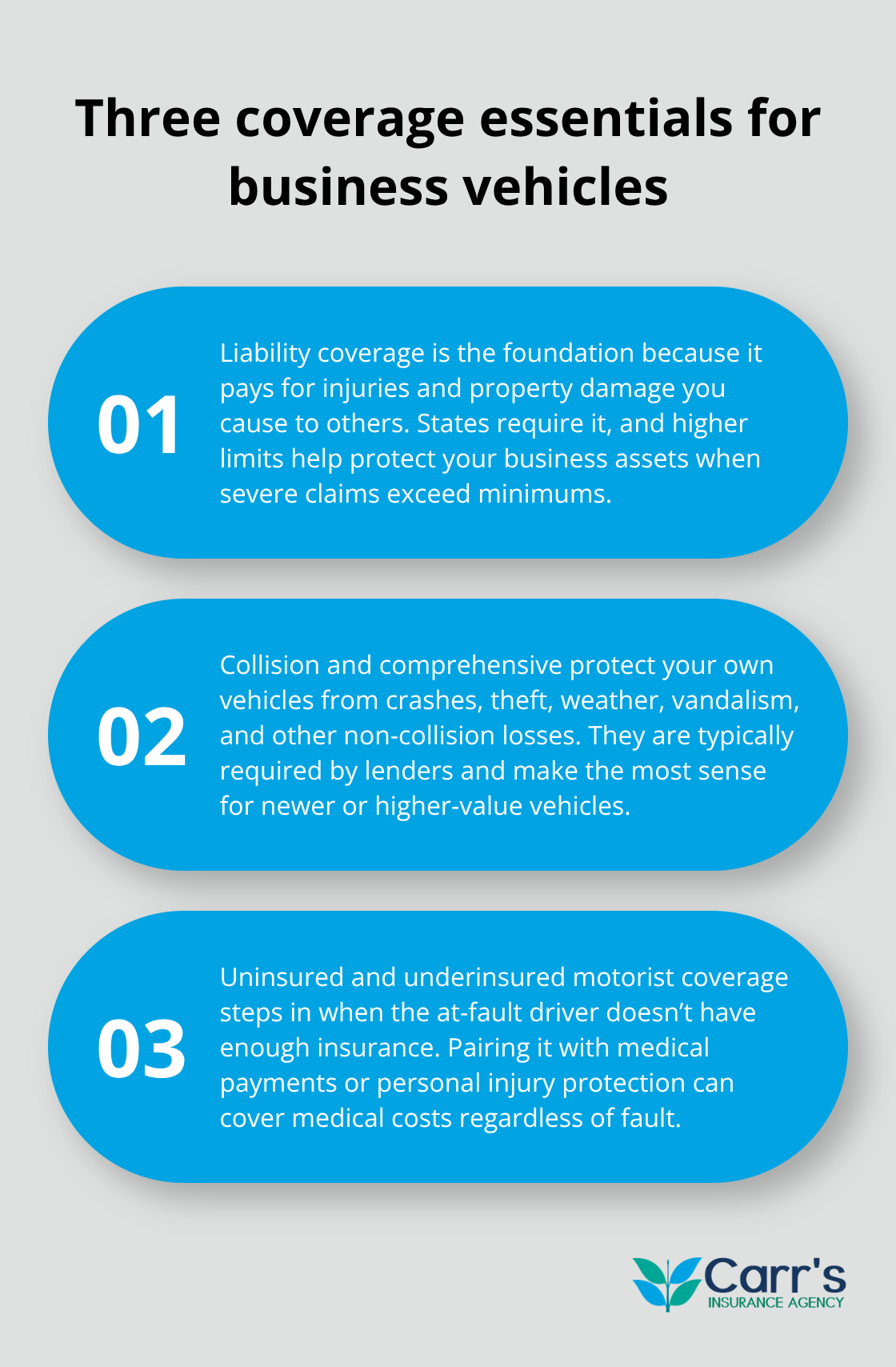
Liability coverage is non-negotiable because every state requires it, with minimum limits varying by location. This coverage pays for injuries and property damage you cause to third parties when you drive for business. If you hit another vehicle or injure someone, your liability coverage protects your company from lawsuits that could drain your bank account.
Depending on vehicle weight and cargo, liability requirements can range between $300,000 and $5,000,000. A serious accident can easily exceed state minimums, leaving your business personally liable for the difference. Higher limits cost more upfront but shield your assets when claims spiral beyond what state law requires.
Collision and Comprehensive Coverage Protects Your Own Vehicles
Collision pays for repairs when you hit something or something hits you, while comprehensive covers theft, weather, vandalism, and other non-collision events. If you own the vehicle outright, you control whether to add these, but if you finance or lease, your lender requires them.
The cost-benefit analysis depends on your vehicle’s age and value. A $3,000 used work van with a $500 deductible might cost more to insure with collision than it’s worth, whereas a newer $25,000 commercial truck justifies the protection. Calculate what you’d pay out of pocket to replace or repair your vehicles against the annual premium to make an informed decision.
Uninsured and Underinsured Motorist Coverage Protects You from Other Drivers’ Mistakes
Uninsured and underinsured motorist coverage is where many business owners make dangerous assumptions. This coverage protects you and your employees when another driver causes an accident but lacks sufficient insurance. Without it, you chase an uninsured driver for damages while your medical bills and vehicle repairs pile up.
This coverage matters regardless of your industry, and it costs relatively little to add compared to the protection it provides. Medical payments coverage or personal injury protection covers medical expenses for you and your employees injured in accidents, regardless of who caused the crash. For businesses with multiple drivers, this becomes valuable protection that keeps your operation moving without employees bearing out-of-pocket costs.
Compare Quotes with Specific Coverage Details in Mind
When you request quotes, ask providers to specify liability limits, deductible amounts, and whether collision and comprehensive are included or optional add-ons. Your business type, vehicle values, and driver profiles determine what makes financial sense, which is why generic quotes rarely capture your actual needs. The cheapest option often sacrifices coverage breadth that protects your business when accidents happen.
Now that you understand what coverage types matter, the next step involves gathering accurate information about your business and vehicles so you can request meaningful quotes from multiple providers.
Getting the Right Information Before You Request Quotes
Organize Your Business and Vehicle Details
Requesting quotes without organized information wastes time and produces incomplete comparisons that mislead you into picking the wrong provider. Start by documenting your exact business structure, the vehicles you operate, and how you use them daily. List each vehicle’s make, model, year, vehicle identification number, current mileage, and whether you own, finance, or lease it.
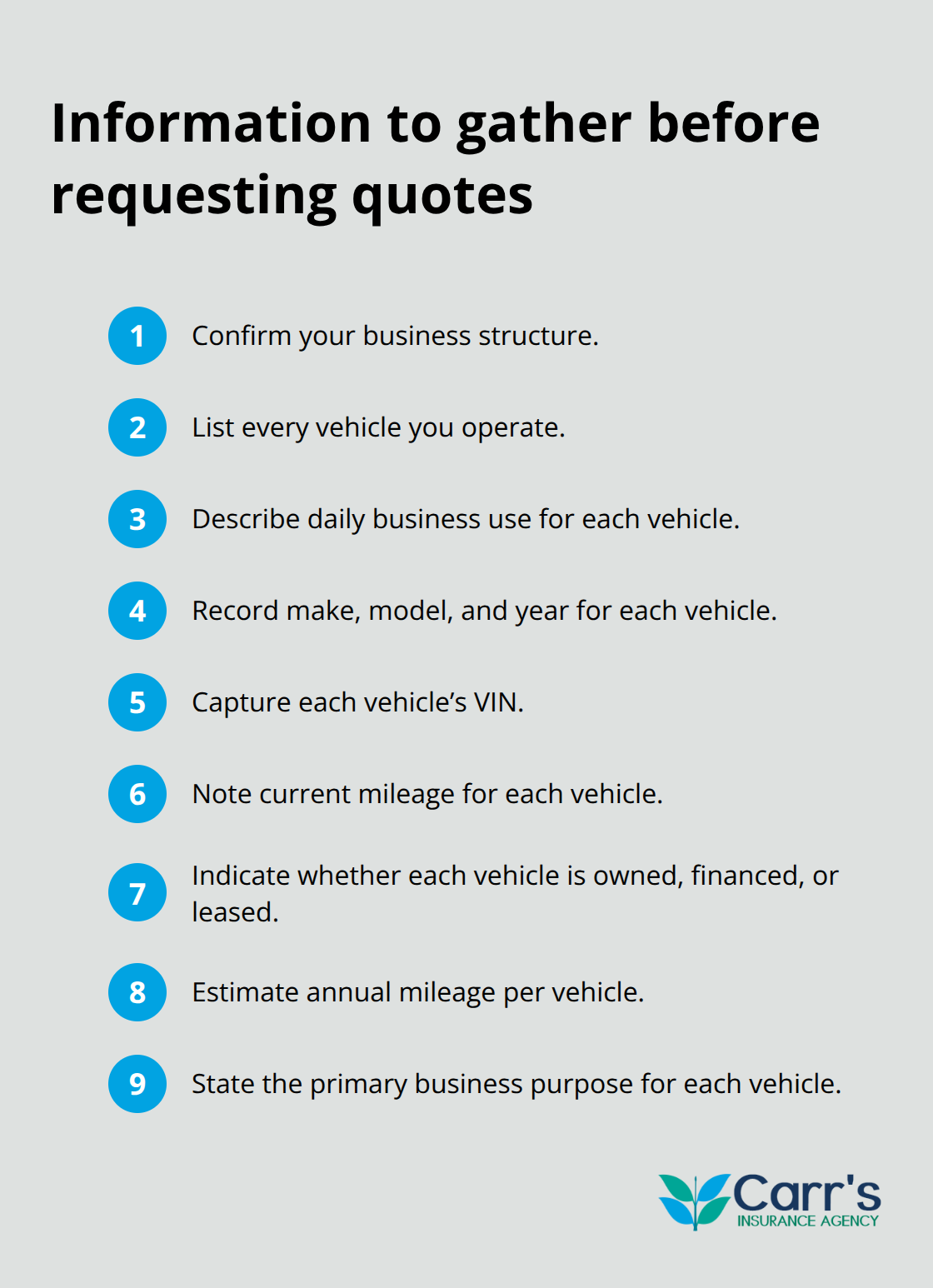
Include annual mileage estimates and the primary business purpose for each vehicle-deliveries, jobsite visits, equipment hauling, or general business use all carry different risk profiles that insurers price separately.
Document Your Drivers and Current Coverage
Document your drivers too: names, ages, driving records, and years of driving experience. Insurers weight young drivers and those with accidents or violations far more heavily than clean records, so accurate driver information prevents quote surprises later. Gather your current business auto policy if you have one, noting your existing liability limits, deductibles, and any add-on coverages you currently carry. This baseline helps you compare apples to apples across quotes rather than accidentally downgrading protection to chase a lower price.
Request Quotes with Identical Coverage Parameters
When you contact providers, request quotes with identical coverage limits and deductibles across all of them so price differences reflect actual rate variation, not coverage gaps. Ask each provider to break down their quote by coverage type and explain what each component costs-this reveals which insurer charges premium rates for specific coverages your business actually needs. Standard commercial auto coverage typically includes liability, collision, comprehensive, uninsured/underinsured motorist, and medical payments components.
Use Online Tools and Independent Agents
The Zebra, an auto insurance comparison marketplace, generates personalized quotes in roughly five minutes and displays quotes side by side from multiple carriers so you see price, coverage, and available perks in one view without manually calling dozens of agencies. Request quotes online from at least three providers, but contact an independent agent who represents multiple carriers because agents often access discounts and coverage options unavailable through online quote tools alone. These agents can represent top carriers and help you navigate options specific to your business needs.
Evaluate Total Protection, Not Just Price
When analyzing quotes, compare liability limits first since state minimums frequently leave your business underprotected, then examine deductible choices where higher deductibles lower premiums but increase your out-of-pocket costs during claims. Review what add-ons each quote includes: roadside assistance, rental reimbursement, and expanded towing vary by provider and affect real-world value during emergencies. Ignore price alone and instead evaluate total protection relative to cost, checking each provider’s financial strength and claims handling reputation because a cheap quote from an insurer known for slow claims processing costs you money when accidents happen. With your quotes in hand and coverage options clear, you’re ready to examine the specific factors that drive your rates up or down.
What Drives Your Business Auto Insurance Rates
Your insurance premium reflects risk, and insurers calculate risk by examining three interconnected factors: who drives your vehicles, what vehicles you operate, and where you operate them. Understanding how each factor influences your quote prevents sticker shock and reveals where you can legitimately reduce costs without sacrificing protection.
Driver History Carries the Most Weight in Rate Calculations
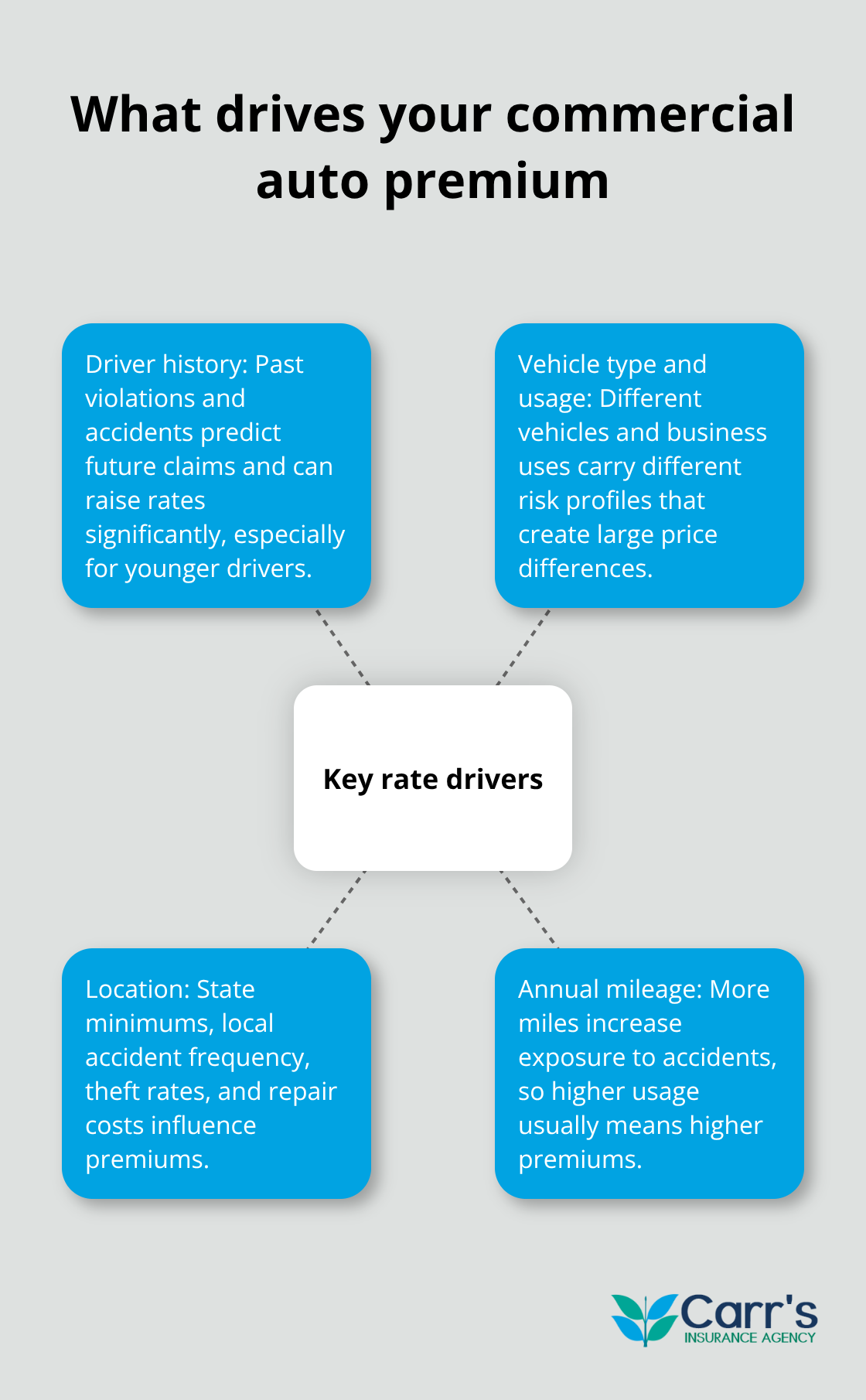
Driver history carries the most weight in rate calculations because past behavior predicts future claims. A driver with two accidents in the past three years signals higher risk than someone with a clean ten-year record, and insurers price that difference substantially. Progressive data from 2025 shows that contractors with clean records average around $260 per month for commercial auto coverage, but violations can increase that baseline depending on severity and your state’s rating rules.
Age matters too: drivers under 25 cost significantly more to insure than those over 30, and this premium typically persists until age 65. If your business relies on young drivers, expect higher quotes across all providers regardless of their individual driving records. When you request quotes, provide complete and honest driver information because omitting violations or downplaying accident severity leads to quote cancellations after you purchase the policy when the insurer discovers the truth during underwriting.
Vehicle Type and Usage Shape Your Premium More Than You Realize
The vehicles you operate directly determine your rate because a food delivery van carrying hot containers through city traffic faces different risks than a contractor’s pickup truck visiting jobsites once weekly. For-hire transport trucks average roughly $926 per month according to Progressive’s 2025 data, while business auto vehicles average $276 monthly, illustrating how usage type creates dramatic rate differences.
A tow truck averages $606 per month because towing operations expose the vehicle to mechanical breakdowns, accidents during recovery, and liability from towed vehicles. Newer vehicles with safety features and comprehensive repair documentation cost less to insure than older models because claims data shows them involved in fewer serious accidents. Vehicle weight and cargo capacity also matter: a heavy-duty truck hauling construction equipment generates higher rates than a compact van delivering packages because equipment damage claims and rollover risk increase premiums.
When you compare quotes, specify exactly how each vehicle gets used because vague descriptions like general business use produce inflated estimates. Insurers want specifics: do your contractors drive to multiple jobsites daily or make one visit per week? Does your delivery vehicle operate in dense urban areas or suburban routes? These operational details directly affect your quotes.
Location and Mileage Patterns Reveal Hidden Rate Drivers
Your business location determines which state’s minimum liability requirements apply and influences local accident frequency, theft rates, and repair costs that insurers build into regional pricing models. Operating in Hawaii versus California produces different rates despite similar business types because local claims history and cost of repairs vary significantly.
Annual mileage estimates matter because higher mileage increases accident exposure: a service business vehicle traveling 25,000 miles yearly costs more to insure than an identical vehicle driven 5,000 miles for occasional jobsite visits. Insurers scrutinize mileage claims carefully because underestimating your actual usage creates coverage gaps when claims occur outside stated parameters. If you estimate 10,000 annual miles but actually drive 20,000, your insurer can deny claims or cancel your policy for misrepresentation.
Request quotes based on realistic mileage figures from your actual business operations, not optimistic estimates you hope to achieve. Seasonal variations matter too: a landscaping business with peak activity during summer months drives more miles June through August than during winter, and some insurers adjust rates based on seasonal usage patterns if you provide that detail. Urban locations with higher traffic density and theft rates produce higher premiums than rural areas where accident frequency and vehicle theft remain lower.
Final Thoughts
Comparing business auto insurance quotes from multiple providers prevents costly coverage gaps that emerge when accidents happen and your protection falls short. Driver history, vehicle type, and location shape your rates more than anything else, so providing accurate details to insurers produces quotes that reflect your actual risk profile. Your coverage needs shift as your company grows, your fleet expands, or your operations move to new locations, which means you should review your policy annually with an agent to confirm your liability limits still match your business exposure.
We at Carr’s Insurance Agency have served Hawaii business owners since 1990, and our team compares rates across multiple insurers to connect you with options you might miss shopping alone. As an independent agency, we represent top carriers and work with licensed, locally knowledgeable agents who understand your specific business needs. Rather than accepting the first quote you receive, contact us today to discuss your coverage needs and see how much you could save by comparing business auto insurance quotes from carriers that actually compete for your business.
Reach out to Carr’s Insurance Agency to start your quote comparison and protect your business with the right coverage at the right price.
Disclaimer: The information provided in this blog is for general informational purposes only and does not constitute legal, financial, or insurance advice. Coverage options, terms, and availability may vary. Please consult with a licensed professional for advice specific to your situation





