

Commercial Hurricane Insurance Hawaii: Coverage for Storms
Hawaii’s hurricane season brings real threats to commercial properties. Standard business insurance often leaves gaps that leave you exposed when storms hit.
At Carr’s Insurance Agency, we help Hawaii business owners understand why commercial hurricane insurance in Hawaii is essential. The right coverage protects your assets, operations, and bottom line when nature strikes.
What Commercial Hurricane Insurance Actually Covers
Commercial hurricane insurance protects specific property and business assets when named windstorms strike Hawaii. Standard business policies typically exclude wind damage or place severe limits on it, leaving owners vulnerable when hurricanes hit. We at Carr’s Insurance Agency see this gap repeatedly-businesses assume their general liability or property policies cover hurricane damage, only to discover during claims that wind exclusions apply. Commercial hurricane coverage fills this gap by protecting your building structure, inventory, equipment, and sometimes even business income during storm shutdowns. Your policy can cover roof damage, structural repairs, damaged merchandise, and even temporary relocation costs if your building becomes uninhabitable. Some policies also include coverage for debris removal and emergency repairs to prevent further damage.
Why Your Current Business Policy Leaves You Exposed
Standard commercial property policies often come with wind exclusions or sub-limits that cap hurricane coverage at 5 to 10 percent of your total insured value. This means if your building is worth $500,000 and you have a 10 percent wind sub-limit, you’re only covered for $50,000 in hurricane damage-far less than actual repair costs. Many business owners don’t realize they need separate hurricane or named-peril coverage until it’s too late. Equipment breakdown coverage, business interruption protection, and loss of rents aren’t automatically included in basic hurricane policies either. You must add these endorsements specifically to protect ongoing operational expenses when storms force temporary closures.
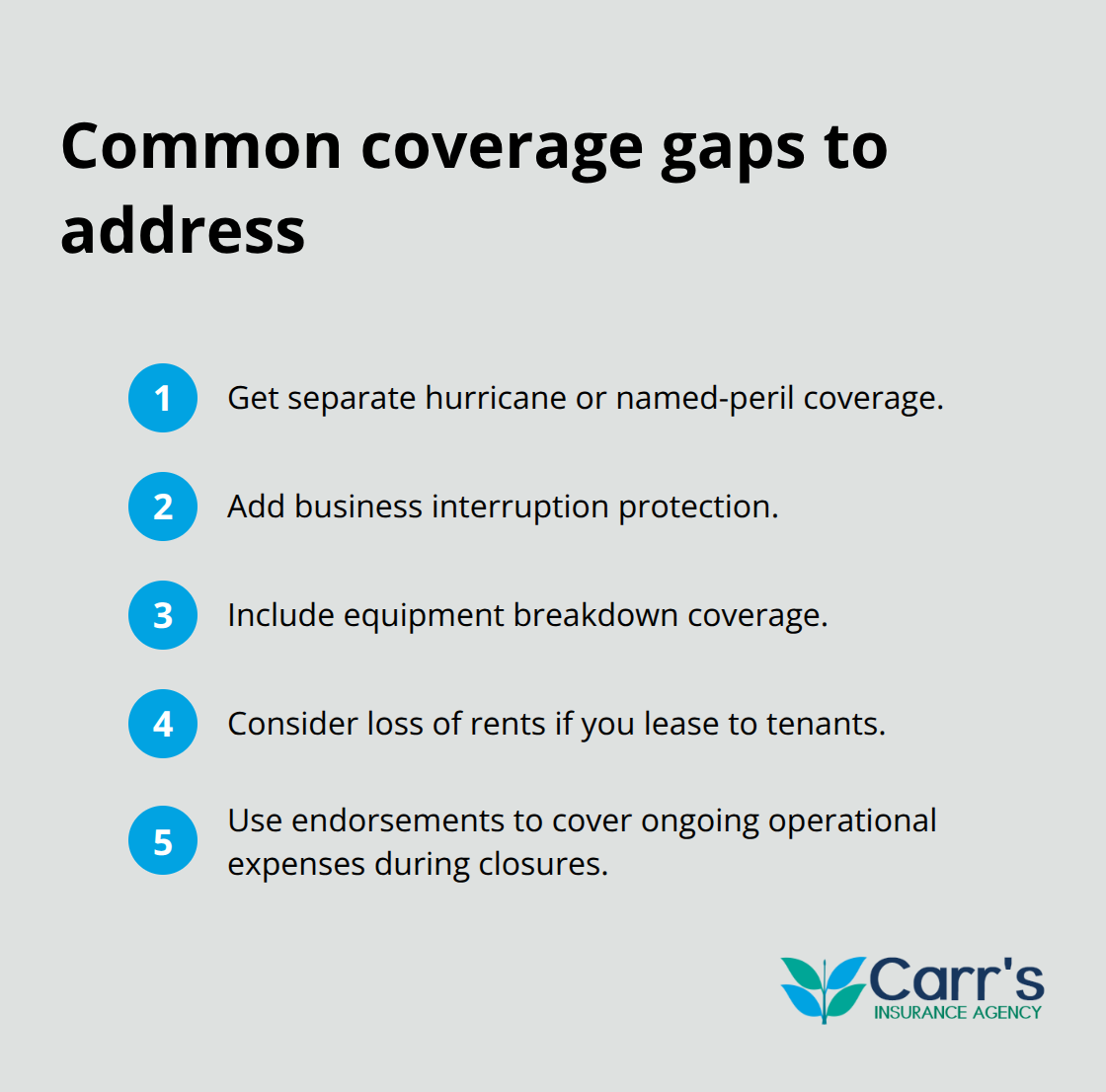
Without these additions, you cover property damage but lose income protection during recovery periods.
Hawaii’s Specific Storm Exposure
Hawaii faces unique hurricane risks due to its central Pacific location and susceptibility to late-season storms. Trade winds and ocean temperatures between June and November create conditions for rapid storm intensification near Hawaii. Your location matters significantly-windward shores and exposed coastlines face higher velocity winds than leeward areas, affecting both premium rates and coverage recommendations. Salt spray and moisture from hurricanes also accelerate corrosion of metal roofing, HVAC systems, and electrical equipment, creating secondary damage that standard coverage often misses. Flood damage from hurricane-driven storm surge requires separate flood insurance, which wind policies explicitly exclude.
Assessing Your Coverage Needs
Different business types face different hurricane exposures, and your coverage should reflect your actual risk profile. A retail storefront on Oahu’s windward side needs different protection than a warehouse in a more sheltered location. Your industry matters too-restaurants and hospitality businesses face higher business interruption losses than manufacturing operations with lower daily revenue. The deductible you select (typically ranging from $1,000 to $25,000 or higher) directly impacts your premium costs and out-of-pocket expenses when storms hit. Higher deductibles lower your monthly payments but increase what you pay when claims occur. Local agents who understand Hawaii’s climate and your specific neighborhood can recommend appropriate coverage limits and deductible levels based on your actual risk profile.
Types of Commercial Hurricane Policies Available
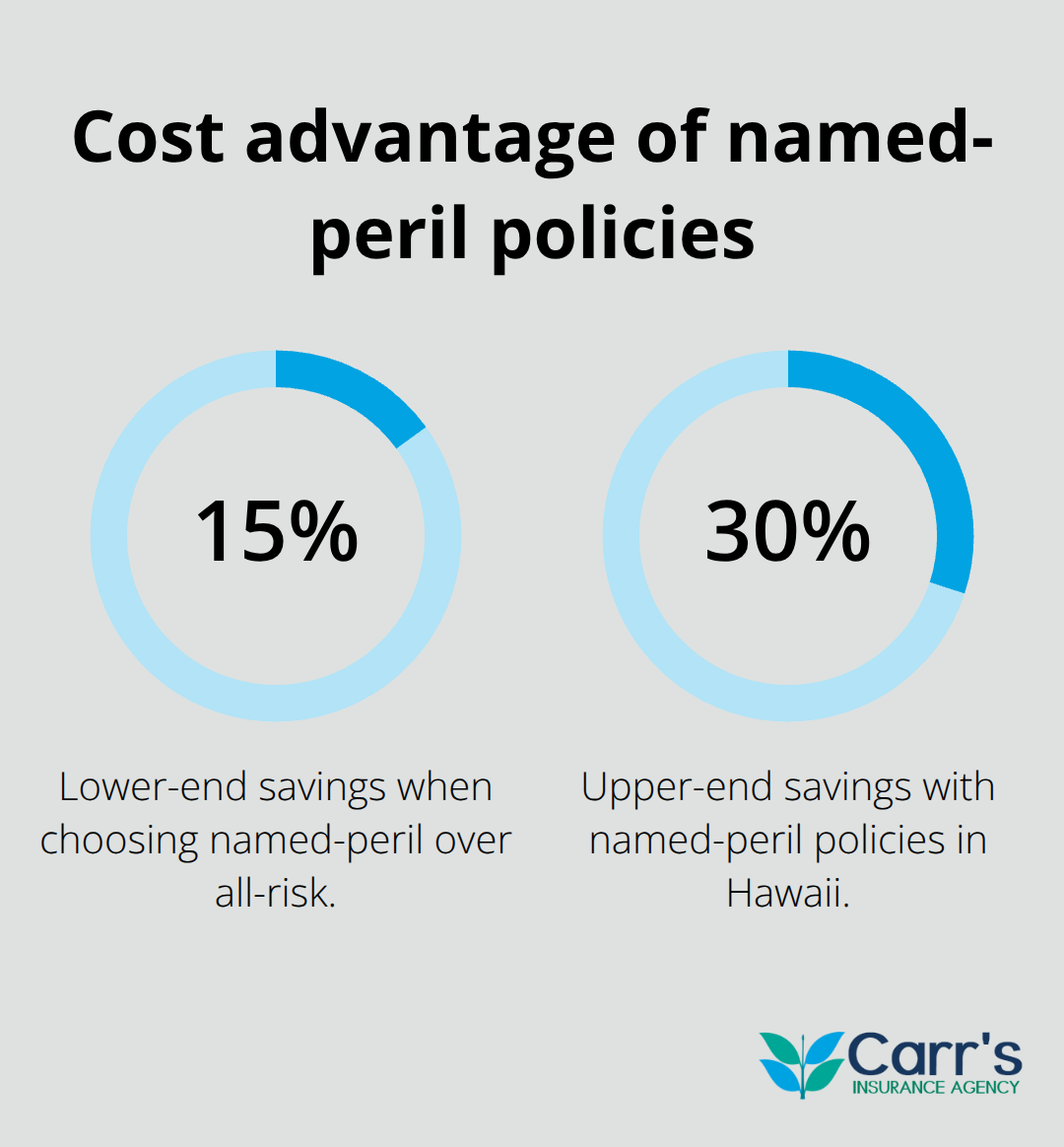
Named peril policies and all-risk policies represent fundamentally different approaches to hurricane protection, and named peril coverage makes more sense for most Hawaii commercial properties. Named peril policies specifically list the perils they cover-hurricane, windstorm, hail, and similar events-while all-risk policies theoretically cover everything except what’s explicitly excluded. The problem with all-risk policies is that they often come with wind exclusions or severely limited wind coverage anyway, making them deceptively expensive for the actual protection they provide. Named peril hurricane policies cost 15 to 30 percent less than all-risk alternatives while delivering clearer, more straightforward coverage for the specific threats Hawaii businesses actually face. When you purchase a named peril policy focused on hurricane and windstorm protection, you know exactly what’s covered and what isn’t, eliminating the surprise gaps that plague all-risk policies during claims.
Deductibles Shape Both Your Premium and Your Risk
Deductible selection directly determines your monthly costs and your financial exposure when storms strike. Hawaii commercial hurricane policies typically offer deductibles ranging from $1,000 to $50,000, with some carriers allowing even higher options for larger properties. A $5,000 deductible represents the middle ground for most small to mid-sized businesses, balancing reasonable monthly premiums against manageable out-of-pocket expenses. Choosing a $10,000 deductible instead of $5,000 can reduce your annual premium by 20 to 25 percent, creating significant savings for businesses willing to absorb larger upfront costs after storms. However, if your business operates on thin margins or lacks substantial cash reserves, a higher deductible becomes risky-you might qualify for a lower premium but face financial strain when you actually need to file a claim. The calculation involves your business’s emergency fund capacity and your tolerance for unexpected expenses, not simply selecting the highest deductible available to minimize premiums.
Business Interruption and Equipment Breakdown Matter More Than Most Realize
Business interruption coverage protects your lost income during the days or weeks your operations shut down after hurricane damage, and this protection often proves more valuable than the property damage coverage itself. A restaurant loses $2,000 daily in revenue during a two-week closure, facing $28,000 in income loss, yet many business owners focus solely on insuring their $150,000 building structure. Equipment breakdown coverage addresses the secondary damage that hurricanes cause-HVAC systems corroded by salt spray, electrical panels damaged by moisture, refrigeration units failing after storm-related power surges. These additions require specific endorsements to your base hurricane policy and cost between 10 and 20 percent more than basic coverage, but they transform your policy from property-focused to operationally focused. Without business interruption coverage, you recover your building but lose months of revenue during repairs. Without equipment breakdown protection, you replace damaged property only to face hidden failures in complex systems weeks after the storm passes.
Selecting Additional Coverages for Your Operation
Your specific business type and location determine which additional coverages make financial sense. A retail storefront on Oahu’s windward side needs different protection than a warehouse in a more sheltered location, and your industry matters significantly. Restaurants and hospitality businesses face higher business interruption losses than manufacturing operations with lower daily revenue. Debris removal coverage addresses the costs of clearing storm wreckage from your property, while emergency repair endorsements cover temporary fixes that prevent further damage. Some policies include coverage for loss of rents (if you lease to tenants) or extra expense coverage (for temporary relocation costs). An independent agent who understands Hawaii’s climate and your specific neighborhood can recommend appropriate coverage limits and endorsements based on your actual risk profile and operational needs.
Matching Coverage to What Your Business Actually Owns and Earns
Calculate Your Total Insurable Value
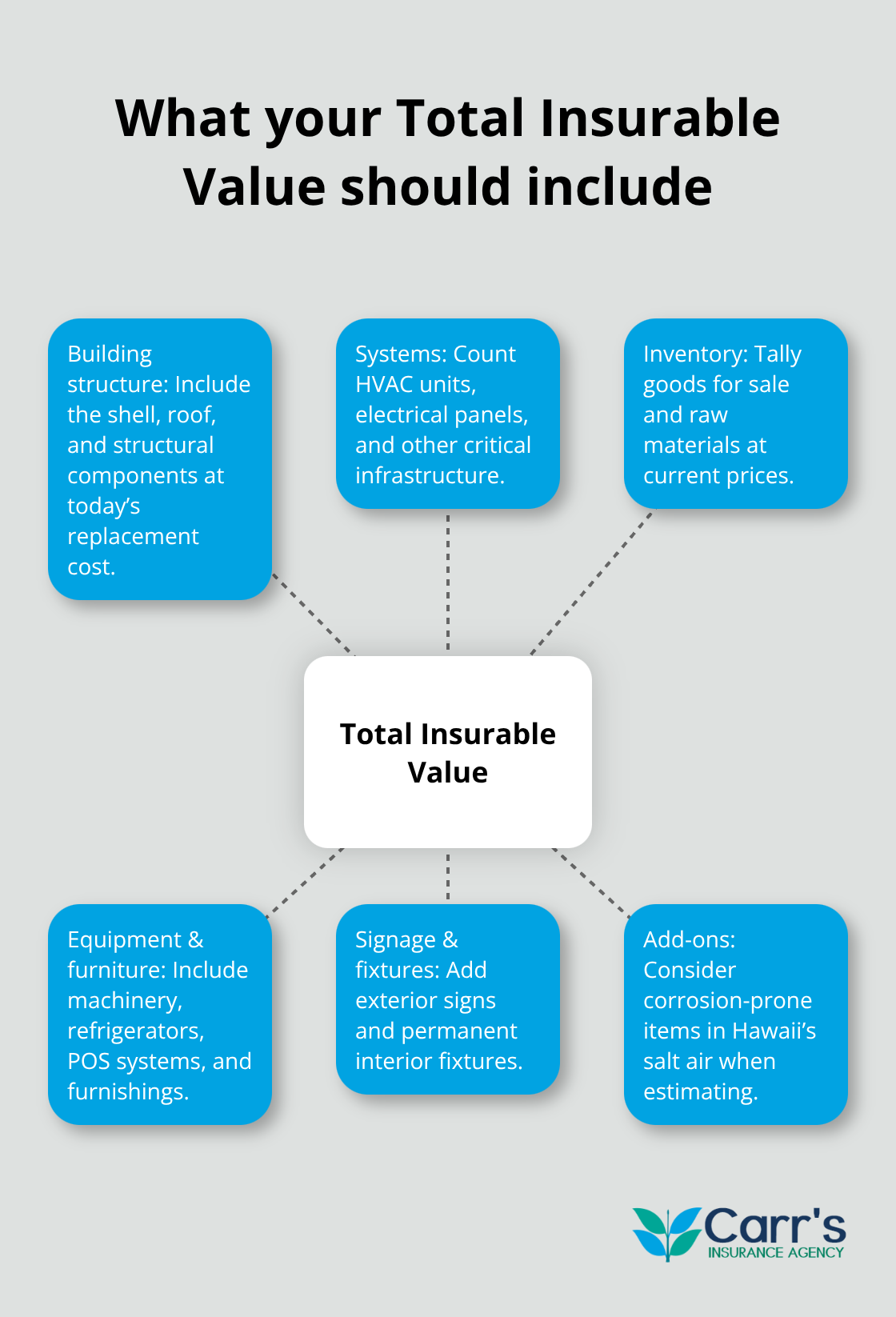
Start by calculating your total insurable value, not what you paid for property years ago. Walk through your building and list every asset that would need replacement after a hurricane: the structure itself, HVAC systems, electrical panels, inventory, furniture, equipment, signage, and any permanent fixtures. Many Hawaii business owners underestimate this number significantly. A mid-sized retail space might contain $200,000 in inventory alone, yet the owner only insures the $150,000 building value.
Your coverage limit should match replacement costs in today’s Hawaii market, where construction and labor costs run 15 to 20 percent higher than mainland averages. Get written quotes from local contractors for what repairs would actually cost, then add 20 percent for inflation and supply chain delays common after major storms. This becomes your baseline coverage amount.
Protect Your Operating Income
Next, calculate your monthly operating expenses and daily revenue. If your business generates $5,000 daily and faces a two-week closure after hurricane damage, business interruption coverage should protect at least $70,000 in lost income. Many policies cap business interruption at 12 months of coverage, which works well for most Hawaii businesses since hurricane recovery typically takes 3 to 6 months.
Equipment breakdown endorsements should cover every system that keeps your operation running. HVAC units cost $8,000 to $15,000 to replace, commercial refrigeration units run $5,000 to $20,000, and electrical systems can exceed $30,000 in repairs. These secondary damage costs often exceed the initial structural damage from wind.
Avoid the Affordability Trap
The single biggest mistake business owners make is choosing coverage limits based on what feels affordable rather than what their actual exposure demands. A restaurant owner paying $200 monthly for a $50,000 coverage limit faces financial catastrophe if a hurricane causes $150,000 in damage. Your premium should reflect your real risk, not the other way around.
Local agents who spend time in Hawaii’s communities understand which neighborhoods face highest wind exposure, how salt spray affects specific equipment types, and which coverage gaps create problems for your particular industry. Windward Oahu properties face measurably higher wind speeds than leeward locations, affecting both your risk profile and appropriate deductible selection. An agent familiar with your specific block knows whether your building sits in an area prone to storm surge, which determines whether flood insurance becomes essential alongside hurricane coverage.
Select Endorsements That Match Your Operation
They can also identify which additional endorsements matter most for your operation rather than suggesting every available option. Insurance protects what you’ve built, so coverage decisions should rest on your actual asset values and income needs, not on minimizing monthly premium payments. Your specific business type and location determine which additional coverages make financial sense-a retail storefront on Oahu’s windward side needs different protection than a warehouse in a more sheltered location.
Final Thoughts
Commercial hurricane insurance in Hawaii protects what you’ve built, but only if your coverage matches your actual exposure. The gap between what business owners think they’re covered for and what their policies actually protect remains the biggest problem we see at Carr’s Insurance Agency. Standard business policies fail because they exclude wind damage or cap it at levels far below real repair costs.
Named peril hurricane coverage costs less than all-risk alternatives while delivering clearer protection for the specific threats Hawaii businesses face. Your deductible selection, business interruption endorsements, and equipment breakdown coverage determine whether you recover quickly or struggle financially after storms hit. The math is straightforward: calculate your total replacement costs, add your monthly operating expenses, then select coverage limits that match those numbers.
Your location matters significantly-windward properties face higher wind speeds than leeward areas, affecting both your premium rates and appropriate coverage recommendations. Salt spray accelerates corrosion of metal roofing and electrical equipment, creating damage that standard coverage misses. Contact Carr’s Insurance Agency to discuss your commercial hurricane insurance Hawaii needs, and our locally knowledgeable agents will recommend appropriate coverage limits based on your actual exposure.
Disclaimer: The information provided in this blog is for general informational purposes only and does not constitute legal, financial, or insurance advice. Coverage options, terms, and availability may vary. Please consult with a licensed professional for advice specific to your situation






