

Hurricane Insurance Claims Hawaii: From Filing to Settlement
Hurricanes hit Hawaii hard, and the aftermath often brings confusion about insurance coverage and claims. We at Carr’s Insurance Agency know that understanding your hurricane insurance claims in Hawaii can mean the difference between a smooth recovery and months of financial stress.
This guide walks you through everything from filing your claim to receiving your settlement payment.
Understanding Hurricane Coverage in Hawaii
Standard homeowners policies in Hawaii cover wind damage from hurricanes, but this coverage comes with strict limits that catch most people off guard. Wind damage includes damage to your roof, walls, windows, and structural components caused directly by hurricane-force winds. However, water damage from storm surge and heavy rainfall falls into a completely different category and requires separate coverage. According to the National Association of Insurance Commissioners, homeowners in coastal states need to understand what their policies exclude to avoid massive out-of-pocket expenses after major storms.
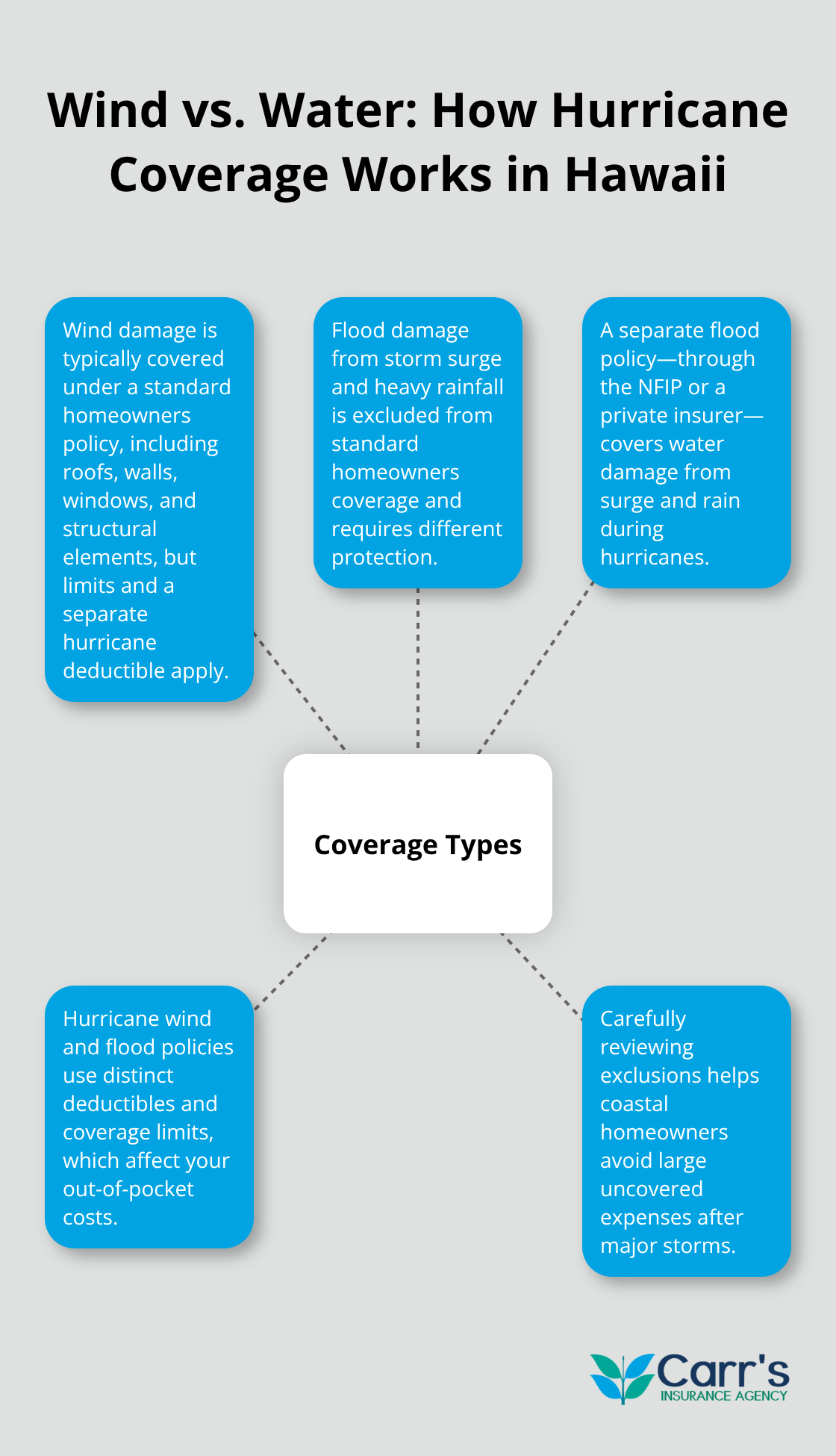
The distinction matters tremendously because hurricane damage in Hawaii frequently involves both wind and water, yet insurers treat them as separate claims with different coverage limits and deductibles.
Water Damage Requires Its Own Policy
Flood damage from storm surge and torrential rain is explicitly excluded from standard homeowners policies across Hawaii. If you live in a flood-prone area or near the coast, you need a separate flood insurance policy through the National Flood Insurance Program or a private flood insurer. The Hawaii Department of Commerce and Consumer Affairs reports that only about 15% of Hawaii homeowners carry flood insurance despite living in high-risk areas. This gap in coverage is catastrophic because storm surge from major hurricanes can push water inland several miles, affecting properties far from the immediate coastline. Any homeowner within five miles of the ocean should seriously consider flood coverage, regardless of what flood maps suggest. Private flood insurance often costs less than federal flood insurance while offering better coverage terms and faster claims processing.
Hurricane Deductibles Work Differently Than You Think
Most Hawaii homeowners policies include a separate hurricane deductible that applies only to hurricane-related wind damage, and this deductible is typically much higher than your standard deductible. Instead of a flat dollar amount, hurricane deductibles often run between 2% and 10% of your home’s insured value, meaning a home insured for $500,000 could face a $10,000 to $50,000 deductible per claim. The deductible applies once per hurricane season regardless of how many storms hit, not per individual storm. Hawaii’s insurance commissioner requires insurers to clearly disclose these separate hurricane deductibles in policy documents, yet many homeowners never review this information until after a hurricane strikes. Water damage from flooding carries its own deductible through a flood policy, typically ranging from $1,000 to $2,500. Understanding these layered deductibles before hurricane season arrives means you can budget appropriately and avoid financial shock when you file claims.
What Happens Next with Your Claim
Once you understand your coverage limits and deductibles, the next critical step involves knowing exactly what to do immediately after a hurricane strikes your property.
Filing Your Hurricane Claim Right
The first hours after a hurricane hits your property determine whether your claim moves smoothly or gets bogged down in disputes. Stop worrying about cleanup and start documenting everything instead-this is the single most important action you can take.
Document Damage Before Cleanup Begins
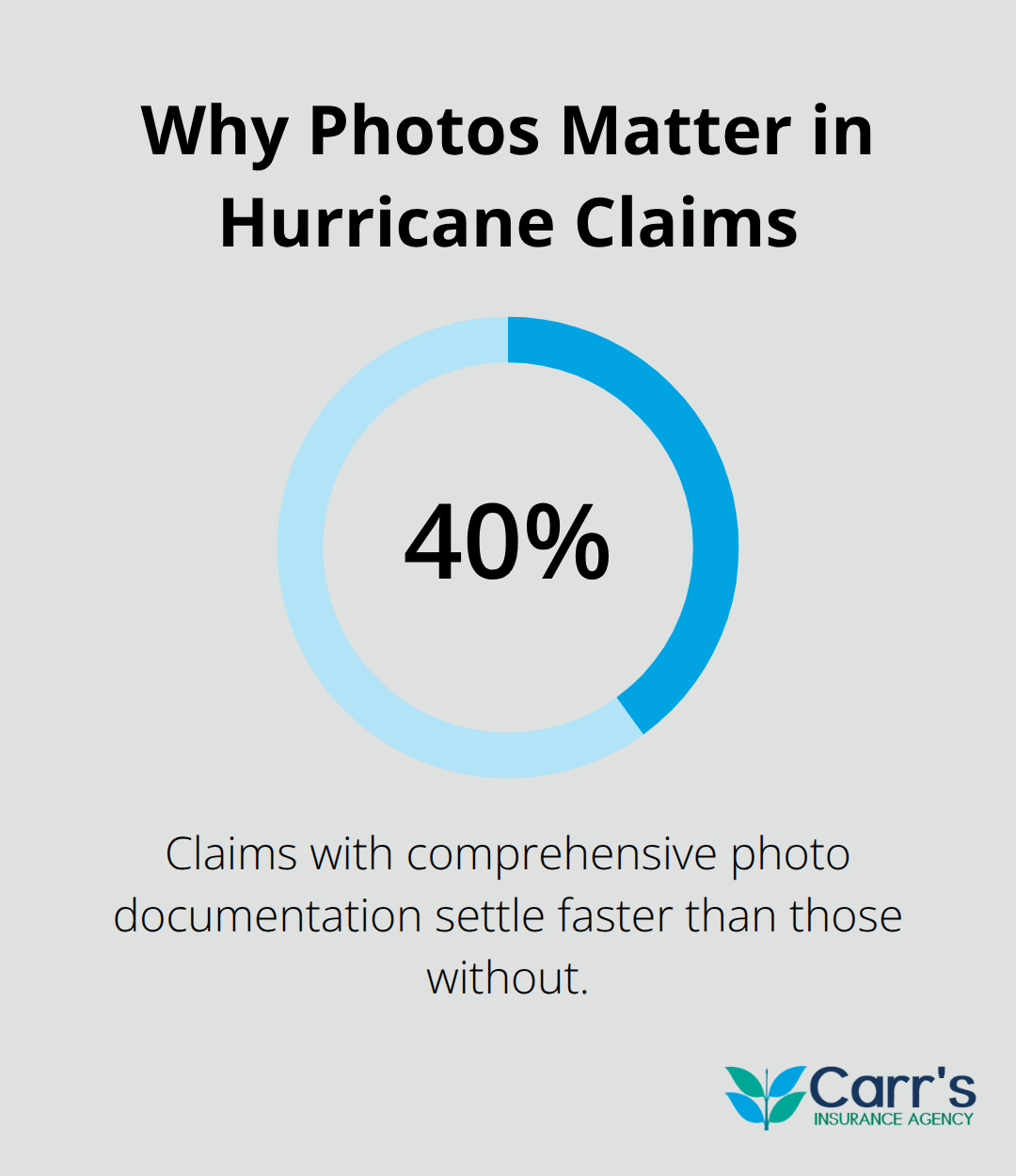
Photograph and video all damage before you remove debris or make temporary repairs, as insurers need to see the damage in its original state. Your phone camera works perfectly for this task. Capture wide shots showing the overall damage plus close-ups of specific broken windows, roof damage, or structural issues. Claims with comprehensive photo documentation settle 40% faster than those without visual evidence. Create a dated folder on your phone or cloud storage with these images immediately, before you contact anyone.
Contact Your Insurer Quickly
Contact your insurer within 24 to 48 hours of the storm passing. Most Hawaii insurers operate dedicated hurricane hotlines during peak season, and early reporting prevents delays in assigning an adjuster. Request written confirmation of your claim number and assigned adjuster’s contact information when you file.
Gather Essential Documentation
Collect your insurance policy documents, home inventory records, and receipts for any temporary repairs or emergency expenses like boarding up windows or tarping a damaged roof. Maintaining a detailed home inventory (including purchase dates and values for major items) dramatically strengthens your claim if contents are damaged. Write down the exact date and time the hurricane hit your area, wind speeds if available from local weather reports, and any damage to neighboring properties as supporting context.
Cover Emergency Mitigation Costs
If you made temporary repairs to prevent further damage, keep all receipts and photographs showing the work. Insurers typically cover reasonable emergency mitigation costs, so document everything carefully. Submit your claim through your insurer’s preferred method, whether online portal, phone, or in-person.
With your claim filed and documentation submitted, the next phase begins when an adjuster evaluates your property and determines what your insurer will pay.
The Claims Process and Settlement Timeline
After your claim hits your insurer’s system, an adjuster gets assigned within 24 to 72 hours during hurricane season when dozens of claims flood in simultaneously. Your adjuster is the person who determines how much your insurer pays, making this relationship critical to your settlement outcome. The adjuster will contact you to schedule an inspection, typically within 5 to 10 business days depending on claim volume and weather conditions. During this waiting period, continue to document any additional damage and keep receipts for all temporary repairs or emergency expenses. If your insurer hasn’t contacted you within two weeks, call your claims department directly and ask for a status update with a specific inspection date. Hawaii’s insurance commissioner requires insurers to acknowledge claims within 15 days and provide a timeline for inspection, so pushing back on delays is not just acceptable-it’s your right.
How Adjusters Evaluate Damage
Your adjuster walks through your property with a trained eye for structural damage, water intrusion, and the specific cause of each damaged component. Adjusters working in Hawaii typically spend 2 to 4 hours on residential properties, photographing damage, measuring affected areas, and noting whether damage resulted from wind or water. This distinction matters enormously because wind damage pays out from your homeowners coverage while other policies do not cover water damage from flooding but may cover damage from other perils, such as wind-driven rain or fire. Be present during the inspection and point out all damage, including issues in attics, crawl spaces, and interior walls that aren’t immediately visible. Provide your adjuster with your documentation folder containing photos taken immediately after the storm, receipts for temporary repairs, and your home inventory records. Adjusters who see comprehensive documentation upfront are more likely to approve higher settlements because the evidence removes guesswork from their evaluation.
Challenging an Adjuster’s Assessment
If you disagree with the adjuster’s assessment, most policies include an appraisal clause allowing you to hire an independent appraiser to challenge their valuation. This process adds 4 to 8 weeks to settlement, but it protects you when you believe the adjuster undervalued your damage. Request a detailed explanation of how your insurer calculated the payout, including the depreciation applied to damaged items. Don’t accept a settlement check without understanding exactly what damage it covers and what you’ll repair out-of-pocket.
Timeline from Filing to Payment
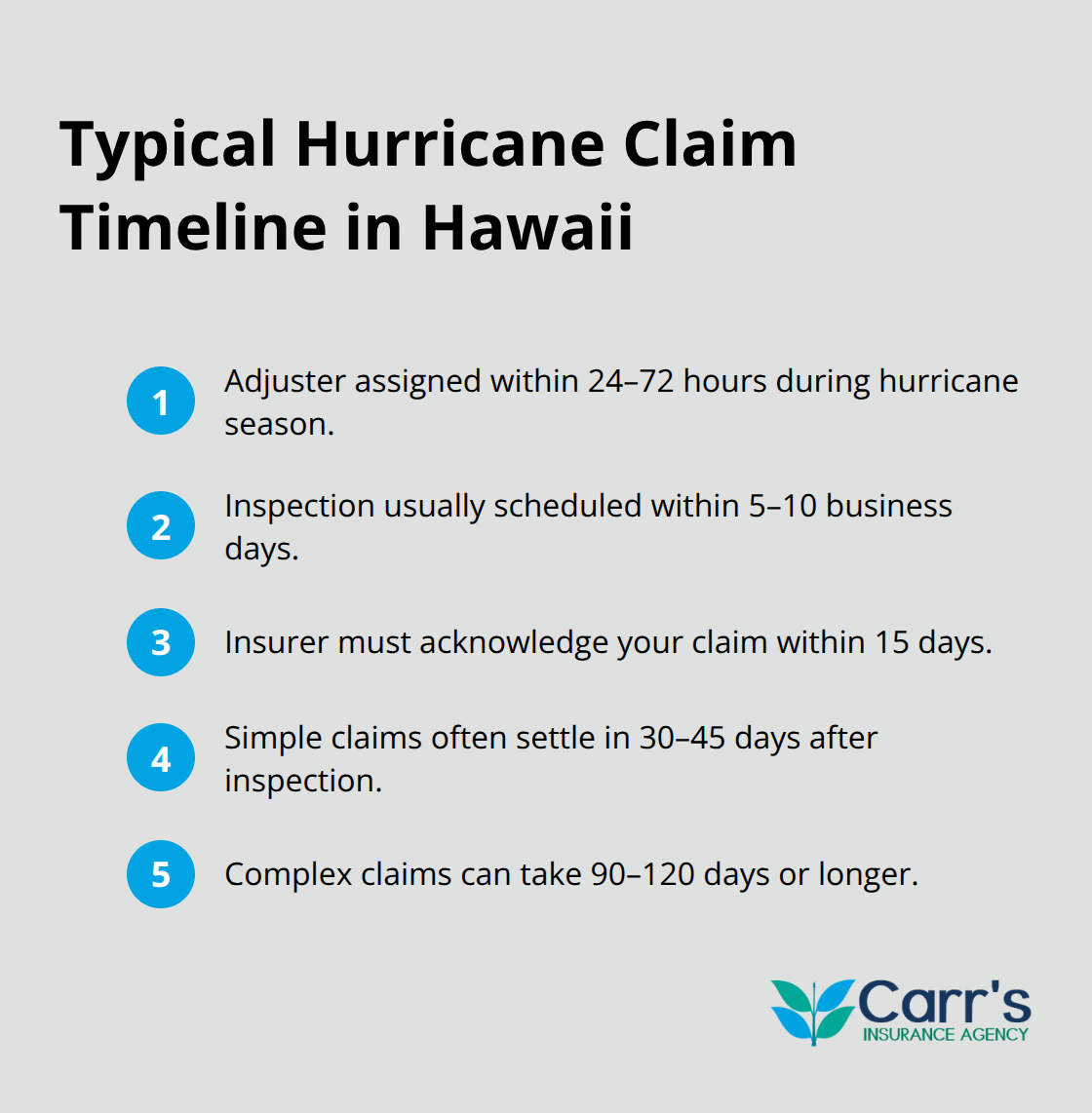
Simple claims with minor wind damage and clear documentation typically settle within 30 to 45 days from the initial inspection. Complex claims involving both wind and water damage, structural issues, or content disputes can stretch to 90 to 120 days or longer. Your insurer must provide written notice of claim approval or denial within 30 days of receiving your claim in Hawaii, though this deadline often extends during major hurricane seasons when insurers are overwhelmed. Once your claim receives approval, your insurer issues payment either directly to you or jointly to you and any mortgage lender or lienholder on your property.
Final Thoughts
Hurricane insurance claims in Hawaii demand preparation before the storm arrives, not after. Understanding what your standard homeowners policy covers, recognizing that water damage requires completely separate flood insurance, and documenting everything immediately after a hurricane strikes transforms a chaotic claims process into a manageable recovery path. These three steps matter most when hurricane season hits your property.
Working with a local agent makes an enormous difference when you file hurricane insurance claims in Hawaii. We at Carr’s Insurance Agency have served Hawaii since 1990, and our locally knowledgeable agents understand the specific risks facing Hawaii homeowners that national insurers often overlook. An independent broker like ours compares rates across top carriers to find coverage that actually protects your property rather than leaving dangerous gaps, and when you file a claim, having an agent who knows your policy inside and out accelerates your settlement significantly.
Start protecting your property now by reviewing your current coverage with a licensed agent who understands Hawaii’s unique hurricane exposure. Schedule a policy review before the next hurricane season to confirm you have adequate wind coverage, separate flood insurance if you’re in a high-risk area, and clear documentation of your home’s contents and value. Contact us to review your hurricane coverage and build a comprehensive protection plan tailored to your specific property and location.
Disclaimer: The information provided in this blog is for general informational purposes only and does not constitute legal, financial, or insurance advice. Coverage options, terms, and availability may vary. Please consult with a licensed professional for advice specific to your situation






