

Tow Truck Insurance Hawaii: Protecting Your Towing Business
Running a towing business in Hawaii means facing unique risks that standard commercial insurance won’t cover. From vehicle damage to customer injuries, the gaps in typical policies can leave your operation exposed.
At Carr’s Insurance Agency, we’ve helped tow truck operators across Hawaii build protection plans that actually match their daily operations. This guide walks you through the coverage types you need and how to keep costs manageable.
Why Standard Insurance Falls Short for Towing
The Coverage Gaps in General Liability Policies
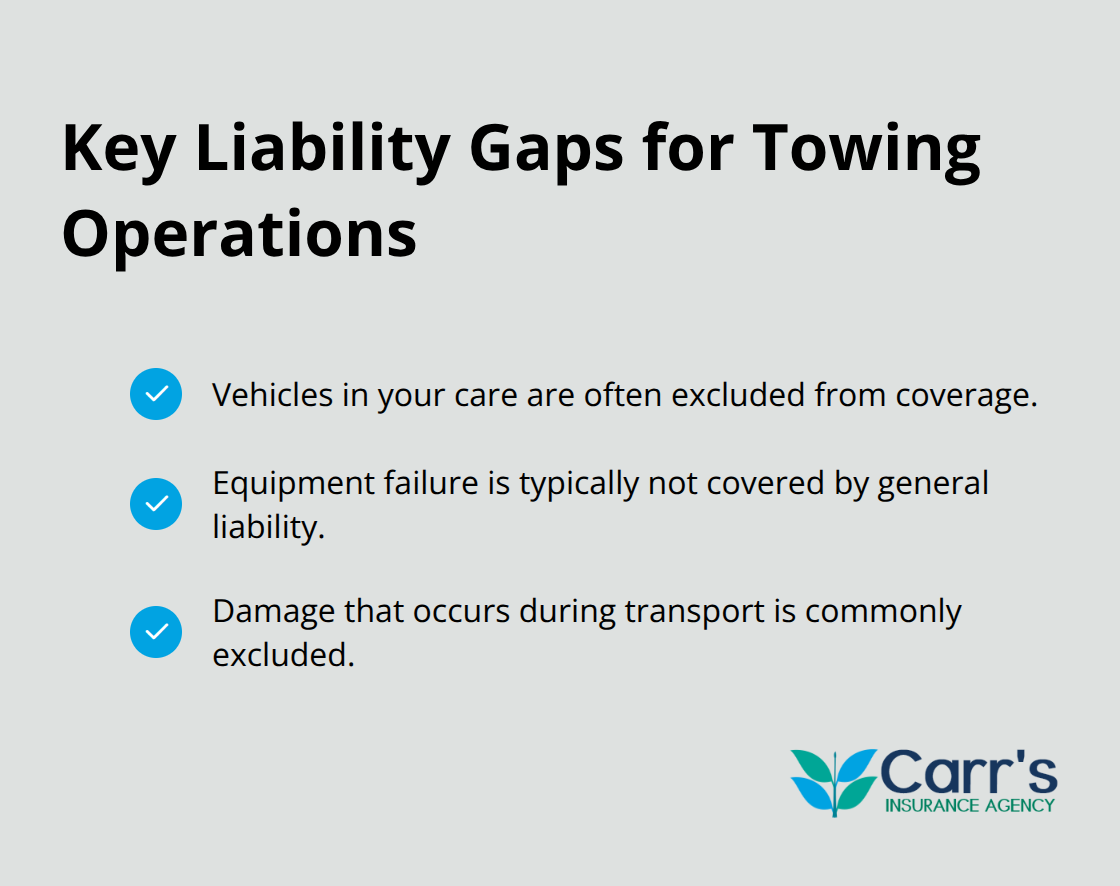
Standard commercial insurance policies treat towing operations like any other business, which is exactly the problem. A general liability policy covers basic slip-and-fall incidents at your office, but it doesn’t protect you when a customer’s vehicle gets damaged while it sits on your flatbed, or when someone gets injured during the towing process itself. Your policy might explicitly exclude vehicles in your care, equipment failure, or damage that occurs during transport. This gap between what you think you’re covered for and what you actually are covered for creates serious financial exposure that can cripple a towing operation overnight.
Why Physical Damage Coverage Misses the Mark
Physical damage coverage in standard policies also falls short for towing businesses. Your tow truck isn’t just transportation-it’s a revenue-generating asset that faces constant wear from heavy-duty work. Standard commercial auto policies cap coverage on specialized equipment like winches, boom arms, and hydraulic systems, or exclude them entirely. When you haul vehicles worth $15,000 to $40,000, you need cargo coverage that protects both the vehicle you’re towing and your liability if something goes wrong during transport.
Specialized Coverages You Actually Need
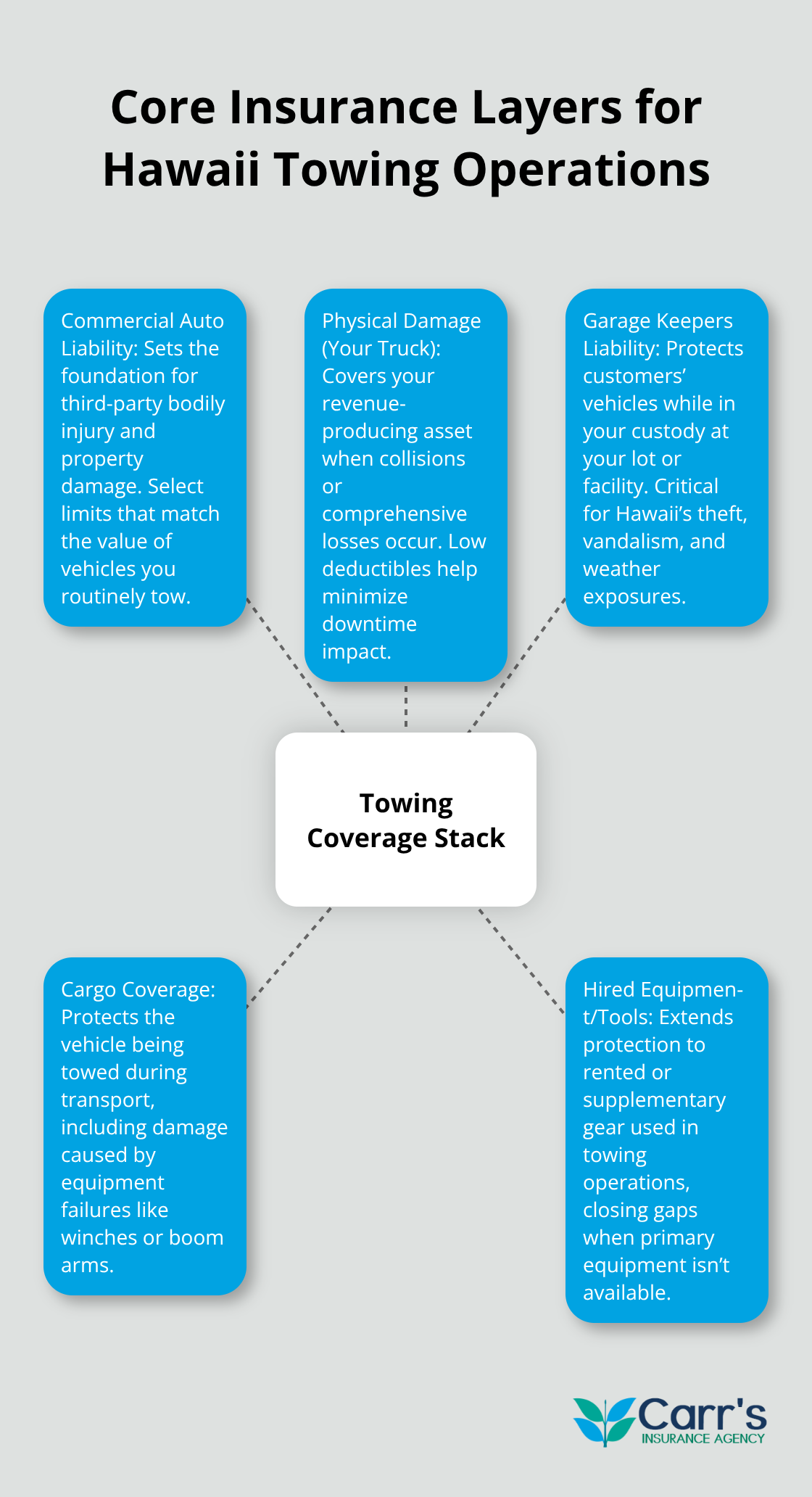
Garage keepers liability specifically covers vehicles left in your care at your lot or facility, protecting you from theft, vandalism, or damage while they wait for repair or pickup. Without these specific coverages, a single incident-a towed vehicle damaged on your truck, a customer injured during hookup, or equipment failure that damages a car-can create significant losses. These aren’t theoretical risks; they’re the daily realities tow operators face across Hawaii.
As an independent broker representing top carriers, Carr’s Insurance Agency compares rates and works with tow operators throughout Hawaii to layer these specialized coverages together, ensuring your business stays protected against the exact risks you face daily. Understanding what each coverage type actually protects is the first step toward building a policy that works for your operation.
Coverage Types Essential for Towing Operations
Commercial Auto Liability: The Foundation That Matters
Commercial auto liability forms the foundation of any towing operation’s insurance strategy, but most tow operators accept whatever limits their carrier suggests without question. Hawaii towing businesses operate across diverse terrain-from Honolulu’s congested highways to rural Maui routes-which means your liability exposure varies significantly depending on where you work and what you tow. A standard commercial auto liability policy with $100,000 per occurrence and $300,000 aggregate won’t protect you if you regularly tow vehicles worth $25,000 to $50,000. Nationwide requires at least $100,000 commercial auto liability coverage per vehicle, with a recommended minimum of $500,000 up to a maximum of $1 million for towing operations.
Physical Damage Coverage for Your Tow Truck
Physical damage coverage on your tow truck itself gets overlooked because operators focus on protecting others’ property, but your truck is your business. A 2024 analysis by the National Association of Independent Insurers shows that tow truck repair costs average $8,500 per incident when equipment like hydraulic systems fails. Comprehensive plus collision coverage with low deductibles ($500 or less) protects your ability to keep operating during downtime and prevents a single breakdown from shutting down your revenue stream.
Garage Keepers Liability and Vehicle Protection
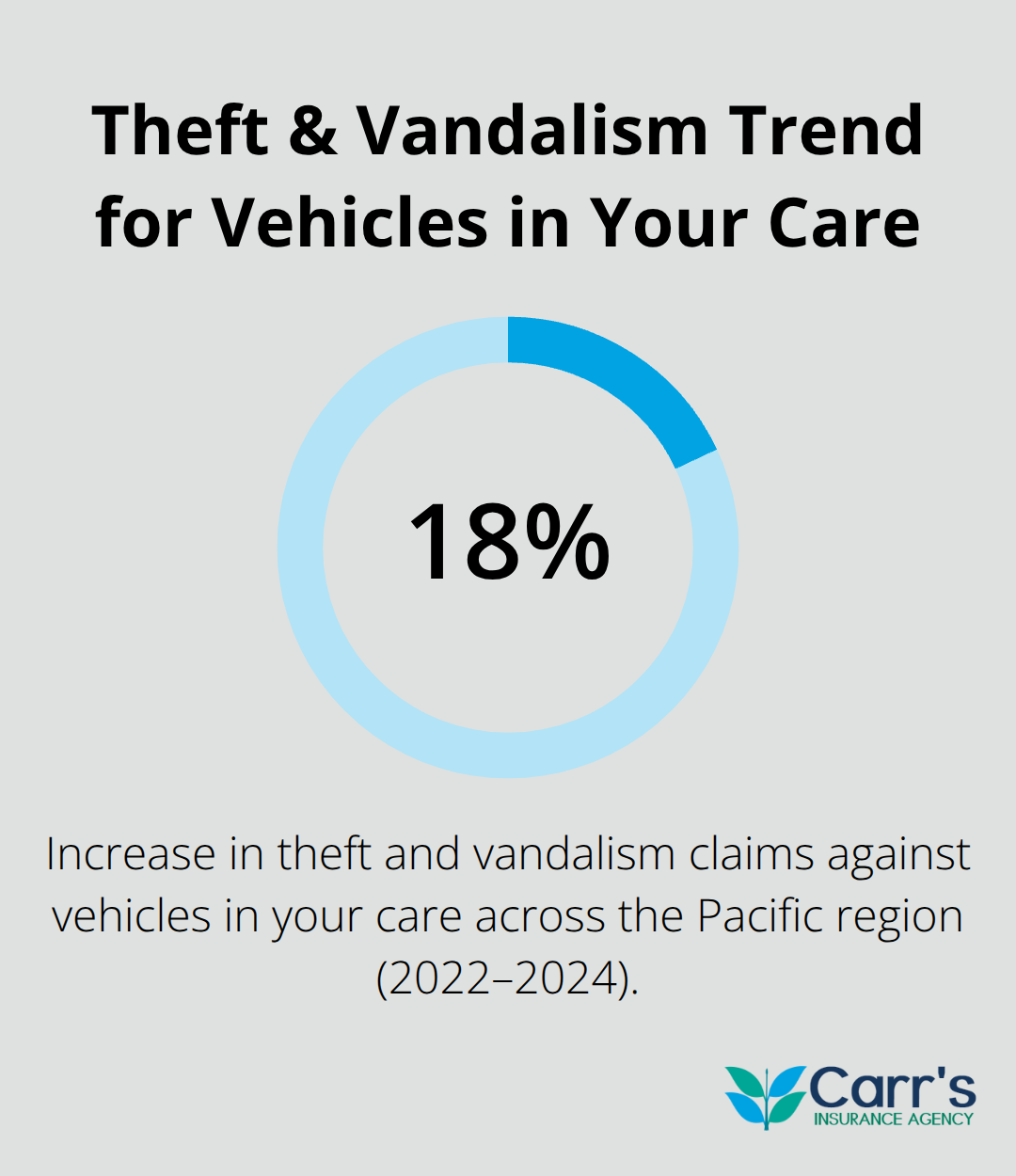
Garage keepers liability covers vehicles sitting in your lot or facility-the protection that actually matters most in Hawaii’s weather conditions. Theft and vandalism claims against vehicles in your care increased 18 percent across the Pacific region between 2022 and 2024, according to the Insurance Information Institute, making this coverage non-negotiable for any operation with a storage lot. This coverage protects you from financial loss when someone steals or damages a customer’s vehicle while it waits for pickup or repair.
Cargo and Hired Equipment Coverage
Cargo and hired equipment coverage protects both the vehicle you’re towing and your liability if your equipment damages it during transport-think a winch failure that scratches a customer’s paint job or a boom arm that accidentally punctures a fuel tank. This coverage typically costs between $400 and $900 annually depending on your towing radius and vehicle types, but a single cargo claim without it can easily exceed $15,000. The actionable step here is getting these three coverage types quoted together rather than separately, because carriers often bundle them more competitively than individual policies.
When you compare complete packages side by side, you identify gaps faster and spot opportunities to reduce your overall premium. The next section walks you through the specific cost factors that affect your tow truck insurance rates and shows you where real savings opportunities exist.
Cost Factors and Savings Opportunities for Tow Truck Insurance
How Vehicle Type and Operating Radius Affect Your Premiums
Your tow truck’s make, model, and age directly determine how much you’ll pay for coverage, but most operators accept quotes without understanding why their rate differs from another shop down the street. A newer heavy-duty tow truck with advanced hydraulic systems and safety features costs less to insure than an older model, even though the newer truck might be worth more money. Insurance carriers evaluate repair costs and parts availability when setting rates, which means a 2023 Peterbilt costs significantly less to insure than a 2015 model with outdated components.
Your operating radius matters equally-towing exclusively within Honolulu’s city limits exposes you to different risks than operating across multiple islands. Island-to-island towing increases your premium by 15 to 25 percent depending on the carrier, since ocean transport and longer distances create higher loss potential. Some insurers charge separately for multi-island operations because the liability exposure shifts substantially.
The types of vehicles you tow also affect your rate. Towing heavy commercial trucks or specialty equipment commands higher premiums than light-duty passenger vehicle towing because the liability exposure increases with vehicle weight and value.
Safety Records and Training Discounts
Your safety record and driver training history directly reduce what you pay, making this the fastest way to lower premiums without sacrificing coverage. Carriers offering tow operator-specific training programs report premium reductions for businesses completing certification courses. Hawaii’s Department of Transportation doesn’t mandate specific towing certifications, but completing a recognized program through organizations like the Heavy Duty Trucking Association demonstrates commitment to safety and qualifies you for measurable discounts.
A clean driving record with zero at-fault accidents over three years saves you 10 to 20 percent annually compared to operators with recent claims. This discount applies directly to your bottom line without requiring coverage changes.
Bundling Commercial Policies to Reduce Overall Costs
Bundling your commercial auto, garage keepers liability, and cargo coverage into one package instead of shopping them separately typically saves 15 to 30 percent on total premiums. Carriers offer volume discounts when you consolidate coverage, and what saves money for one towing business may cost more for another depending on your vehicle mix and service area. Shopping bundled packages from multiple carriers identifies which ones offer the best rates for your specific operation.
Final Thoughts
Your tow truck insurance in Hawaii needs to reflect the specific risks your operation faces daily, not the generic coverage a standard commercial policy offers. Commercial auto liability with adequate limits for the vehicles you tow, garage keepers liability for vehicles in your care, and cargo coverage that protects both the vehicles you transport and your liability if equipment fails during the process form the three layers that cover the gaps most towing operations face. These three coverages work together to eliminate the dangerous exposure that leaves many operators unprotected.
Document your vehicle types, your typical towing radius across the islands, your annual towing volume, and your safety record over the past three years to get accurate quotes instead of estimates based on incomplete details. Compare bundled packages from multiple carriers rather than shopping individual coverages separately, since bundling typically saves 15 to 30 percent on total premiums. A clean driving record and completed safety training reduce your costs by 10 to 20 percent, so pursuing operator certification offers your fastest path to lower rates without sacrificing protection.
Local insurance knowledge matters significantly for Hawaii towing operators because your risks differ substantially from mainland operations-island geography, multi-island towing logistics, Hawaii’s specific weather patterns, and regional theft and vandalism trends all affect your coverage needs and premium costs. An agent familiar with Hawaii’s towing industry understands these factors and structures your policy accordingly. Contact Carr’s Insurance Agency to connect with a locally knowledgeable agent who compares rates from top carriers and finds the right protection for your tow truck insurance in Hawaii.
Disclaimer: The information provided in this blog is for general informational purposes only and does not constitute legal, financial, or insurance advice. Coverage options, terms, and availability may vary. Please consult with a licensed professional for advice specific to your situation






