

SR22 Insurance Requirements Hawaii: Who Needs It?
Getting a DUI or reckless driving conviction in Hawaii means you’ll face SR22 insurance requirements. This form proves to the state that you carry the minimum liability coverage needed to drive legally again.
At Carr’s Insurance Agency, we help drivers understand what an SR22 filing means and how long you’ll need to maintain it. Whether you’re dealing with a suspended license or an at-fault accident, we’ll walk you through the process of getting compliant coverage.
Understanding SR22 Filings in Hawaii
What an SR22 Certificate Actually Is
An SR22 is a certificate of financial responsibility that Hawaii’s Department of Transportation requires when you’ve been convicted of driving under the influence, reckless driving, or accumulated too many traffic violations. This form isn’t insurance itself-it’s a document your insurance company files with the state to verify you maintain the minimum liability coverage required by law. Hawaii mandates SR22 filings because the state views these violations as high-risk driving behavior.
The Hawaii Administrative Rules Section 19-115-2 establishes these requirements to protect other drivers on the road. When you’re required to carry an SR22, your insurance company must report your coverage status to the Department of Transportation. If your policy lapses or gets canceled, they must notify the state immediately. This notification system exists because Hawaii takes these violations seriously and wants real-time verification that you maintain continuous coverage.
How Long Your SR22 Requirement Lasts
The length of your SR22 requirement depends on your violation type. Hawaii requires SR22 filings for three years following a DUI or DWI conviction, which is standard across most states. If you received an SR22 due to reckless driving, at-fault accidents, or driving without insurance, the requirement typically lasts three years from the conviction or violation date as well.
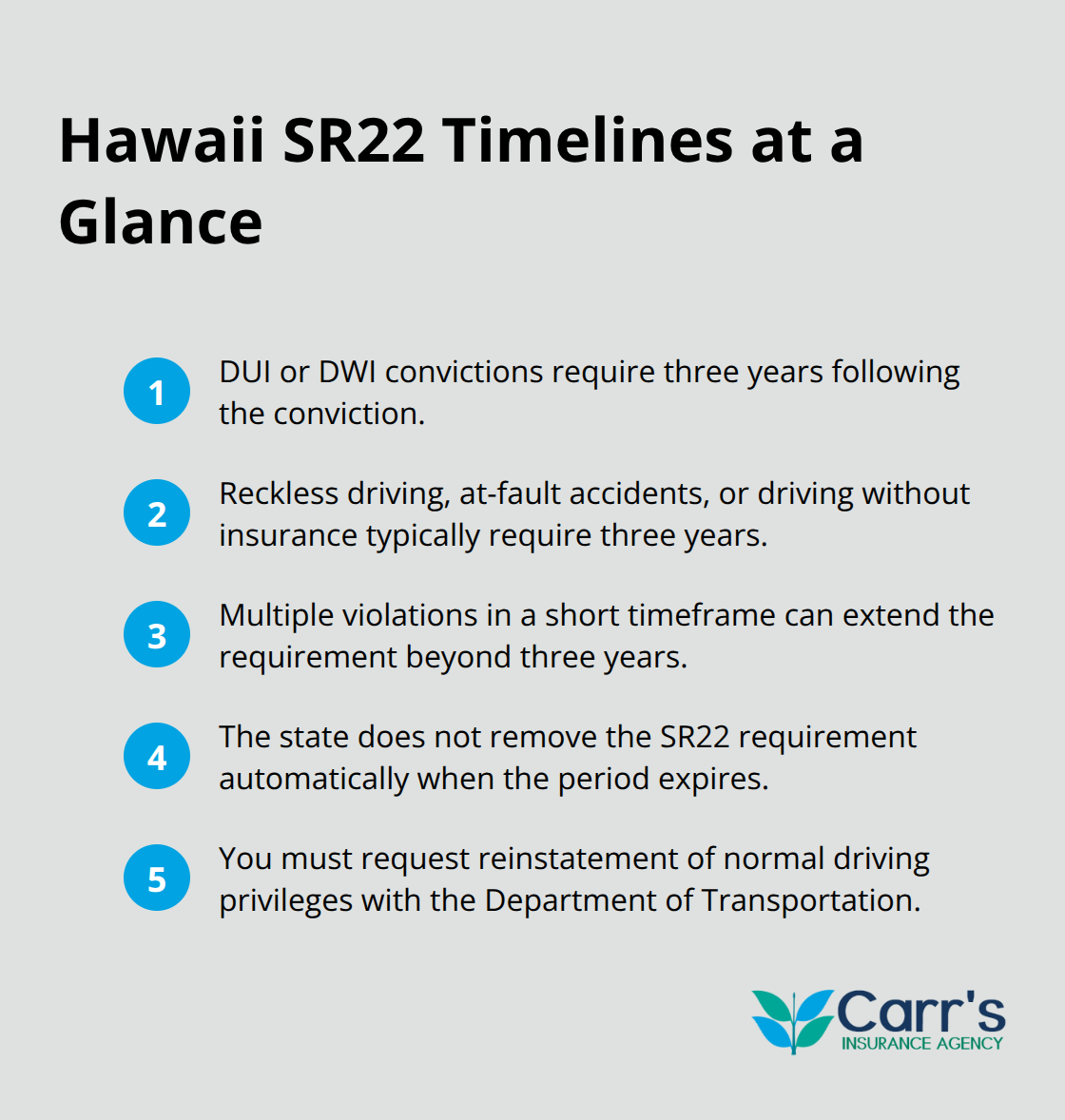
Multiple violations within a short timeframe can extend the requirement beyond the standard three years. The state doesn’t automatically remove your SR22 requirement when the period expires-you must request reinstatement of your normal driving privileges through the Department of Transportation.
Moving Forward With Your SR22 Status
Tracking these timelines matters because missing your reinstatement window means you’ll continue carrying SR22 coverage longer than necessary. The process of getting compliant and eventually removing this requirement involves several steps, starting with finding the right insurance provider who understands Hawaii’s specific regulations and can file your SR22 form correctly.
Who Needs SR22 Insurance in Hawaii
DUI and DWI Convictions Trigger Mandatory SR22 Filing
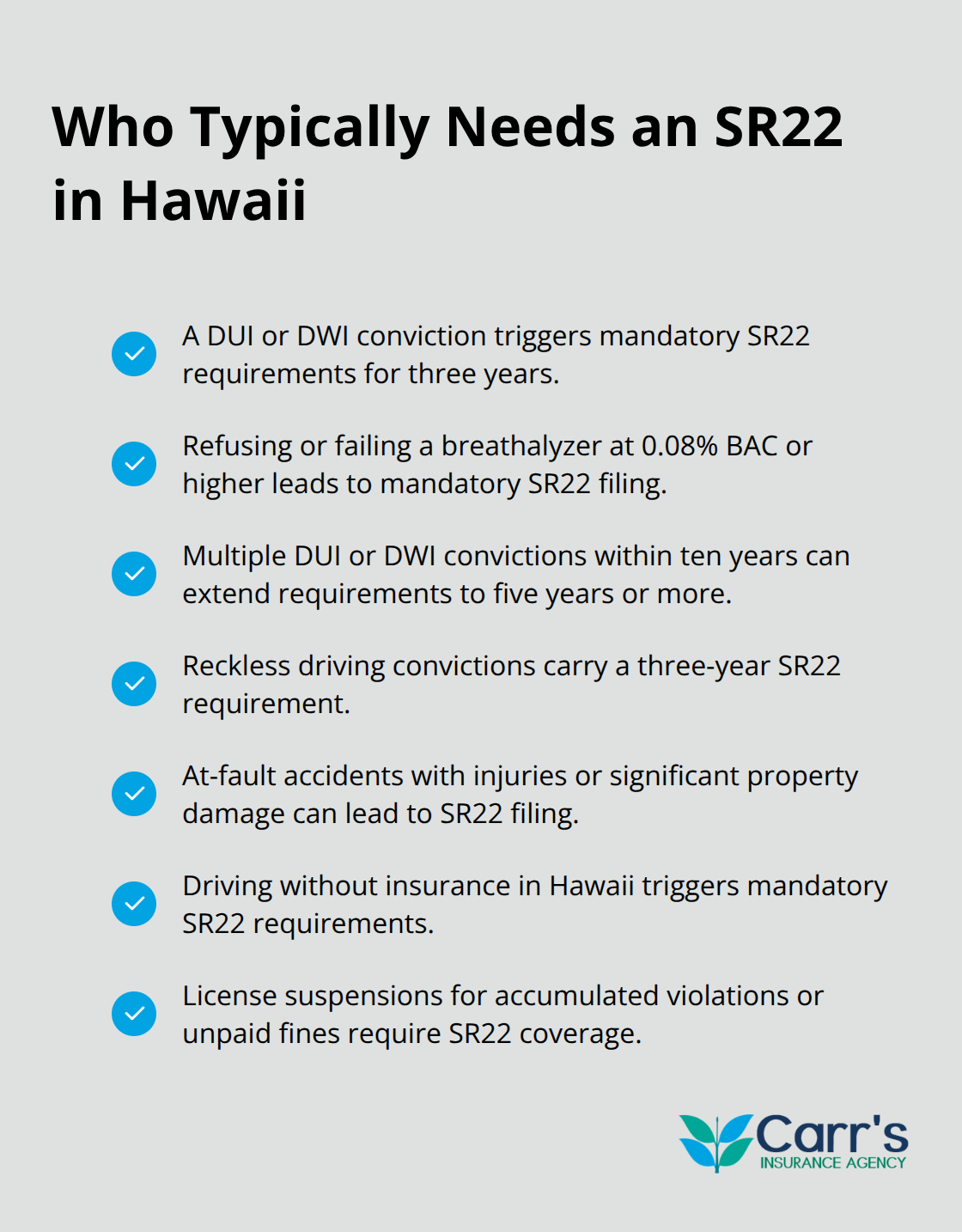
A DUI or DWI conviction in Hawaii automatically triggers SR22 requirements, and Hawaii courts take these violations seriously. Anyone convicted of driving under the influence must file an SR22 for three years from the conviction date. The state applies the same three-year timeline to first-time offenders and repeat violators alike. If you refused a breathalyzer test or failed one with a blood alcohol content of 0.08% or higher, you face mandatory SR22 filing. Multiple DUI or DWI convictions within a ten-year period extend your requirements further-sometimes requiring SR22 coverage for five years or more. Hawaii’s strict approach reflects the state’s position that impaired driving poses an unacceptable risk to other motorists.
Reckless Driving, At-Fault Accidents, and Uninsured Driving
Reckless driving convictions carry the same three-year SR22 requirement as a DUI under Hawaii Revised Statutes Section 291-2. At-fault accidents that result in injuries or significant property damage can lead to SR22 filing, particularly if you lacked adequate insurance coverage at the time of the accident. Driving without insurance in Hawaii triggers mandatory SR22 requirements-the state views uninsured driving as a serious violation of financial responsibility laws. License suspensions due to accumulated traffic violations or failure to pay fines also require SR22 coverage before you can legally operate a vehicle again.
Why Speed Matters for Your SR22 Filing
Every day you delay filing your SR22 increases the risk of driving uninsured, which creates additional legal liability and potential criminal penalties. The sooner you file your SR22, the sooner you start your compliance clock and move toward regaining unrestricted driving privileges. Finding the right insurance provider who understands Hawaii’s specific regulations becomes your next critical step in this process.
Getting SR22 Insurance in Hawaii
Find an Insurance Provider That Handles SR22 Filings
Start your SR22 process by contacting insurance companies that actively write SR22 filings in Hawaii. Not all insurers handle these policies equally-some charge significantly more, while others specialize in high-risk drivers and offer competitive rates. When you call an insurance company, ask directly if they file SR22 forms with Hawaii’s Department of Transportation and how quickly they can process your paperwork. Most insurers can file your SR22 within 24 to 48 hours of policy purchase, which matters because your coverage must be active before you legally drive.
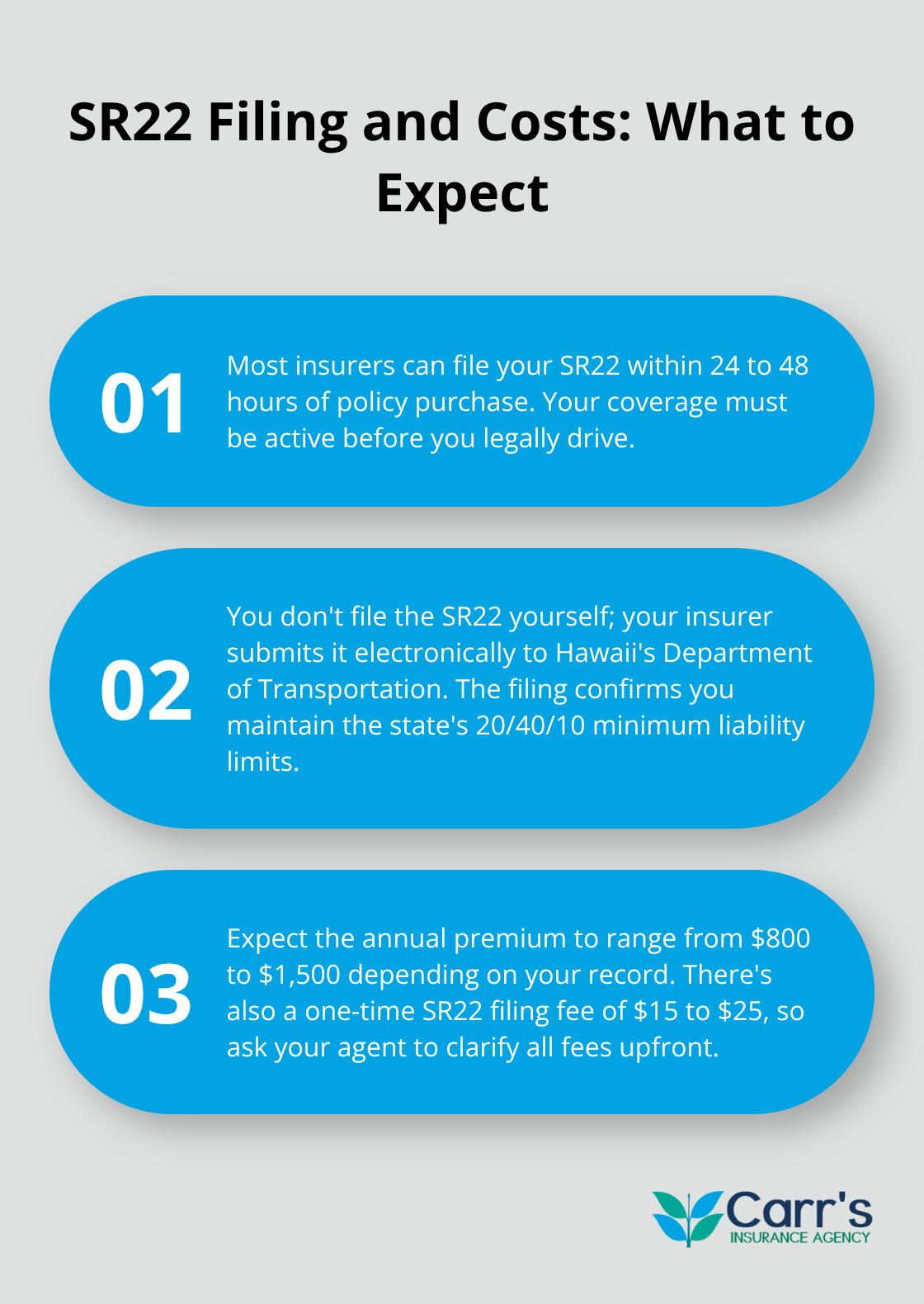
Request quotes from at least three providers to compare rates. SR22 premiums in Hawaii typically range from $800 to $1,500 annually depending on your violation type and driving history, according to national insurance data. Drivers with DUI convictions generally pay higher premiums than those with reckless driving violations. As an independent broker representing top carriers, Carr’s Insurance Agency compares rates across multiple insurers to help you find competitive SR22 coverage that fits your situation.
Submit Your SR22 Form to Hawaii’s Department of Transportation
Once you select an insurer, they handle the actual SR22 filing with Hawaii’s Department of Transportation. You don’t file the form yourself-your insurance company submits it electronically after you purchase your policy. The form confirms you maintain the state’s minimum liability limits, which in Hawaii are 20/40/10 for bodily injury and property damage.
Your insurance company must notify the state immediately if your policy lapses or gets canceled. Any gap in coverage triggers an automatic state notification, which extends your SR22 requirement and creates additional legal problems. Verify with your insurer that they’ll notify you before your policy renews so you don’t accidentally let coverage lapse.
Understand Your Total Costs and Coverage Requirements
Your total costs include the policy premium plus a one-time SR22 filing fee, typically $15 to $25. Some insurers bundle this fee into your first payment, while others charge it separately. Ask your agent to clarify all fees upfront so you understand your exact out-of-pocket cost before committing to coverage. This transparency helps you avoid surprises when your policy activates and your SR22 filing begins.
Final Thoughts
SR22 insurance requirements in Hawaii protect other drivers and hold high-risk motorists accountable for their violations. Whether you’re dealing with a DUI conviction, reckless driving charge, or uninsured driving violation, the three-year filing period gives you a clear timeline to regain your driving privileges. Acting quickly matters because every day you delay increases your legal exposure and keeps you from starting your compliance clock.
Your next step involves contacting an insurance provider who actively handles SR22 filings in Hawaii. Request quotes from multiple carriers to compare rates, since premiums vary significantly based on your violation type and driving history. Ask each company how quickly they can file your SR22 form and what fees they charge beyond the policy premium.
At Carr’s Insurance Agency, we help Hawaii drivers navigate SR22 insurance requirements and find competitive coverage that fits your budget. Contact Carr’s Insurance Agency to get started with your SR22 filing today, and our licensed agents will guide you through every step of the process.
Disclaimer: The information provided in this blog is for general informational purposes only and does not constitute legal, financial, or insurance advice. Coverage options, terms, and availability may vary. Please consult with a licensed professional for advice specific to your situation






