
Hurricane Insurance Hawaii: Prepared for Storm Season
Hurricane season in Hawaii brings real danger to homes and businesses across the islands. At Carr’s Insurance Agency, we know that standard homeowners policies often leave significant gaps in protection when storms strike.
Hurricane insurance in Hawaii isn’t optional if you want genuine financial security. This guide walks you through what coverage actually protects you, how to prepare your property, and why local expertise matters when choosing the right policy.
Understanding Hurricane Risk in Hawaii
Hawaii’s hurricane season runs from June through November, but the real threat concentrates between August and October when atmospheric conditions align to push storms toward the islands. According to the National Weather Service, about 4 to 5 tropical systems occur each year within 1500 miles or so of Hawaii, though indirect impacts from passing storms occur far more frequently. The islands’ position in the central Pacific means storms intensify rapidly over warm waters before reaching land, giving residents limited warning time and little margin for error in preparation.
Historical Patterns Shape Current Exposure
The Big Island and Maui face the highest exposure because of their geographic position and topography, with the Big Island’s windward side particularly vulnerable to moisture-laden systems. Kauai has absorbed some of the most destructive hurricanes in recent decades, including Hurricane Iniki in 1992, which caused over 1 billion dollars in damage and remains a sobering reminder of what unprotected property faces. These historical events show that Hawaii’s hurricane threat is not theoretical-it’s documented, measurable, and repeating.
Geographic Vulnerability Varies Significantly
Maui County, which includes Maui, Molokai, and Lanai, sits in a particularly exposed corridor where storms frequently track. The Big Island’s height and terrain trigger unexpected wind patterns and flooding that standard assessments miss. Oahu, home to Honolulu and the majority of Hawaii’s population, has lower direct hit frequency but still faces significant risk from storm surge and heavy rain. Kauai’s smaller size and exposed coastlines mean that even indirect hurricane impacts cause severe damage to homes and infrastructure.
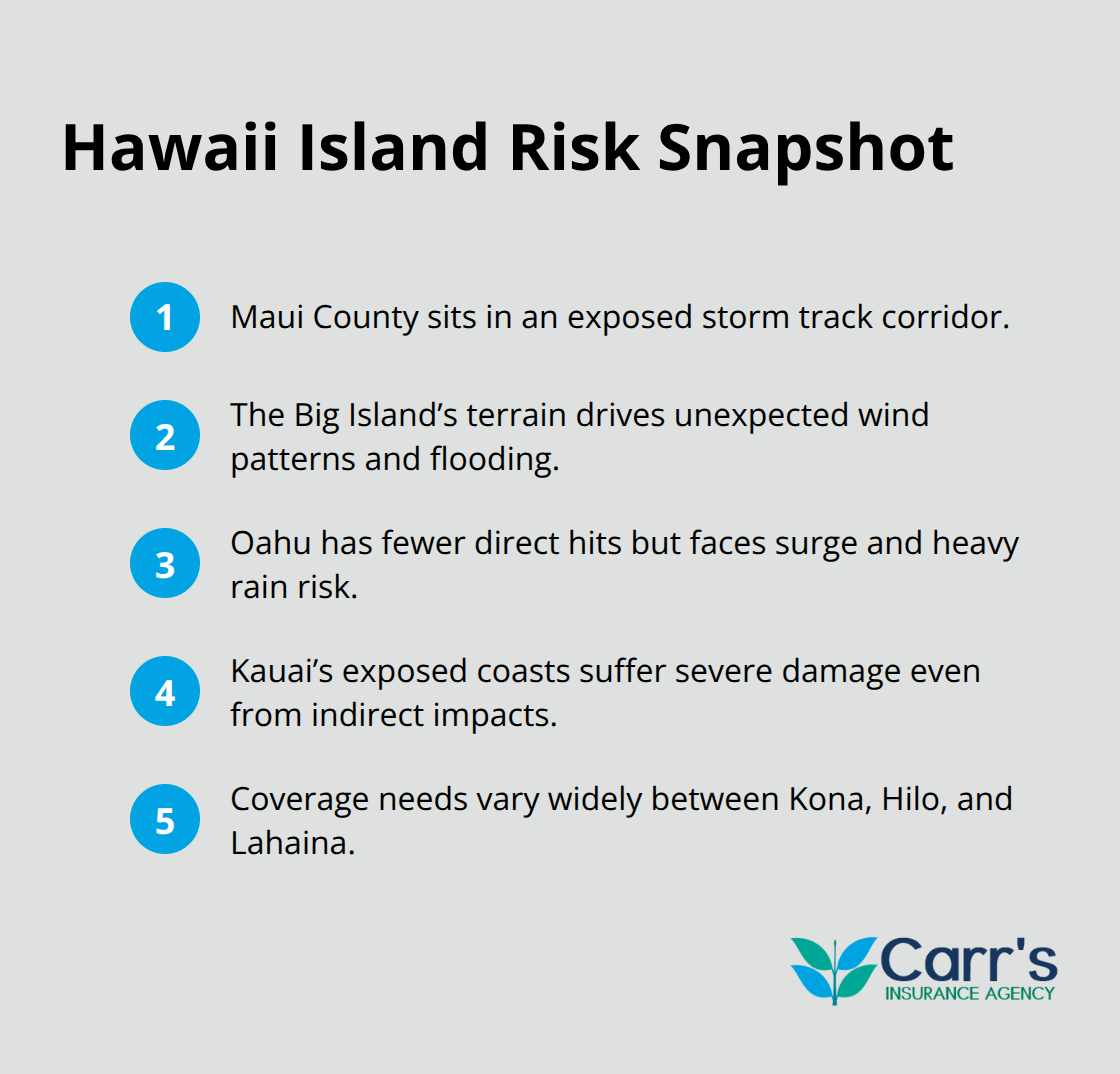
Coverage needs in Kona differ dramatically from those in Hilo or Lahaina because each location faces distinct storm exposure patterns.
Uninsured Losses Mount Quickly
Homeowners without adequate hurricane coverage face repair bills that regularly exceed 50,000 to 150,000 dollars for moderate damage, with major hurricanes inflicting 300,000 to 500,000 dollars in losses on single properties. Businesses suffer even steeper consequences, with commercial properties in exposed areas facing million-dollar-plus repair obligations after significant storms. The Hawaii Insurance Council reports that uninsured and underinsured losses in the state continue rising as property values increase and construction costs climb. Wind damage accounts for the largest share of hurricane losses, followed by water intrusion and flooding, both of which standard homeowners policies either exclude or severely limit.
Waiting until hurricane season arrives to address coverage gaps leaves you exposed to denial of claims and catastrophic out-of-pocket expenses that can take years to recover from financially. Understanding what your current policy actually covers-and what it doesn’t-becomes the first step toward real protection.
Hurricane Insurance Coverage Essentials
Wind Damage: The Hidden Gap in Standard Policies
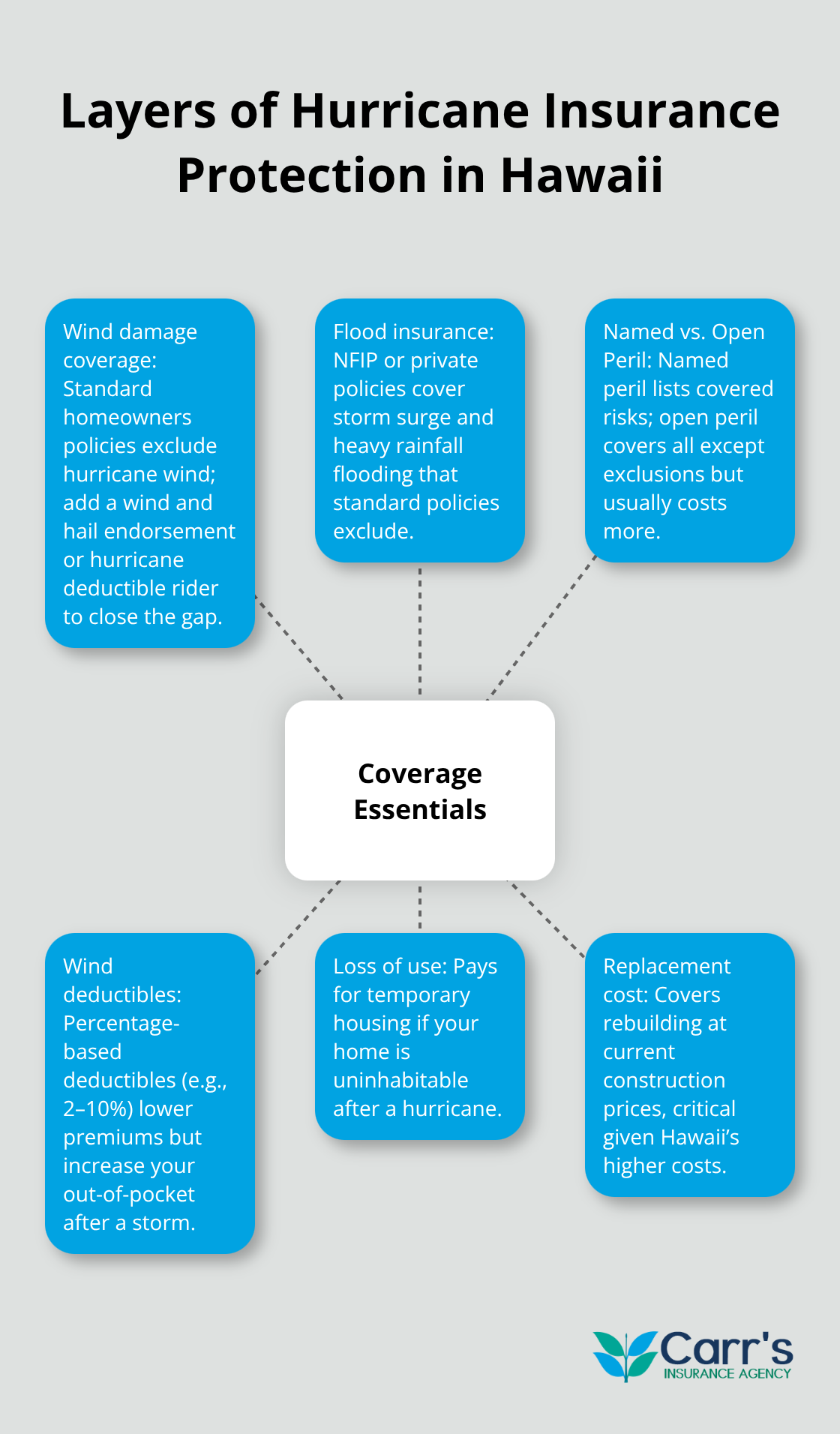
Standard homeowners policies sold across Hawaii exclude wind damage from hurricanes entirely, treating it as a separate peril that requires additional coverage through a wind and hail endorsement or a standalone hurricane deductible rider. This distinction matters tremendously because wind damage accounts for 60 to 80 percent of total hurricane losses. Your basic homeowners policy covers fire, theft, and some water damage from rain that enters through broken windows or damaged roofs, but the moment sustained winds from a named hurricane cause that damage, your claim gets denied unless you purchased supplemental protection. Water damage presents another complexity-flooding from storm surge and heavy rainfall is excluded from standard policies, requiring separate flood insurance through the National Flood Insurance Program or private carriers.
Named Peril vs. Open Peril Coverage
Named peril policies, which dominate the Hawaii market, only pay claims for specific listed perils like wind, hail, or fire, leaving you unprotected against unlisted risks like storm surge flooding or falling trees. Open peril policies, sometimes called all-risk coverage, protect against any loss except those specifically excluded in your policy language, providing significantly broader protection but typically costing more in annual premiums. Many Hawaii homeowners choose named peril policies because they cost less upfront, but this gamble often backfires during hurricane season when multiple damage types occur simultaneously.
Additional Coverage Options That Matter
Increased wind deductibles ranging from 2 to 10 percent of your home’s replacement value reduce premiums but shift more financial responsibility to you after a hurricane. Loss of use coverage pays temporary housing expenses if your home becomes uninhabitable following a storm. Replacement cost endorsements ensure your insurer pays to rebuild your home at current construction costs rather than depreciated value-essential in Hawaii where labor and materials consistently exceed mainland pricing.
Flood Insurance: A Separate but Essential Layer
Homeowners in flood-prone zones near coastlines should carry flood insurance through the National Flood Insurance Program, which covers damage from storm surge that standard policies completely ignore. This coverage protects against a major source of hurricane losses after wind damage, making it non-negotiable for coastal properties. Understanding these coverage distinctions now prevents the financial devastation that strikes homeowners who discover gaps only after a hurricane makes landfall.
With your coverage options clarified, the next step involves preparing your actual property to withstand the forces that insurance alone cannot prevent.
Preparing Your Property Before Hurricane Season Hits
Structural Reinforcements That Stop Wind Damage
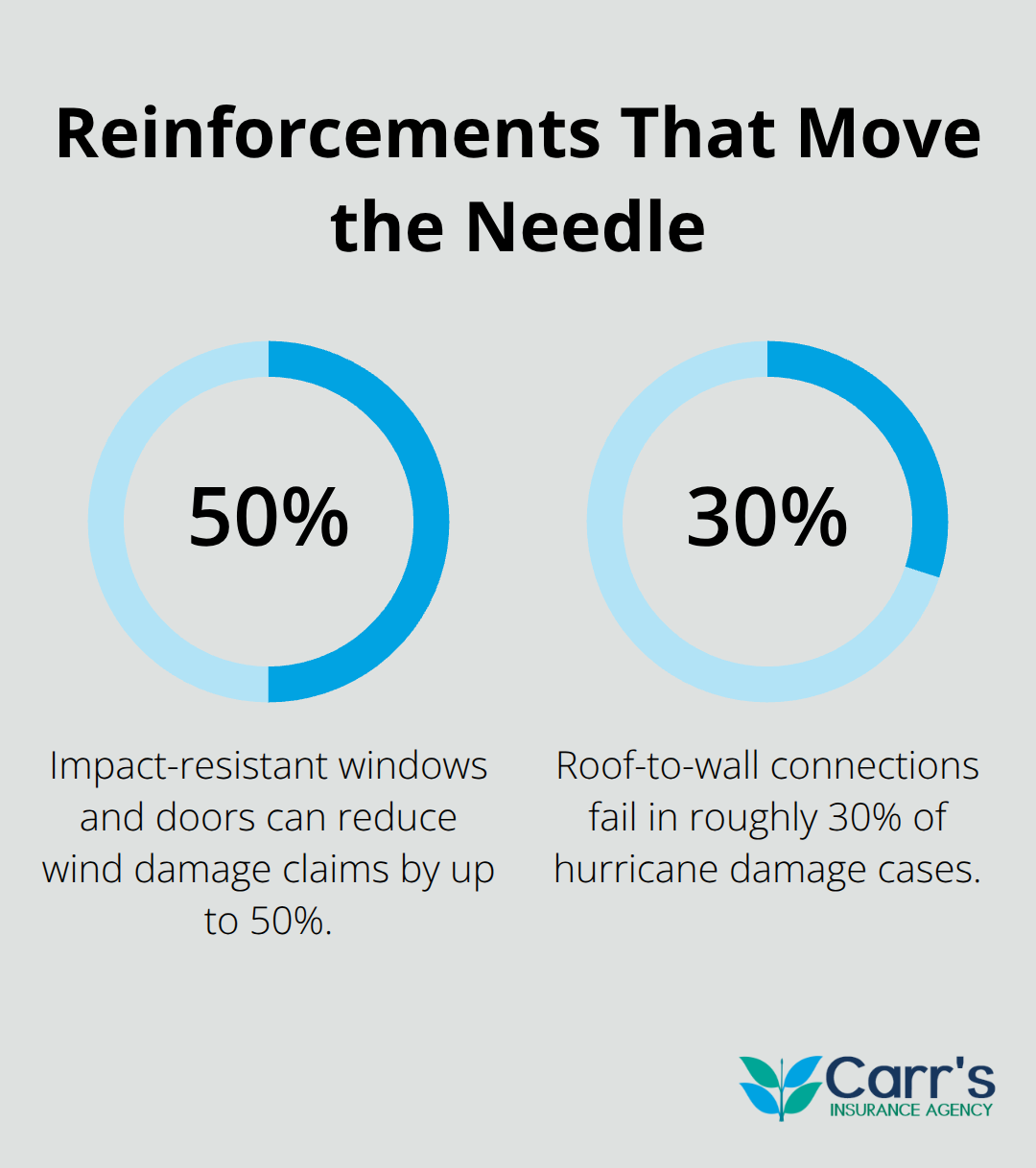
Structural reinforcements form the foundation of property protection, and Hawaii homeowners who skip this step pay the price when winds exceed 100 mph. Impact-resistant windows and doors rated for hurricane-force winds cost between $3,000 and $8,000 installed but reduce wind damage claims by up to 50 percent according to insurance industry data. Roof-to-wall connections fail in roughly 30 percent of hurricane damage cases, making metal hurricane straps or bolts a non-negotiable upgrade that costs $500 to $2,000 depending on your home’s size.
Gable-end reinforcement prevents the roof from lifting during high winds-a failure point that leads to catastrophic interior water damage once the roof structure separates. Secondary water barriers applied to exterior walls before hurricane season stop moisture intrusion that causes mold and structural rot long after the storm passes. Garage door reinforcement matters because a failed garage door allows wind to enter your home and creates internal pressure that can collapse walls and remove roofing. These improvements take weeks or months to complete, so you should schedule contractors now rather than waiting until August when every roofer and window installer in Hawaii is booked solid.
Critical Maintenance Tasks Before June Arrives
Maintenance tasks completed before June prevent minor vulnerabilities from becoming major damage during the season. Trim tree branches hanging over your roof and clear gutters of debris so water drains properly and doesn’t pool on your roof or foundation. Secure loose outdoor items like air conditioning units, satellite dishes, and antennas that become projectiles in sustained winds. Inspect your roof for missing shingles, cracked flashing, and deteriorated sealant, addressing these issues immediately rather than waiting for a storm to expose them. Test your sump pump and backup power systems if your property sits in a flood-prone area, ensuring they function when you need them most. Document your home’s condition with photos and video before hurricane season, creating evidence for insurance claims if damage occurs.
Emergency Supplies and Evacuation Planning
Establish your emergency supply now rather than three days before a storm when stores are emptied and prices spike. Stock at least two weeks of non-perishable food, a gallon of water per person per day, prescription medications, first aid supplies, and battery-powered or hand-crank flashlights. Create a household evacuation plan identifying your evacuation route, destination, and communication method with family members who may be separated. Store important documents including insurance policies, deeds, mortgage papers, and medical records in waterproof containers (keeping copies both at home and with an out-of-state contact). Know which zones require mandatory evacuation in your area by checking Hawaii County civil defense websites now, not when a hurricane warning is issued. These preparations transform your response from chaotic scrambling into decisive action that protects both your life and your property investment.
Final Thoughts
Hurricane insurance Hawaii protects your financial future when storms strike, but only if you understand what your policy covers and act before June arrives. Standard homeowners policies leave you exposed to wind and flood damage that accounts for the majority of hurricane losses, while structural improvements completed now prevent damage that insurance alone cannot fix. Local knowledge about your specific island’s exposure patterns determines whether your coverage matches your actual risk.
Your next step involves reviewing your current policy with honest eyes about what it excludes. Check whether you have wind coverage through a separate endorsement or rider, confirm that your replacement cost limits reflect current Hawaii construction prices, and determine whether flood insurance makes sense for your property’s location. Many homeowners discover gaps only after calling their agent during hurricane season, when options narrow and premiums spike.
Contact Carr’s Insurance Agency to review your current coverage and explore options that match your actual risk without overpaying for unnecessary protection. Our agents understand how storms track toward different islands, which areas face the highest flood risk, and how construction costs in Hawaii exceed mainland pricing that national carriers sometimes underestimate. Getting hurricane insurance coverage right requires comparing options from multiple carriers and understanding how each policy responds to the specific threats your property faces.
Disclaimer: The information provided in this blog is for general informational purposes only and does not constitute legal, financial, or insurance advice. Coverage options, terms, and availability may vary. Please consult with a licensed professional for advice specific to your situation






