

A Practical Guide to SR22 Insurance Hawaii
Getting an SR22 filing in Hawaii isn’t optional if you’ve had certain driving violations. It’s a legal requirement that can feel overwhelming, but it doesn’t have to be.
We at Carr’s Insurance Agency help drivers navigate SR22 insurance in Hawaii every day. This guide walks you through what you need to know, how to get it, and how to keep costs down.
What SR22 Actually Means and Why Hawaii Requires It
An SR22 is not an insurance policy. It’s a certificate of financial responsibility that proves you carry the minimum liability insurance required by Hawaii law. When you file an SR22, your insurance company submits this document directly to the Hawaii Department of Motor Vehicles on your behalf. The state uses it to verify that you maintain continuous coverage after certain driving violations. Hawaii requires an SR22 for violations like driving under the influence, reckless driving, driving without insurance, or accumulating too many points on your license. Drivers with DUI convictions must maintain SR22 coverage for three years from the conviction date. If your coverage lapses even for one day, your insurer must notify the DMV, and your license suspension can be reinstated immediately. This is why SR22 filers cannot afford gaps in coverage like other drivers might tolerate.
Why Hawaii’s Rules Are Stricter Than You Think
Hawaii takes traffic safety seriously. The state’s minimum liability limits are 20/40/10, meaning $20,000 in bodily injury per person, $40,000 per accident, and $10,000 in property damage. For SR22 filers, you must maintain these exact minimums without exception. Hawaii also has a points system where accumulating 12 points in 24 months results in license suspension. A single speeding ticket adds three points, while a DUI adds 12 points automatically. The consequence of this strict system is that SR22 filers often stay longer in the system than drivers in other states. Most states require SR22 coverage for three years, but Hawaii’s three-year requirement starts fresh if you incur another violation during that period, extending your obligation further.
Who Actually Needs SR22 Coverage Right Now
If you have been convicted of DUI or DWUI in Hawaii, you need SR22 coverage. If authorities caught you driving without insurance, you need it. If you caused an accident while uninsured, you need it. If you accumulated 12 or more points on your driving record in 24 months, you need it. If you refused a breathalyzer test, Hawaii treats this the same as a DUI conviction, and you need SR22 coverage. The Hawaii DMV will send you a notice if you are required to file, but do not wait for that letter. Contact an insurance agent immediately after any qualifying incident.
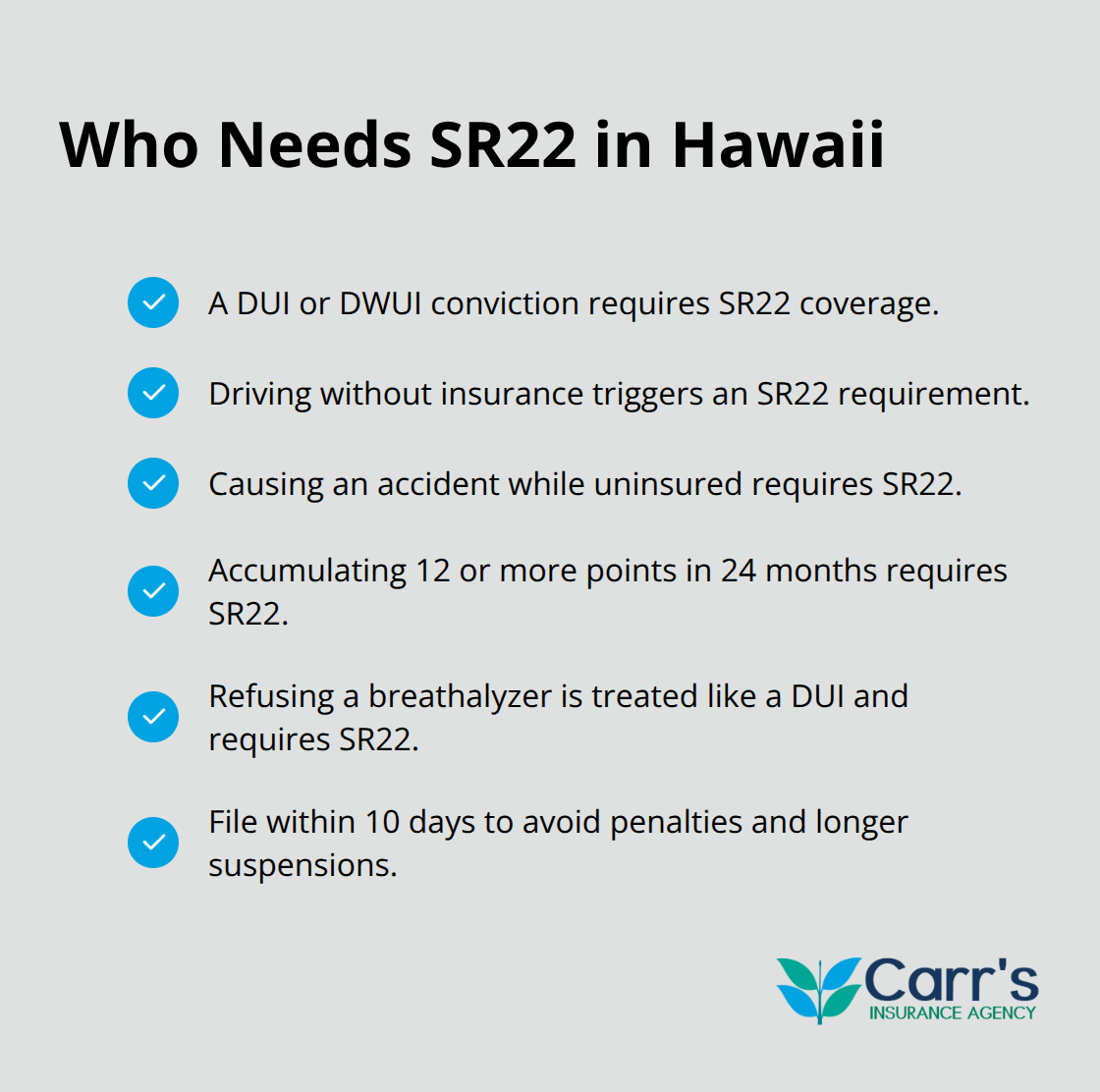
We at Carr’s Insurance Agency recommend filing within 10 days of your violation or conviction because delays result in additional penalties and extended license suspension periods. The sooner you file, the sooner you can begin your three-year countdown to normal driving status.
What Happens Next After You Identify Your Need
Once you recognize that you need SR22 coverage, the actual process of obtaining it moves quickly. Your insurance company handles most of the paperwork and submits the filing to the DMV on your behalf. You will need to provide specific information about your violation or conviction, your driving history, and your current vehicle details. The timeline from application to DMV approval typically takes between three to five business days. However, some carriers process SR22 filings same-day, which can make a significant difference if your license suspension is imminent. The key is to act fast and work with an agent who understands Hawaii’s specific requirements and can navigate the process efficiently.
How to Get SR22 Coverage in Hawaii
What Information You Need to Gather
You must contact an insurance company that writes policies in Hawaii and provide your driving violation details. The insurer handles the DMV submission on your behalf. Collect your driver’s license number, vehicle identification number, the date of your violation or conviction, and details about what triggered the SR22 requirement. If you had a DUI, the conviction date matters because it determines when your three-year obligation starts. Have your current vehicle information ready, including the make, model, year, and whether you own or finance it. If you finance your vehicle, your lender’s information helps speed up the process since they must appear on your policy.
The Filing Process and Timeline
Most carriers in Hawaii process SR22 filings within three to five business days, though some complete them same-day. Once you submit your information, the insurance company files the SR22 certificate electronically with the Hawaii Department of Motor Vehicles. The DMV typically processes these filings within two to three business days after receiving them. However, if you have multiple violations on your record or your case involves additional complications (like a suspended license), processing may take longer. Some insurance companies charge a filing fee between $15 and $50 on top of your premium, so ask about this upfront.
Why Speed Matters in Hawaii
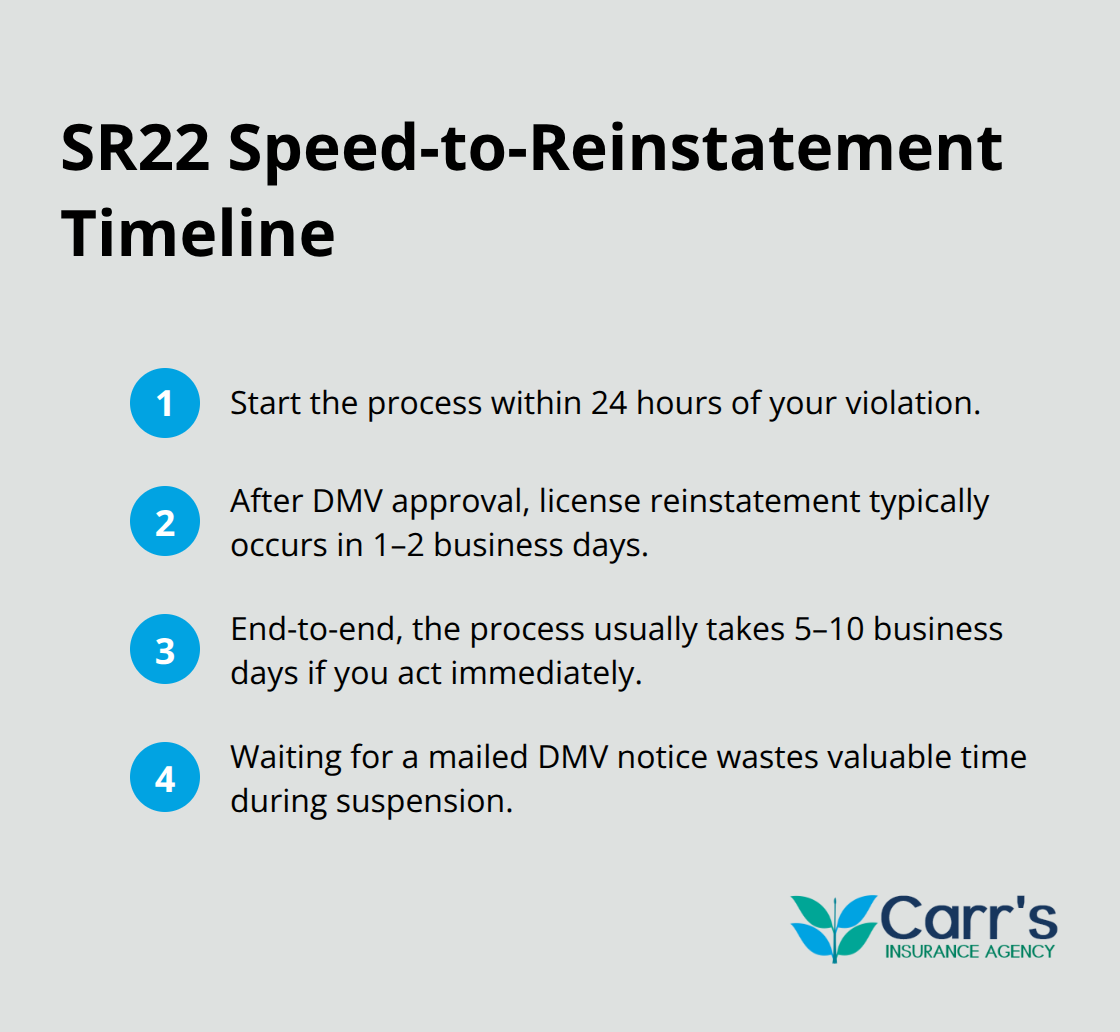
Many drivers make the mistake of waiting to file until after they receive notice from the DMV, but this costs you time during a period when your license suspension is already active. Starting the process within 24 hours of your violation gives you the fastest possible path to getting back on the road legally. After the DMV approves your filing, you will receive confirmation, and your license suspension should lift within one to two business days. The entire process from your first phone call to driving legally again usually takes five to ten business days if you act immediately.
Delays happen when drivers wait days to contact an agent or when they provide incomplete information that requires follow-up.
Moving Forward With Your SR22 Application
Now that you understand what information you need and how quickly the process moves, the next step involves understanding what your SR22 coverage will actually cost and which strategies can lower your premiums.
What SR22 Costs in Hawaii and How to Cut That Price
SR22 insurance in Hawaii costs significantly more than standard auto insurance, and the gap widens based on your specific violation. Drivers with a DUI conviction pay an average of $3,500 to $5,200 annually for SR22 coverage in Hawaii, according to data from the National Association of Insurance Commissioners. This represents a 200 to 300 percent increase over what a clean-record driver pays. A reckless driving violation or driving without insurance typically results in premiums between $2,000 and $3,500 per year. The three-year requirement means a DUI conviction could cost you $10,500 to $15,600 total before any discounts apply.
Why Your Rate Varies So Much
Your specific rate depends on your age, gender, driving history before the violation, the type of vehicle you drive, and which insurance company quotes you. Hawaii’s strict insurance requirements and the elevated risk that insurers perceive when you have a serious violation on your record both push premiums higher. Two drivers with identical violations can pay vastly different amounts simply because they shop with different carriers.
Shop Multiple Carriers to Find the Lowest Rate
The most effective way to lower your SR22 premium is to shop multiple carriers because rates vary dramatically between insurers. One driver might pay $4,200 annually with one company and $2,800 with another for identical coverage. As an independent broker representing top carriers, Carr’s Insurance Agency compares rates across multiple insurers and delivers personalized service to find the right coverage and save you money.
Practical Strategies That Cut Your Premium
Bundling your SR22 auto policy with home or renters insurance typically saves 10 to 25 percent on your total premiums. Increasing your deductible from $500 to $1,000 reduces your monthly cost by approximately 15 to 20 percent (though this strategy only works if you have emergency savings to cover a larger out-of-pocket expense after an accident). Taking a defensive driving course approved by the State of Hawaii can reduce your premium by 5 to 10 percent and demonstrates to insurers that you’re committed to safer driving.
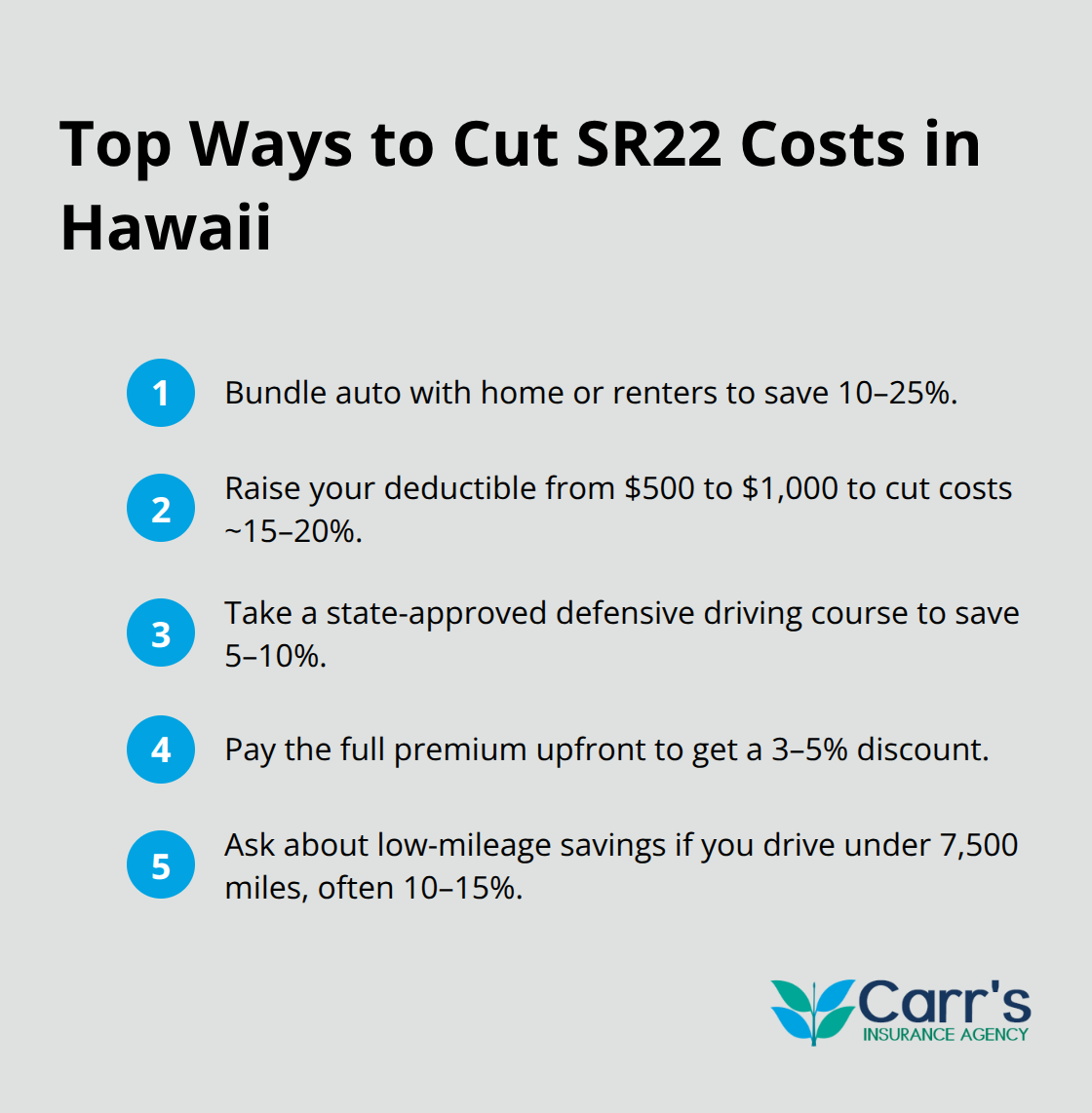
Paying your premium in full upfront rather than monthly installments often qualifies you for a 3 to 5 percent discount. The most overlooked opportunity is asking your insurer about low-mileage discounts if you drive fewer than 7,500 miles annually, which can save an additional 10 to 15 percent.
Final Thoughts
SR22 insurance in Hawaii is temporary, not permanent. You now understand what an SR22 filing actually is, why Hawaii enforces it, and how much it costs over your three-year obligation. The process moves quickly when you act fast, and your compliance during this period determines when you return to normal driving status.
Contact an insurance agent within 24 hours of your violation or conviction. Provide your driver’s license number, vehicle information, and details about what triggered your SR22 requirement, then shop quotes from multiple carriers because rates vary dramatically between insurers. Ask about bundling discounts, defensive driving course reductions, and low-mileage discounts that apply to your specific situation.
Carr’s Insurance Agency has served Hawaii since 1990 as a locally owned, independent broker representing top carriers. Our licensed agents compare rates across multiple insurers and find the right SR22 insurance Hawaii coverage at the lowest possible price for your circumstances. Contact us today to get started on your filing.
Disclaimer: The information provided in this blog is for general informational purposes only and does not constitute legal, financial, or insurance advice. Coverage options, terms, and availability may vary. Please consult with a licensed professional for advice specific to your situation






