

Small Trucking Company Insurance: Protecting Your Growing Fleet
Running a small trucking company means managing countless moving parts. Your vehicles, your drivers, and your cargo all need protection from the unexpected.
Small trucking company insurance isn’t just a legal requirement-it’s the foundation that keeps your business running when accidents happen. We at Carr’s Insurance Agency help trucking companies like yours find the right coverage without overpaying.
What Coverage Types Does Your Trucking Business Actually Need
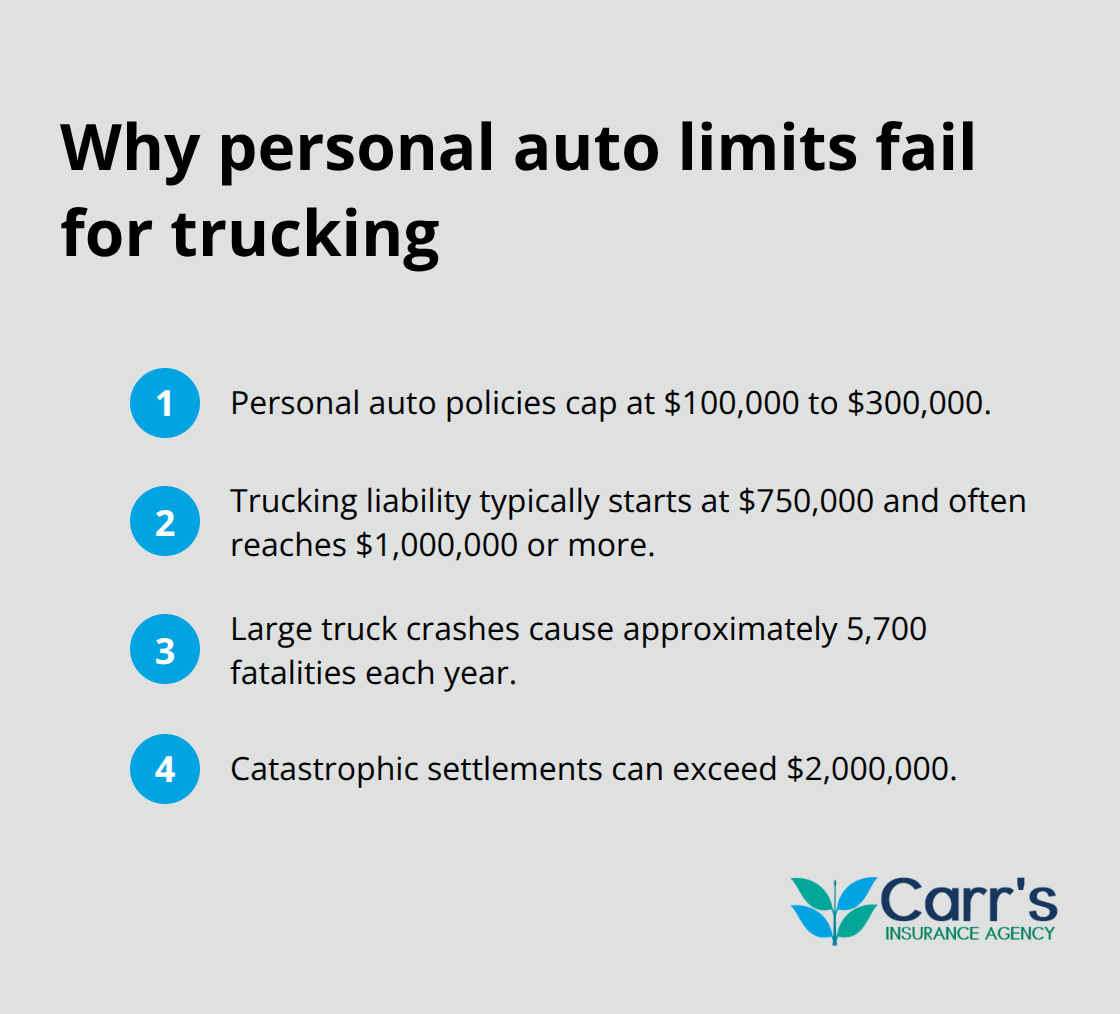
Standard auto insurance won’t cut it for trucking operations. The liability limits on personal auto policies top out at $100,000 or $300,000-amounts that evaporate instantly when a truck causes serious injury or property damage on a highway. Commercial auto liability coverage for trucking companies starts at $750,000 and typically reaches $1 million or higher, which reflects the actual risk exposure. According to the Federal Motor Carrier Safety Administration, large truck crashes result in approximately 5,700 fatalities annually, and a single catastrophic accident can trigger settlements exceeding $2 million.
You need liability protection that matches this reality, not wishful thinking about avoiding accidents.
Commercial Auto Liability Covers the Real Costs
A serious trucking accident creates financial exposure that personal auto policies cannot handle. When your truck injures someone or damages property, the injured party’s legal team will pursue every available asset. Liability coverage protects your business, your personal assets, and your drivers from these claims. The $750,000 to $1 million range reflects what actually happens in catastrophic cases, not theoretical worst-case scenarios. Without adequate liability limits, a single accident could force your company into bankruptcy or personal financial ruin.
Physical Damage Coverage Keeps Your Fleet Running
Your trucks and equipment represent your company’s earning power. Physical damage coverage pays for repairs or replacement when your vehicles suffer damage from collision, weather, theft, or vandalism. Many small trucking companies carry minimal physical damage coverage to save on premiums, then face crippling downtime when a truck needs expensive repairs. A used commercial truck costs $40,000 to $80,000 to replace, and newer models run $100,000 or more. If your fleet sits idle waiting for repairs, you lose revenue immediately. Comprehensive and collision coverage should reflect your actual vehicle values and your ability to absorb downtime costs-typically meaning coverage limits that match replacement value rather than depreciated value.
Workers Compensation Protects Your Team and Business
Workers compensation is legally required in virtually every state if you employ drivers, mechanics, or office staff. According to the National Council on Compensation Insurance, the average workers compensation claim for trucking employees costs $42,000, though serious injuries can exceed $500,000. Beyond legal requirements, workers compensation protects your business from catastrophic liability when employees suffer job-related injuries. Without it, you face personal liability for medical bills, lost wages, and potential lawsuits that could bankrupt your operation. The coverage also provides rehabilitation benefits and wage replacement, which keeps injured workers financially stable and reduces the likelihood of litigation against your company.
Cargo and Bobtail Insurance Fill Critical Gaps
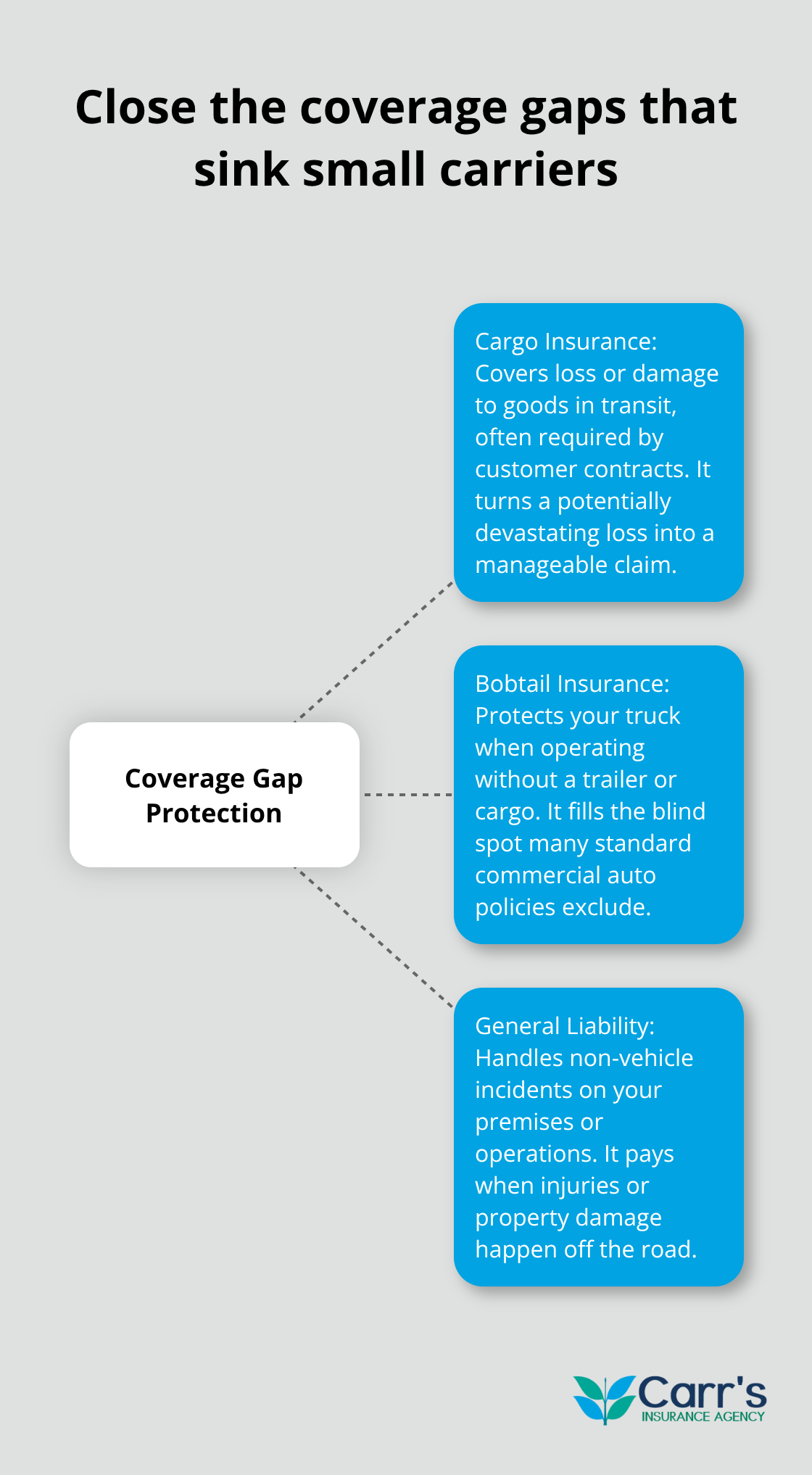
Cargo insurance protects the goods your trucks transport, covering loss or damage that occurs in transit. This coverage matters because your customers expect their shipments to arrive intact, and you’re often liable for losses even when accidents aren’t your fault. Bobtail insurance covers your truck when it operates without a trailer or cargo-situations that standard commercial auto policies often exclude. Many trucking companies overlook bobtail coverage, then discover they have no protection when a truck is involved in an accident while traveling empty between jobs. These specialized coverages address the unique risks that standard policies simply don’t recognize.
Your coverage needs extend beyond what most business owners initially expect, which is why the next section examines how to avoid the most expensive mistakes small trucking companies make when selecting their insurance strategy.
Key Coverage Types That Actually Protect Your Trucking Business
Cargo Insurance Shields Your Shipments and Reputation
Cargo insurance protects the goods your trucks transport while in transit, covering loss or damage regardless of fault in many cases. Your customers hold you responsible for shipments, and their contracts often require you to carry this coverage. Cargo theft costs the trucking industry more than $18 million per day, with individual shipment losses ranging from a few hundred dollars to hundreds of thousands depending on what you haul. If you transport electronics, pharmaceuticals, or high-value manufactured goods, cargo insurance isn’t optional-it’s the difference between a manageable loss and financial devastation.
Bobtail Insurance Covers the Trips You Forgot to Protect
Bobtail insurance covers your truck when it operates without a trailer or cargo, which is a blind spot many small operators miss entirely. Your commercial auto policy often excludes this scenario, leaving you unprotected when you travel between jobs, return from deliveries, or head to maintenance appointments. A single accident while bobtailing can result in liability claims your standard policy won’t cover, forcing you to pay out of pocket for injuries or property damage. This coverage matters most because you can’t predict when an accident will happen-it strikes during routine trips that feel safe but carry real financial risk.
General Liability Protects Your Operations Beyond the Road
General liability coverage protects against claims that arise from non-vehicle incidents on your property or operations. If a customer trips on your loading dock, a mechanic suffers an injury while servicing a vehicle, or your equipment damages someone’s property during a job, general liability steps in where auto policies don’t. The average general liability claim in the transportation industry costs between $10,000 and $50,000 according to industry data, but serious incidents involving premises liability can exceed $100,000. Many small trucking companies assume their commercial auto policy covers everything, then face unexpected out-of-pocket expenses when injuries happen off the road.
These three coverage types work together to eliminate the gaps that destroy unprepared trucking operations. Your specific operational risks determine which combination you actually need, which is why understanding your fleet’s unique exposures matters far more than accepting whatever a broker recommends without question.
The next section examines how to reduce what you pay for these essential protections without sacrificing the coverage your business depends on.
How to Actually Lower Your Insurance Costs Without Gutting Coverage
Bundle Policies to Slash Your Annual Premiums
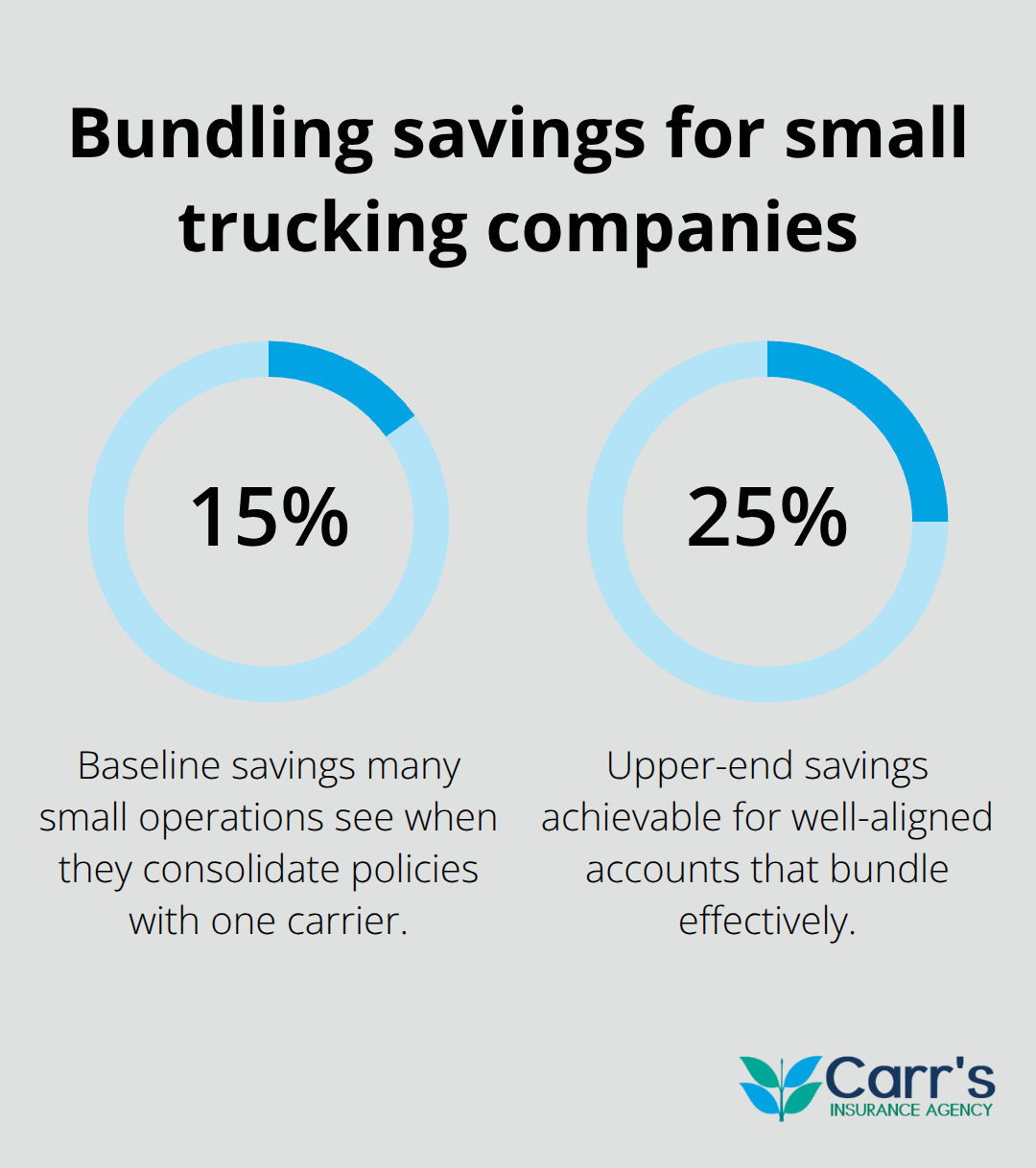
Consolidating policies sounds like generic insurance advice, but the numbers prove it works for trucking companies willing to move forward. Small trucking operations save 15 to 25 percent on annual premiums when they bundle policies under one carrier instead of juggling three separate policies. The savings accumulate because insurers reward consolidated business with volume discounts, and you eliminate the administrative chaos of managing multiple renewal dates and different coverage terms.
Consolidation forces you to review your entire risk profile at once rather than renewing each policy in isolation, which is how gaps develop and costs spiral. The catch is that consolidation only works if you’re consolidating with a carrier that actually wants your business and prices competitively. Shopping around with three to five insurers before consolidating takes time but routinely reveals that one carrier’s consolidated quote beats another’s by thousands of dollars annually.
Drive Down Costs Through Safety Records and Telematics
Your drivers’ safety records directly control what you pay, and this is where most small trucking companies leave money on the table. Insurers use Motor Vehicle Records for every driver on your policy, and a single at-fault accident or moving violation can increase your premium 10 to 40 percent depending on severity and your carrier’s underwriting rules. The Federal Motor Carrier Safety Administration tracks safety violations, and those violations follow your company across carriers-you cannot escape a poor safety history by switching insurers.
A driver safety program that rewards clean records with bonuses and holds drivers accountable for violations typically reduces accident frequency by 8 to 15 percent according to transportation industry data, which translates directly to lower renewal quotes year after year. Some carriers offer telematics programs that monitor harsh braking, speeding, and unsafe cornering in real time, and insurers often discount premiums by 5 to 10 percent for fleets that adopt these systems because the data proves they reduce claims.
Avoid the Underinsurance Trap That Destroys Businesses
Underinsuring your fleet is the financial mistake that destroys small trucking operations faster than any other decision. Choosing coverage limits below what your actual exposure demands creates a false sense of savings that evaporates the moment a serious accident happens, leaving you personally liable for the difference between what insurance pays and what the injured party actually recovers.
Final Thoughts
Small trucking company insurance protects your business from the financial devastation that follows accidents, injuries, and cargo losses. The coverage types outlined in this article-commercial auto liability, physical damage, workers compensation, cargo insurance, bobtail coverage, and general liability-form the foundation that keeps your operation solvent when claims arrive. Skipping any of these protections creates exposure that will eventually cost far more than the premiums you tried to save.
Choosing the right insurance partner matters as much as selecting the right coverage. You need an agency that understands trucking operations, not one that treats your business like a standard commercial account. An independent broker who represents multiple carriers compares quotes across different insurers and finds pricing that reflects your actual risk profile rather than generic industry rates (this comparison process typically reveals significant premium differences for identical coverage).
Contact an insurance professional who specializes in trucking operations and request quotes for the coverage types outlined in this article. Provide accurate information about your fleet size, driver records, cargo types, and annual mileage so quotes reflect your real situation. Carr’s Insurance Agency stands ready to help you navigate these decisions and protect your growing fleet.
Disclaimer: The information provided in this blog is for general informational purposes only and does not constitute legal, financial, or insurance advice. Coverage options, terms, and availability may vary. Please consult with a licensed professional for advice specific to your situation






