
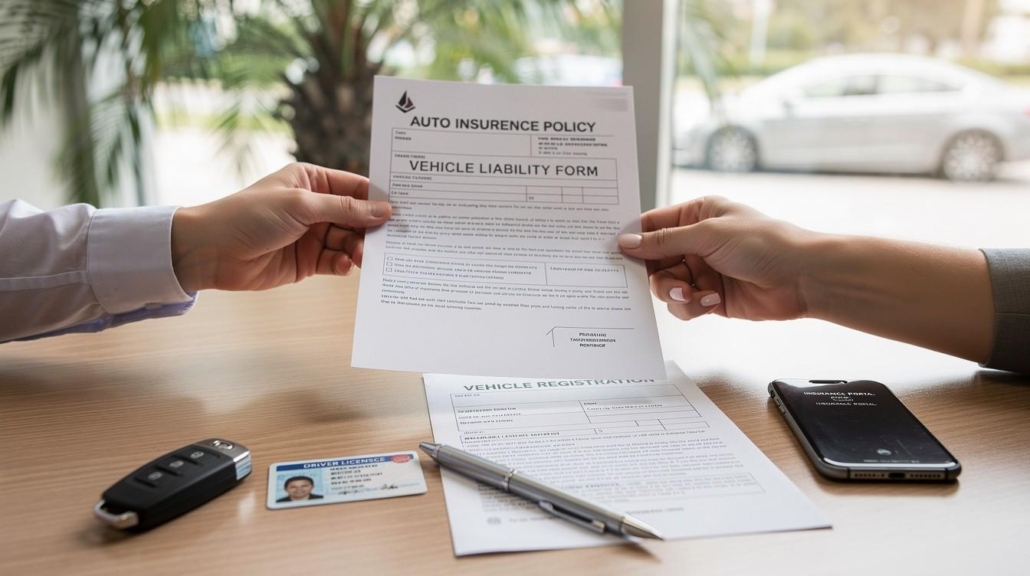
Hawaii Vehicle Liability Insurance: Know Your Liability
Hawaii vehicle liability insurance isn’t optional-it’s the law. Every driver on the islands must carry minimum coverage, and understanding what that means for your wallet and your protection matters.
At Carr’s Insurance Agency, we’ve helped countless Hawaii drivers navigate these requirements and find the right limits for their situation. The difference between minimum coverage and adequate protection can be substantial when an accident happens.
Hawaii’s Vehicle Liability Insurance Requirements
Minimum Coverage Limits Set by State Law
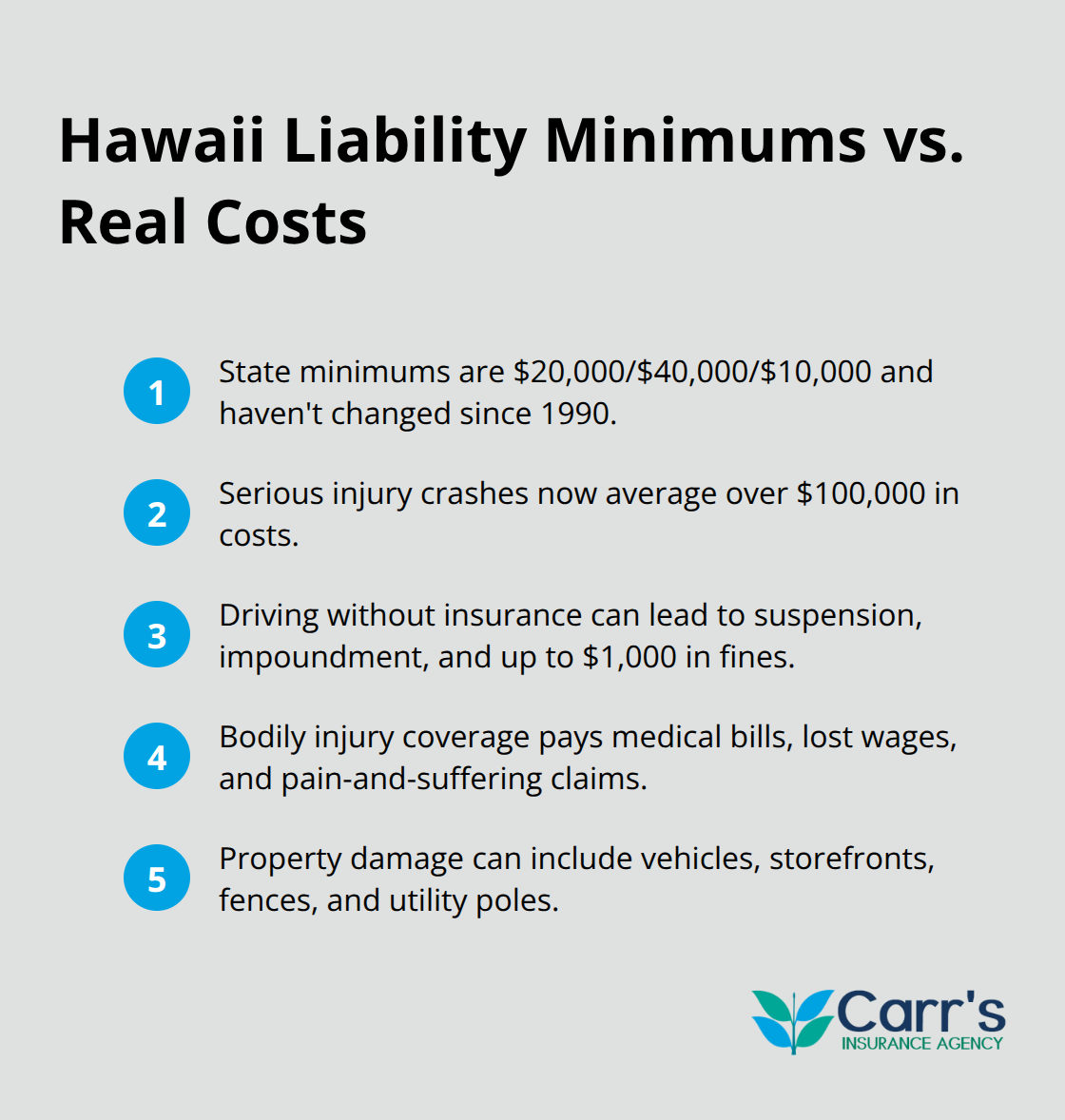
Hawaii law mandates that every driver carry minimum liability coverage of $20,000 for bodily injury per person, $40,000 for bodily injury per accident, and $10,000 for property damage. These minimums have remained unchanged since 1990, which means they haven’t kept pace with inflation or the rising cost of medical care. According to the National Safety Council, the average cost of a serious crash involving injuries now exceeds $100,000, making Hawaii’s minimums dangerously inadequate for most drivers.
If you cause an accident that injures someone or damages property beyond these limits, you become personally liable for the excess amount. Creditors can pursue your wages, bank accounts, and assets to cover the difference. The state doesn’t allow you to skip this coverage either; driving without liability insurance results in license suspension, vehicle impoundment, and fines up to $1,000 for a first offense.
Bodily Injury Coverage Protects Medical Bills
Bodily injury liability covers medical expenses, lost wages, and pain-and-suffering claims when you injure someone in an accident. A single hospitalization in Hawaii can easily cost $50,000 to $100,000, which exceeds the state minimum by several times over. If you’re found at fault for an accident where someone requires surgery or long-term care, the injured party’s attorney will pursue the maximum available under your policy.
Most drivers underestimate how quickly claims accumulate when multiple people are injured or when injuries require ongoing treatment. Try carrying at least $100,000 in bodily injury coverage per person, as this better reflects actual medical costs in Hawaii.
Property Damage Liability Covers More Than You Think
Property damage liability covers repairs to other vehicles, fences, utility poles, and storefronts. Hawaii’s minimum of $10,000 sounds reasonable until you hit a luxury vehicle on Kalakaua Avenue or damage a storefront. A single accident involving a high-end car or commercial property can quickly exceed this limit, leaving you responsible for thousands out of pocket.
Understanding these coverage gaps matters because your personal assets remain at risk when accidents exceed your policy limits. The next section examines real-world scenarios where liability coverage makes the difference between financial stability and serious hardship.
Real-World Scenarios Where Liability Coverage Protects You
At-Fault Accidents and Medical Expenses
A single at-fault accident in Hawaii can drain your finances faster than you’d expect. Consider a realistic scenario: you rear-end another vehicle on the H-1 near Pearl City, injuring the driver and passenger. The driver requires emergency surgery costing $45,000; the passenger undergoes physical therapy for six months at $8,000.
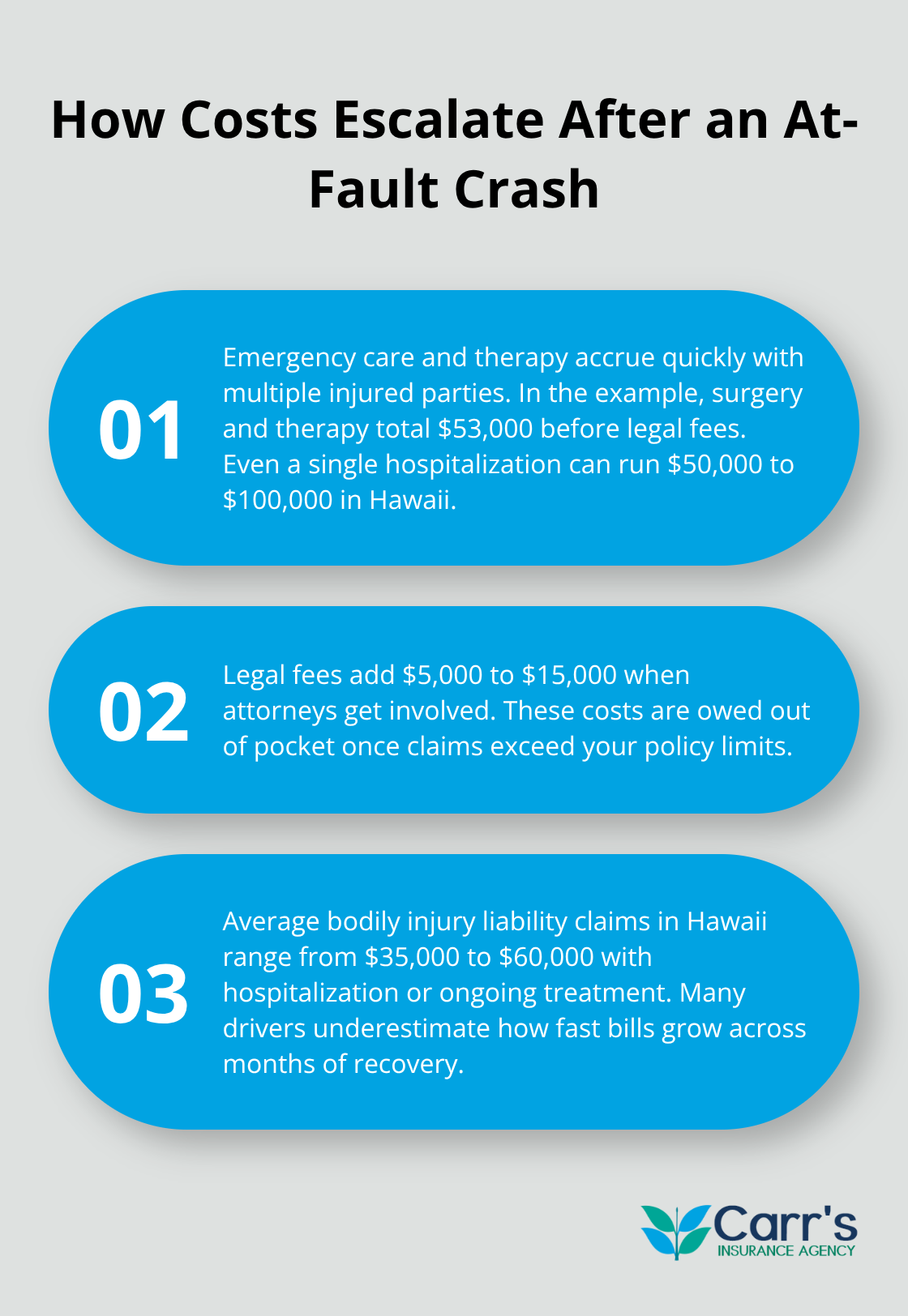
Combined medical expenses total $53,000, which already exceeds Hawaii’s $80,000 bodily injury per accident minimum. You now owe $13,000 out of pocket. If either injured party hires an attorney, legal fees add another $5,000 to $15,000 in costs you must cover. The injured parties can garnish your wages for years to recover these amounts.
This scenario isn’t hypothetical. The Insurance Information Institute reports that the average liability claim for bodily injury in Hawaii runs between $35,000 and $60,000 when injuries require hospitalization or ongoing treatment. Most drivers underestimate how quickly medical bills accumulate when multiple people suffer injuries or when treatment extends over months.
Property Damage to Other Vehicles or Infrastructure
Property damage claims escalate just as quickly when you hit the wrong vehicle or structure. Damage to a luxury car on Waikiki’s streets can easily reach $25,000 to $40,000 in repair costs, instantly exceeding the $20,000 state minimum. Strike a commercial storefront, utility pole, or parked vehicle with expensive modifications, and repair bills climb to $50,000 or more. Your personal assets remain at risk when accidents exceed your policy limits.
Legal Defense Costs and Lawsuits
Legal defense costs compound these expenses further. When an injured party files a lawsuit, your insurer typically covers attorney fees and court costs, but only up to your policy limits. If your coverage is inadequate, you pay out of pocket for additional legal representation. The financial aftermath lasts years once creditors pursue judgment liens against your paycheck, savings, and home.
Why Higher Limits Matter
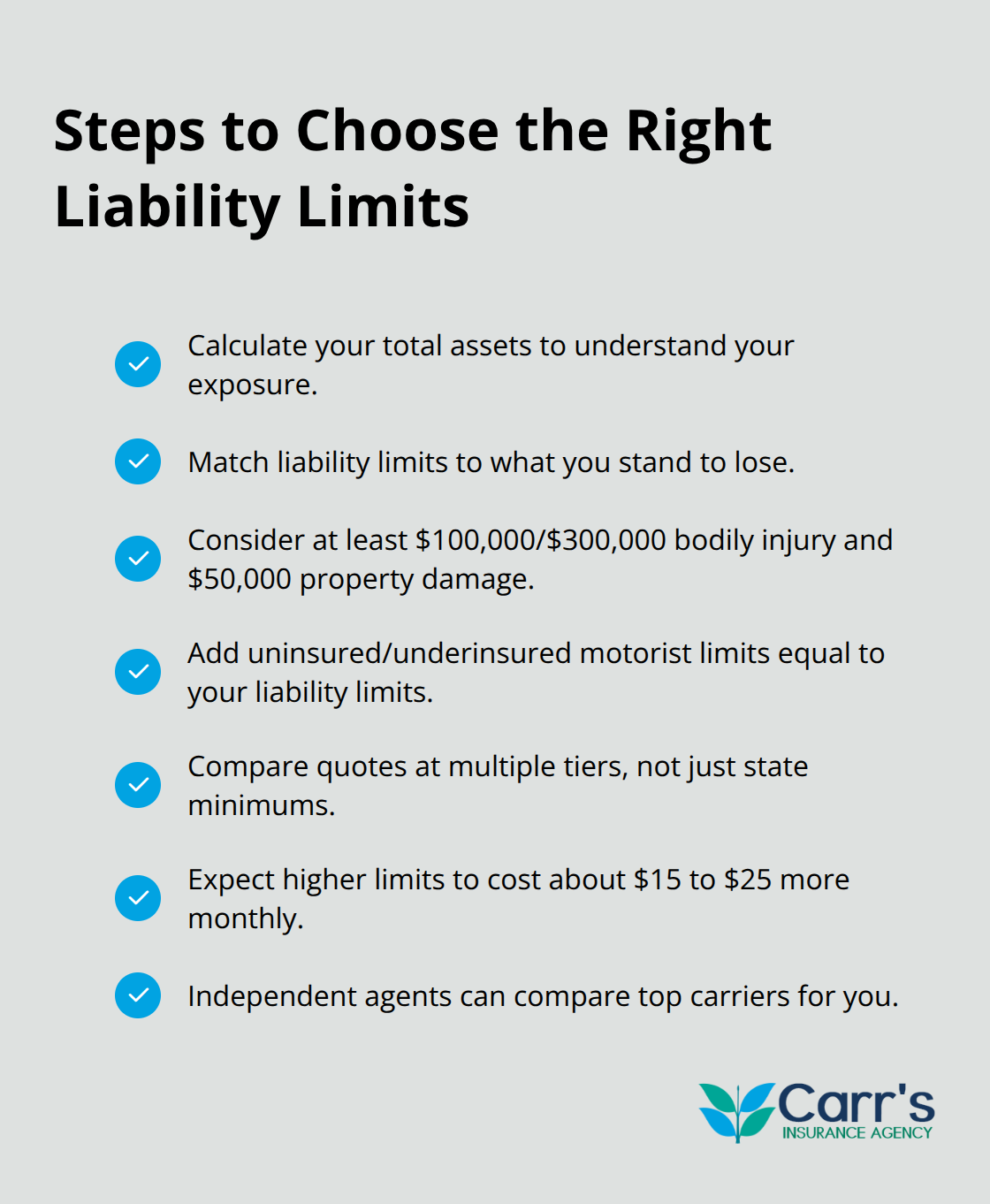
Try carrying at least $100,000 in bodily injury coverage per person and $300,000 per accident, plus $50,000 in property damage liability. These higher limits cost roughly 15 to 25 percent more annually but protect your financial future from creditors. The difference between minimum coverage and adequate protection becomes painfully obvious when an accident happens and medical bills or repair costs exceed what your policy covers. Understanding your exposure helps you make informed decisions about the coverage you actually need.
How to Choose the Right Liability Limits for Your Situation
Assessing Your Assets and Financial Exposure
The gap between Hawaii’s minimum liability limits and actual accident costs creates a dangerous financial trap for most drivers. Your job isn’t to meet state requirements-it’s to protect yourself from losing everything when an accident exceeds those minimums. Start by calculating your total assets: savings accounts, investment accounts, vehicle equity, home equity, and retirement accounts. This number represents your exposure. If you have $300,000 in assets and carry only Hawaii’s minimum $20,000 bodily injury per person coverage, creditors can pursue $280,000 in additional claims against your wages and bank accounts for years after an accident.
The math is straightforward: your liability limits should reflect what you stand to lose, not what the state mandates. Most Hawaii drivers with significant assets should carry at least $100,000 per person and $300,000 per accident in bodily injury coverage, plus $50,000 in property damage liability. This combination costs roughly $50 to $80 more annually than minimums but shields you from catastrophic financial exposure. Drivers with minimal assets can reasonably stop at $50,000 per person, $100,000 per accident, and $25,000 property damage-though even this exceeds Hawaii’s inadequate state minimums.
Understanding Uninsured and Underinsured Motorist Protection
Uninsured and underinsured motorist coverage layers additional protection onto your policy that many Hawaii drivers overlook entirely. This coverage pays your medical bills and repair costs when another driver causes an accident but lacks sufficient insurance to cover damages. Hawaii doesn’t require this coverage, which represents a significant gap in protection. In 2023, 15.4 percent of motorists were uninsured, meaning one in seven drivers on the road cannot cover damages they cause.
If an uninsured driver hits you and causes $50,000 in injuries, you’re stuck pursuing that driver’s personal assets-a slow, expensive process that often yields nothing. Underinsured motorist coverage handles this scenario instead, protecting you when the at-fault driver’s liability limits fall short of your actual damages. Carry uninsured motorist coverage equal to your liability limits; if you’re carrying $100,000 bodily injury liability, carry $100,000 uninsured motorist coverage as well. The additional premium typically runs $10 to $20 monthly and represents one of the best financial decisions you’ll make.
Comparing Coverage Options Across Carriers
When comparing carriers for your final policy, request quotes at multiple coverage levels: Hawaii’s minimum limits, $50,000 per person, and $100,000 per person. Most insurers quote these tiers automatically, and the premium differences will surprise you. The cost difference between $20,000 and $100,000 bodily injury coverage often amounts to only $15 to $25 monthly, making higher limits the obvious financial choice for protecting your future.
As a locally owned, independent agency serving Hawaii since 1990, Carr’s Insurance Agency compares rates across top carriers to help you find the right coverage at the best price-with licensed, locally knowledgeable agents who understand Hawaii’s specific risks and your personal situation.
Final Thoughts
Hawaii vehicle liability insurance protects your financial future far more than your legal standing. The gap between state minimums and actual accident costs creates real financial danger for most drivers, since average liability claims in Hawaii run $35,000 to $60,000 when injuries require hospitalization. Carrying only $20,000 bodily injury per person leaves you vulnerable to wage garnishment, asset seizure, and years of financial hardship when a single accident exceeds those limits.
Start by calculating your total assets and matching your liability limits to what you actually stand to lose. Request quotes at multiple coverage levels from different carriers to see how affordable higher limits truly are-the additional premium typically costs only $15 to $25 monthly compared to minimums. Add uninsured motorist coverage equal to your liability limits, since one in seven Hawaii drivers lack adequate insurance.
Carr’s Insurance Agency compares rates across top carriers to find you the right coverage at the best price. Our licensed, locally knowledgeable agents understand Hawaii’s specific risks and work with you to build a policy that actually protects your situation. Contact us today to review your current coverage and match your liability limits to your financial exposure.
Disclaimer: The information provided in this blog is for general informational purposes only and does not constitute legal, financial, or insurance advice. Coverage options, terms, and availability may vary. Please consult with a licensed professional for advice specific to your situation






