
Hazardous Materials Insurance Hawaii: What Shippers Should Know
Shipping hazardous materials in Hawaii comes with serious legal and financial risks. One mistake in handling, documentation, or transportation can result in massive liability claims and environmental damage.
That’s why hazardous materials insurance in Hawaii isn’t optional-it’s a business necessity. We at Carr’s Insurance Agency help shippers understand their coverage options and protect themselves from the real costs of accidents.
Types of Hazardous Materials Requiring Special Coverage
Flammable Liquids and Gases Present the Highest Risk
Flammable liquids and gases represent the highest-risk category for Hawaii shippers. Gasoline, propane, acetylene, and paint thinners fall into this group and account for a significant portion of hazardous cargo incidents. The U.S. Department of Transportation reports that flammable liquid spills cause a substantial portion of hazardous material transportation accidents. These substances require Class 3 placarding under DOT regulations, and Hawaii’s humid climate can escalate even minor leaks quickly. Shippers who move these materials face immediate liability exposure if containers aren’t properly sealed, vented, or transported in certified vehicles. Standard commercial auto insurance won’t cover these exposures-you need specialized hazmat coverage that addresses both the cargo itself and environmental contamination risks.
Toxic and Corrosive Substances Create Environmental Liability
Pesticides, cleaning chemicals, batteries, and industrial solvents create different challenges than flammables. These materials can cause serious injury to workers and contaminate Hawaii’s sensitive marine environment. The EPA strictly regulates spill response for corrosive substances, and cleanup costs routinely exceed $50,000 for even minor incidents near waterways. Shippers must carry specific documentation showing proper packaging, segregation from incompatible materials, and emergency contact information. Your insurance policy needs to cover not just transportation liability but also third-party bodily injury claims and environmental remediation. Many standard policies exclude these exposures entirely, leaving shippers personally liable for damages.
Radioactive and Biological Materials Demand Maximum Precision
Radioactive medical isotopes and biological specimens moving through Hawaii ports face the most stringent regulations. The Nuclear Regulatory Commission requires shippers to maintain separate insurance specifically for radioactive materials, with coverage limits often exceeding $1 million. Biological materials used in research or medical diagnostics require proof of proper packaging certified to IATA standards. A single documentation error can result in port delays costing thousands daily, plus regulatory fines from the State of Hawaii Department of Health. These shipments need coverage that addresses not just traditional liability but also regulatory defense costs and business interruption from confiscation or quarantine.
Understanding what materials require special coverage is only the first step. Hawaii’s regulatory framework adds another layer of complexity that shippers cannot ignore.
Regulatory Requirements for Hazardous Materials Shipping in Hawaii
The Department of Transportation enforces federal hazmat shipping standards that apply everywhere, including Hawaii, but Hawaii adds its own requirements on top. All hazardous materials moving through Hawaii ports must comply with DOT’s Hazardous Materials Regulations, which specify packaging standards, vehicle certifications, driver qualifications, and routing restrictions. The DOT requires shippers to register with the Pipeline and Hazardous Materials Safety Administration if they transport certain materials regularly, and drivers must hold a Commercial Driver’s License with a hazmat endorsement. Hawaii’s Department of Transportation also requires advance notification for certain hazmat shipments arriving by sea, and the State Department of Health enforces additional rules for biological and radioactive materials that exceed federal minimums. Shippers who underestimate these layered requirements face fines starting at $500 for documentation errors and escalating to $25,000 or more for serious violations.
Federal DOT Regulations and Compliance Standards
The DOT’s Hazardous Materials Regulations establish the baseline for all shipments nationwide. These regulations mandate specific packaging materials, vehicle placarding, and driver certifications that shippers cannot bypass. The Pipeline and Hazardous Materials Safety Administration registration requirement applies to shippers who transport certain hazmat categories on more than a few occasions per year. Drivers transporting hazmat must pass a written exam and carry a hazmat endorsement on their Commercial Driver’s License. Many shippers assume federal compliance covers everything, but that assumption costs them money when state inspectors find missing paperwork or improper labeling at the dock.
State-Specific Hawaii Requirements
Hawaii’s Department of Transportation requires advance notification for hazmat shipments arriving by sea, adding a step that mainland shippers often overlook. The State Department of Health enforces stricter rules for biological and radioactive materials than federal standards require. Port authorities in Honolulu and Hilo conduct inspections that focus specifically on Hawaii’s unique vulnerabilities (island ecosystems, limited emergency response capacity, and marine contamination risks). These state-level requirements exist because Hawaii’s geography and environment demand extra protection. Shippers who comply only with federal standards face significant liability exposure in Hawaii’s regulatory environment.
Documentation and Labeling Obligations
Every hazmat shipment requires a shipping paper that travels with the cargo, listing the material’s proper shipping name, hazard class, UN identification number, and emergency contact information. The EPA and DOT conduct random inspections at Hawaii’s ports, and missing or incorrect shipping papers result in immediate cargo holds and fines. Labels and placards must appear on the container’s four sides using specific fonts and colors-red for flammable, yellow for oxidizers, white with black stripes for toxic substances. Shippers often cut corners with outdated label formats or fail to update documentation when material composition changes slightly, and inspectors catch these mistakes regularly. The State of Hawaii requires shippers to maintain records for at least three years, and audits show that 40 percent of small shippers lack proper documentation systems. Your insurance carrier will deny claims if you cannot prove you followed labeling and documentation procedures, so treating paperwork as a core operational requirement-not an afterthought-directly protects both your business and your coverage.
These regulatory layers create real financial exposure, but they pale in comparison to the liability risks that shippers face when accidents actually occur.
Why Hazardous Materials Insurance Protects Your Bottom Line
The Real Cost of a Single Spill
A single spill of corrosive chemicals near Hawaii’s coast drains your business account faster than any operational expense. Shippers face cleanup bills exceeding $200,000 for minor incidents near waterways, plus third-party liability claims that standard commercial policies flatly reject. Hazmat insurance isn’t about compliance theater or checking regulatory boxes-it’s about preventing one accident from destroying years of profitable operations. When a container of pesticides leaks during transport in Honolulu, your general liability policy won’t cover environmental remediation, worker injury claims, or the regulatory fines that follow.
Hawaii’s Strict Liability Standards
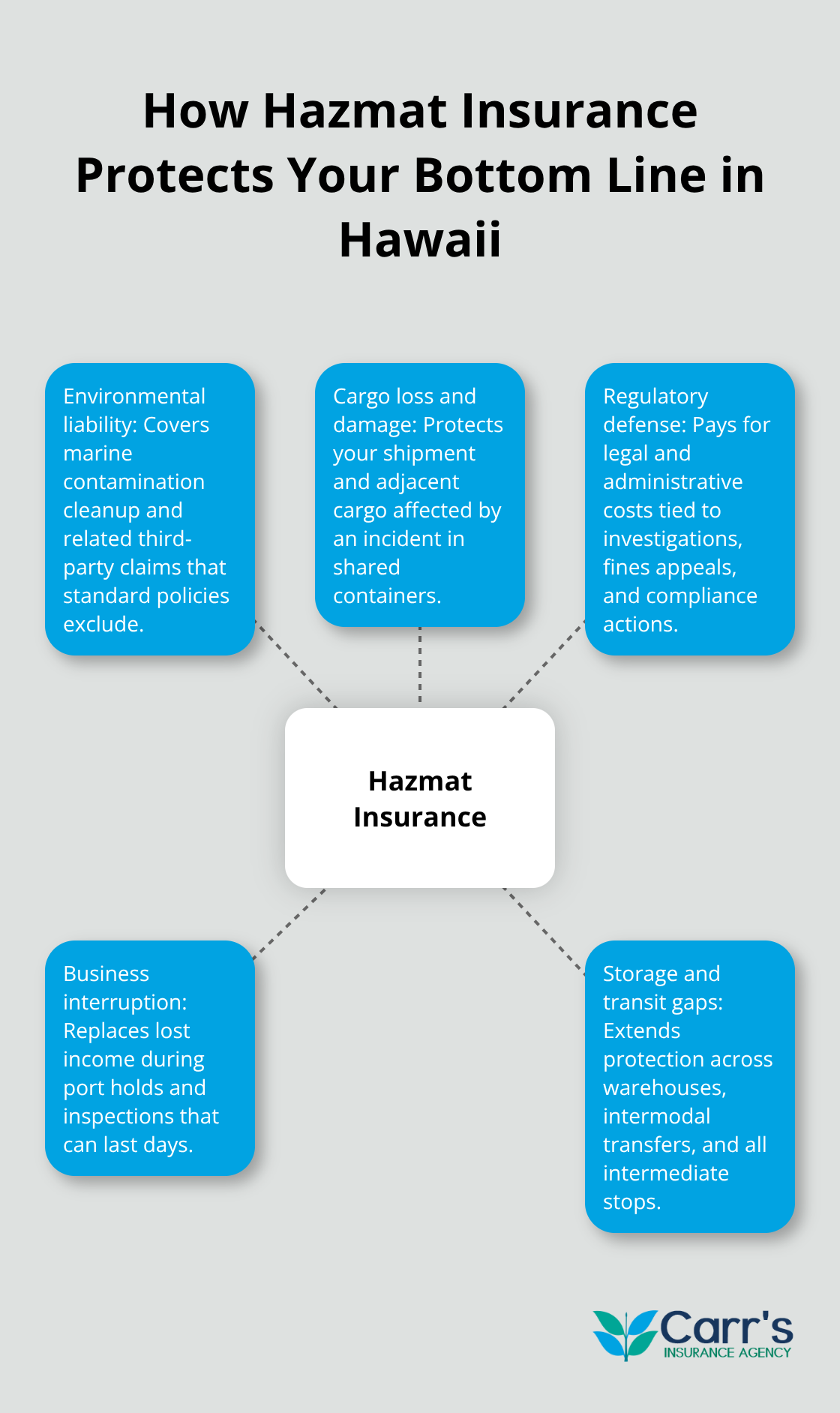
Hawaii’s Department of Health enforces strict liability standards for marine contamination and holds shippers personally responsible for cleanup costs regardless of fault. Proper hazmat coverage addresses what standard policies explicitly exclude: the environmental liability, cargo loss, and third-party bodily injury exposures that create real financial devastation. Transportation risks in Hawaii compound because of island geography and limited emergency response capacity. A hazmat incident on the mainland might trigger response from multiple nearby facilities; in Hawaii, response delays stretch incident response timelines and multiply damage costs.
Coverage for Transportation and Storage Risks
Your insurance must cover cargo loss during transport, liability for damage to other cargo in the same container, and costs from business interruption when shipments face holds at ports during investigations. Port authorities conduct inspections that detain hazmat cargo for 48 hours or longer while documentation gets reviewed, and without business interruption coverage, those delays hit your revenue directly. Storage risks at intermediate facilities create significant exposure-many incidents actually occur at warehouses and distribution centers rather than during active transport. Your policy needs to protect you from warehouse to final destination, including all intermediate stops where cargo sits vulnerable to accidents or environmental exposure.
Port Delays and Financial Impact
Port holds cost shippers thousands daily in lost revenue and operational disruption. A single documentation error can trigger a 72-hour cargo hold while inspectors verify compliance, and your business interruption coverage determines whether you absorb those costs or your insurer does. Hawaii’s ports (Honolulu and Hilo) maintain strict inspection protocols that exceed mainland standards, so your coverage structure must account for Hawaii’s unique regulatory environment. The difference between adequate coverage and inadequate coverage often determines whether a business recovers from an accident or closes its doors permanently.
Final Thoughts
Hazardous materials insurance in Hawaii protects your business from the specific risks that standard commercial policies exclude. Port delays, regulatory fines, environmental cleanup costs, and third-party liability claims converge to create financial exposure that compounds quickly without proper coverage. Your business needs protection that addresses transportation risks, storage exposure at intermediate facilities, and the regulatory defense costs that follow an incident.
We at Carr’s Insurance Agency understand Hawaii’s hazmat shipping landscape because we’ve served the local business community since 1990. As an independent agency, we compare coverage options from top carriers and match your specific cargo types and shipping routes to policies that actually protect your operations. Our locally knowledgeable agents work with you to identify coverage gaps that other brokers miss, and we structure your policy to address Hawaii’s unique regulatory requirements rather than just federal minimums.
Contact Carr’s Insurance Agency to review your current coverage and discuss hazardous materials insurance Hawaii options tailored to your shipping operations. We’ll evaluate your cargo types, routes, and regulatory exposure, then deliver a clear recommendation on the coverage limits and policy structure your business needs. A single incident can destroy years of profitable operations, so addressing your coverage gaps now prevents that outcome.
Disclaimer: The information provided in this blog is for general informational purposes only and does not constitute legal, financial, or insurance advice. Coverage options, terms, and availability may vary. Please consult with a licensed professional for advice specific to your situation