
Business Hurricane Insurance Hawaii: Protecting Your Assets
Hawaii’s hurricane season brings real threats to businesses across the islands. Between June and November, tropical storms can devastate property, halt operations, and drain revenue in days.
We at Carr’s Insurance Agency know that standard business insurance often leaves gaps when hurricanes strike. Business hurricane insurance in Hawaii fills those gaps, protecting your assets, inventory, and income when storms hit hardest.
Why Hawaii’s Location Makes Hurricanes a Business Threat
Hawaii’s Position in the Pacific Hurricane Path
Hawaii sits directly in the path of tropical systems that form across the central Pacific. The state’s hurricane season runs from June through November, with peak activity occurring in August and September. On average, about 4 to 5 tropical systems occur each year within 1500 miles or so of Hawaii, though indirect impacts from passing storms occur much more frequently.
Even storms passing well away from the islands bring destructive winds, heavy rain, and flooding that damage property and disrupt operations. The state’s isolation in the middle of the ocean means that once a hurricane forms and heads toward Hawaii, you cannot move your inventory, equipment, or physical location to safety.
The Real Cost of Past Hurricanes
Historical data shows what hurricanes actually cost business operations. Hurricane Iniki in 1992 caused over $3 billion in damage across the islands and remains one of the costliest hurricanes in Hawaiian history. More recently, Hurricane Lane in 2018 brought unprecedented rainfall to parts of Hawaii and caused widespread flooding that affected businesses for weeks afterward.
Businesses without proper hurricane coverage faced months of lost revenue and repair delays because standard commercial policies simply do not account for the specific risks that tropical systems create. The frequency and unpredictability of storms means that Hawaii businesses cannot rely on luck or hope that the next major hurricane will miss.
Intensifying Storm Patterns Threaten Your Bottom Line
Over the past two decades, the intensity of Pacific hurricanes has increased, with more storms rapidly strengthening as they approach warmer waters near Hawaii. This trend directly affects your bottom line because stronger storms mean greater damage potential and longer recovery periods for businesses without comprehensive protection.
The combination of Hawaii’s geographic exposure, historical hurricane impacts, and intensifying storm patterns creates a clear reality: your business faces real hurricane risk that standard insurance policies do not address. Understanding what business hurricane insurance actually covers becomes the next step in protecting your assets and operations.
What Business Hurricane Insurance Actually Covers
Property Damage Protection for Your Building and Fixtures
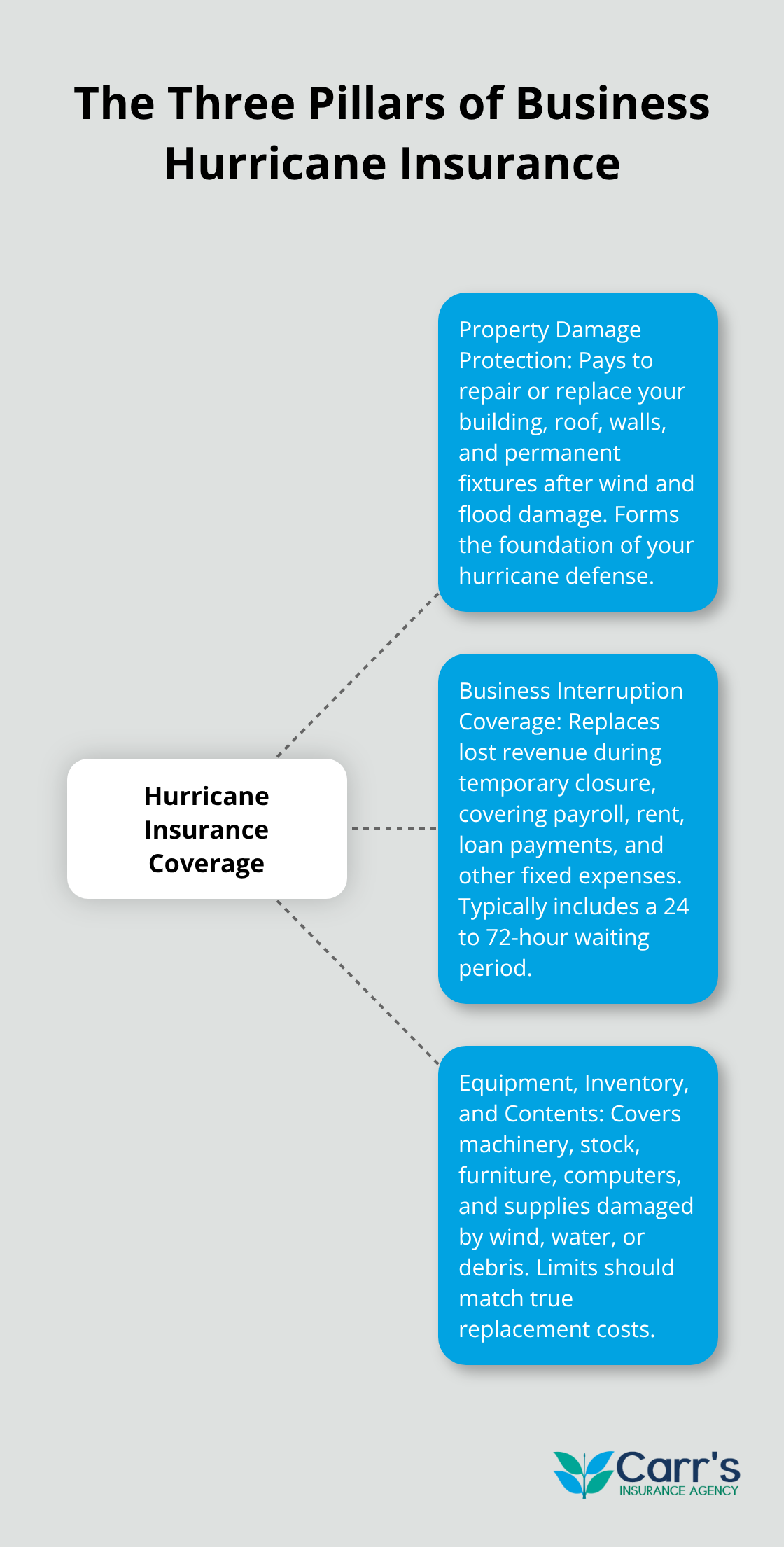
Business hurricane insurance in Hawaii protects three critical areas that standard commercial policies either exclude or severely limit. Property damage coverage pays for repairs or replacement of your building structure, roof, walls, and permanent fixtures when hurricane winds and flooding destroy them. This protection forms the foundation of your hurricane defense-it is not optional in Hawaii.
A standard commercial property policy might cover wind damage to your roof but excludes flood damage entirely, even though hurricanes bring both simultaneously.
Business Interruption Coverage Replaces Your Lost Revenue
Business interruption coverage replaces lost revenue when a hurricane forces you to close temporarily, covering payroll, rent, loan payments, and other fixed expenses that continue even when your doors remain shut. According to the National Association of Insurance Commissioners, businesses without interruption coverage fail at twice the rate of those with it after major disasters. This coverage has waiting periods, typically 24 to 72 hours, which means you absorb losses during the initial critical hours after a storm hits. If you operate a retail shop with $50,000 in inventory and a restaurant with $8,000 monthly rent, a two-week closure costs you $16,000 in rent alone before counting lost sales.
Equipment, Inventory, and Contents Protection
Equipment, inventory, and contents protection covers everything inside your building-machinery, stock, furniture, computers, and supplies-that gets damaged or destroyed by wind, water, or debris. The gap between what you think you have and what you actually have is where businesses in Hawaii get hurt most. Coverage limits must reflect your actual replacement costs, not your best guess. A professional property appraisal establishes accurate limits rather than leaving you underinsured and facing partial recovery after a major hurricane.
Deductibles and Premium Decisions
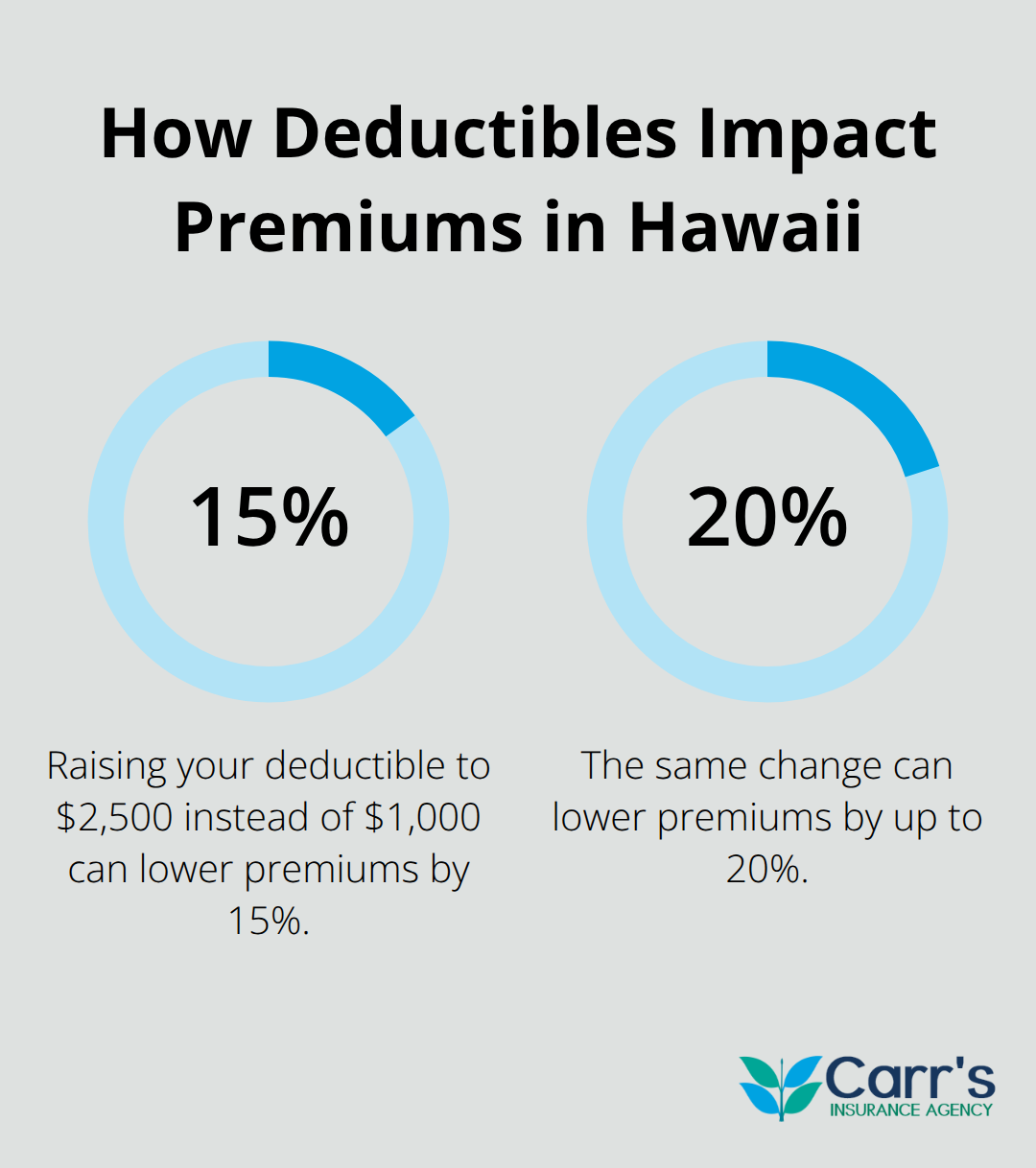
Deductibles matter significantly in Hawaii-choosing a $2,500 deductible instead of $1,000 can lower your premium 15 to 20 percent, but that decision determines how much you pay out of pocket when damage occurs. Your choice between lower premiums and higher out-of-pocket costs depends on your cash reserves and risk tolerance. Once you understand what your policy actually covers, the next step involves selecting the right coverage limits and deductibles for your specific business operations.
How to Choose the Right Hurricane Insurance Policy
Calculate Your True Replacement Costs
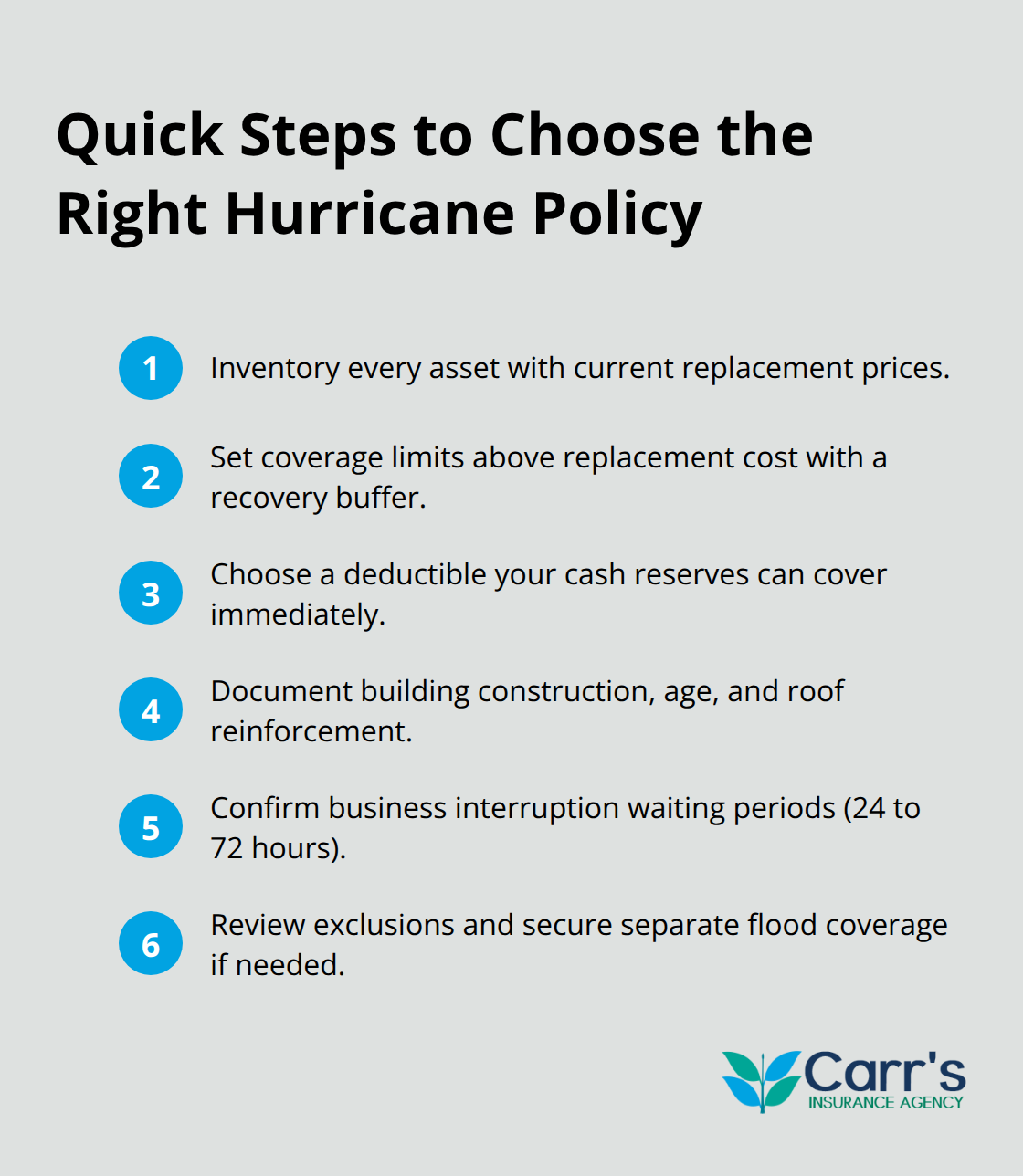
Start with an accurate inventory of what your business actually costs to replace, not what you think it costs. Walk through your facility and document every piece of equipment, inventory, and fixture with current replacement prices from suppliers, not outdated purchase receipts. Many Hawaii business owners underestimate replacement costs because they overlook installation fees, shipping delays from the mainland, and price increases over time. A commercial kitchen with equipment purchased five years ago costs significantly more to replace today than the original purchase price suggests.
Match Coverage Limits to Your Actual Needs
Once you have accurate replacement values, compare those numbers against potential policy limits being offered. Your coverage limit must exceed your replacement cost, not match it, because you’ll face unexpected expenses during recovery that standard replacement costs don’t account for. Deductibles in Hawaii range from $1,000 to $10,000 or higher, and your choice directly affects both your premium and your financial exposure. A $5,000 deductible saves you money on premiums compared to a $1,000 deductible, but you must have $5,000 in cash reserves available immediately after a hurricane hits to cover that out-of-pocket expense before insurance money arrives.
Work with a Local Insurance Agent
A local insurance agent who understands Hawaii’s specific hurricane exposure can review your current policies for gaps and compare hurricane coverage options across multiple carriers rather than locking you into one company’s limitations. During your consultation, bring documentation of your property inventory, financial statements showing annual revenue, and details about your building’s construction and age (since newer concrete structures with reinforced roofs qualify for better rates than older wooden buildings). Ask your agent specifically about waiting periods for business interruption coverage, because that 24 to 72-hour gap means your business absorbs initial losses while you wait for coverage to activate.
Understand Policy Exclusions and Flood Coverage
Request a detailed explanation of what your policy excludes, not just what it covers, since exclusions create the real financial surprises after storms. Your agent should explain how flood coverage works separately from wind coverage, since many hurricane policies exclude flood damage entirely and require a separate flood insurance policy through the National Flood Insurance Program or private carriers.
Final Thoughts
Start by scheduling a consultation with an insurance professional who understands Hawaii’s specific hurricane exposure. Bring your business financials, property inventory, and building details so your agent can assess your actual replacement costs and revenue needs. This conversation takes a few hours but prevents months of financial chaos after a hurricane hits.
Document everything your business owns and calculate accurate replacement costs using current supplier pricing, not old purchase receipts. Include installation fees and shipping delays from the mainland, since these costs add up quickly during recovery. Once you have real numbers, match your coverage limits to those costs plus a buffer for unexpected expenses, then select a deductible amount your business can actually pay immediately after a hurricane hits.
We at Carr’s Insurance Agency help Hawaii businesses navigate hurricane exposure and find business hurricane insurance that actually protects their operations. Our locally knowledgeable agents compare rates across top carriers to deliver personalized protection for your specific needs. Contact us to review your current policies and secure the coverage your Hawaii operation requires.
Disclaimer: The information provided in this blog is for general informational purposes only and does not constitute legal, financial, or insurance advice. Coverage options, terms, and availability may vary. Please consult with a licensed professional for advice specific to your situation






