
Hawaii Insured Commercial Vehicles: Why Coverage Matters
Running a business with commercial vehicles in Hawaii means navigating real risks that most business owners underestimate. Hawaii insured commercial vehicles require more than basic coverage-they need protection tailored to our islands’ specific conditions and legal landscape.
At Carr’s Insurance Agency, we’ve seen too many business owners discover gaps in their coverage only after an accident or claim. The good news is that understanding your options now can save your business from devastating financial losses later.
Why Your Commercial Vehicles Need Real Protection in Hawaii
Hawaii’s Road Environment Demands Serious Coverage
Hawaii’s road environment punishes inadequate coverage in ways mainland business owners rarely face. The combination of narrow roads, heavy tourist traffic, and aggressive weather creates accident rates that demand serious insurance strategies. When your commercial vehicle collides with another vehicle or object here, the damage compounds quickly-repair costs spike due to limited local parts availability and shipping delays from the mainland.
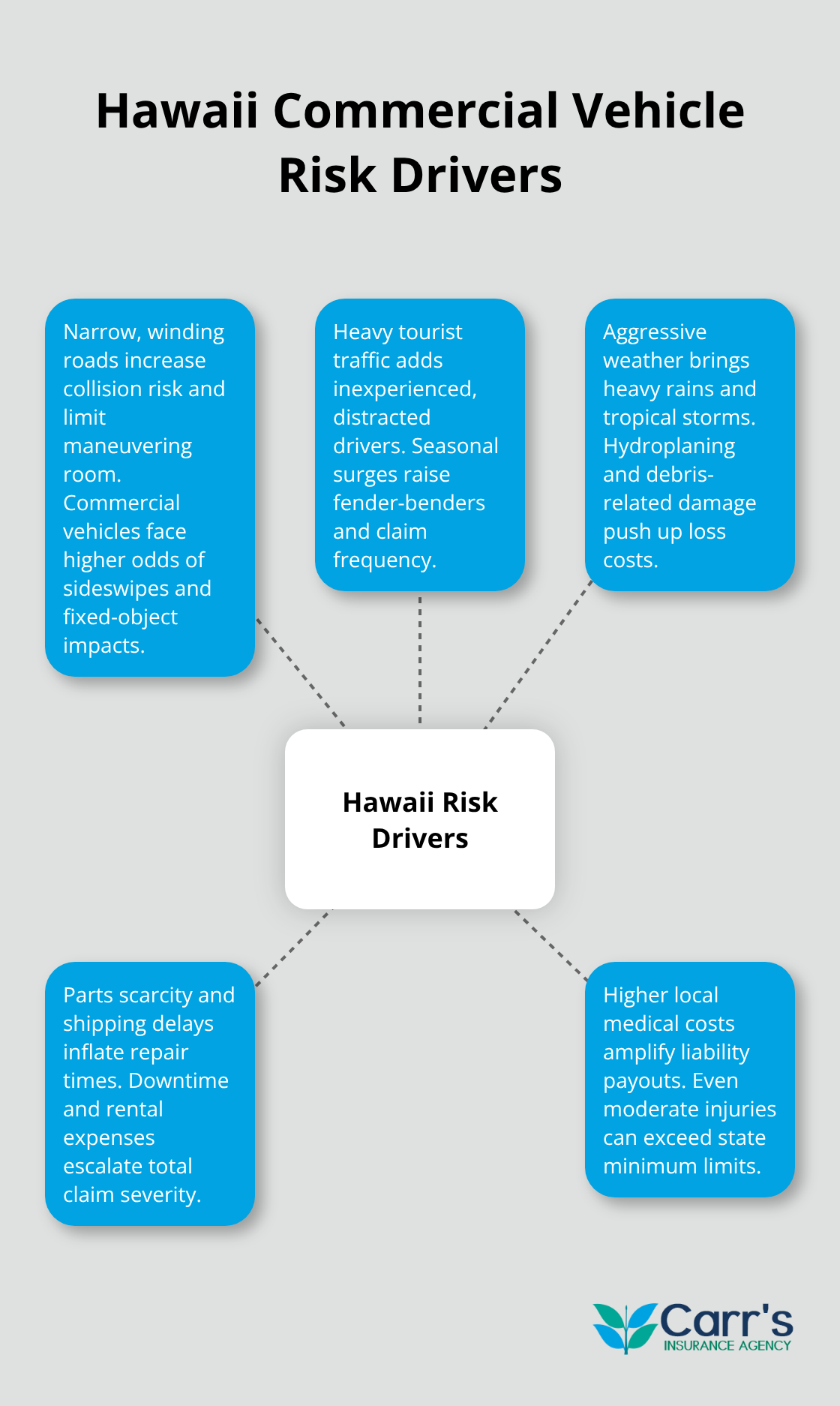
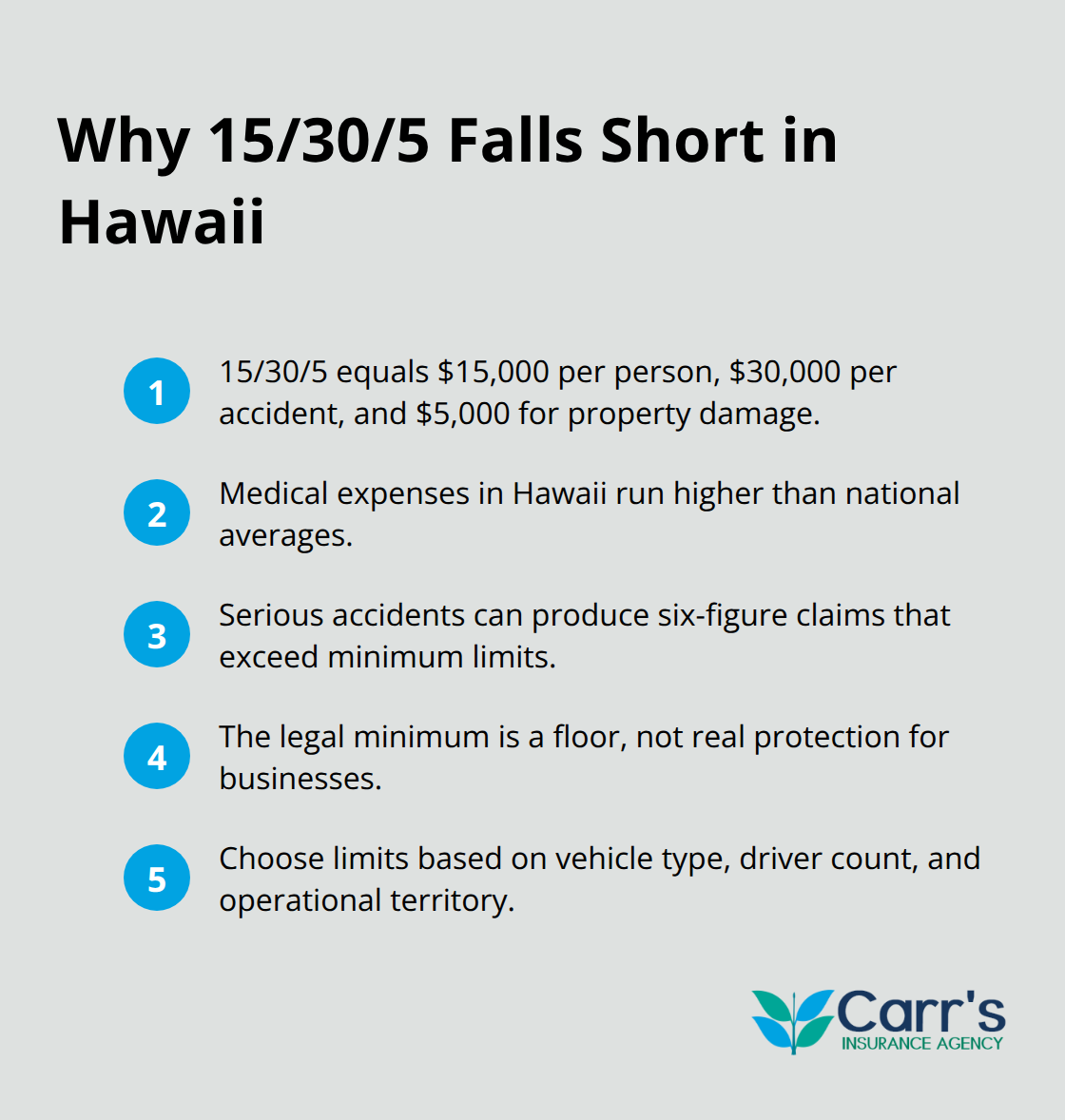
Liability claims escalate faster in Hawaii too, where medical expenses run higher than national averages. You cannot afford to guess at coverage levels or rely on whatever your previous agent recommended. A single serious accident involving your commercial vehicle can expose your company to six-figure claims that exceed state minimums by multiples.
Hawaii’s Legal Minimums Fall Short of Real Protection
Hawaii requires all commercial vehicles to carry minimum liability insurance of 15/30/5 (bodily injury per person, total bodily injury per accident, and property damage), but this legal floor is dangerously low for actual business protection. The financial exposure extends beyond the accident itself. If your commercial vehicle injures someone or damages property, Hawaii law makes your business liable for damages that often reach significant amounts in serious cases.
Most business owners severely underestimate their fleet’s actual replacement value, leaving themselves vulnerable when vehicles are totaled. Weather-related claims in Hawaii spike during November through March, when tropical storms and heavy rains cause accidents that standard policies sometimes exclude or limit.
Coverage Gaps That Destroy Unprepared Businesses
Hired and non-owned vehicle coverage-protection for when employees drive rented vehicles or borrow equipment for business purposes-gets overlooked constantly, yet these gaps create massive exposure. Businesses lose coverage protection entirely when they fail to notify their agent after adding a new vehicle to their fleet or changing how vehicles operate. These oversights happen more often than you’d think, and they leave your company completely unprotected at the worst possible moment.
The bottom line is straightforward: commercial vehicle coverage in Hawaii isn’t about meeting legal requirements or checking boxes. Your protection must match Hawaii’s specific risks and your actual operational needs. Understanding what types of coverage actually exist-and which ones your business truly needs-separates companies that survive claims from those that face financial ruin.
What Coverage Options Actually Protect Your Hawaii Fleet
Standard Commercial Auto Coverage and Its Real Limits
Commercial auto insurance in Hawaii splits into distinct categories, and choosing between them determines whether your business survives a major claim or faces bankruptcy. Standard commercial auto policies cover liability, collision, and comprehensive damage, but Hawaii’s specific risks demand you understand exactly what each component covers and where gaps emerge. Liability coverage pays for injuries or property damage your vehicle causes to others, collision covers damage to your vehicle from accidents, and comprehensive handles weather, theft, and vandalism. Most business owners incorrectly assume these three components work together seamlessly, but they operate independently with separate deductibles and limits.
You cannot afford to focus only on meeting Hawaii’s legal minimum of 15/30/5 instead of calculating your actual risk exposure based on vehicle type, driver count, and operational territory.
Specialty Coverage for Tow Trucks and Service Vehicles
Specialty coverage becomes non-negotiable if your business operates tow trucks, service vehicles, or mobile equipment. Tow truck operators face unique exposures that standard commercial auto policies either exclude or severely limit, including coverage for tools, equipment, and the towed vehicle itself. Service vehicles carrying expensive tools or diagnostic equipment need inland marine coverage layered over basic auto policies, since standard commercial auto won’t compensate you for stolen or damaged equipment.
Business Owner Policies and Cost Savings
Business owner policies combine commercial auto with general liability, property coverage, and other protections into one package. However, bundling only saves money if the package actually covers your specific operations. Many business owners discover after a claim that their bundled policy excluded hired vehicle coverage or non-owned vehicle liability, forcing them to pay losses directly from cash flow.
The Hidden Exposure of Hired and Non-Owned Vehicles
If your business uses rented vehicles for deliveries or temporarily borrows equipment vehicles, hired and non-owned vehicle coverage is not optional. This gap exposes your company to significant liability when employees drive vehicles your business doesn’t own. The decision about which coverage structure works for your fleet requires honest assessment of every vehicle type you operate, every way employees use vehicles for business purposes, and every scenario where you might need protection-which brings us to the coverage gaps that destroy unprepared businesses.
Common Coverage Gaps Business Owners Miss
Underinsuring Vehicle Value Costs You Thousands
Most business owners in Hawaii drastically underestimate what their commercial vehicles are actually worth, then shock themselves when a total loss claim arrives and their insurance payout falls thousands of dollars short of replacement costs. You need to physically inspect each vehicle, research current market replacement values for that exact make and model in Hawaii, then add 15 to 20 percent for the reality that parts and labor cost significantly more on the islands than on the mainland. The National Association of Insurance Commissioners reports that underinsured vehicles represent one of the costliest mistakes businesses make, yet it happens because owners rely on decade-old estimates or what they originally paid for a vehicle.
A 2015 Ford van that cost $28,000 new might now cost $19,000 to replace with equivalent mileage, or it might cost $24,000 depending on current market conditions-you cannot guess at this number. Pull quotes from local Hawaii dealers, check current auction prices through NADA Guides, and document everything so your agent can set accurate coverage limits that actually reflect what you’d spend to get back on the road after a total loss.
Hired and Non-Owned Vehicles Create Uninsured Exposure
If your employees ever drive rental vehicles for business deliveries, borrow a colleague’s truck to pick up supplies, or operate equipment vehicles that your business doesn’t own, your standard commercial auto policy likely provides zero protection for those situations. This gap catches business owners completely off guard because they assume their commercial auto coverage travels with their employees, but it doesn’t-it only covers vehicles your business owns or leases.
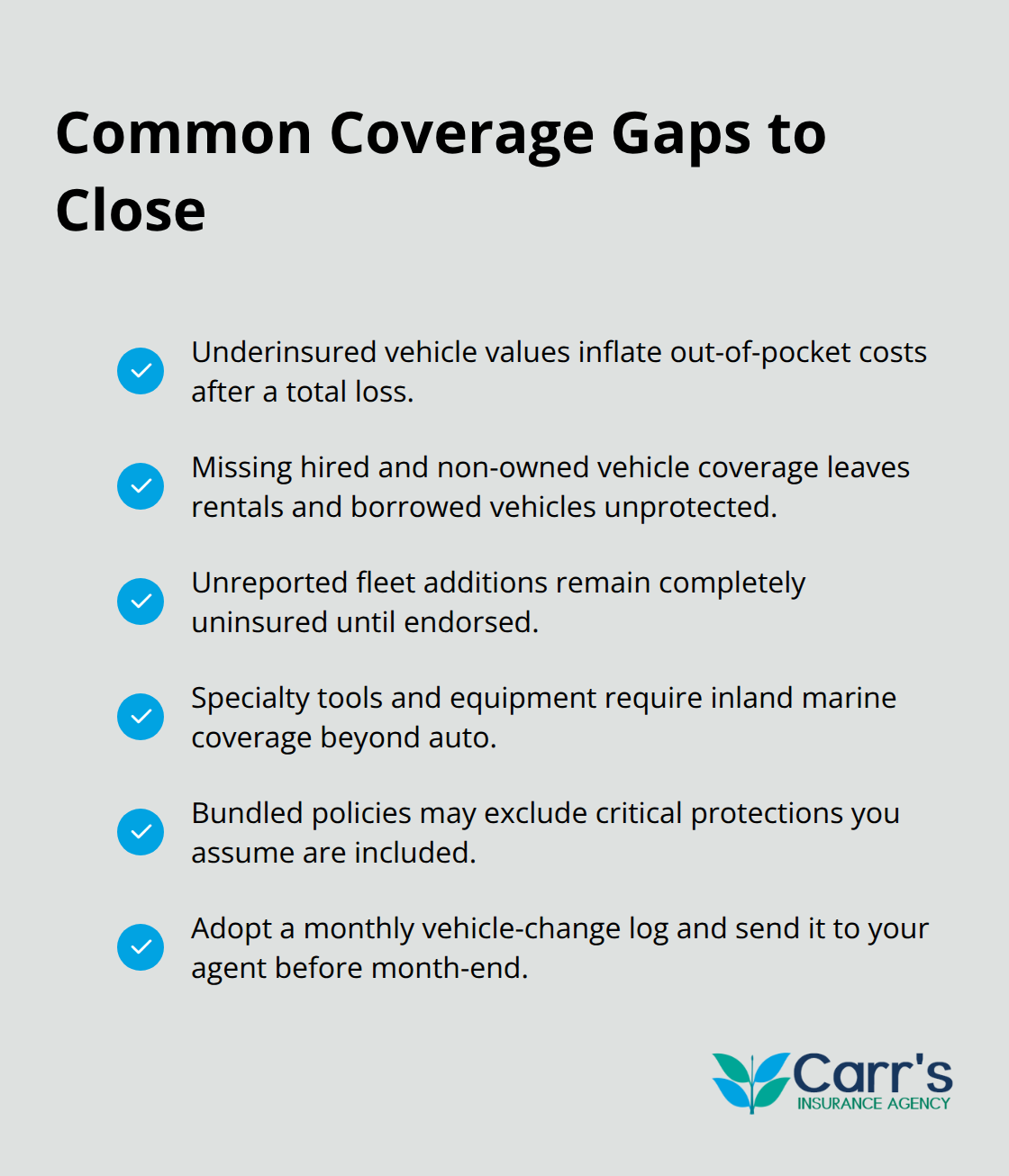
A delivery driver using a rented vehicle involved in an accident that injures someone means your business faces liability claims that your policy won’t cover, forcing you to pay damages directly from cash reserves. Hired and non-owned vehicle coverage eliminates this catastrophic exposure, and it becomes mandatory if your operations involve any scenario where employees operate vehicles outside your direct ownership.
Fleet Changes and Policy Neglect Leave Gaps
Adding new vehicles to your fleet without notifying your agent leaves those vehicles completely uninsured, a mistake that happens repeatedly because owners assume coverage automatically expands or they simply forget to make the call. If your business purchases an additional service vehicle, brings in a used truck from another location, or temporarily adds equipment for seasonal work, your existing policy does not cover those additions until you formally notify your agent and they issue an endorsement.
Insurance claims investigators look specifically for this type of coverage lapse when investigating accidents, and they will deny claims for vehicles not listed on your active policy. You must establish a monthly routine where you document every vehicle change (additions, removals, or operational changes like converting a personal vehicle to business use) and submit that list to your agent before month-end, creating a paper trail that protects your business and keeps your coverage current with your actual operations.
Final Thoughts
Assessing your commercial vehicle coverage needs starts with a brutally honest inventory of every vehicle your business operates and exactly how each one gets used. Document the make, model, year, and current replacement value for each vehicle, then list every scenario where employees might drive vehicles you don’t own or operate equipment outside your direct control. This inventory becomes your roadmap for identifying which coverage types you actually need versus which ones you can skip.
Hawaii insured commercial vehicles require coverage decisions based on your specific operational reality, not generic templates or what competitors carry. A tow truck operator faces completely different risks than a service contractor, who faces different risks than a delivery business (and your coverage structure must match your actual exposures). Having detailed conversations with someone who understands Hawaii’s insurance landscape and your business operations transforms your protection from guesswork into strategy.
Contact Carr’s Insurance Agency to schedule a coverage review with an agent who can assess your fleet, identify gaps in your current protection, and build a strategy that actually covers your business. Waiting until after an accident or claim to discover coverage gaps costs far more than investing time now to get protection right. Your business assets deserve protection that matches Hawaii’s real risks.
Disclaimer: The information provided in this blog is for general informational purposes only and does not constitute legal, financial, or insurance advice. Coverage options, terms, and availability may vary. Please consult with a licensed professional for advice specific to your situation






