
Classic Car Insurance Hawaii: Insuring Your Vintage Vehicle
Your classic car is more than transportation-it’s an investment that deserves protection standard auto policies simply won’t provide. Classic car insurance in Hawaii is specifically designed for vintage vehicles, with coverage options that reflect how collectors actually drive and store their prized possessions.
At Carr’s Insurance Agency, we understand that your collector car needs specialized attention. Let’s walk through what makes classic car coverage different and how to protect your vehicle properly.
Why Standard Car Insurance Fails Classic Vehicles
Standard auto policies treat your vintage car like a daily driver, which means they undervalue it dramatically. These policies calculate payouts using actual cash value, a method that depreciates your classic car based on age and mileage rather than its true market worth. If your 1967 Chevelle suffers damage, a standard insurer might offer you $8,000 when the actual replacement cost reaches $35,000 or higher. Collectors contact us after filing claims on standard policies only to discover their coverage falls thousands of dollars short. The gap exists because standard policies assume cars lose value predictably, but classic cars move in the opposite direction. A well-maintained vintage vehicle appreciates over time, especially rare models. Standard insurers ignore this reality, leaving you massively underprotected.
Agreed Value Coverage Changes Everything
Agreed value coverage works differently. You and your insurer agree on your car’s value upfront, often using market data from sources like CLASSIC.COM, which aggregates pricing from over 2,000 sources including major auction houses like RM Sotheby’s and Mecum. If your 1975 Porsche 911 Carrera receives a valuation of $89,000 and it becomes totaled, you receive $89,000-not some depreciated number pulled from a standard valuation guide. This approach protects your actual investment. The key is setting the valuation correctly initially. You’ll want documentation of your car’s condition, recent appraisals, and market comparables. CLASSIC.COM tracks values for free and sends alerts when similar models sell, helping you stay current with market shifts. This data becomes your insurance foundation. When you work with an independent agent who understands collector vehicles, they’ll help you set a value that reflects your car’s condition and the current market-not arbitrary depreciation tables.
Mileage Limits Reflect Real Collector Habits
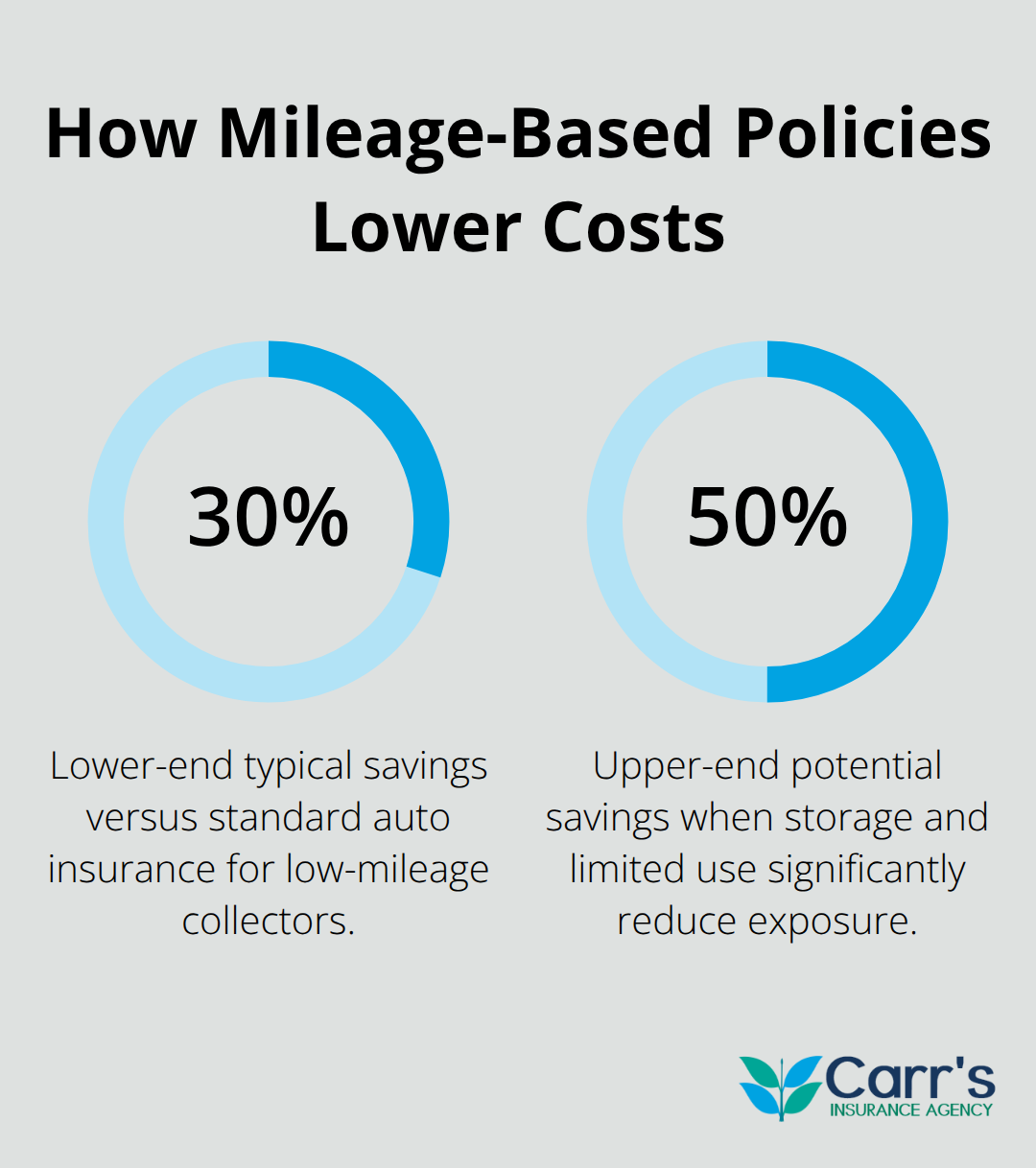
Classic car policies include annual mileage restrictions, typically ranging from 2,500 to 7,500 miles per year. This isn’t a limitation-it’s actually protective for you. Collectors don’t drive their vintage vehicles like commuter cars. You take your Mustang to shows, occasional weekend drives, and car club events. That amounts to maybe 3,000 miles annually if you’re active. Standard policies don’t account for this low-mileage reality, charging you for coverage you don’t need. Specialty policies reward your actual driving patterns with lower premiums. You’ll save 30 to 50 percent compared to standard auto insurance because the risk profile is fundamentally different. Your classic car spends most of its time garaged, protected from weather and regular road hazards.
Setting Your Mileage Expectations Accurately
Report your expected annual mileage honestly when you obtain quotes, and confirm that your policy allows for occasional longer drives to distant car events without penalty. This transparency prevents coverage disputes later and ensures your premium reflects your actual usage. The next step involves understanding what specific coverage options protect your investment beyond basic agreed value protection.
What Coverage Actually Protects Your Classic Car
Agreed value coverage remains the foundation of proper classic car protection, but the real question is how much additional coverage you need beyond that base layer. Your 1969 Camaro might carry $45,000 in agreed value protection, but what happens when you’re restoring it and have $12,000 in NOS parts sitting in your garage waiting for installation? Standard agreed value policies won’t cover those components until they’re permanently attached to the vehicle.
Spare Parts Coverage Protects Your Restoration Investment
Spare parts coverage fills this gap by protecting your investment in restoration materials, original equipment, and hard-to-find components stored off the vehicle. This coverage typically costs just 10 to 15 percent more than base agreed value but prevents catastrophic losses when fire, theft, or weather damage strikes your collection. The coverage extends to parts in storage, parts being transported to a restoration shop, and components waiting for installation.
Without this rider, a garage fire that destroys your original 427 big-block engine and transmission results in zero payout on a standard agreed value policy. Restoration coverage works alongside parts protection by covering the labor costs and materials involved in bringing your vehicle back to its pre-loss condition. High-end restorations demand significant labor investment (specialist shops charge $150 to $300 per hour), making this protection essential for serious collectors.
Transportation Coverage Protects Your Vehicle in Transit
Your classic car faces different risks than daily drivers, particularly when being transported to shows, auctions, or restoration facilities. Standard auto policies exclude coverage during transport on trailers or while stored in non-residential locations-precisely when many collectors need protection most. Transport coverage specifically protects your vehicle while it travels on a trailer to a car show or ships to a specialist restorer on the mainland.
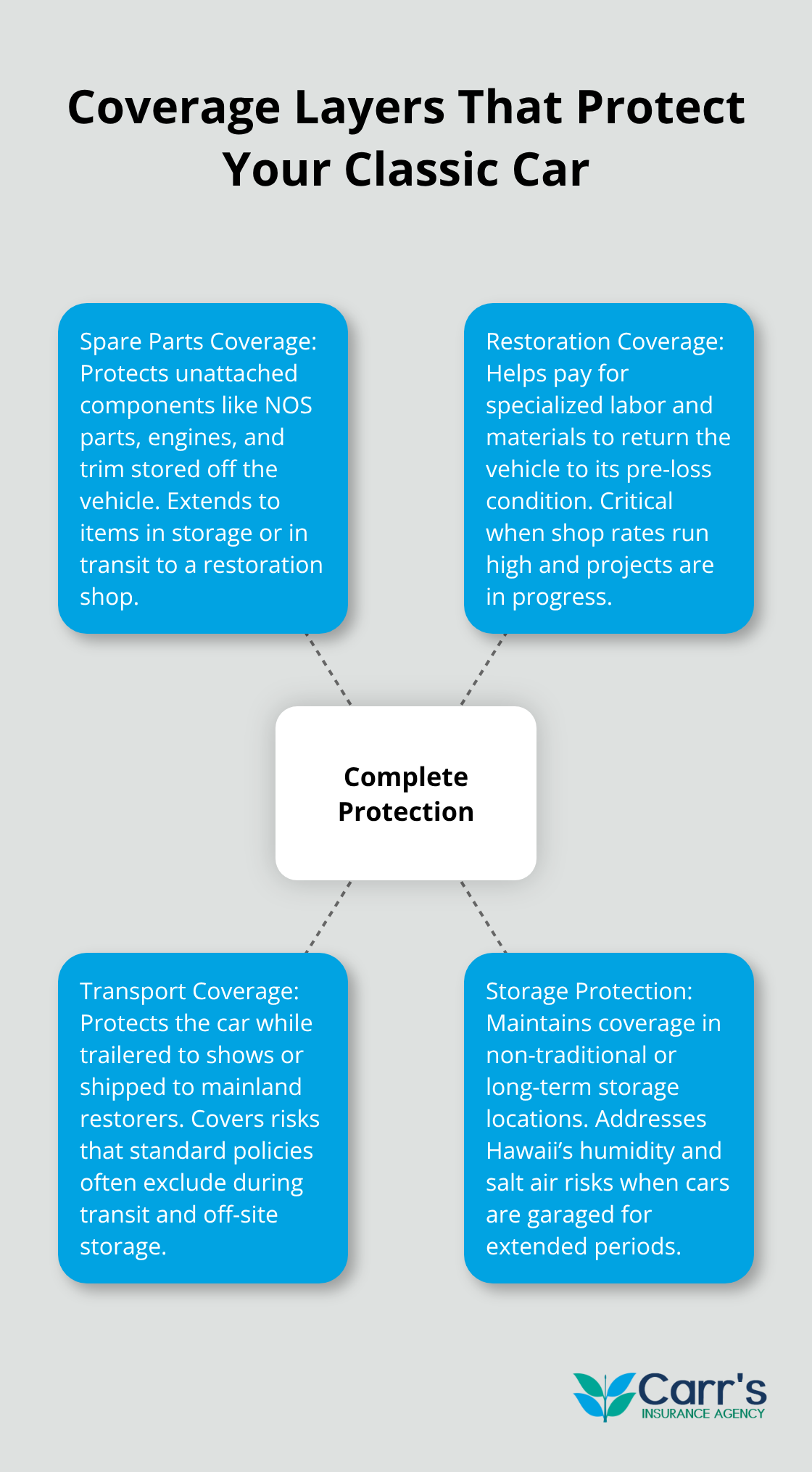
This protection matters because the trailer journey introduces exposure that your garage doesn’t. Weather, road hazards, and accidents during transport can total a classic car before it ever reaches its destination. Transport coverage activates the moment your vehicle leaves your property and continues until it arrives at its final location.
Storage Protection Addresses Hawaii’s Unique Climate Challenges
Storage protection extends coverage to vehicles kept in non-traditional storage-climate-controlled storage units, private warehouses, or even at a friend’s property-maintaining full protection regardless of where your car sits between driving seasons. Hawaii’s salt air and humidity create additional storage concerns that mainland collectors rarely face; your classic car stored in a standard garage without climate control can suffer significant corrosion damage over a six-month period.
Agreed value policies often restrict coverage for vehicles stored longer than 30 days or parked at non-residential addresses without explicit storage coverage added to your policy. This limitation leaves your investment vulnerable during the off-season months when many collectors store their vehicles. Adding storage protection removes these restrictions and ensures your car remains fully covered no matter how long it sits or where you keep it.
Understanding these coverage layers helps you build a complete protection strategy. The next step involves determining your vehicle’s actual value-a process that requires accurate documentation and market research.
Getting Your Classic Car Properly Valued and Insured
Establish Your Vehicle’s True Market Value
Valuing your classic car accurately forms the foundation of everything that follows. You cannot obtain proper agreed value coverage without knowing what your vehicle is actually worth, and this number differs dramatically from what you might guess. Start by gathering documentation of your car’s condition-photographs from multiple angles, maintenance records, restoration receipts, and any professional appraisals you’ve had completed. Next, research comparable sales using CLASSIC.COM, which aggregates data from over 2,000 sources including RM Sotheby’s, Mecum, Bring a Trailer, and Hagerty Marketplace Auctions. If your 1972 Datsun 240Z appears in fair condition, CLASSIC.COM might show similar models selling between $28,000 and $35,000 depending on originality and mileage.
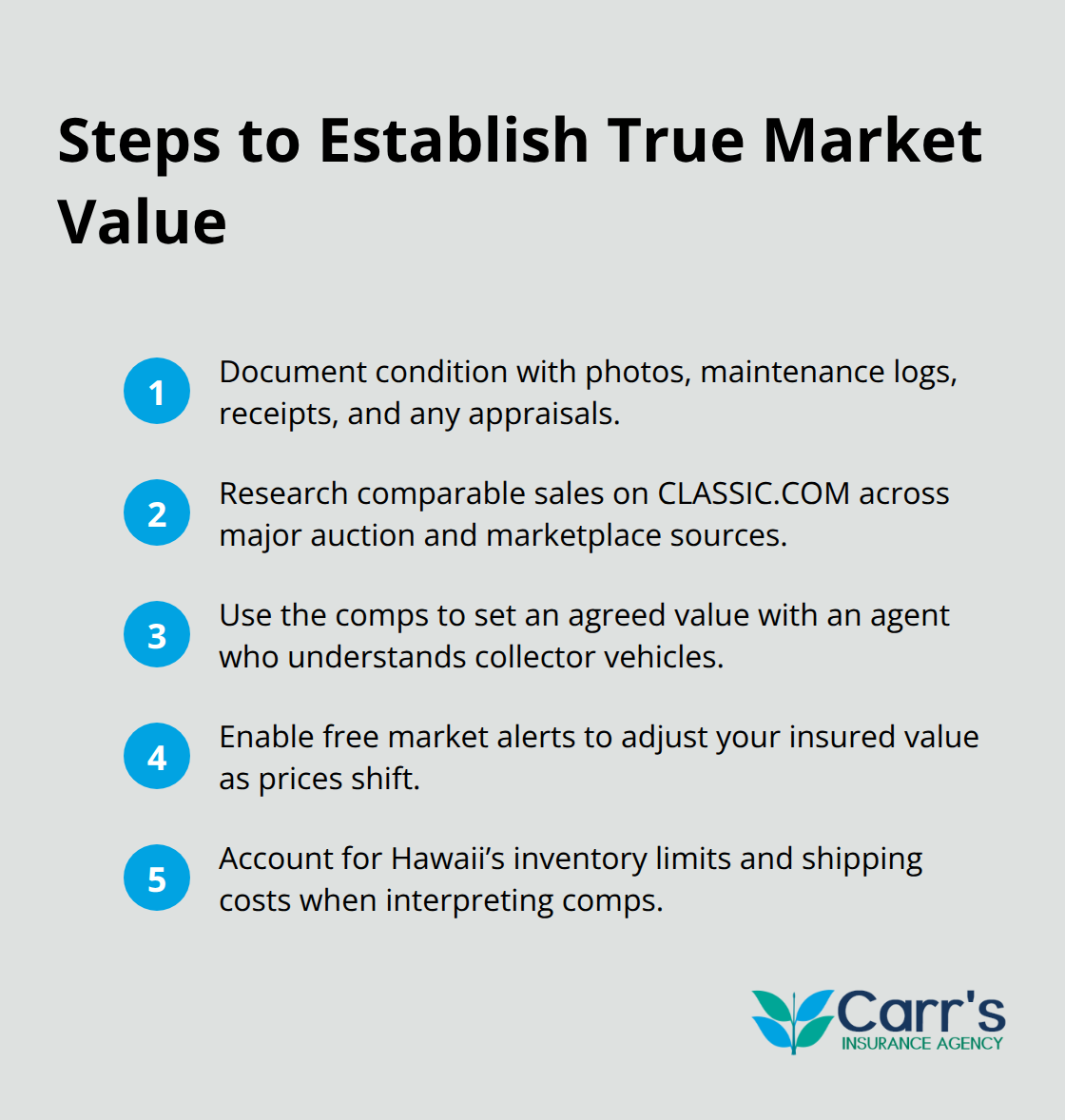
Use this market data as your valuation anchor.
The platform offers free market-tracking alerts that notify you when comparable vehicles sell, helping you adjust your insurance value as market conditions shift throughout the year. Hawaii’s collector car market moves differently than mainland markets due to limited inventory and shipping costs, so tracking actual sales data specific to your vehicle type matters more than general depreciation guides.
Choose an Agent Who Specializes in Collector Vehicles
Once you’ve established your car’s value, the agent you choose becomes critical to your protection strategy. An independent agent who specializes in collector vehicles understands the nuances that standard auto agents miss-they know that a 1967 Chevelle with matching numbers commands premium pricing, that restoration-in-progress vehicles need different coverage than finished cars, and that Hawaii’s salt air demands enhanced storage protection. An independent agent can compare rates across multiple carriers rather than pushing you toward a single company’s limited options.
When you meet with your agent, bring your CLASSIC.COM valuation data, your documentation photos, and your maintenance records. Discuss whether you need spare parts coverage for components in storage, transportation protection for upcoming shows or shipments, and storage coverage that accounts for Hawaii’s climate demands. The agent should ask detailed questions about your driving habits, planned mileage, storage conditions, and any restoration work in progress. If an agent doesn’t ask these questions, they’re not giving your classic car the attention it deserves.
Leverage Bundling to Reduce Your Overall Costs
Explore bundling opportunities by combining your classic car policy with homeowners insurance, other vehicles, or boat coverage if you own multiple assets. Bundling typically reduces your overall premium by 10 to 25 percent across all policies, making comprehensive coverage more affordable than insuring your classic car alone. This approach protects your entire collection under one relationship with an agent who understands your specific needs.
Final Thoughts
Your classic car represents years of passion, investment, and careful stewardship. Protecting it with proper classic car insurance in Hawaii means selecting coverage that reflects what your vehicle is actually worth and how you truly drive it. Standard auto policies fail collectors because they ignore that vintage vehicles appreciate rather than depreciate, that mileage stays low, and that restoration components and specialized storage matter.
We at Carr’s Insurance Agency have specialized in collector vehicle coverage since 1990 as a locally owned, independent agency serving Hawaii. Our licensed agents understand the specific challenges classic car owners face in Hawaii’s climate and market conditions, and we represent top carriers to compare rates across multiple options rather than limiting you to a single company’s offerings. When you work with us, you receive personalized service from people who actually understand what makes your 1967 Chevelle or 1975 Porsche 911 different from a daily driver.
The process starts with accurate valuation using market data, continues through selecting an agent who asks the right questions about your storage conditions and driving plans, and concludes with bundling opportunities that reduce your overall costs. Contact Carr’s Insurance Agency today to discuss your classic car’s specific coverage needs and discover how much you can save with proper collector vehicle insurance.
Disclaimer: The information provided in this blog is for general informational purposes only and does not constitute legal, financial, or insurance advice. Coverage options, terms, and availability may vary. Please consult with a licensed professional for advice specific to your situation






