
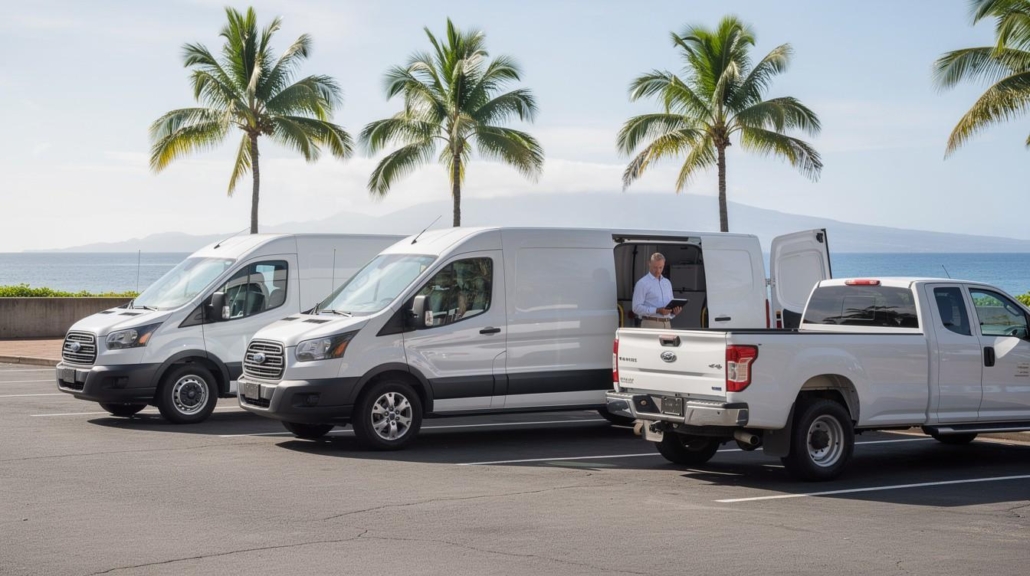
Fleet Auto Insurance Hawaii: Manage a Growing Fleet
Running a growing fleet in Hawaii comes with rising insurance costs that can quickly strain your budget. At Carr’s Insurance Agency, we help fleet owners navigate fleet auto insurance in Hawaii and find real ways to cut premiums without cutting corners.
This guide walks you through how fleet size affects your rates, what coverage options actually matter, and proven strategies to reduce your insurance costs.
How Your Fleet Size Drives Insurance Costs
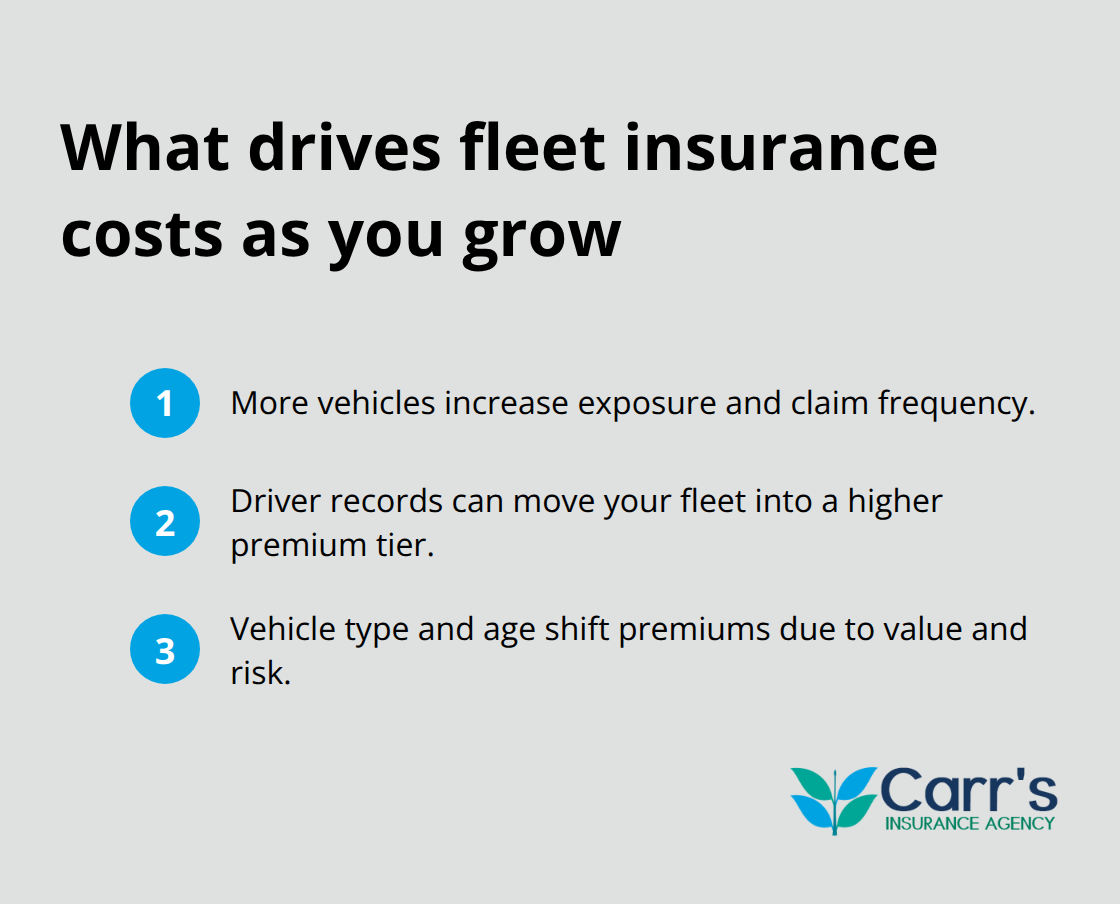
Every vehicle you add to your fleet in Hawaii increases your insurance premiums, but the relationship between fleet size and cost isn’t linear. A fleet that grows from five to ten vehicles typically sees rate increases of 15 to 25 percent, while expanding from ten to twenty vehicles can push costs up another 20 to 30 percent. Insurance carriers view larger fleets as statistically riskier because more vehicles create greater exposure to accidents, theft, and liability claims. The specific rate structure depends heavily on your drivers’ records and the types of vehicles you operate, but size alone moves the needle significantly.
Driver Records Shape Your Premium Tier
Your drivers’ history determines whether you pay standard rates or premium rates for your entire fleet. A single driver with multiple at-fault accidents or traffic violations can increase your fleet’s premium by 10 to 40 percent across all vehicles, since insurers apply that risk profile to your overall operation. Hawaii has a 6.2 traffic fatality rate per 100,000 residents, making safe driving records especially valuable in our state. When you shop for quotes, emphasize drivers with clean records because carriers reward low-accident fleets with better rates. One driver with a poor history drags down your entire operation’s rating, making driver screening and training non-negotiable investments for growing fleets.
Vehicle Type and Age Directly Impact Your Bills
Newer commercial vehicles cost more to insure than older models because replacement value is higher, but they also qualify for safety discounts that older vehicles don’t. A 2024 commercial pickup truck typically costs 20 to 35 percent more to insure than a 2018 model of the same make, though the newer truck’s advanced safety features can offset some of that difference through discounts. Heavy-duty vehicles like box trucks or flatbeds carry premiums 40 to 60 percent higher than standard vans because they’re involved in more complex claims. When you add vehicles to your fleet, mix vehicle ages strategically-maintaining a balanced fleet of newer and mid-age vehicles often costs less than converting entirely to new equipment.
How Coverage Needs Shift With Fleet Growth
As your fleet expands, your coverage requirements become more complex and demand closer attention. Larger fleets face higher liability exposure, which means you need adequate commercial auto liability limits to protect your business from catastrophic claims. Physical damage coverage becomes increasingly important when you operate multiple vehicles across Hawaii’s varied terrain and traffic conditions. The coverage options you select directly influence your total premium, making it essential to understand what each option protects before your fleet reaches the next growth stage.
Coverage Options for Hawaii Fleet Owners
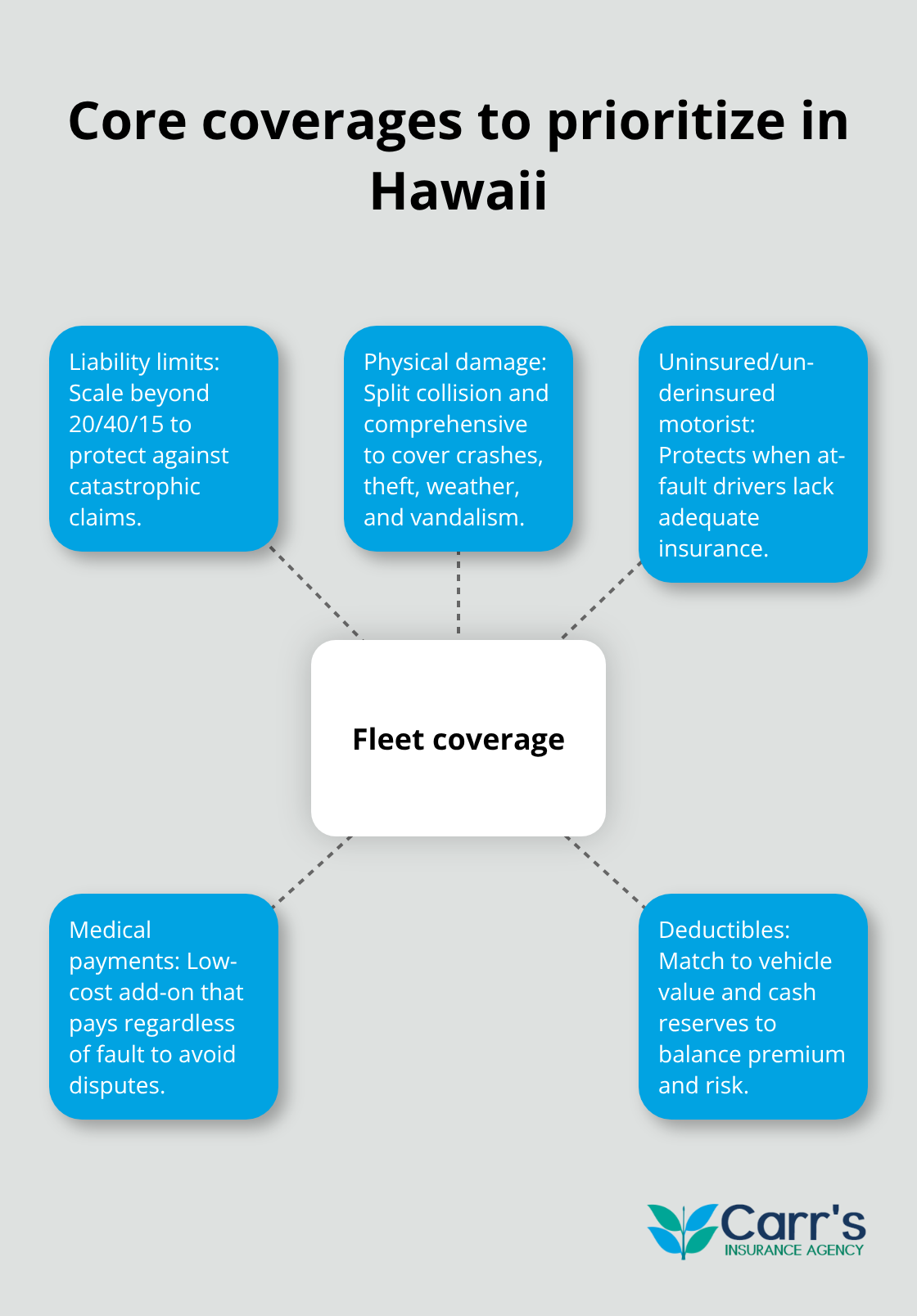
Commercial auto liability is non-negotiable for any fleet operating in Hawaii, and the minimum state requirement of 20/40/15 (twenty thousand bodily injury per person, forty thousand per accident, fifteen thousand property damage) falls short for growing operations. Most carriers recommend 100/300/100 limits for fleets with more than five vehicles, and you should avoid settling for state minimums because a single serious accident can generate medical bills exceeding two hundred thousand dollars. Hawaii’s average auto accident injury claim costs roughly thirty-eight thousand dollars according to the National Safety Council, meaning your liability exposure grows exponentially as your fleet expands.
Liability Limits Scale With Fleet Risk
Your liability limits should reflect your actual exposure, not just state minimums or industry averages. A fleet that hauls materials or operates in high-traffic areas needs higher limits than a fleet making local deliveries, and catastrophic injury claims routinely exceed three hundred thousand dollars in Hawaii’s litigious environment. Medical payments coverage adds five to ten dollars per vehicle monthly but covers medical expenses regardless of fault, making it practical protection that prevents smaller accidents from becoming insurance disputes.
Physical Damage Coverage Protects Your Assets
Physical damage coverage splits into collision and comprehensive protection, with collision covering accidents you cause and comprehensive handling theft, weather, and vandalism. For growing fleets in Hawaii, comprehensive coverage matters more than many fleet owners realize because our islands experience higher rates of vehicle theft than the mainland average, with over fifteen thousand vehicles stolen annually across Hawaii. Resist the temptation to minimize physical damage limits on older vehicles because replacement costs in Hawaii run twenty to thirty percent higher than mainland prices due to shipping and local market conditions.
Uninsured Motorist Protection Fills Critical Gaps
Uninsured and underinsured motorist protection fills a critical gap when other drivers lack adequate insurance or flee the scene, and this coverage applies to your entire fleet uniformly. 15.4 percent of motorists in 2023 were uninsured, according to the Insurance Research Council, making this protection genuinely valuable rather than theoretical. This coverage protects your operation when you encounter drivers who cannot pay for damages they cause.
Deductible Strategy Impacts Your Bottom Line
Higher deductibles lower your premiums but require cash reserves to cover claims, so growing fleets should match deductible amounts to their financial capacity and accident history rather than defaulting to five-hundred-dollar amounts. A five-hundred-dollar deductible on a twenty-thousand-dollar van creates unnecessary exposure compared to a one-thousand-dollar deductible on a forty-thousand-dollar box truck. Tailoring your deductibles based on each vehicle’s replacement value and your fleet’s accident history produces better financial outcomes than applying uniform deductibles across all vehicles.
As your fleet grows, the coverage decisions you make today directly affect your ability to manage risk and control costs tomorrow.
Managing Risk and Reducing Fleet Insurance Premiums
Driver Safety Training Cuts Accident Rates Fast
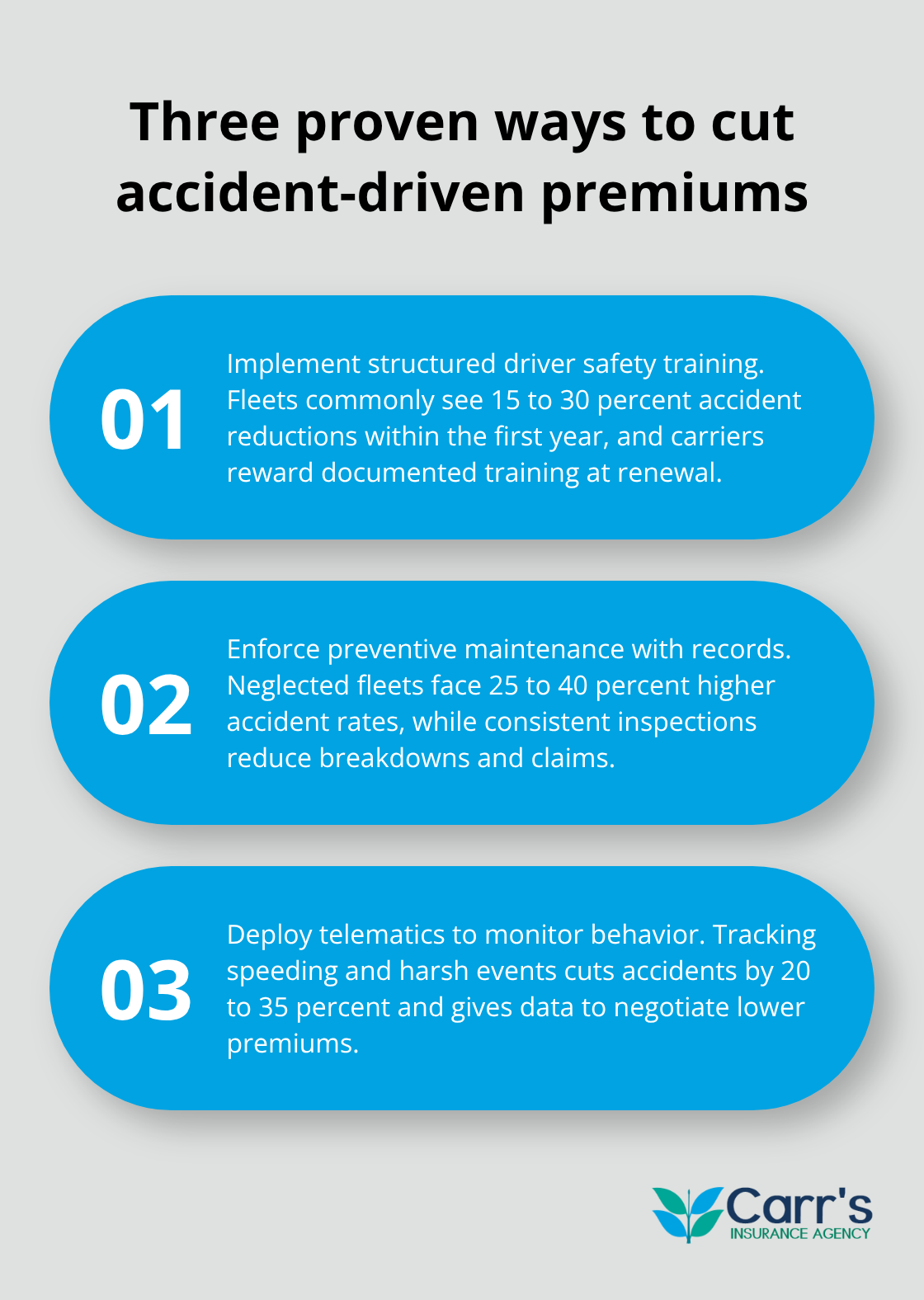
Driver safety training programs reduce accident rates faster than any other single intervention, and the financial returns justify the investment immediately. Fleets that implement structured safety programs see accident reductions of 15 to 30 percent within the first year, according to the National Safety Council, which means fewer claims translate directly into lower premiums at renewal. Programs like the National Safety Council’s Defensive Driving Course or Fleet Safety International’s training modules cost between fifty and two hundred dollars per driver annually, but a single serious accident claim in Hawaii averages thirty-eight thousand dollars, making the math straightforward. Insurance carriers actively reward fleets that document completed safety training with rate reductions, so maintain certificates and share completion records when you renew your policy. Trained drivers cause fewer accidents, which means less vehicle downtime and lower repair costs across your fleet.
Maintenance Inspections Prevent Expensive Claims
Fleets with vehicles that fail basic maintenance inspections experience accident rates 25 to 40 percent higher than well-maintained operations, which means skipping routine maintenance directly increases your insurance costs. Track tire tread depth, brake condition, and fluid levels monthly because worn tires and failed brakes cause preventable accidents that spike your premiums at renewal. Worn components create liability exposure that extends beyond simple repair bills-they increase your risk profile in the eyes of insurance carriers. Establish a maintenance schedule that your team follows consistently, and document all inspections to demonstrate your commitment to vehicle safety.
Telematics Systems Monitor Driver Behavior
Modern telematics systems like Samsara or Verizon Connect cost thirty to seventy dollars per vehicle monthly but provide real-time data on harsh braking, speeding, and unsafe turns that correlate strongly with accident frequency. Fleets that monitor driver behavior through telematics see accident reductions of 20 to 35 percent because drivers modify behavior when they know their actions are tracked. Reward safe drivers with bonuses or recognition programs, and address poor driving patterns immediately through retraining or reassignment because one aggressive driver can damage your entire fleet’s rating.
The data these systems collect also supports your case when you request premium reductions from your carrier at renewal time.
Final Thoughts
Managing fleet auto insurance in Hawaii requires you to balance growth with smart risk management, and the strategies outlined here directly reduce your premiums while protecting your operation. Driver safety training, vehicle maintenance, and telematics monitoring work together to lower accident rates and demonstrate to insurers that your fleet operates responsibly. A fleet that implements safety training sees accident reductions of 15 to 30 percent within the first year, while proper maintenance prevents the 25 to 40 percent higher accident rates that plague neglected operations.
These improvements translate into lower premiums at renewal and reduced downtime from preventable accidents. Your growing fleet’s success depends on treating fleet auto insurance Hawaii as an operational expense you can actively control rather than a fixed cost you simply accept. Clean driving records, appropriate coverage limits, and strategic deductible placement ensure you’re not overpaying for protection you don’t need while maintaining adequate coverage for claims that matter.
Contact Carr’s Insurance Agency to review your current fleet auto insurance coverage and explore rate reductions based on your safety initiatives. Bring your driver records, vehicle list, and any safety training documentation you’ve completed, and we’ll identify specific opportunities to lower your costs without compromising protection. We at Carr’s Insurance Agency represent top carriers and compare rates to find coverage that matches your actual needs and budget.
Disclaimer: The information provided in this blog is for general informational purposes only and does not constitute legal, financial, or insurance advice. Coverage options, terms, and availability may vary. Please consult with a licensed professional for advice specific to your situation






