

Commercial Auto Insurance Rates: What Affects Your Policy
Commercial auto insurance rates vary wildly depending on who drives your vehicles, what you use them for, and where you operate. Small differences in your business profile can mean hundreds or thousands of dollars in annual premiums.
We at Carr’s Insurance Agency help business owners understand exactly what’s pushing their costs up-and more importantly, how to bring them down. This guide breaks down the real factors that matter and shows you concrete steps to reduce what you pay.
What Really Drives Your Commercial Auto Insurance Rates
Driver Safety Records Set Your Premium Foundation
Your driver’s safety record is the single most important factor in your premium, and it’s not even close. Insurance carriers pull motor vehicle records for every driver authorized to operate your vehicles, and even minor violations spike your costs. A driver with multiple speeding tickets, at-fault accidents, or license suspensions signals high risk to underwriters, and they price accordingly.
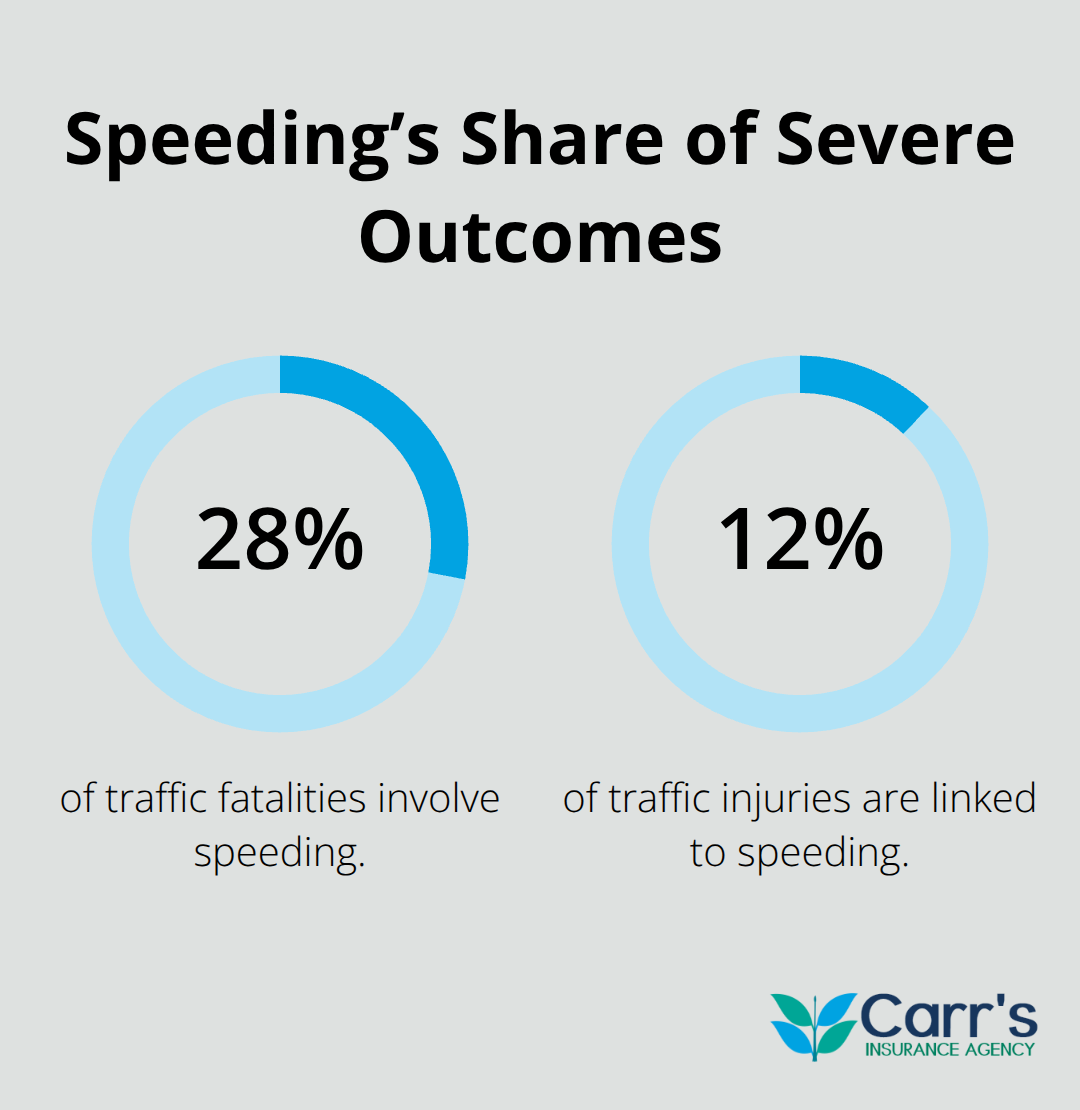
The LexisNexis Risk Auto Insurance Trends Report found that bodily injury loss costs continue to rise, driven largely by uninsured motorists and speeding-related injuries. Speeding alone accounts for 28% of traffic fatalities and 12% of injuries. If your team includes drivers with poor records, your premiums reflect that exposure immediately.
Hire drivers with clean records and run background checks before employment. Monitor driving records monthly to catch violations early. This approach stops premium increases before they happen.
Vehicle Type and Repair Costs Shape Your Bill
Vehicle type matters far more than most business owners realize. A contractor running a van costs significantly less to insure than one operating a heavy dump truck or for-hire transport vehicle. According to Progressive’s 2025 data, monthly premiums for business autos average around $276, while for-hire transport trucks run $734 to $926 monthly.
The difference comes down to loss severity-heavier vehicles cause more damage in crashes, and specialized equipment increases repair costs. Material damage severity continues to increase due to repair costs. Right-size your fleet to your actual work and avoid unnecessary premium weight.
Location and Industry Classification Impact Rates
Location determines your premium more than many owners expect. Urban routes with heavy traffic, high uninsured-driver rates, and elevated medical costs carry steeper rates than rural operations with similar risk profiles. Vehicle theft and catalytic converter thefts drive up claims volume across the industry, especially in certain regions.
Your industry classification also shapes your rate. Construction contractors, installation specialists, and for-hire operations face different pricing tiers than nonprofits or real estate services. A construction contractor might pay around $264 monthly while a nonprofit averages $168, reflecting the different hazards each industry presents.
Mileage and Operating Radius Directly Affect Your Cost
Annual mileage and operating radius directly influence your cost. Higher mileage means more road exposure and more opportunities for accidents. Underreporting your actual miles is one of the costliest mistakes you can make because carriers adjust your rate sharply upward at renewal when they discover the discrepancy.
How you use your vehicles matters too-a plumbing contractor making local service calls has lower exposure than one running regional routes with multiple drivers. Report your mileage accurately from the start, and you’ll avoid nasty surprises at renewal time. Now that you understand what drives your rates up, the next section shows you exactly how to bring those costs down.
How to Cut Your Commercial Auto Insurance Costs
Driver Safety Programs Attack the Root Cause of Claims
Driver safety programs work because they address the root cause of claims. The U.S. Department of Transportation reports that about 90% of crashes stem from driver action, not vehicle failure or road conditions. That means your most effective cost-control lever sits behind the wheel.
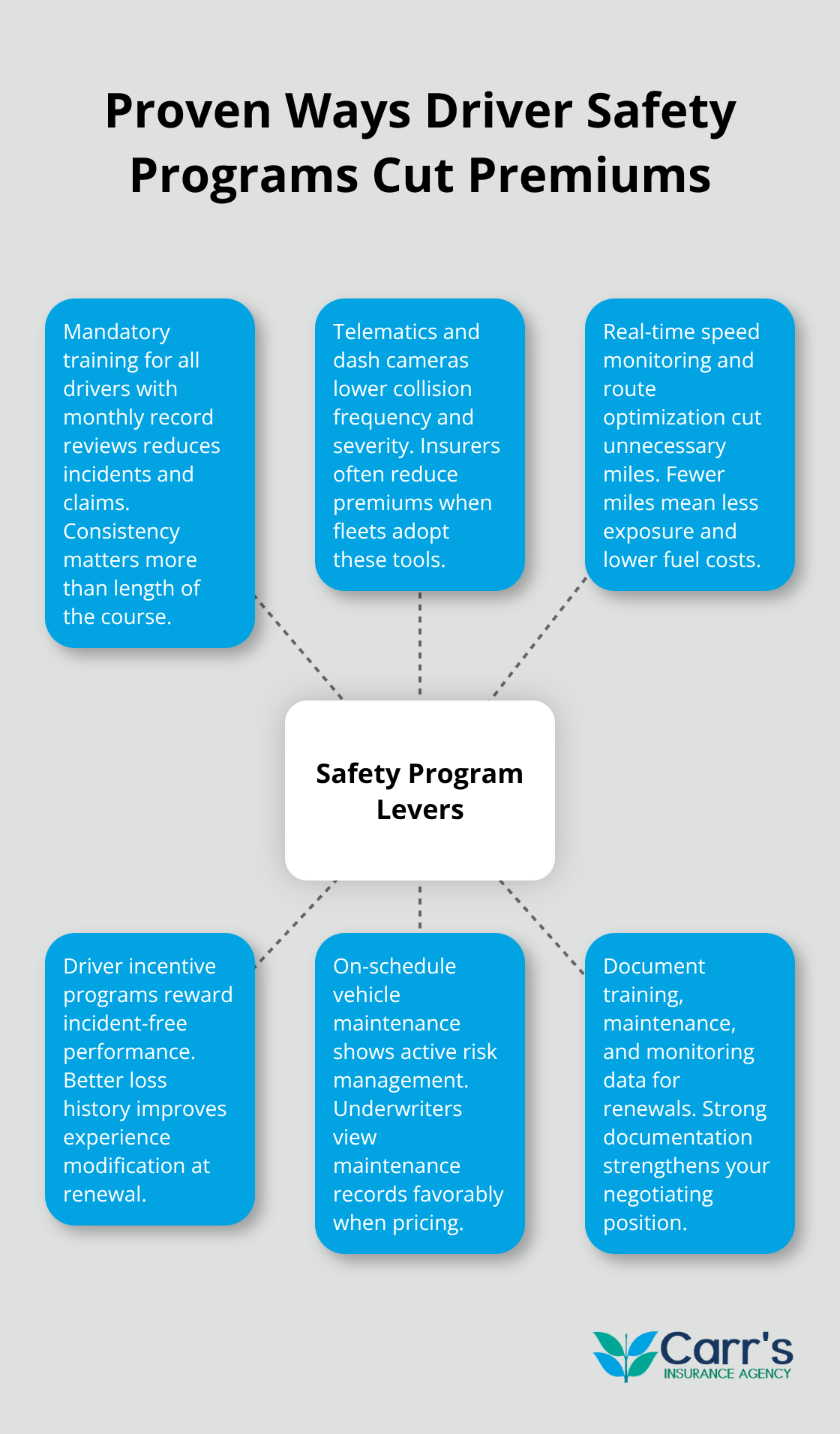
Implement mandatory safety training for all drivers, not just new hires, and track results with monthly record reviews. Telematics and dash cameras reduce collision frequency and severity-insurers recognize this and lower premiums for fleets using these tools. Real-time speed monitoring and route optimization cut unnecessary miles, reducing both accident exposure and fuel costs.
Driver incentive programs that reward incident-free performance create accountability and directly lower your loss history, which carriers use to calculate experience modification factors at renewal. Fleet operations that maintain vehicles on schedule also pay less because underwriters view maintenance records as proof of risk management. Document your safety culture with training logs, maintenance records, and monitoring data you can show carriers at renewal time-this documentation becomes your negotiating tool.
Bundle Policies and Adjust Coverage to Match Your Growth
Bundling your commercial auto policy with general liability, workers compensation, or property coverage typically saves 7% or more on combined premiums. Multi-policy customers reduce their overall costs significantly compared to those buying auto insurance alone.
Review your coverage limits annually because business growth often means you need higher liability limits to match contract requirements or increased asset exposure. Many business owners keep outdated limits from years past, paying for protection they don’t need while leaving gaps in others. A $1 million per-occurrence liability limit might have been adequate five years ago but insufficient today.
Raising deductibles on physical damage coverage frees up premium dollars to redirect toward higher liability limits or umbrella coverage, which protects you against catastrophic claims that exceed your auto policy limits. This strategy lets you strengthen protection where it matters most without inflating your total premium.
Shop Multiple Carriers Every Two Years
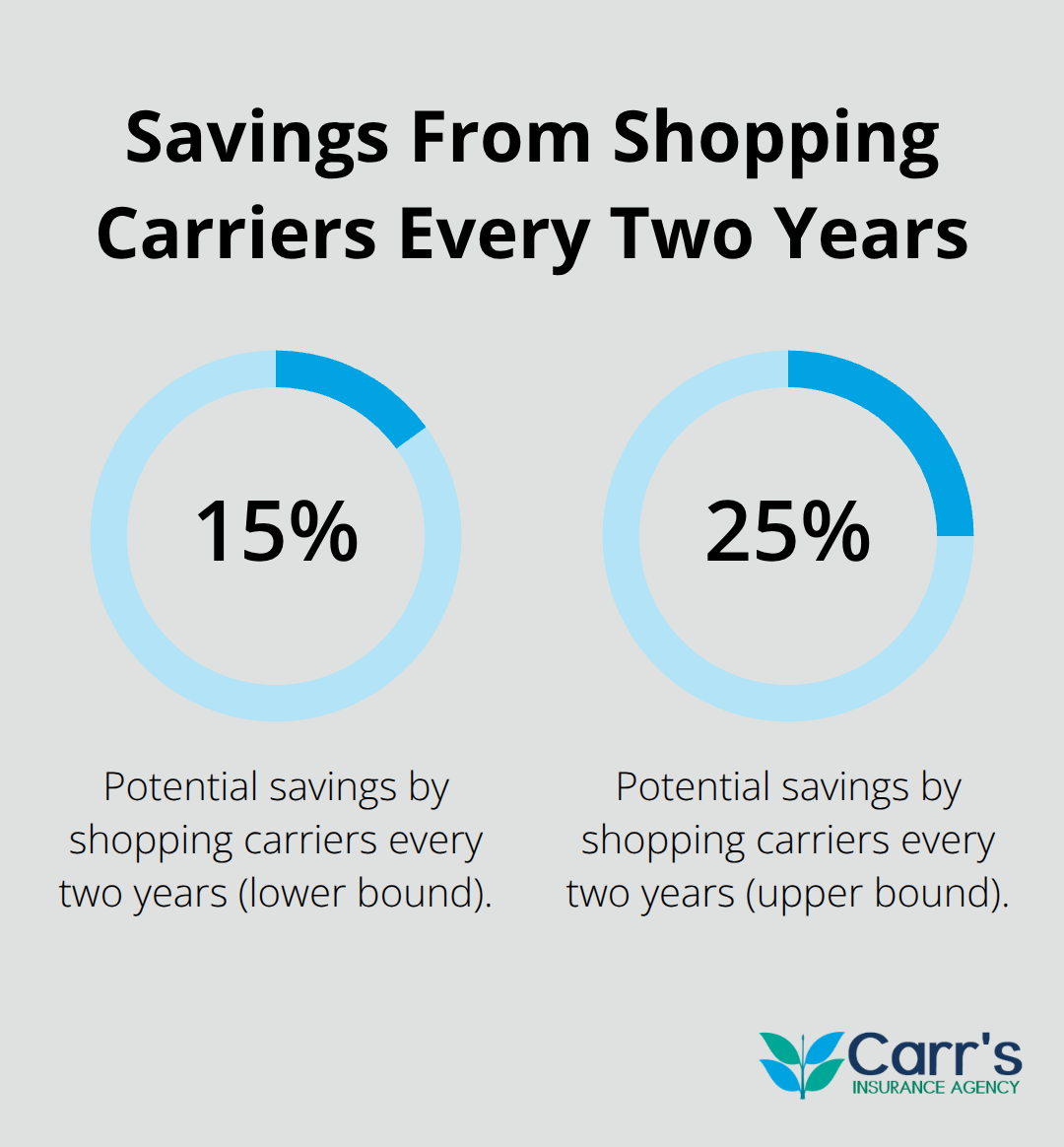
Shop quotes from multiple carriers every two years because rates shift based on claims experience, fleet changes, and competitive positioning. Insureon data from about 100,000 small-business policyholders shows median monthly premiums of around $207 for business autos, but individual quotes vary widely based on your specific risk profile. Getting fresh quotes takes a few hours and often uncovers savings of 15% to 25% compared to renewing with your current carrier.
When you compare quotes, you gain leverage to negotiate better terms with your existing carrier or switch to a provider that values your safety improvements and loss history. The competitive market rewards businesses that actively manage their risk-carriers want to insure fleets that demonstrate commitment to safety and accurate reporting. Your next step involves identifying which mistakes most commonly inflate premiums and how to avoid them.
Mistakes That Kill Your Rates
Underreporting Mileage Creates Immediate Rate Shock
Most business owners make the same costly errors year after year without realizing it. Underreporting your annual mileage is the most damaging mistake because carriers use mileage to assess road exposure and accident frequency. When you tell your insurer you drive 15,000 miles annually but actually drive 35,000, the carrier discovers this at renewal and adjusts your rate sharply upward to reflect the true risk. That sudden spike catches business owners off guard, but it’s entirely preventable.
Track your actual mileage for a month, multiply by 12, and add 10% for seasonal variation. This gives you a realistic number to report. Underreporting mileage also creates a compliance issue-carriers can deny claims if they prove you misrepresented your usage, leaving you exposed when an accident happens.
Ignoring Coverage Changes as Your Business Grows
Failing to update your coverage when your business changes is equally destructive. You hire three new drivers, add two service vehicles, or expand into a new territory, but you never call your agent to adjust your policy. Your coverage remains frozen at last year’s profile while your actual exposure has grown.
When a claim occurs, underwriters review your policy and discover the mismatch between what you reported and what you’re actually operating. This discrepancy can trigger coverage disputes or force a mid-term rate increase. Notify your agent whenever you add vehicles, hire drivers, change your operating area, or increase annual mileage. These changes take minutes to report but prevent expensive surprises.
Missing Out on Safety Equipment Discounts
Ignoring safety features and loss prevention tools costs you real money. Dash cameras, telematics systems, and GPS tracking reduce collision frequency and severity-carriers recognize this and lower premiums for fleets using these tools. If you’ve installed safety equipment but never mentioned it to your agent, you’re paying full price for partial protection.
Document your safety investments and provide that information during renewal negotiations. Many business owners invest in these systems but fail to communicate the investment to their carrier, essentially throwing away premium reductions they’ve already earned.
Staying Loyal to One Carrier Costs Thousands
Staying with the same carrier year after year is a financial mistake. Insureon’s data from 100,000 small-business policyholders shows median monthly premiums vary significantly based on carrier and risk profile. Shopping quotes every two years typically reveals 15% to 25% in potential savings.
Carriers reward new business with competitive rates while existing customers often see gradual increases. The market moves constantly, and your current rate may be 20% higher than what competitors offer for identical coverage. Spending two hours getting fresh quotes costs nothing and often saves thousands annually.
Final Thoughts
Your commercial auto insurance rates reflect the choices you make every day. Driver safety records, vehicle selection, accurate mileage reporting, and timely coverage updates directly control what you pay. The businesses paying the lowest premiums share one trait: they actively manage their risk instead of hoping rates stay flat.
Start by pulling your current policy and comparing it against your actual operations. Are your coverage limits aligned with your business size today, or are they frozen from years ago? Have you added vehicles or drivers without notifying your agent? Is your reported mileage realistic, or are you guessing? These gaps between your policy and reality are where premium increases hide, and closing them saves you thousands annually.
We at Carr’s Insurance Agency have served Hawaii since 1990, comparing rates from top carriers to find the right coverage at the right price. As an independent broker, we represent multiple insurers and work with licensed, locally knowledgeable agents who understand your specific business and market. Contact us today to review your current policy and explore how we can lower your commercial auto insurance costs while strengthening your protection.
Disclaimer: The information provided in this blog is for general informational purposes only and does not constitute legal, financial, or insurance advice. Coverage options, terms, and availability may vary. Please consult with a licensed professional for advice specific to your situation






