

Hurricane Homeowners Insurance Hawaii: Protecting Your Home
Hawaii’s hurricane season brings real threats to homeowners every year. Standard homeowners insurance often leaves gaps in coverage when storms hit, leaving you exposed to significant financial loss.
At Carr’s Insurance Agency, we help Hawaii homeowners understand their hurricane homeowners insurance options and find policies that actually protect their homes. This guide walks you through coverage types, cost-saving upgrades, and the steps you need to take now.
What Makes Hawaii’s Hurricane Risk Different
Hawaii’s hurricane season runs from June through November, and the state faces genuine exposure that mainland homeowners rarely encounter. Between 2015 and 2024, Hawaii experienced multiple near-misses and direct impacts that tested insurance coverage limits. Hurricane Lane in 2018 brought rainfall exceeding 50 inches in some areas, causing flooding that standard policies simply don’t cover. NOAA reported that the U.S. experienced 14 weather and climate disasters with losses exceeding $1 billion each in 2019 alone, marking the fifth consecutive year with at least 10 such catastrophic events.
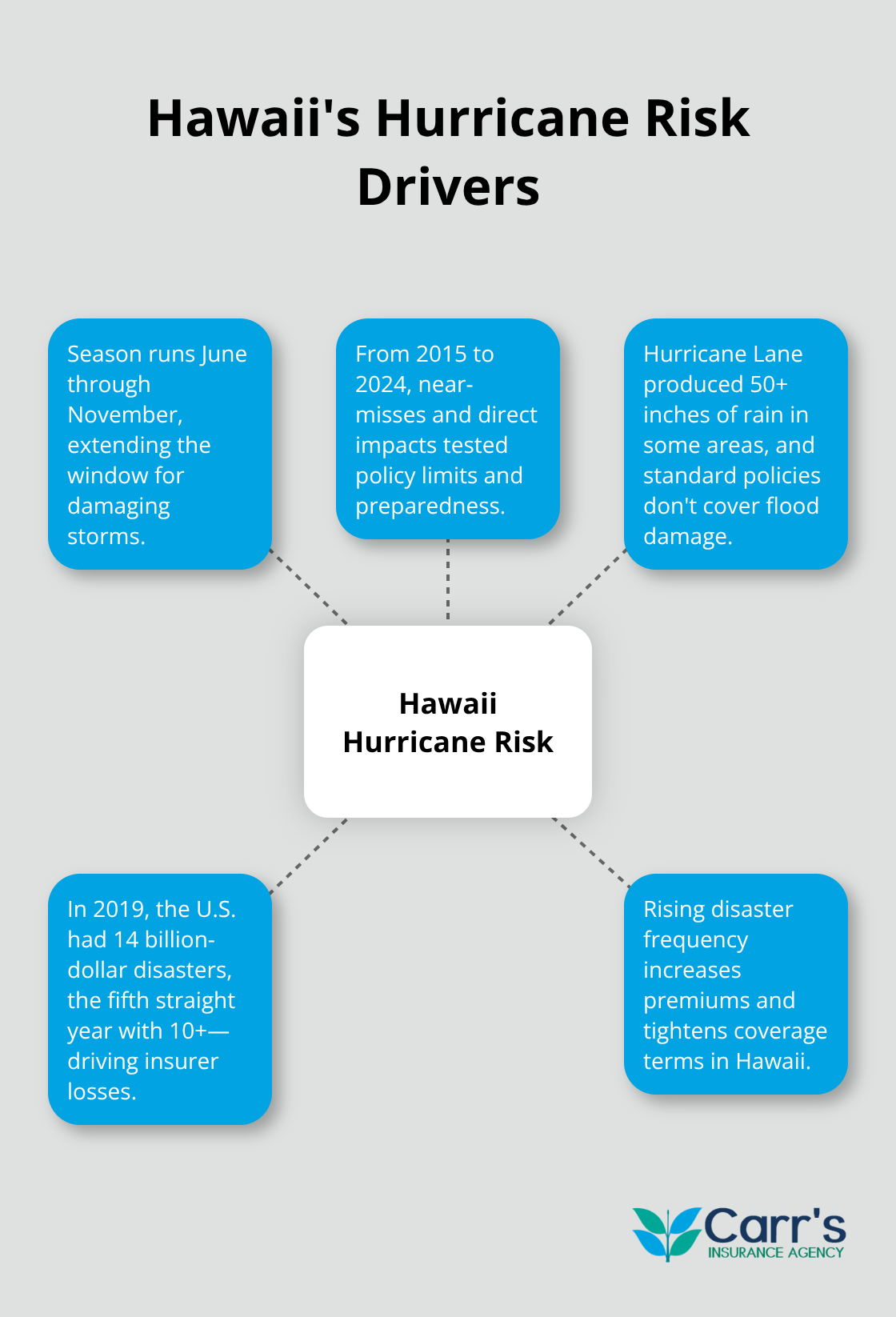
This upward trend in disaster frequency directly affects Hawaii’s insurance market and the premiums homeowners pay.
The Coverage Gap That Catches Most Homeowners Off Guard
Standard homeowners insurance in Hawaii excludes hurricane-force winds (74 mph and above) and flood damage entirely. Your typical policy covers wind damage up to about 73 mph, which sounds protective until a hurricane arrives. When hurricane-strength winds hit, you need separate hurricane coverage to get paid. The exclusion gap widens with flooding-one inch of floodwater causes more than $25,000 in damage, yet most policies won’t cover it. Many Hawaii homeowners discover this gap only after a storm passes and they file a claim.
Flood insurance requires advance planning. The National Flood Insurance Program imposes a 30-day waiting period before coverage activates, so waiting until storm season arrives leaves you unprotected. You must purchase flood insurance well before potential flood events to avoid this delay.
Why Your Home’s Location and Age Matter
Properties within 300 feet of water face steeper hurricane insurance costs and stricter eligibility requirements. Homes built before 1994 typically pay significantly higher premiums than recently constructed homes with modern building codes and impact-resistant materials. Older roofs, single-pane windows, and traditional construction methods all increase risk in the eyes of insurers.
If you own a home in a high-risk flood zone and carry a mortgage, your lender mandates flood insurance regardless of your comfort level with the cost. FEMA updated flood maps for Oahu in 2024, with changes taking effect in 2026, meaning your property’s risk classification may shift without warning. These changes directly impact whether flood insurance becomes mandatory and how much you’ll pay for protection.
How These Risks Shape Your Insurance Needs
Your home’s specific characteristics-its age, construction type, location, and flood zone status-determine what coverage options you actually need and what you’ll pay for them. Understanding these factors helps you make informed decisions about which policies protect your investment and which gaps leave you vulnerable. The next section walks you through the specific coverage options available to Hawaii homeowners and how each one addresses the risks your property faces.
What Coverage Actually Protects Your Home in a Hurricane
How Hurricane Deductibles Work Differently Than Standard Deductibles
Hurricane deductibles operate as a percentage of your home’s insured value, not a flat dollar amount like standard deductibles. Standard homeowners policies typically use a flat deductible-$500, $1,000, or $2,500-that applies to most claims. Hurricane deductibles in Hawaii typically range from 1 percent to 5 percent of your home’s insured value. On a $400,000 home with a 5% hurricane deductible, you pay $20,000 out of pocket before insurance covers hurricane damage. A roof replacement costing $30,000 leaves you responsible for the first $20,000. Many Hawaii homeowners underestimate this cost and face serious financial strain after storms.
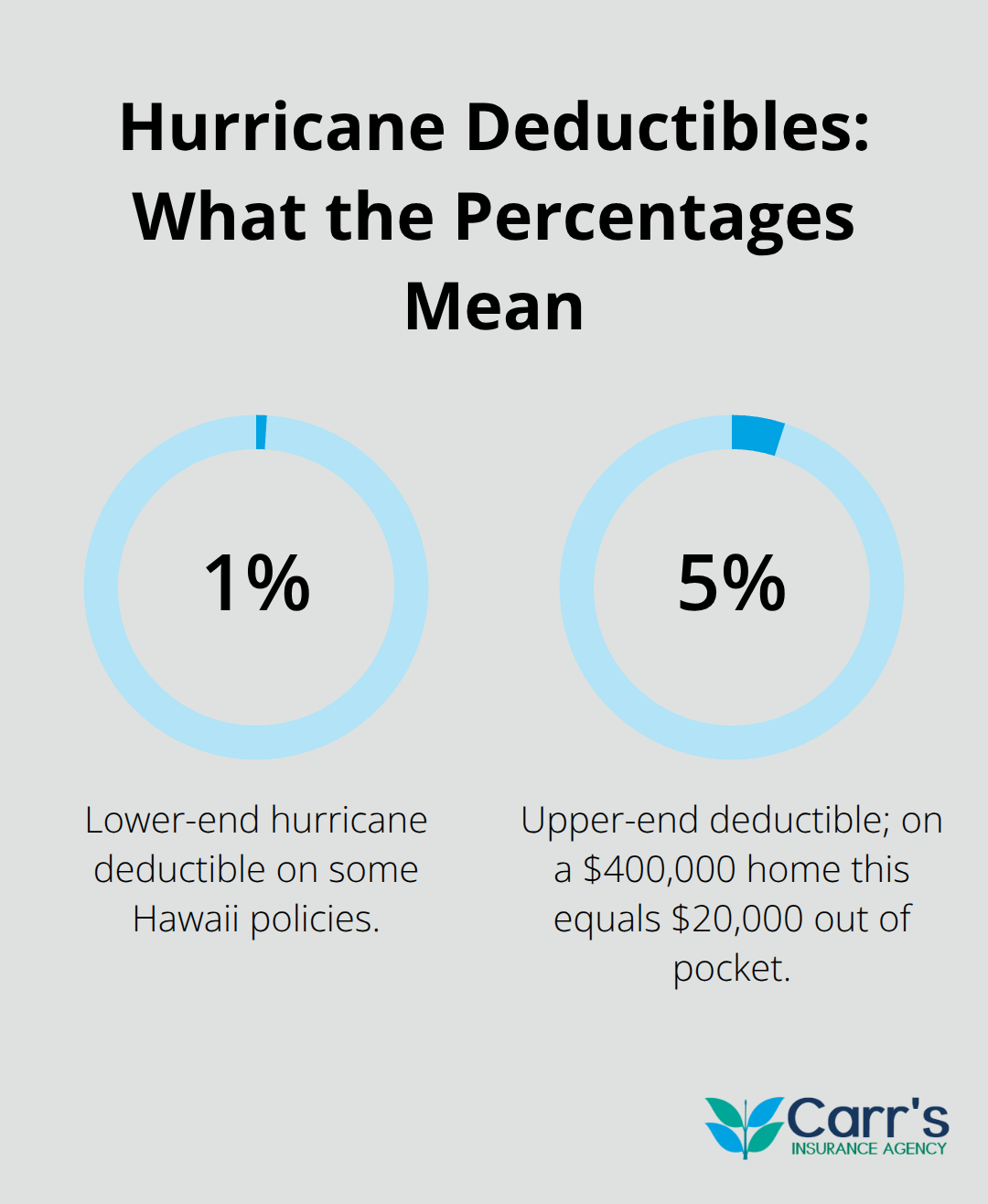
Calculate your actual hurricane deductible in dollars, not just percentages, before selecting a policy. Some insurers offer lower percentage deductibles on newer homes or properties with reinforced roofing, so ask specifically about discounts tied to home improvements you’ve already made.
Windstorm Coverage Versus Hurricane Coverage
Standard policies cover wind damage up to approximately 73 mph through basic windstorm coverage. Hurricane coverage activates at 74 mph and above, protecting against the catastrophic winds that standard policies exclude. This distinction creates real financial consequences when storms hit. The U.S. News rate analysis shows State Farm charges around $1,333 annually for an $800,000 Hawaii home, while RLI and Island Insurance run $1,429 and $1,721 respectively-differences that reflect varying hurricane coverage terms and deductible structures. Understanding which coverage applies to your property prevents costly surprises after a hurricane passes.
Additional Riders and Endorsements That Fill Coverage Gaps
Private flood insurance, earthquake endorsements, and Additional Living Expenses coverage each add separate costs but fill critical gaps that standard policies leave open. Earthquake coverage typically carries deductibles of 10% to 25% of your home’s value, reflecting Hawaii’s seismic activity. Additional Living Expenses coverage pays for lodging and living costs if your home becomes uninhabitable during repairs-a protection that standard policies often exclude or severely limit. When comparing policies, request detailed quotes showing the exact deductible amount in dollars for hurricane losses, the separate deductible for flood damage if applicable, and what Additional Living Expenses would cover if disaster strikes. This granular comparison reveals true costs and prevents discovering coverage gaps after a storm passes.
Comparing Quotes to Identify Your True Out-of-Pocket Costs
Request quotes from multiple insurers that break down each coverage component separately. Ask each insurer to calculate your hurricane deductible in actual dollars, not percentages, so you understand your real financial exposure. Compare the separate deductibles for wind, flood, and earthquake coverage side by side across different policies. A policy with a lower premium might carry a higher hurricane deductible, shifting more financial burden to you when a storm hits. The specific coverage you select determines whether you face manageable costs or devastating financial loss after a hurricane. Your next step involves understanding which home improvements and property upgrades actually lower your premiums while strengthening your protection against hurricane damage.
Upgrades That Cut Your Hurricane Insurance Costs
Roof Reinforcement Delivers the Biggest Premium Savings
Roof reinforcement stands as the single most effective way to lower your hurricane insurance premiums in Hawaii. Insurers offer concrete discounts for impact-resistant roofing materials and modern installation that withstands hurricane winds. Impact-resistant shingles can save homeowners up to 35% on wind insurance. Homes built in the last three years receive the steepest discounts, while older homes retrofitted with reinforced roofing see meaningful savings that justify the upfront investment.
Impact-Resistant Windows and Doors Reduce Risk and Costs
Impact-resistant windows and doors provide similar premium reductions to roof upgrades. Single-pane windows shatter under hurricane-force winds, allowing water intrusion and structural damage that multiplies repair costs. Impact-resistant windows rated for 74 mph winds or higher cost more upfront but reduce your annual insurance bill and eliminate the risk of catastrophic water damage inside your home. Request quotes from your current insurer before and after describing these specific upgrades to see your actual savings. Some homeowners find that the annual premium reduction pays for window replacement within five to eight years, making the investment financially sensible beyond just risk reduction.
Landscaping Maintenance Protects Your Home and Wallet
Landscaping maintenance directly affects your insurance costs and your home’s physical vulnerability. Trimmed tree limbs eliminate flying debris that pierces roofs and windows during hurricanes. Dead or weakened branches pose the highest risk and should be removed immediately, not waiting for storm season. Your insurer may require documented tree maintenance as a condition of coverage in high-risk zones. Creating defensible space around your home by removing dead vegetation and maintaining clear sightlines reduces both your risk and your premiums.
Documentation Creates the Evidence Insurers Need
Document all improvements with photographs, receipts, and contractor certifications because insurers require proof before applying discounts. Maintain a current inventory of your home’s contents with descriptions, purchase dates, and estimated values. This documentation accelerates claims processing after a hurricane and prevents disputes over what you owned before the storm.
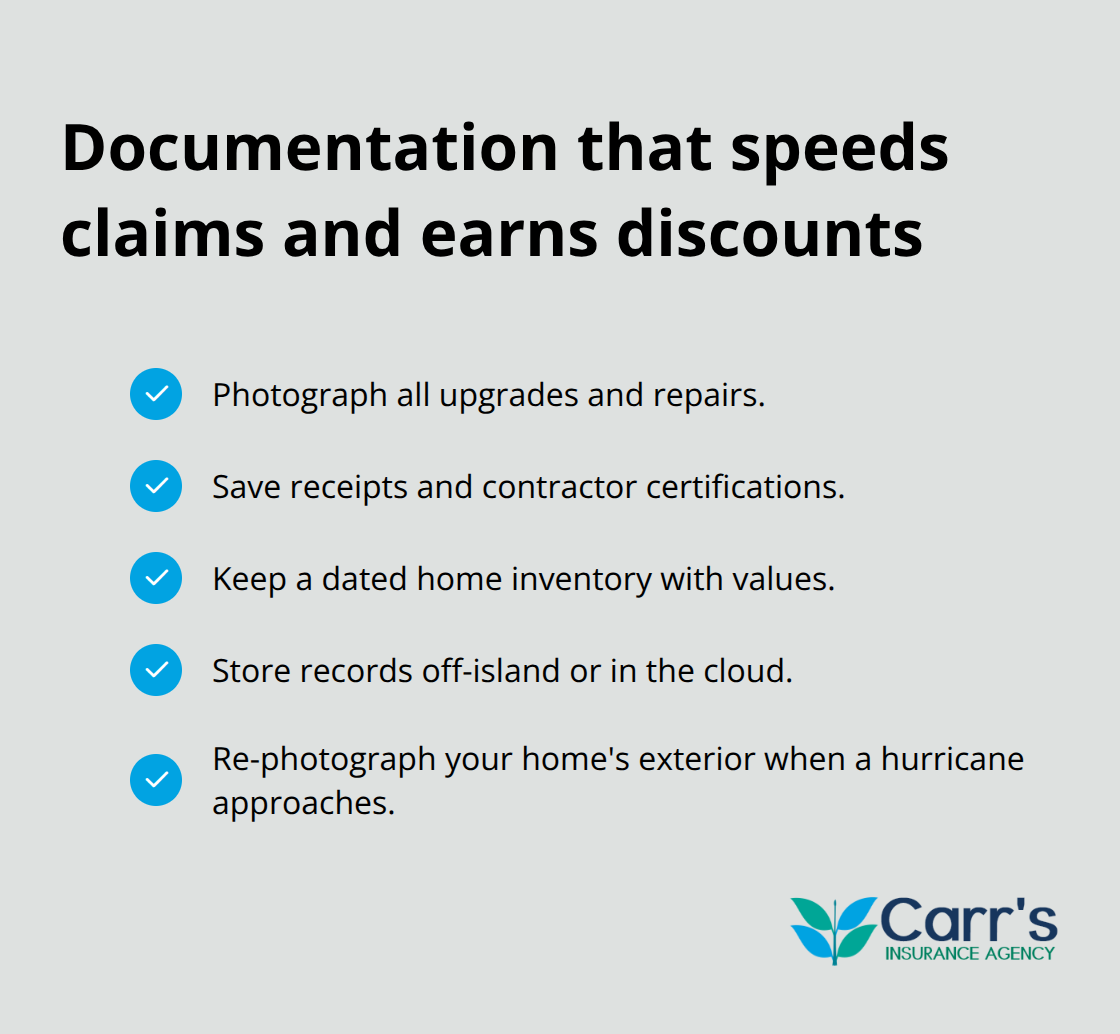
Store this inventory somewhere other than your home, either digitally in cloud storage or physically with a trusted person off-island. When a hurricane approaches, photograph your home’s exterior condition and any recent repairs you’ve completed. This photographic record protects you if the insurer questions whether damage existed before the storm or resulted from the hurricane itself. These practical steps cost nothing to minimal amounts but create the evidence insurers need to process claims fairly and quickly.
Final Thoughts
Hurricane homeowners insurance in Hawaii requires you to understand three realities that most homeowners miss: standard policies exclude hurricane-force winds and flood damage, your home’s age and location directly determine your costs, and advance planning prevents financial devastation. A policy costing $200 less annually might carry a 5% hurricane deductible instead of 2%, meaning you pay $20,000 out of pocket on a $400,000 home instead of $8,000 when a hurricane hits. That $200 annual savings vanishes instantly when you file a real claim.
Roof reinforcement, impact-resistant windows, and documented landscaping maintenance deliver genuine premium reductions while actually strengthening your home against the storms Hawaii faces every June through November. We at Carr’s Insurance Agency have served Hawaii homeowners since 1990, comparing rates across top carriers to find coverage that matches your specific property and budget. Our locally knowledgeable agents understand Hawaii’s unique hurricane risks, flood zone changes, and the coverage gaps that catch most homeowners unprepared.
Contact Carr’s Insurance Agency to review your current homeowners policy against your actual hurricane exposure. Request a detailed breakdown of your hurricane deductible in dollars, your flood coverage status, and what Additional Living Expenses would cover if your home becomes uninhabitable (including lodging and living costs during repairs). Our agents will walk you through these details and show you what other carriers offer for comparable protection on hurricane homeowners insurance in Hawaii.
Disclaimer: The information provided in this blog is for general informational purposes only and does not constitute legal, financial, or insurance advice. Coverage options, terms, and availability may vary. Please consult with a licensed professional for advice specific to your situation






