

Commercial Vehicle Insurance Hawaii Explained
Running a business with commercial vehicles in Hawaii means understanding your insurance obligations. Commercial vehicle insurance Hawaii protects your fleet, your drivers, and your bottom line when accidents happen.
We at Carr’s Insurance Agency help Hawaii business owners navigate coverage options that fit their specific needs. This guide breaks down what you need to know to stay protected and compliant.
What Your Hawaii Commercial Policy Actually Covers
Liability Coverage: The Foundation of Your Policy
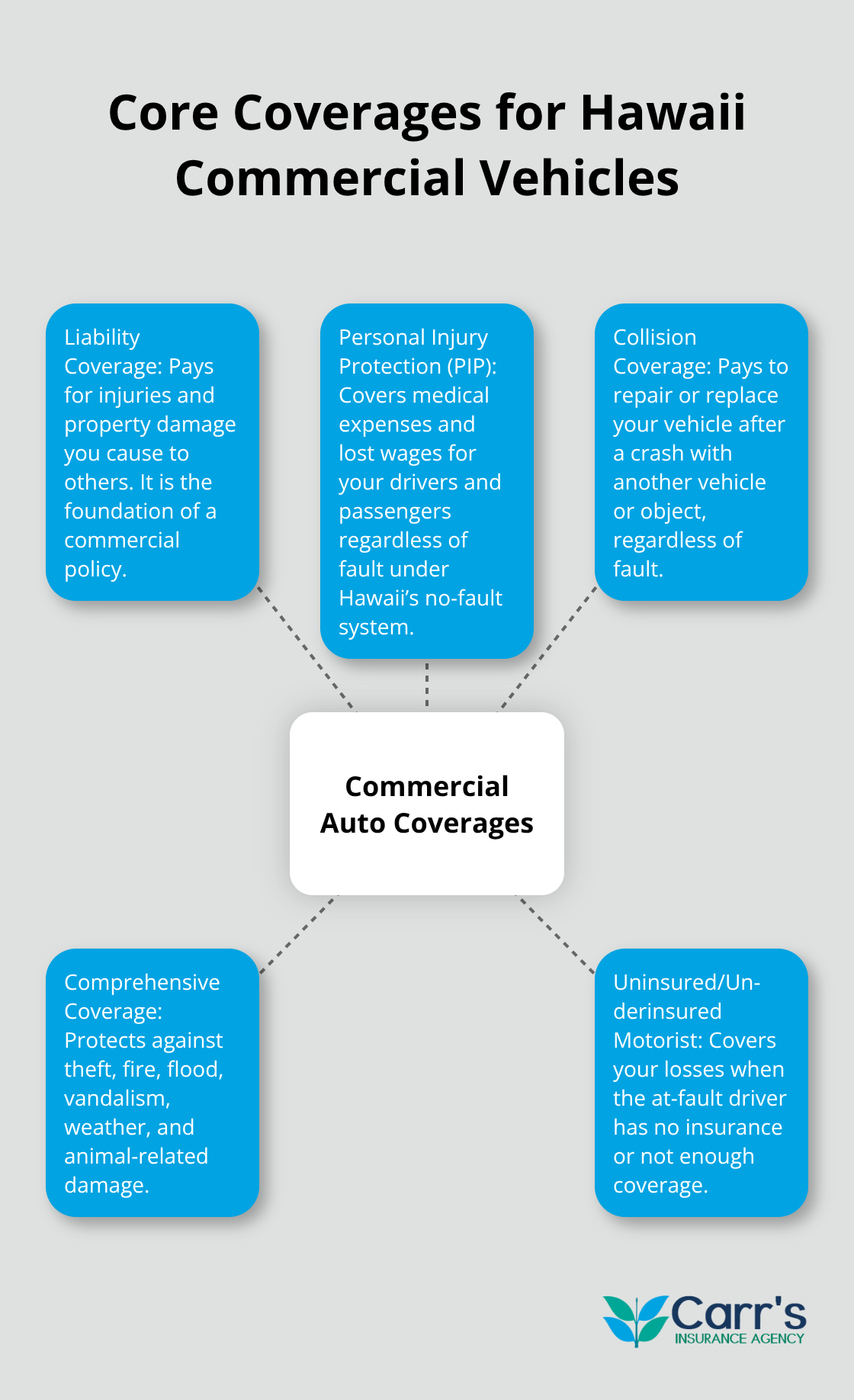
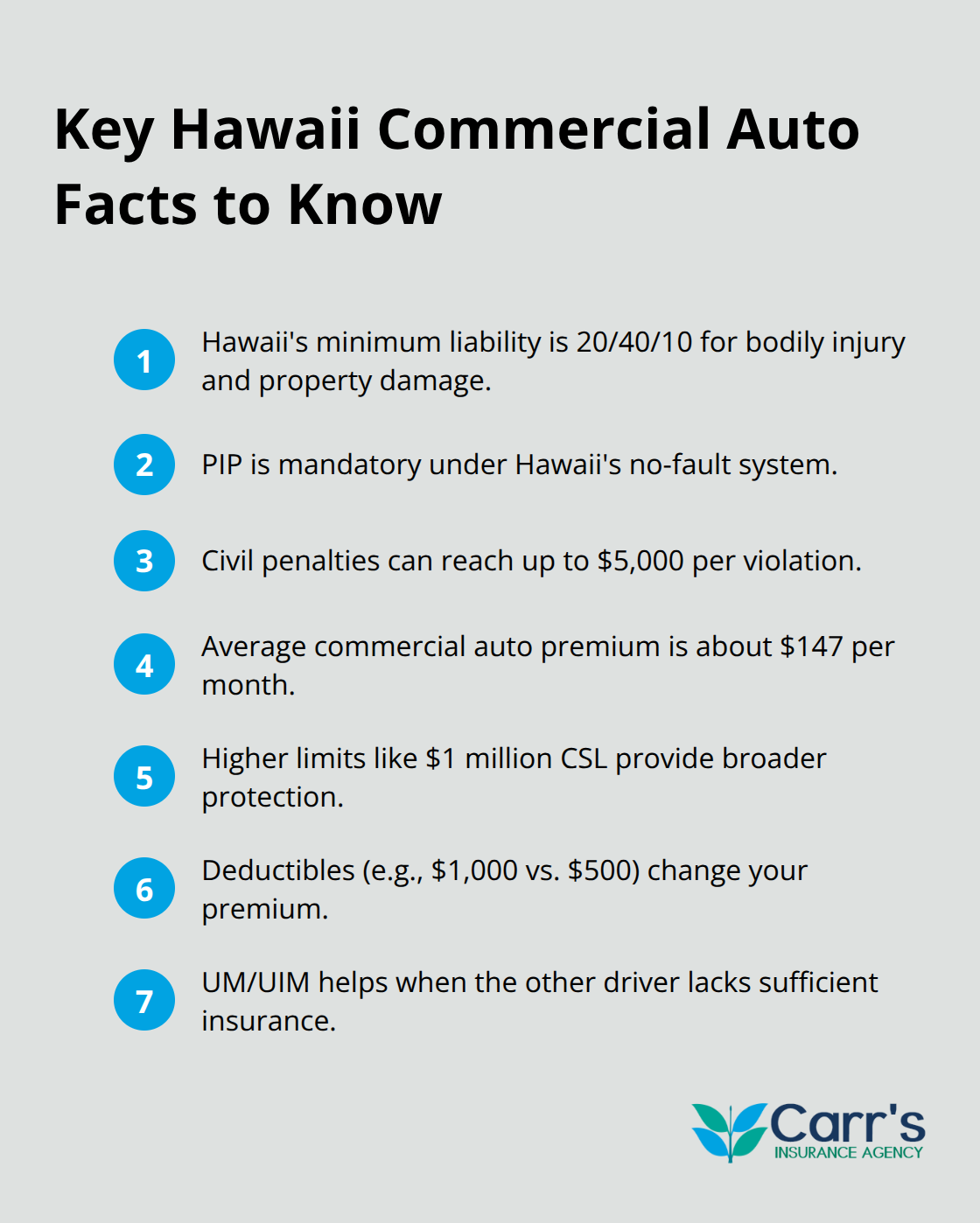
Hawaii’s minimum commercial auto liability requirement is $20,000 per person and $40,000 per accident for bodily injury, plus $10,000 for property damage. These numbers exist for a reason: they reflect the real costs of accidents on Hawaii’s roads. Liability coverage pays for injuries and damage you cause to other people or their property, and it forms the backbone of any commercial policy.
However, these minimums often fall short for businesses with higher exposure. A contractor transporting expensive equipment or a delivery service running multiple routes faces significantly greater risk, and underinsuring at state minimums can leave your business financially exposed. Higher limits protect your assets when accidents happen.
Personal Injury Protection: Hawaii’s No-Fault Requirement
Personal Injury Protection, or PIP, is mandatory in Hawaii and covers medical expenses and lost wages for your drivers and passengers regardless of who caused the accident. This is Hawaii’s no-fault system in action-your own insurer pays first-party benefits regardless of fault. This distinction matters when you evaluate your total coverage picture, as PIP operates independently from liability claims.
Physical Damage Protection: More Than Optional
Collision and comprehensive coverage protect your vehicles from damage, and in Hawaii, comprehensive coverage deserves serious attention. Weather-related damage, theft, and vandalism pose real threats on the islands. Collision coverage reimburses repair or replacement costs after an accident with another vehicle or object, regardless of fault. Comprehensive covers the perils collision does not: theft, fire, flood, vandalism, and animal-related damage.
Dense traffic in Honolulu and variable road infrastructure across the islands mean collision claims happen frequently, making this coverage a practical safeguard rather than optional protection. Your vehicles face constant exposure to these risks, and physical damage coverage protects your operational capacity when incidents occur.
Uninsured and Underinsured Motorist Coverage: The Gap Filler
Uninsured and underinsured motorist coverage fills a critical gap that liability alone cannot address. If another driver causes an accident but lacks sufficient insurance, this coverage protects your business from absorbing losses out of pocket. Uninsured motorist claims occur frequently nationwide, and Hawaii is no exception.
Many business owners skip this protection, thinking their liability limits are high enough-they are not. Liability only covers damage you cause to others, not damage others cause to you. This coverage is worth the modest premium increase, especially for businesses that operate multiple routes or depend on their vehicles daily. As you evaluate which carrier and policy structure best fits your operation, the specific limits and optional coverages you select will determine how well your business weathers an accident.
Why Your Business Needs Commercial Vehicle Insurance in Hawaii
Legal Requirements That Carry Real Penalties
Hawaii law mandates commercial auto insurance for any vehicle used for business operations, and your personal auto policy explicitly excludes work-related use. Driving a business vehicle without proper coverage exposes you to legal requirements for commercial vehicle use in Hawaii, with civil penalties not to exceed $5,000 for each violation. State law enforcement takes this seriously, and the consequences compound quickly.
The True Cost of an Uninsured Accident
An accident involving your commercial vehicle can cost thousands of dollars in medical expenses, vehicle repairs, and liability claims. Hawaii’s dense traffic in Honolulu combined with variable road infrastructure across the islands creates frequent collision scenarios. A single serious accident without adequate coverage wipes out cash reserves, forces you to liquidate assets, or leaves your business unable to operate. Commercial auto insurance transfers this financial risk to your carrier, protecting your company’s ability to continue serving customers after an incident.
How Fleet Size Multiplies Your Risk
Businesses running delivery services, construction operations, food trucks, or any fleet-based operation face exposure that grows with each vehicle and each driver. Multiple vehicles and multiple drivers increase your claims frequency risk, making comprehensive coverage across your entire fleet essential rather than optional. Each additional vehicle and each additional driver should trigger a review of your coverage structure to match your actual operational exposure.
Protecting Your Business Operations
The cost of replacing vehicles and covering liability claims without insurance far exceeds annual premiums. For businesses that depend on their vehicles daily, an accident without adequate coverage can halt operations entirely. Your fleet represents your ability to generate revenue, and protecting that asset through proper insurance keeps your business running when incidents occur. The financial protection commercial auto insurance provides determines whether an accident derails your business or remains a manageable incident.
As you evaluate your specific operational needs, the next step involves understanding how to select a policy that actually matches your business model and risk profile.
How to Choose the Right Commercial Vehicle Insurance Policy
Match Coverage to Your Actual Operations
Choosing the right commercial vehicle insurance starts with an honest assessment of your operational footprint, not industry averages or what competitors carry. A food truck operating daily in Honolulu faces completely different risks than a contractor who uses a single truck for occasional jobs across the Big Island. Document your actual vehicle usage: how many miles your fleet logs monthly, whether routes stay local or span multiple islands, what you transport, and how many drivers operate your vehicles.
Hawaii’s geography matters significantly. Local routes within city limits carry lower premiums than operations spanning rural areas or frequent inter-island coordination. Your vehicle types also drive costs substantially. A heavy truck or tractor requires different coverage than a standard van, and specialty vehicles like food trucks need consideration for exposures beyond standard commercial auto policies. Progressive, the nation’s leading commercial auto insurer by written premium data according to SNL Financial, emphasizes that understanding your specific industry risk is non-negotiable when selecting limits and optional coverages.
Construction contractors, landscapers, delivery services, and real estate professionals all operate under different exposure profiles. Your policy should reflect that reality, not generic industry standards.
Request Quotes with Specific Information Ready
Getting quotes from multiple carriers reveals how dramatically rates vary based on how insurers perceive your risk. When you request quotes, prepare specific information: your industry classification, exact vehicle types and values, driver ages and experience levels, the 3-year motor vehicle report for all drivers, your desired coverage limits, and your claims history. Comparing quotes from at least three carriers prevents you from overpaying or accidentally accepting insufficient limits.
Higher coverage limits cost more but protect your assets substantially better than minimums. Moving from Hawaii’s required 20/40/10 limits to a $1 million combined single limit increases premiums, yet the protection jump justifies the cost for most commercial operations. Deductibles also shape your final premium significantly. A $1,000 deductible costs less than a $500 deductible, but that difference matters only if you can absorb the higher out-of-pocket cost when a claim occurs.
Leverage Discounts That Compound Across Your Fleet
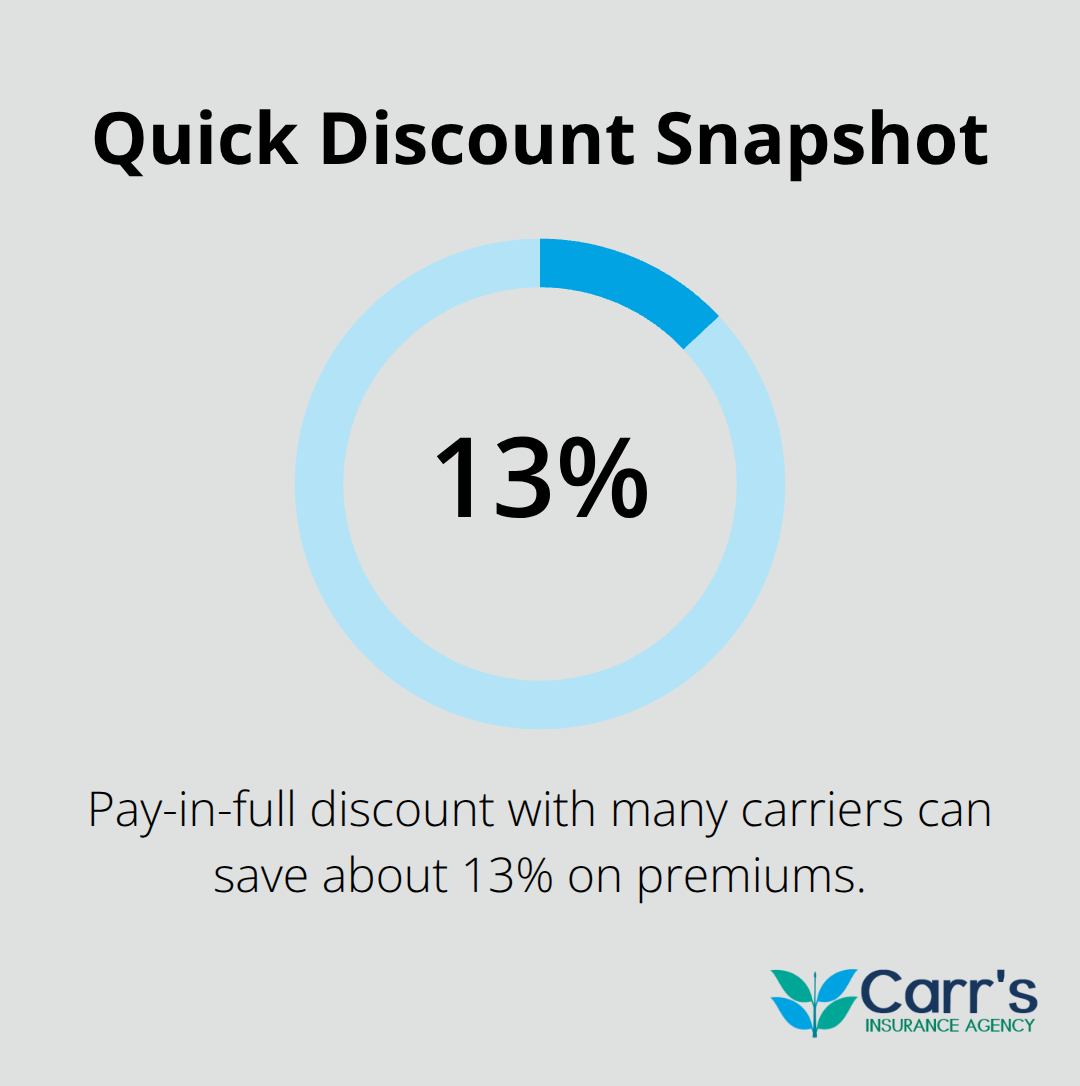
Your business cash flow determines the deductible you can realistically manage. Consider available discounts seriously: paying your full premium upfront saves 13 percent or more with many carriers, bundling commercial auto with other policies yields additional savings, and safety features on your vehicles lower premiums. Defensive driving courses and good driving records for your team also qualify for discounts that compound across multiple vehicles.
The average Hawaii commercial auto premium runs about $147 monthly, but that number masks enormous variation based on these specific factors. Your actual premium depends on how you structure your coverage, not on what the average business pays. As an independent broker, we at Carr’s Insurance Agency compare rates across top carriers to help you find coverage that matches both your operational needs and your budget.
Final Thoughts
Commercial vehicle insurance Hawaii protects your fleet, your drivers, and your business when accidents happen. The coverage you select determines whether an incident becomes a manageable expense or a financial catastrophe that halts operations. Hawaii’s legal minimums exist, but they rarely provide adequate protection for businesses running multiple vehicles or operating across the islands.
Your operational reality should drive your coverage decisions, not industry averages or what competitors carry. A contractor with expensive equipment faces different risks than a delivery service running daily routes through Honolulu. Document your actual vehicle usage, driver experience, and claims history, then request quotes from multiple carriers with that specific information.
Contact Carr’s Insurance Agency to discuss your commercial vehicle insurance needs and receive personalized quotes that reflect your actual operational footprint. Our locally knowledgeable agents work with you to identify the right limits, optional coverages, and discounts that protect your business while keeping premiums manageable. Your business depends on your vehicles, and the right insurance protects that investment.
Disclaimer: The information provided in this blog is for general informational purposes only and does not constitute legal, financial, or insurance advice. Coverage options, terms, and availability may vary. Please consult with a licensed professional for advice specific to your situation






