
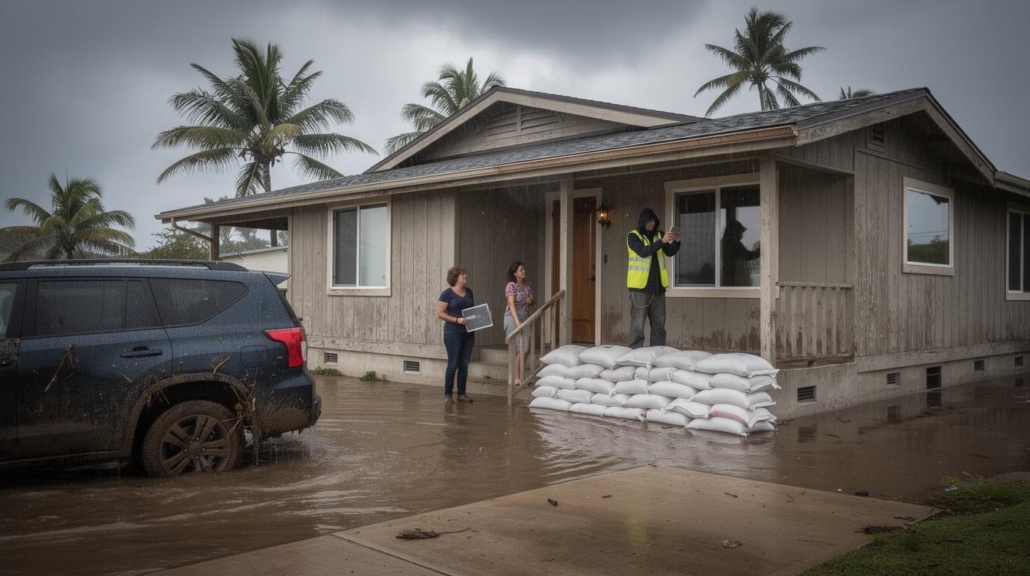
Hurricane Flood Insurance Hawaii: Protecting Your Property
Hawaii’s location in the Pacific hurricane belt puts your home at serious risk. Between 1950 and 2023, the islands experienced 16 direct hurricane hits, with damages reaching billions of dollars.
Standard homeowners insurance won’t cover flood damage, leaving many Hawaii residents dangerously underprotected. We at Carr’s Insurance Agency help homeowners understand their hurricane flood insurance options so they can safeguard their properties before the next storm arrives.
Why Hurricane Flooding Threatens Hawaii Homes
Hawaii’s Position in the Pacific Hurricane Belt
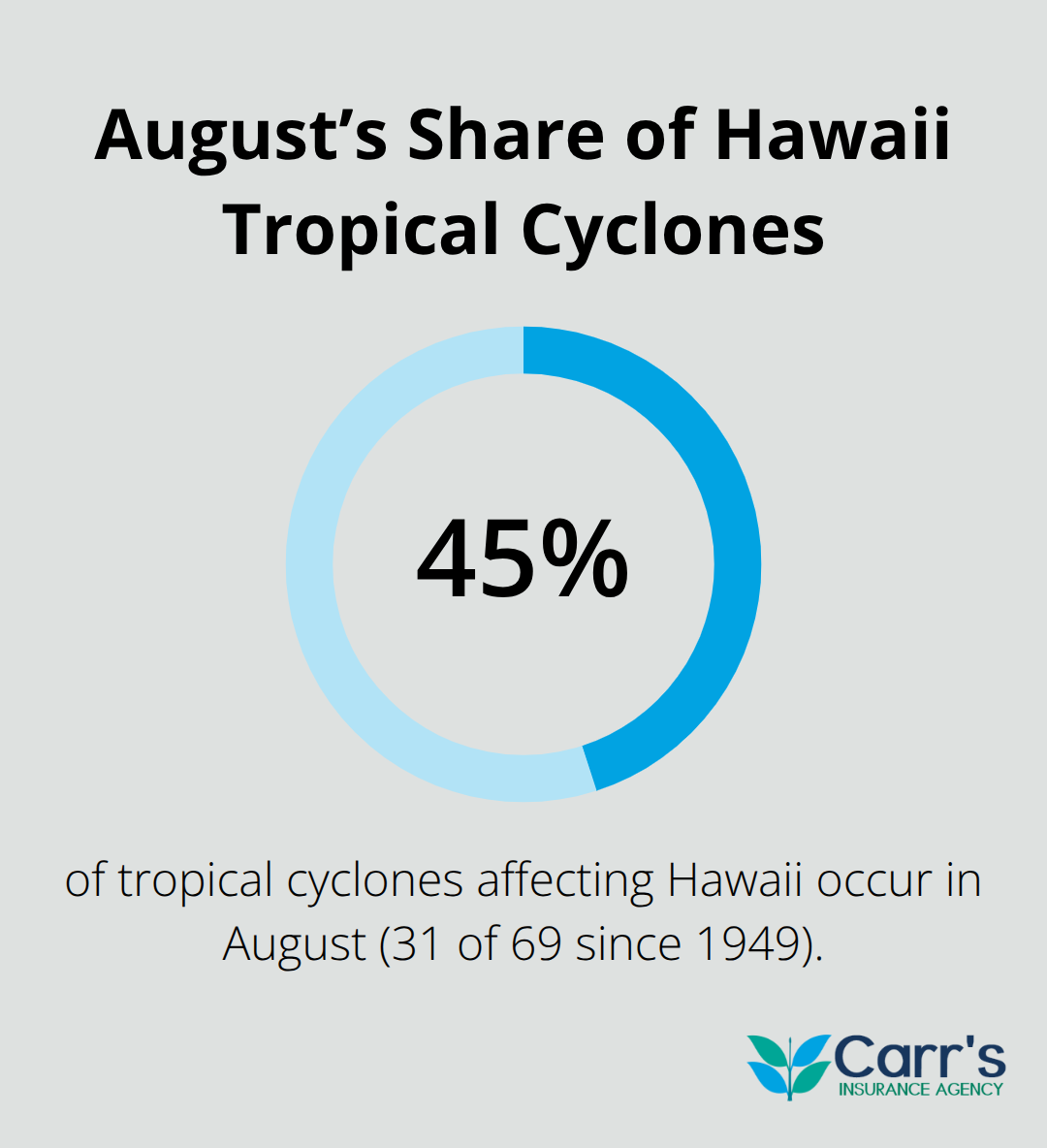
Hawaii faces a unique combination of hurricane and flood threats that standard homeowners insurance simply doesn’t address. The islands sit directly in the Pacific hurricane belt, and tropical cyclones have affected Hawaii roughly 69 times since 1949, according to the Central Pacific Hurricane Center. August is the peak danger month, with about 45 percent of all tropical cyclones occurring then-31 storms out of 69 total.
Rainfall Causes More Damage Than Wind
Here’s what surprises most Hawaii homeowners: rainfall and flooding cause more damage than wind. Hurricane Lane in 2018 dumped 52.02 inches of rain on Mountain View on the Big Island, which triggered mudslides and drowning incidents. The 2000 remnants of Tropical Storm Paul produced 38.76 inches of rain at Kapapala Ranch. These aren’t rare events-they’re part of Hawaii’s weather pattern.
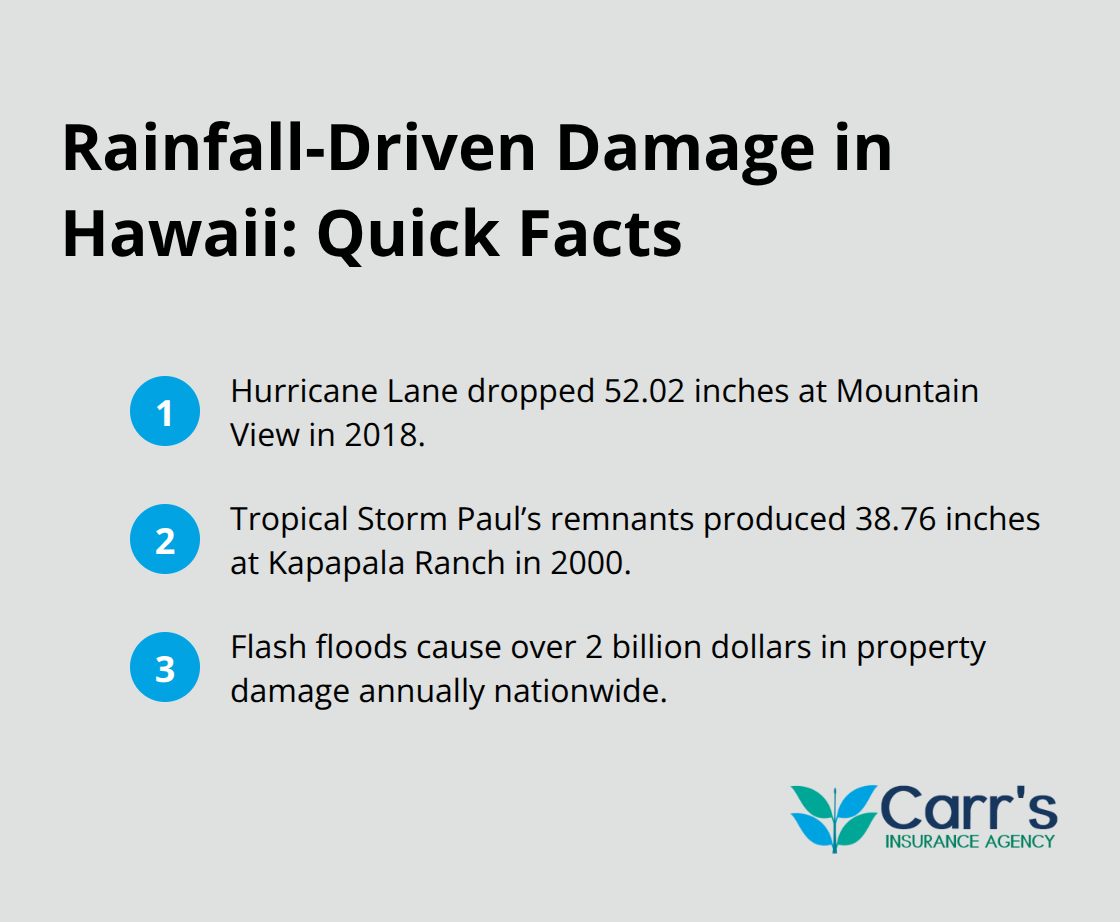
Flash floods happen year-round, not just during hurricane season, and they rank as the most common natural disaster in the country, causing over 2 billion dollars in property damage annually nationwide. A few inches of floodwater destroys homes and belongings faster than most people realize.
Historical Storm Damage Patterns
Historical storms prove that flood risk extends far beyond direct hurricane hits. Hurricane Iniki struck Kauai as a Category 4 in 1992 with 140 mph winds, causing 3.1 billion dollars in damage-one of the costliest East and Central Pacific hurricanes ever recorded. Hurricane Iwa in 1982 dealt severe damage on Kauai despite not being a high-category storm, with estimated losses around 250 million dollars at the time. More recently, Hurricane Iselle made landfall in 2014 as a tropical storm on Hawaii island, causing 148 million dollars in damage, mostly to crops. The pattern is clear: Hawaii’s islands, especially Kauai and the Big Island, experience the most notable impacts.
What Flood Damage Actually Destroys
Property damage includes structural damage to roofs and walls, destroyed personal belongings, contaminated water systems, and displaced families needing temporary housing. Standard homeowners policies don’t cover any of this flood damage. This coverage gap means Hawaii residents who want real protection must obtain separate flood insurance-a step that becomes even more important as you assess your specific property’s risk level and determine what coverage limits actually protect your finances.
What Your Homeowners Policy Actually Leaves Unprotected
The Coverage Gap That Exposes Hawaii Homes
Your standard homeowners insurance policy has a critical blind spot when it comes to water damage from flooding. The National Flood Insurance Program covers more than 1 trillion dollars across policyholders nationwide because standard homeowners policies explicitly exclude flood damage-whether that flood comes from hurricane storm surge, heavy rainfall, flash flooding, or overflowing waterways. This isn’t a minor limitation. In Hawaii, where rainfall events regularly exceed 50 inches and properties sit in high-risk coastal zones, this gap in coverage becomes catastrophic.
What Standard Policies Actually Cover
Your homeowners policy covers wind damage up to 74 mph, broken windows, roof damage from wind-driven debris, and temporary living expenses if your home becomes uninhabitable from a covered peril. It does not cover water entering your home through any means related to flooding. A home in a high-risk flood zone with a federally backed mortgage requires separate flood insurance by lender mandate, yet many homeowners either skip this coverage or underestimate how much protection they actually need.
NFIP and Private Flood Insurance Options
The National Flood Insurance Program and private flood insurance options exist precisely because standard policies won’t touch flood claims. NFIP flood insurance covers both building structure and contents as separate policies, meaning you can insure your home’s frame and foundation independently from your personal property inside. Private flood insurance carriers offer similar protection but with different pricing models and sometimes more flexible terms. The critical detail most Hawaii residents miss: NFIP flood policies carry a mandatory 30-day waiting period before coverage activates, so purchasing insurance weeks before peak hurricane season offers zero protection during those early weeks.
Premium Costs and Map Changes
Premiums vary dramatically by location and building type-a 250,000 dollar home might cost 500 dollars annually in some neighborhoods but 2,500 dollars in others. Premiums increase annually but are capped at 18 percent per year. O’ahu’s flood maps were updated in 2024 and take effect in 2026, which means your current flood-zone designation could change, potentially triggering new lender requirements or allowing you to drop coverage if you move to a lower-risk zone. Obtaining personalized quotes from multiple carriers now positions you ahead of these map shifts and before hurricane season peaks in August.
Choosing the Right Coverage for Your Hawaii Property
Assess Your Property’s Flood Risk Level
Start by obtaining your property’s flood risk designation from FEMA’s flood maps, which determine whether your lender mandates coverage and what you’ll pay annually. If your home sits in a high-risk flood zone (also called Special Flood Hazard Area), flood insurance becomes mandatory with a federally backed mortgage. O’ahu’s updated flood maps take effect in 2026, so properties may shift into or out of high-risk zones, directly affecting insurance requirements and costs. Check your current designation at FEMA’s map service, then contact your mortgage lender to confirm their specific requirements.
Properties in moderate-risk zones aren’t legally required to carry flood insurance but face real financial exposure-a few inches of floodwater costs thousands to remediate and destroys belongings regardless of zone designation. Your flood risk assessment should also consider whether your home sits near rivers, streams, coastal areas, or low-lying neighborhoods prone to ponding after heavy rain. Hawaii’s rainfall events regularly exceed 50 inches, so proximity to water matters more than distance from the ocean.
Determine Adequate Coverage Limits
Coverage limits should match your home’s replacement value plus the cost to repair or replace personal property inside. The National Flood Insurance Program allows you to insure building structure and contents separately, so calculate both independently rather than selecting one round number. A $400,000 home in a high-risk flood zone typically needs $300,000 to $400,000 in building coverage plus $50,000 to $100,000 in contents coverage, though exact amounts depend on construction materials, elevation, and whether your home has a basement or crawlspace.
Premiums for a $250,000 home range from $500 annually in lower-risk areas to $2,500 in high-risk coastal neighborhoods, and increases cap at 18 percent yearly according to NFIP regulations. These figures vary significantly based on your specific location and property characteristics, so personalized quotes provide the most accurate picture of your actual costs.
Compare Quotes from Multiple Carriers
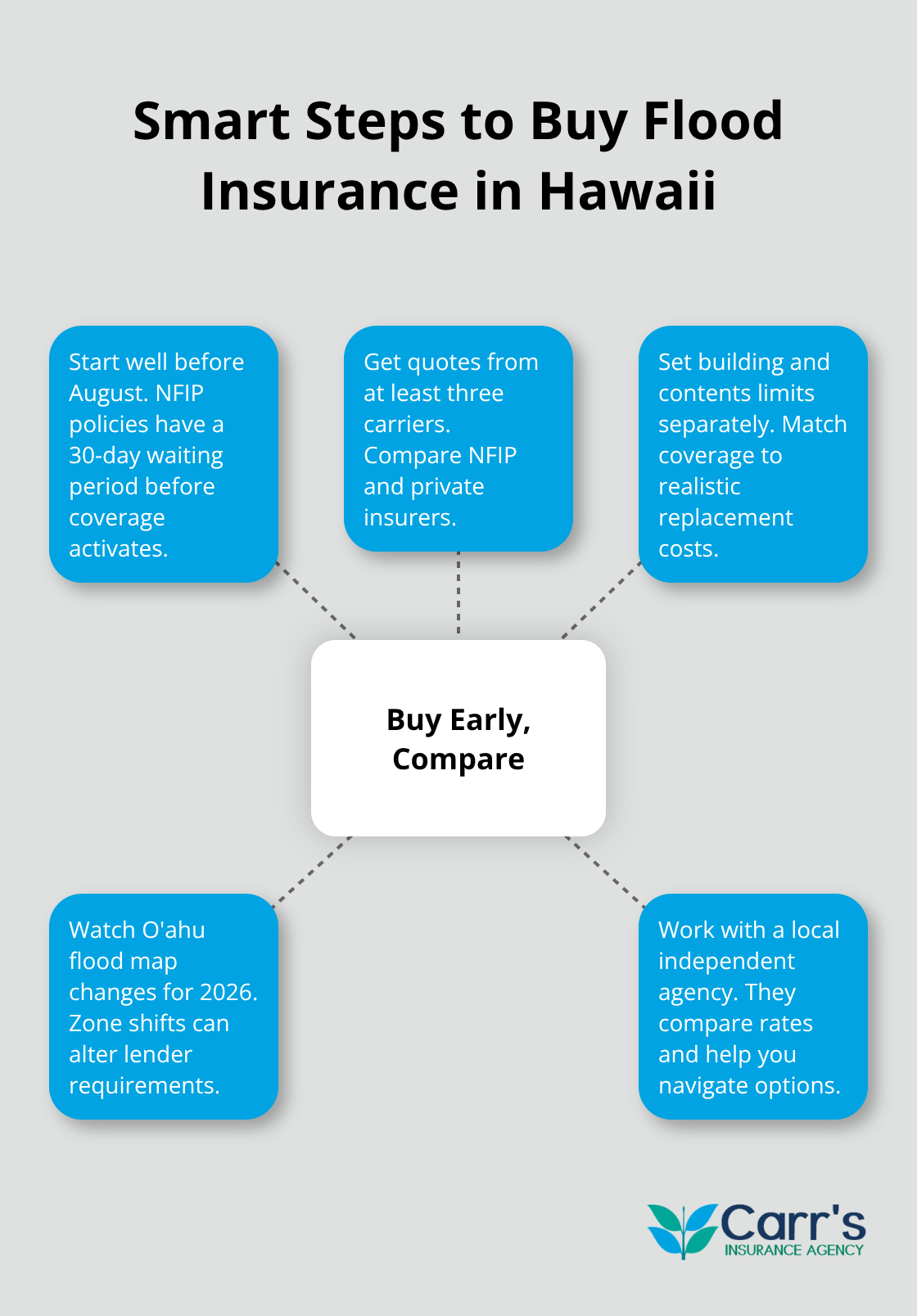
Obtain quotes from at least three carriers before purchasing-NFIP and private insurers price identically for standard risk homes but differ significantly for properties with prior claims or unusual characteristics. Private flood insurance sometimes offers lower rates and faster claims processing, while NFIP provides the stability of a government-backed program. Request quotes now rather than waiting until August, when hurricane season peaks and insurers process applications slowly.
The 30-day waiting period means coverage purchased in June won’t protect you from July storms, so timing your purchase well before peak risk months matters more than saving a few hundred dollars on premiums. Locally owned, independent agencies like Carr’s Insurance Agency (serving Hawaii since 1990) can compare rates across multiple carriers and help you navigate these options with personalized, knowledgeable guidance tailored to Hawaii’s specific risks.
Final Thoughts
Standard homeowners insurance won’t protect your Hawaii home from flood damage, and waiting until August to act guarantees you’ll face coverage gaps when storms arrive. Rainfall causes more damage than wind, flood insurance requires a 30-day waiting period before coverage activates, and premiums vary dramatically based on your property’s location and flood-zone designation. O’ahu’s updated flood maps take effect in 2026, which means your current insurance requirements could shift without warning.
Your next step is straightforward: obtain your property’s flood risk designation from FEMA’s flood maps, then contact your mortgage lender to confirm their specific coverage requirements. Calculate adequate coverage limits for both your home’s structure and personal property inside, accounting for replacement costs rather than current market value. Request personalized quotes from at least three carriers before making your decision, and compare rates across multiple options to find the best hurricane flood insurance Hawaii coverage for your needs.
We at Carr’s Insurance Agency have served Hawaii since 1990 and understand the unique risks your property faces. Our team compares rates across top carriers and connects you with licensed agents who know Hawaii’s flood and hurricane threats firsthand. Contact us today to discuss your hurricane flood insurance options and protect your property before the next storm arrives.
Disclaimer: The information provided in this blog is for general informational purposes only and does not constitute legal, financial, or insurance advice. Coverage options, terms, and availability may vary. Please consult with a licensed professional for advice specific to your situation






